Architecture in Sławków means a ruined bishops' castle, a timber inn, a medieval church and a former zinc rolling mill on the Biała Przemsza.
Sławków is a small town, yet its monuments are enough for a whole day. There are buildings from the thirteenth century and from the industrial age, timber and brick, ruins and structures still in use. The overview runs from the Market Square (Rynek) outwards.
What to see around the market in Sławków
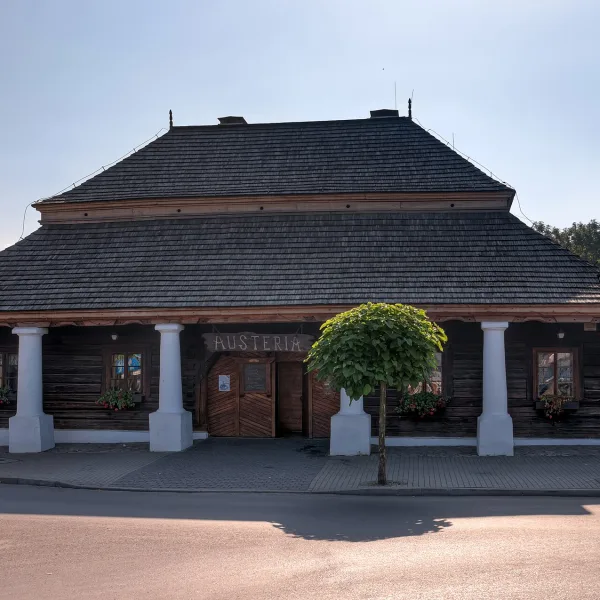
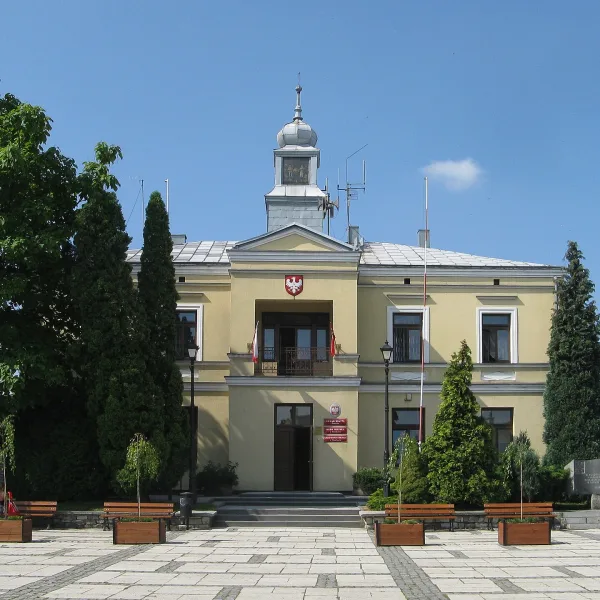
On the square stand the Town Hall and the Sławków Inn. Both explain the layout of the town, and the inn is a site on the Silesian Voivodeship's timber-architecture route.
The town hall, number 1, stands in the middle of the square. The first building, single-storey with arcades, went up in the second half of the eighteenth century, and its present form with a tower comes from a thorough rebuilding in 1905. It still seats the town authorities. The inn at number 2 is a wooden tavern whose arcade is carried by six round columns of stone. The register of monuments gives the year 1771, and a restaurant occupies it today.
Which medieval buildings does Sławków have?
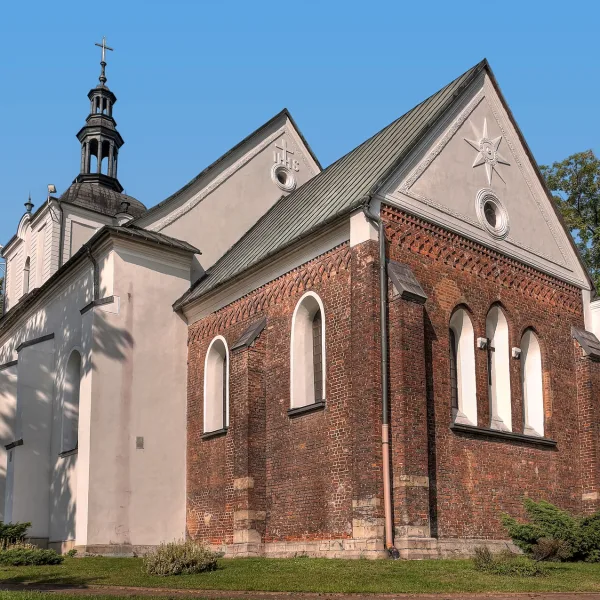
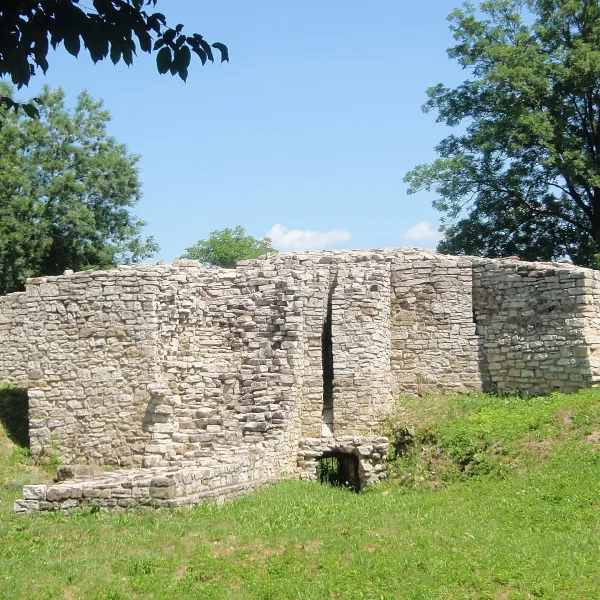
The oldest are the ruins of the castle of the Kraków bishops and the Church of the Elevation of the Cross and St Nicholas. Of the castle, mostly wall fragments and a tower remain; of the church, the brick chancel.
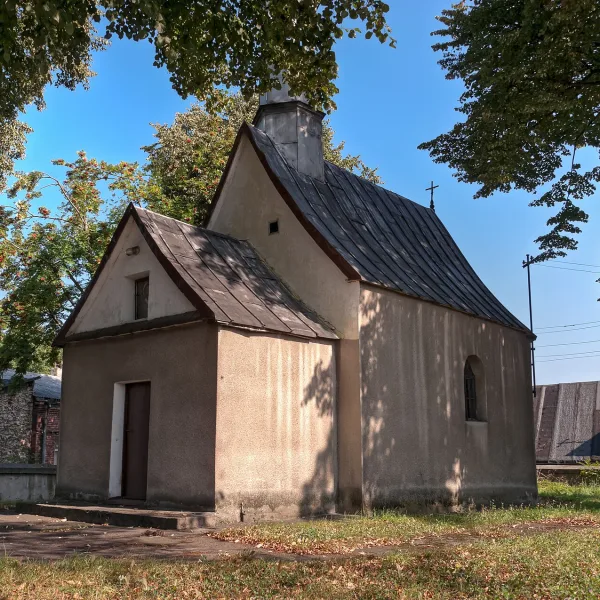
Bishop Paweł of Przemankowo started the castle before 1283, and the first surviving mention of it dates from 1289. The church on Kościelna Street, number 26, was raised in 1255-1265. The chancel shows an arcade frieze in a style between Romanesque and Gothic, and the nave holds medieval wall paintings. On the former site of the Order of the Holy Spirit's monastery stands St James's Chapel, built in 1827. Over five hundred years earlier, in 1298, Bishop Jan Muskata had founded a church and monastery here, and in 1455 unpaid soldiers destroyed them. Inside are a crypt and a neo-Gothic altar.
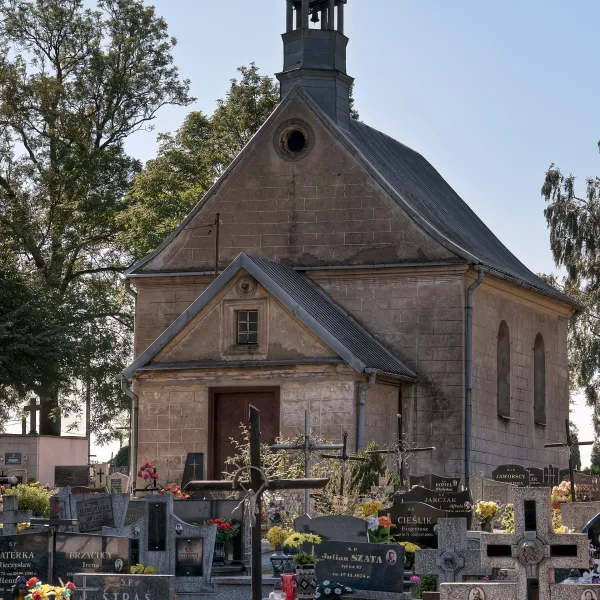
In the cemetery stands St Mark's Chapel, a Neoclassical building of the early nineteenth century. Its altar dates from 1632, and an illusionistic polychrome decorates the interior. The chapel and the charnel houses of 1839 set into the cemetery wall are protected by an entry in the register of monuments.
What remains of industry and the former Jewish community
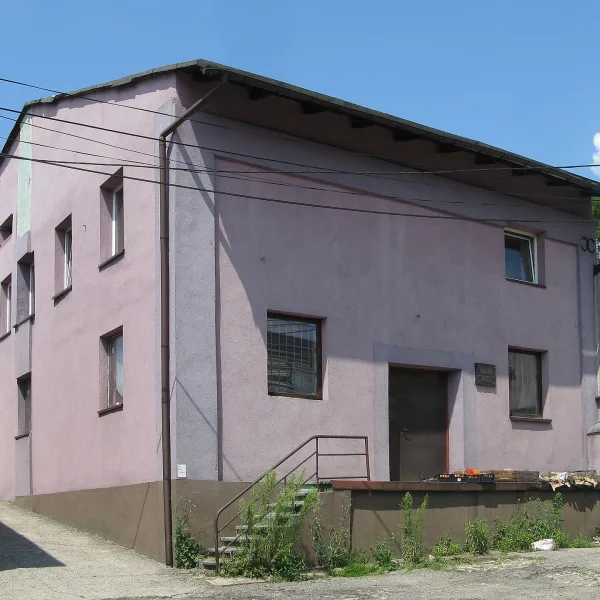
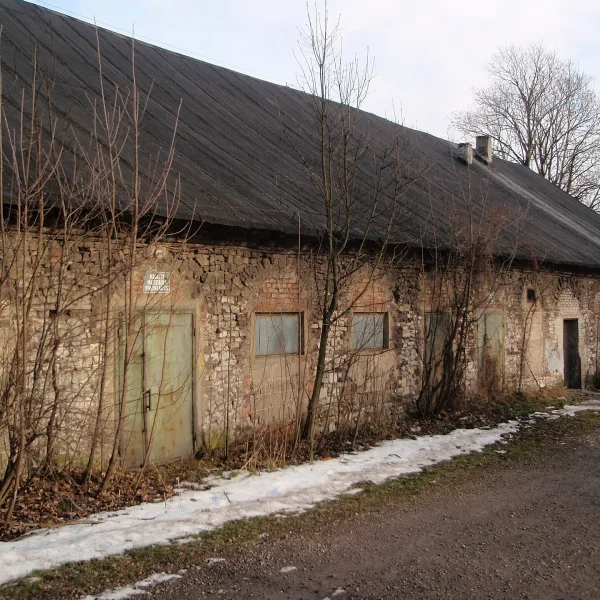
On the Biała Przemsza stand the buildings of the Sławków rolling mill, and at Biskupia 10 the former synagogue. They are two traces of a past that is spoken of by walls rather than exhibitions.
The mill for zinc sheet and a foundry worked from 1826 to 1888, and the surviving buildings are entered in the register of monuments. In the Kingdom of Poland only the Białogon mill had been built earlier as a plant of this type. The history of zinc is told in the article Zinc in Upper Silesia. The red-brick synagogue was built in 1896. Under German occupation the building was ruined and turned into a storehouse, and after the war it served as a cultural centre. Today the building has no religious function and serves as a warehouse; a commemorative plaque hangs on its wall. It is viewed from the outside.
Frequently asked questions
How much of the castle survives in Sławków?
Ruins: fragments of walls and a tower. They are what remains of the stronghold of the Kraków bishops from the end of the thirteenth century, listed in the register of monuments.
Can you eat in the Sławków inn?
Yes, a restaurant now operates in the historic timber tavern at Rynek 2.
What is in the synagogue in Sławków?
The building is a warehouse today and has no religious function. The brick structure of 1896 and a commemorative plaque survive.
Where are more places to see?
See the Sławków section and the Architecture page.

 Historic sites