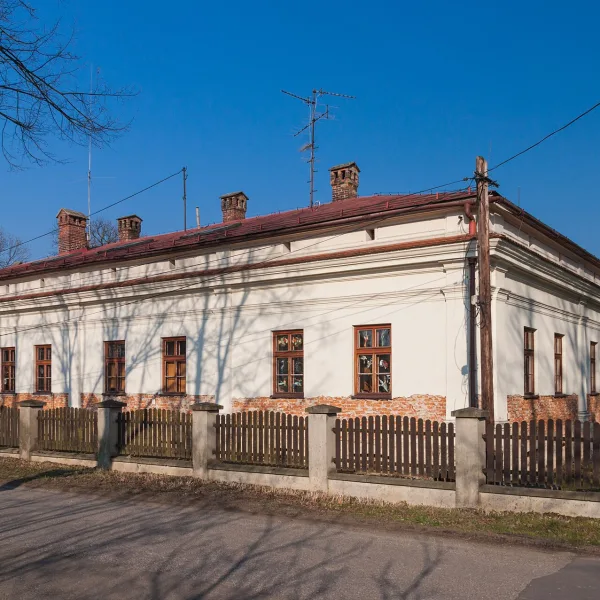
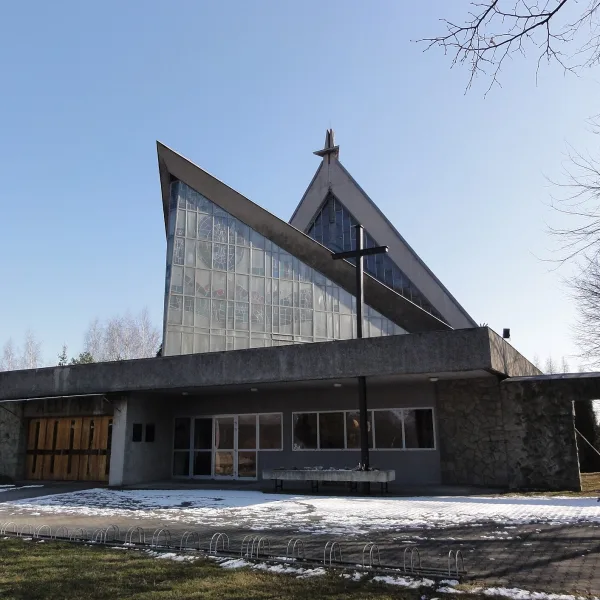
Things to do in Drogomyśl: a baroque palace, a Lutheran church of toleration from 1788-1797 and a modernist church from 1967-1969.
Drogomyśl lies in the Strumień municipality, in Cieszyn Silesia. Its three places show how architecture changed here, from classicism to buildings after the Second Vatican Council.
What to see in Drogomyśl in one day
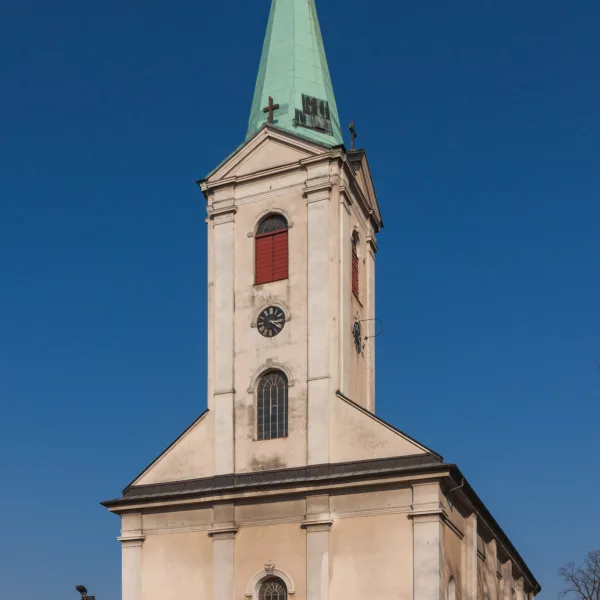
The Evangelical Augsburg Church at Plac Kościelny im. barona F. Kalisza 3 is one of the Lutheran churches of toleration in Cieszyn Silesia, with a classicist brick body and a three-aisled interior with side galleries. It was built after Emperor Joseph II's Patent of Toleration of 1781, as one of the last in the group.
The palace at Modrzewiowa 1 was built around 1786. For over a hundred years it belonged to the Habsburgs, and between the wars it housed the directorate of the State Stud. Today a social welfare centre uses it, so it is seen from outside, together with a park of more than forty tree species.
The Church of Our Lady of Częstochowa on Dobrego Pasterza square was built in 1967-1969 to a design by Stanisław Kwaśniewicz, with a roof shaped like tents. It is regarded as the first church in Poland built after the Second Vatican Council.
Frequently asked questions
Can you enter the palace in Drogomyśl?
No, a social welfare centre uses the complex. You can see the building from outside and walk in the park.
Who designed the modern church in Drogomyśl?
Stanisław Kwaśniewicz. The stained glass was made by the Ryniewicz firm.

 Churches and monasteries