Things to do in Żywiec: the Habsburg castle with its park, a market square below Grojec hill, a brewery museum and a lake on the Soła.
Żywiec lies in the Żywiec Basin, at the gateway to the Beskids, and has a compact centre that can be covered on foot. A plan for a day or a weekend runs from Zamkowa Street and the park, through the Market Square and the museums, to the churches, the lake and the cemeteries. In the region, Żywiec stands out for having a Habsburg castle and a brewery side by side.
What to see in Żywiec first?
Begin on the castle hill by Zamkowa Street: see the New Castle, the park with the Chinese House and the co-cathedral. Then walk to the Market Square, and in the afternoon look into the brewery museum. Żywiec has several dozen places worth a stop, most of them churches and chapels. The full overview is the page of attractions in Żywiec, while the Habsburg and brewery story is developed in an article on the Habsburgs and the Archducal Brewery.
The castle, park and miniatures: what is on Zamkowa Street?
Zamkowa Street gathers the town's key sites: the Habsburg palace, a large park, the co-cathedral and a miniature park.
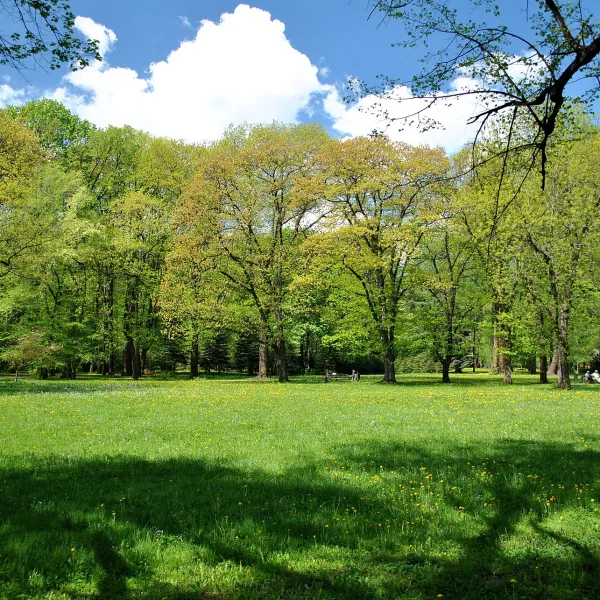
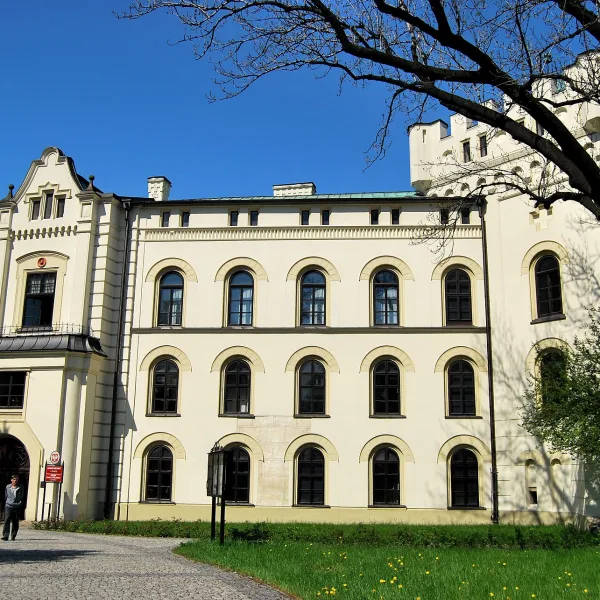
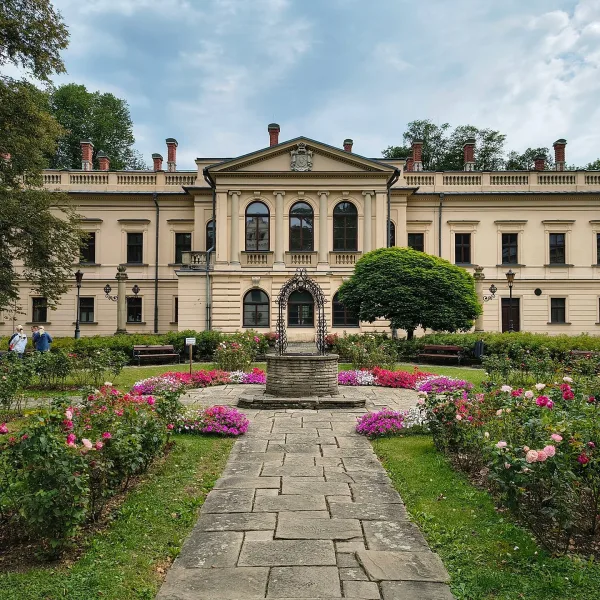
The New Castle, also called the Habsburg palace, is a brick palace raised in 1871-1885 on the order of Archduke Albrecht to a design by Karol Pietschka. Building work went on until 1911. Next to it spreads the Castle Park of about 26 hectares, laid out in 1712 in the Italian style and later reshaped as a landscape park. On an island in it stands the Chinese House, an octagonal, two-storey pavilion of the later eighteenth century, funded by the Wielopolski family.
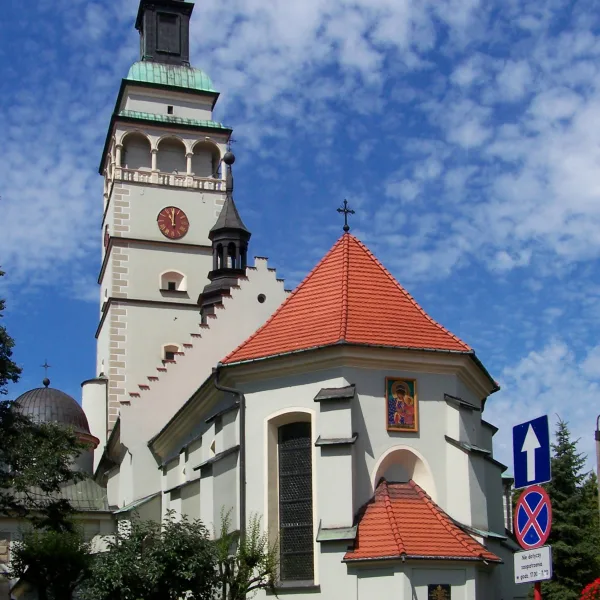
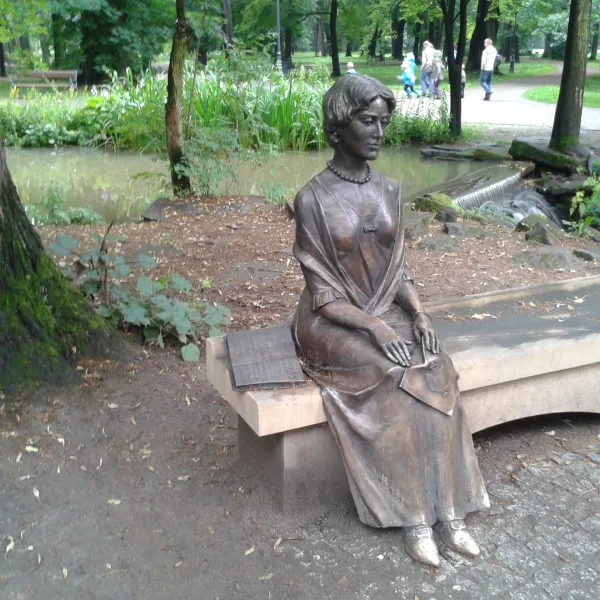
The castle park also holds the Miniature Park, opened in 2012, with models of monuments of the Podbeskidzie region. Nearby is the bronze bench of Alice Habsburg, who lived in Żywiec between 1920 and 1945, and you can sit beside it. On the same street, at number 6, rises the Co-Cathedral of the Nativity of the Blessed Virgin Mary, a Gothic church of the fifteenth century with a Renaissance tower and Baroque furnishings. Since 1992 it has been the co-cathedral of the Bielsko-Żywiec diocese.
The Market Square, squares and the centre: how to walk around the middle of town?
Four stops make up the middle of town: the Market Square, Plac Mariacki, Plac Grunwaldzki and the Klementynka villa.
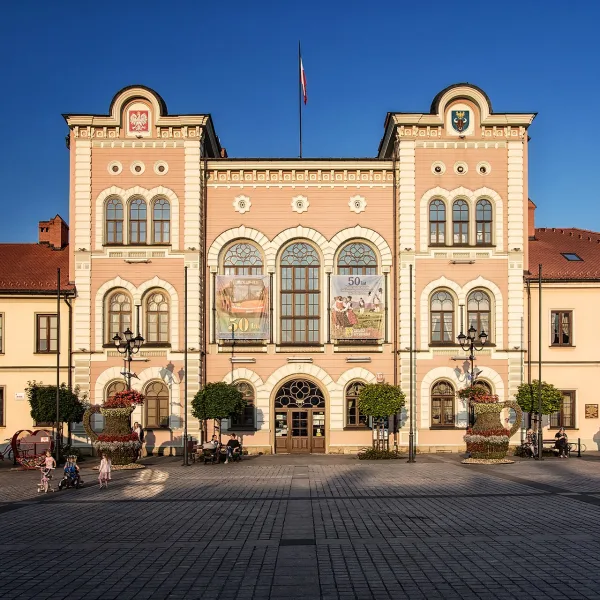
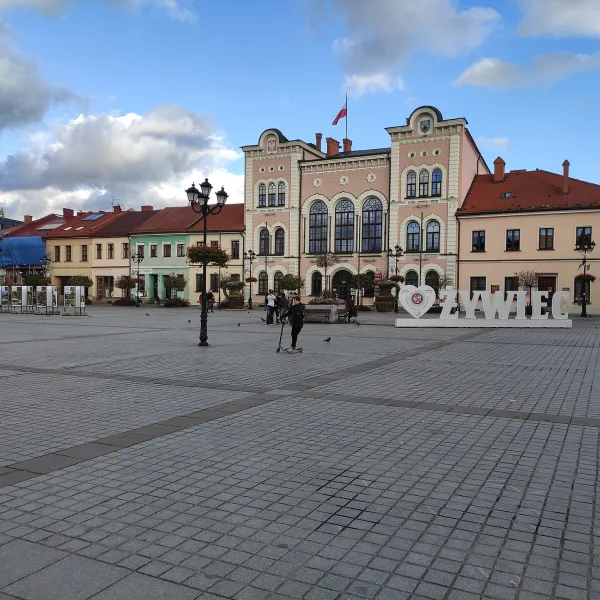
The Market Square is a medieval chartered square, probably laid out in the first half of the fifteenth century at the foot of Grojec hill. It has a regular four-sided shape and is lined with townhouses and the Magistrat. In the northern frontage, at number 2, stands the town hall, a four-storey brick building that grew out of the Kantorowski family house and today holds the City Office.
In the very centre lies Plac Mariacki, rebuilt in 1968 for the town's seven-hundredth anniversary and now an important public transport hub. Plac Grunwaldzki is a roundabout with a green square at the crossing of Kościuszki, Handlowa, Podwale and Aleja Legionów. Its character comes from the Grunwald Monument, an eagle unveiled in 1910, destroyed in 1939 and rebuilt in 2005. On Paderewskiego Street stands the Klementynka villa, a manor of 1720 rebuilt in 1887, with a park and a white poplar forty metres tall. Similar places are collected in the category Atmospheric places in Żywiec.
Which museums in Żywiec to visit when it rains?
For wet weather choose the Żywiec Brewery Museum in its rock cellars or the Municipal Museum in the Old Castle. A third, devoted to armed effort, sits in an air-raid shelter. The Miniature Park adds something for families.
The Żywiec Brewery Museum occupies the lagering cellars cut into rock in the oldest part of the brewery. It opened on 9 September 2006 to mark the brewery's 150th anniversary. The exhibition has eighteen rooms over some 1,600 square metres. The Municipal Museum in the Old Castle presents the history of the town, the culture of the Żywiec highlanders, archaeology, nature and sacred art, and grew out of a collection assembled since 1925.
The Museum of Armed Effort of the Żywiec Region occupies a German air-raid shelter of 1944 and opened on 14 May 2011. It tells of the part played by local people in the armed conflicts of the twentieth century. More wet-weather ideas are in the category Rainy-day ideas in Żywiec, and families with children will find mountain trip ideas in the roundup Beskids with children.
Which churches and chapels in Żywiec are worth seeing?
Żywiec has fourteen churches and chapels, from Gothic at the end of the fourteenth century to buildings of the 1980s. The oldest stand in Ruda and in the centre, the newer ones in the districts of Oczków, Moszczanica and Kocurów-Koleby.
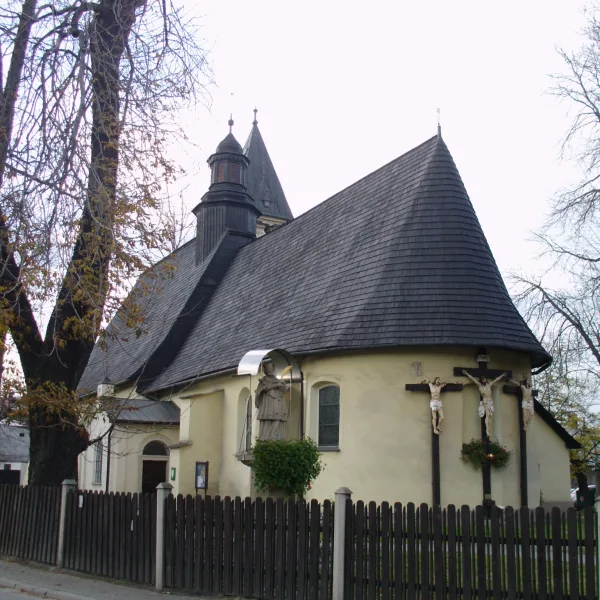
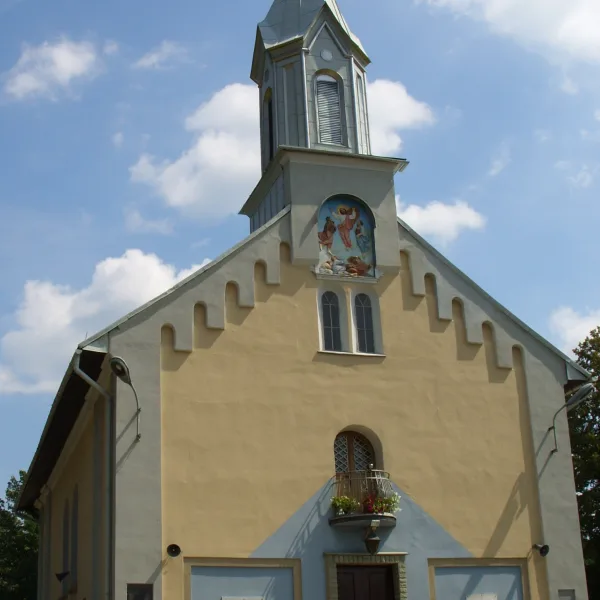
Besides the co-cathedral, see the Church of the Holy Cross in Ruda, a Gothic building of about 1380, known as the Church of the Three Crosses. The Church of the Transfiguration on Komonieckiego Street is a cemetery church of 1850-1856, successor to a wooden chapel funded in 1701 by Andrzej Komoniecki. St Mark's Church of 1885 stands where a wooden votive chapel once marked the end of a plague.
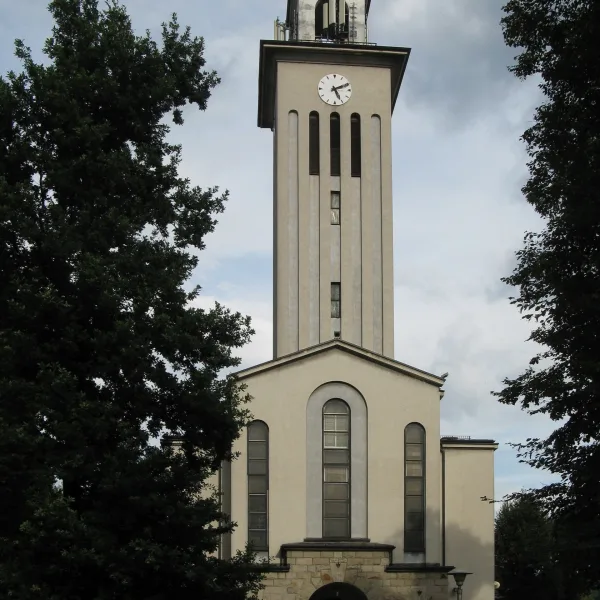
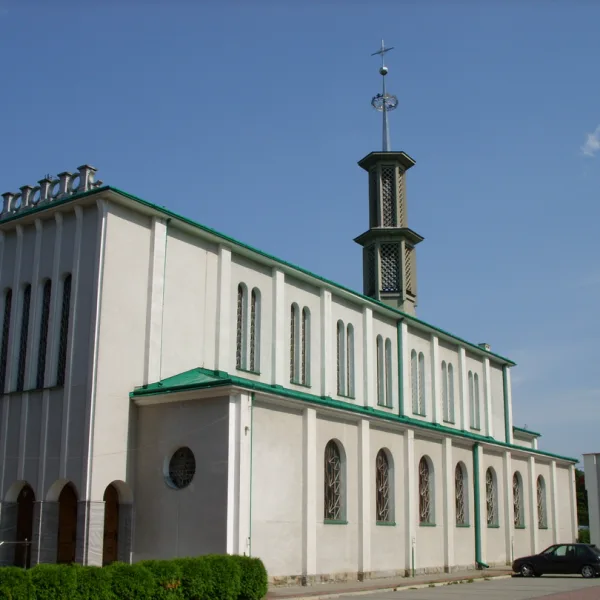
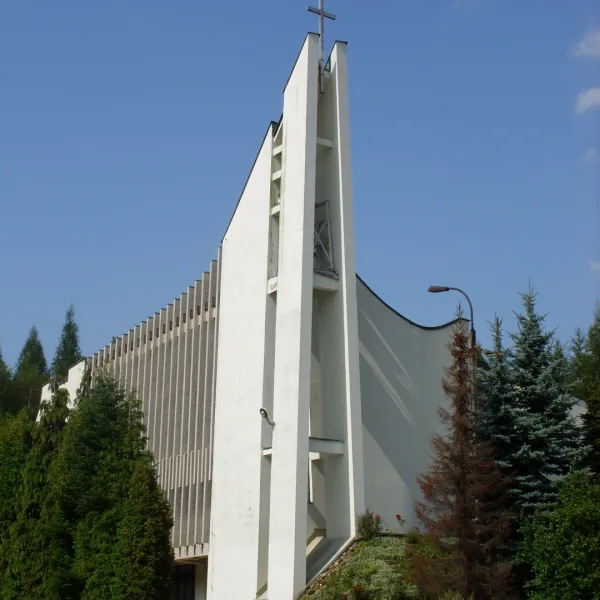
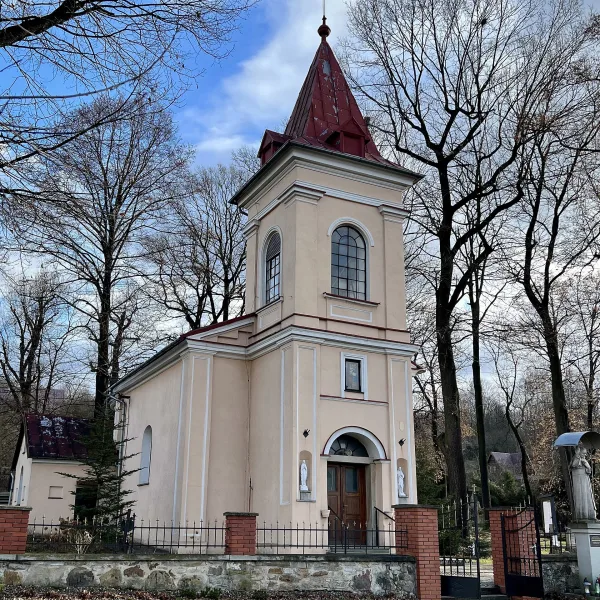
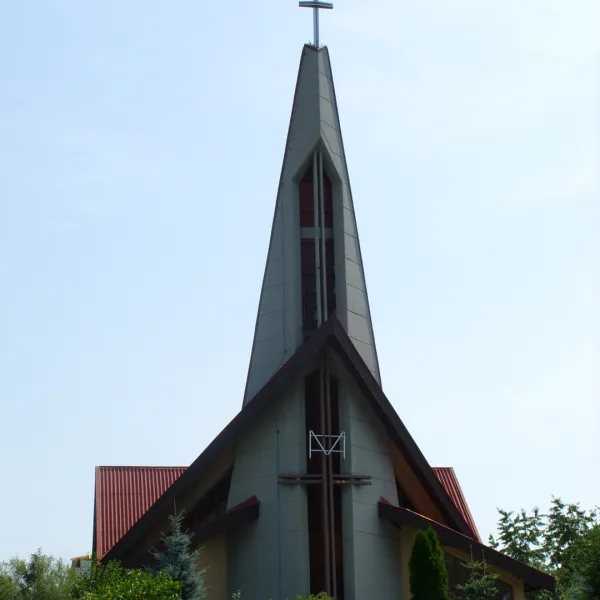
In the districts you find the Church of St Florian in Zabłocie, a brick church in the Romanesque style, built in stages in 1935-1954. Opposite it is the chapel of St Florian from the early nineteenth century. Sporysz has the Church of Christ the King, consecrated in 1962 by Bishop Karol Wojtyła, and the Chapel of the Exaltation of the Holy Cross of 1936-1938. In Oczków stands the Church of St Maximilian Kolbe of 1982-1986, and in Moszczanica the Church of Divine Mercy, begun in 1981 and consecrated in 1999.
In Rędzina stands the Chapel of Our Lady of the Rosary of 1967-1968, with a Baroque altar of 1708. In Kocurów-Koleby there is a chapel of 1933 and a church of 1996 with a cornerstone consecrated by John Paul II. The St Vitus chapel is gone; only a relocated spring survives, and the chapel of St Vitus was blown up in 1964 during construction of the lake. All the churches are listed in the category Churches and monasteries in Żywiec.
The lake, Grojec hill and a reserve: where to head into nature?
Lake Żywiec and Wilczy Jar lead to the water and the trails, while Grojec hill carries the ruins of a castle.
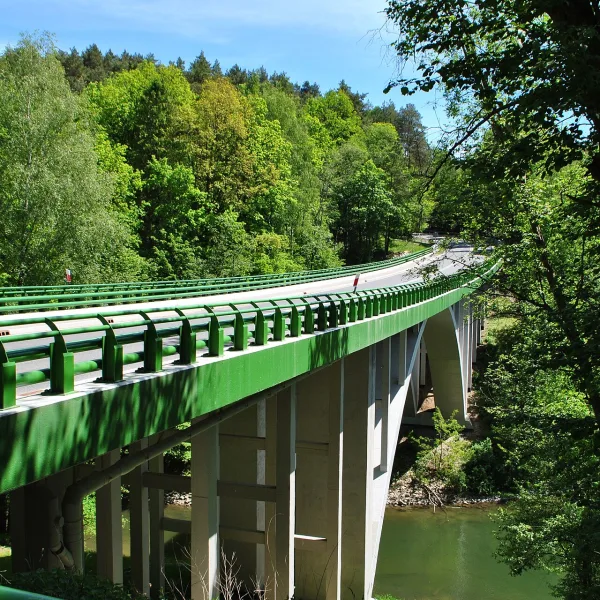
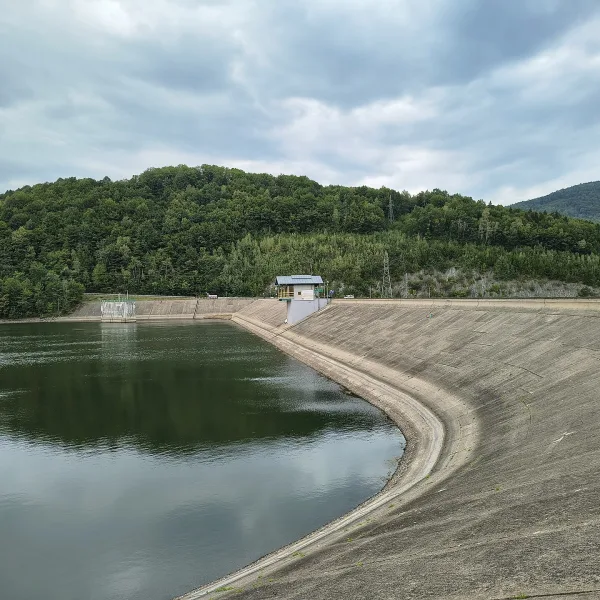
Lake Żywiec, also called the Tresna Reservoir, is a dam reservoir on the Soła, created in 1966. It is up to 6.6 kilometres long and up to 26.8 metres deep, and has a hydroelectric plant. The making of the lake and the drowned villages are described in an article on Lake Żywiec and Lake Międzybrodzie. Wilczy Jar is a ravine in the Oczków district with a reinforced-concrete bridge of 1964, the start of trails and a difficult descent to the lake.
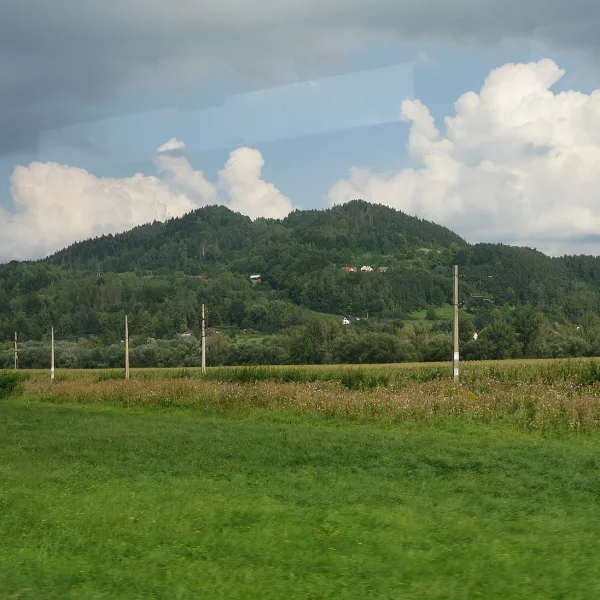
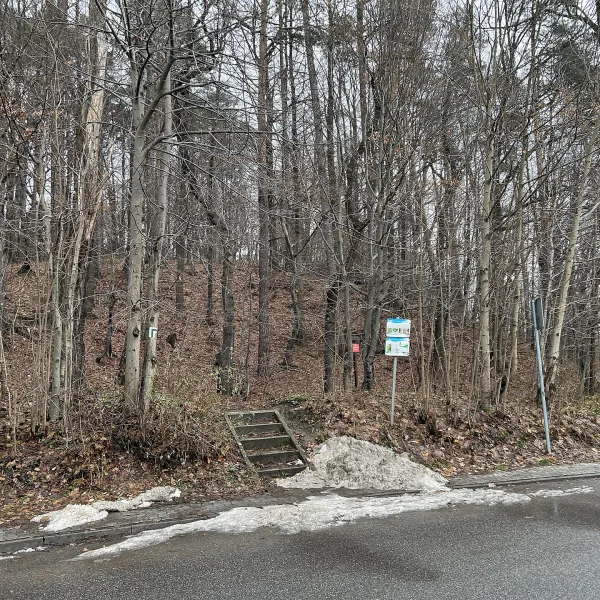
On top of a hill 612 metres high lies the castle on Grojec hill, in fact the ruins of a medieval castle between the Soła and the Koszarawa, destroyed in 1477. The Grapa Nature Reserve is a strict forest reserve of 23.23 hectares, created in 1996 to protect the oak-hornbeam woods and ash alluvial forest of the Żywiec Basin. In Moszczanica there is also a manor and park complex with a neoclassical manor of 1828. Mountain huts above Żywiec are covered in an article on the huts of the Żywiec Beskids.
Cemeteries and places of remembrance in Żywiec
The cemeteries of Żywiec tell the story of the town, so walk through them quietly. Alongside them is the site of a synagogue that no longer exists.
The Transfiguration Cemetery on Komonieckiego Street is the oldest active necropolis of the town, with a chapel of 1705, graves of distinguished residents and war plots. The cemetery on Sienkiewicza Street was founded in 1784 around St Mark's Church, is closed to new burials and has a neo-Gothic tomb chapel. In Moszczanica lies the Soviet soldiers' cemetery of 1951, where 1,120 soldiers killed in 1945 in the Żywiec region are buried.
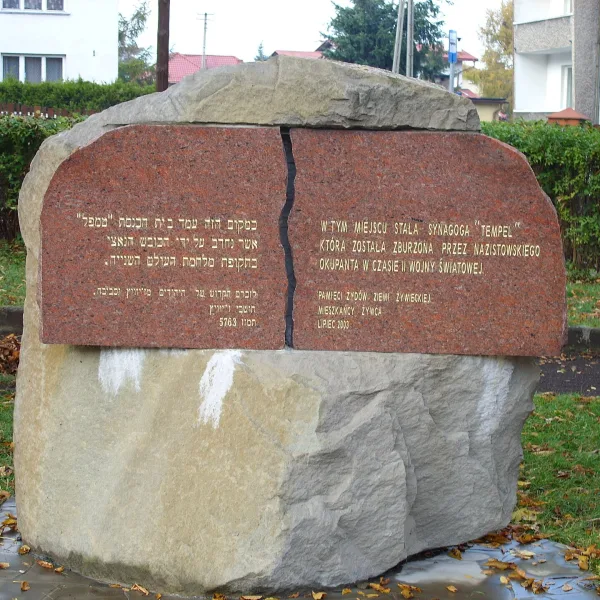
The Jewish cemetery on Stolarska Street in Zabłocie covers about half a hectare and has about 500 gravestones, the oldest from 1853, restored in 2018-2020. The Tempel synagogue is gone: the site in Zabłocie, between Dworcowa and Wesoła streets, is now occupied by school buildings, and a monument unveiled in 2003 recalls the synagogue destroyed during the Second World War.
Frequently asked questions
What to see in Żywiec in one day?
The castle hill with the New Castle, park and co-cathedral, the Market Square with the town hall, and the Brewery Museum in its rock cellars. If time remains, add Lake Żywiec.
What to do in Żywiec when it rains?
Visit the Brewery Museum, the Municipal Museum in the Old Castle or the Museum of Armed Effort in its shelter. The Miniature Park suits children.
Are there free places to visit in Żywiec?
Yes, among them the Castle Park, the Market Square, the lake, the Grapa reserve and the cemeteries. Museums have their own conditions of entry.
Where are the castle ruins in Żywiec?
On the summit of Grojec hill, between the Soła and the Koszarawa. They are the ruins of a medieval castle destroyed in 1477.
What happened to the synagogue in Żywiec?
The Tempel synagogue was demolished during the Second World War. School buildings stand there today, and a monument of 2003 recalls the former synagogue.