Things to do in Racibórz: a brick castle on Ostróg, a dozen churches, an aquapark and an arboretum on the Oder. Start here for what to see first.
This guide suits anyone who wants to get to know the town at the southern edge of the Silesian Voivodeship in one day, or spread it over several walks. It covers churches, Old Town squares, parks, monuments and industrial landmarks. What sets Racibórz apart from its neighbours is the castle and the Ostróg hill, around which most of the route is built.
What to see in Racibórz first?
Begin at Racibórz Castle on Ostróg, then walk to the Market Square with its Baroque column and to the Racibórz Museum, housed in a former Dominican nuns' church. The Prison Tower and the park around the pond round off the day. In this way you see traces of the Middle Ages, the Baroque and the nineteenth century in one outing.
The town has several dozen places worth a stop. Churches are the largest group, followed by monuments and cemeteries, then a handful of squares, four parks and two water towers. The full overview sits on the page with all attractions in Racibórz, and the sections below sort it by district and type.
The castle and Ostróg: what lies around the castle hill?
Ostróg is a district on an old river island, where the Oder makes a loop. The castle stands here, and next to it you will find a brewery, an aquapark, a park, a church and a bridge. Everything sits close together, so the next stop is only a few steps away.
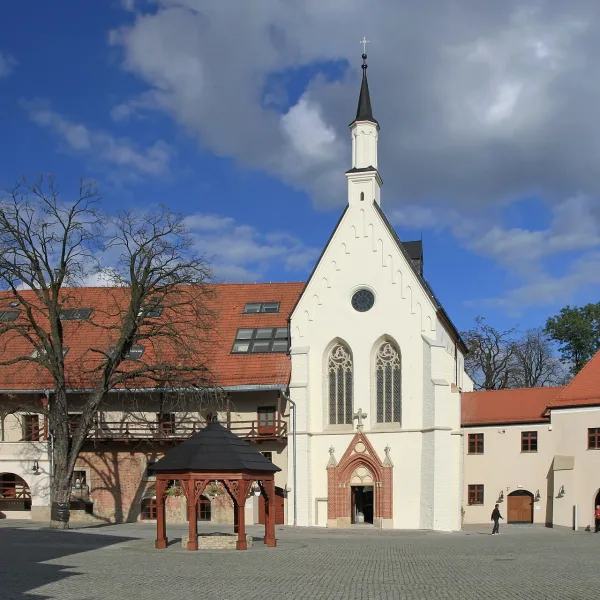
The castle is a complex of brick buildings with a Gothic chapel of St Thomas, a house known as the ducal palace and a gatehouse. Today it holds a museum with exhibitions, a dungeon in the tower and a tourist information point. The history of the stronghold and the legend of the stone head are told in an article about the castle and the stone head legend.
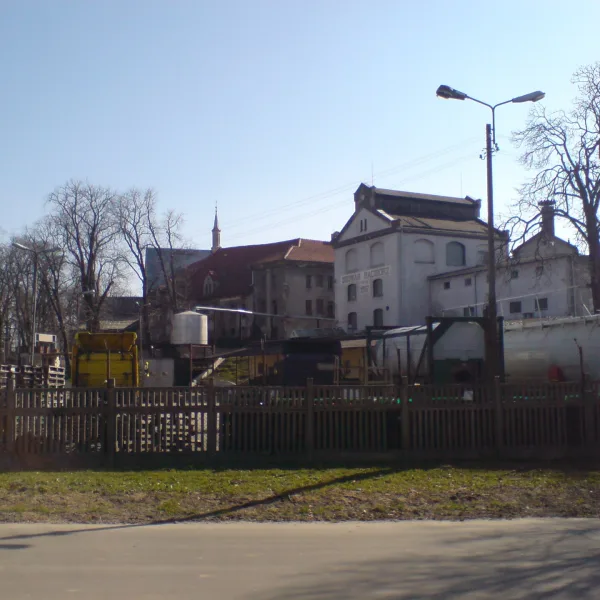
Beside the castle stands the Racibórz Brewery. Beer has been brewed at this spot since the early sixteenth century, while the present plant was built in the nineteenth. The brewery is open to visitors, and its counterpart in Cieszyn and the use of open fermentation vats are covered in the text on beer from open vats.
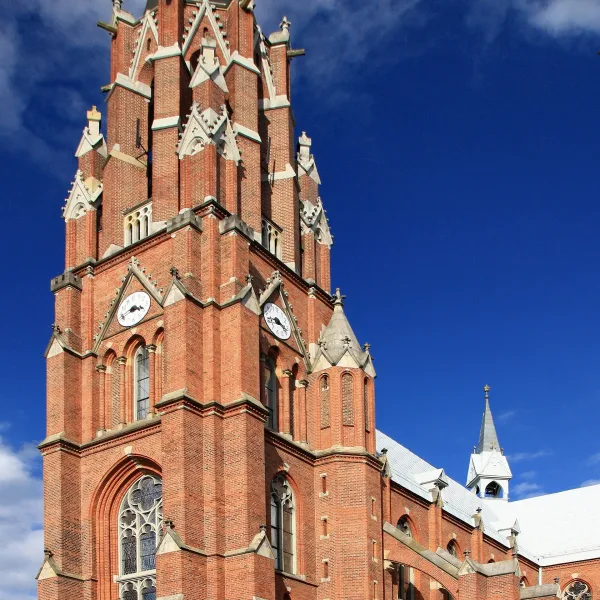
The Castle Park surrounds the hill, with black poplars more than two centuries old growing on a former riverside forest. The Castle Bridge over the Oder replaced a crossing first recorded in 1299, and the present structure was rebuilt after 1945. Close by is the neo-Gothic Church of St John the Baptist, built in 1856-1866 to a design by the Cologne architect Vincenz Statz.
Which churches in Racibórz are worth seeing?
The oldest is the Gothic Church of the Assumption of the Blessed Virgin Mary, the town's parish church, and the most unusual in outline is the Church of the Sacred Heart, a rotunda from the 1930s. Between them lie several neo-Gothic churches from the turn of the twentieth century and a Baroque Marian shrine. Churches in use are best visited outside service times.
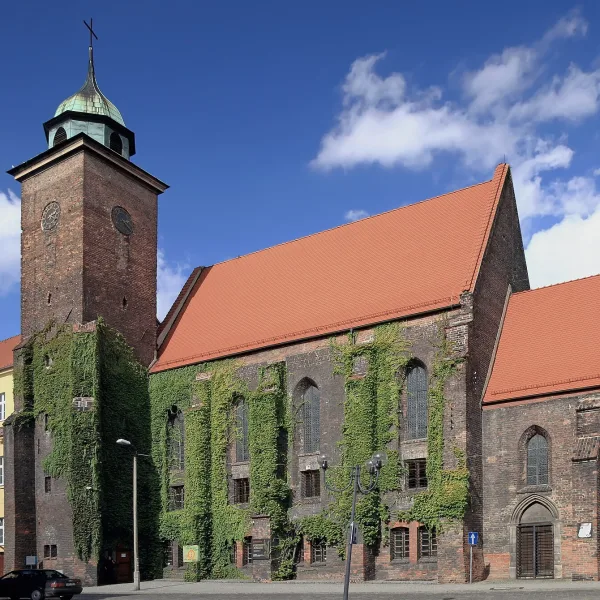
In the centre you find two Gothic churches. The parish church on Mickiewicza Street has a brick nave with a single tower, star vaults, a Baroque altar and stalls from the former collegiate chapter. The Church of St James by the Market Square is a former Dominican friary church, built in 1246-1258 and reshaped in the early fifteenth century. It keeps the burial chapel of the von Gaschin counts and the Rosary altar. Nothing else of the friary has survived.
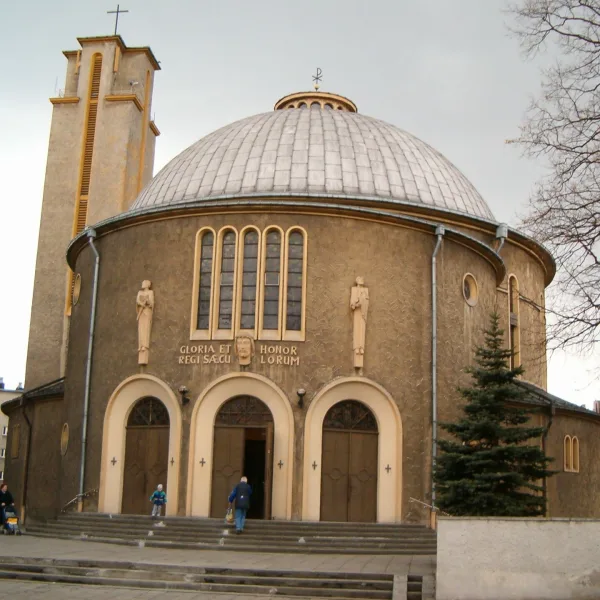
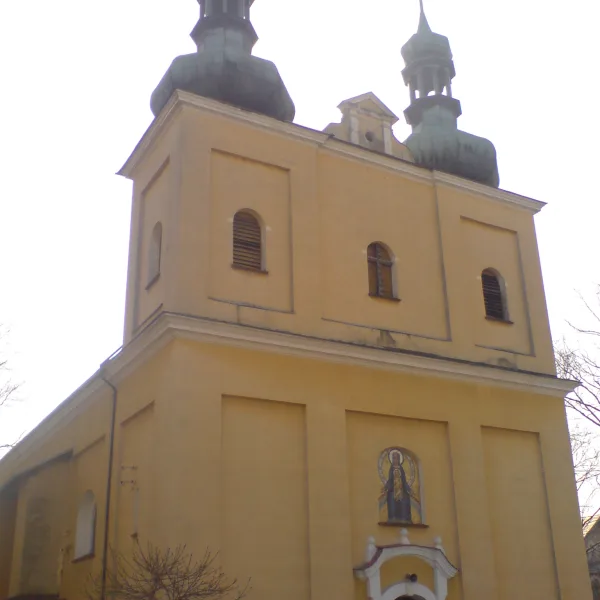
The Nowe Zagrody district has two very different buildings. The Church of Our Lady, built in 1723-1736, is a Baroque shrine with the image of Our Lady of Racibórz, while the Church of the Sacred Heart of Jesus on Warszawska Street is a rotunda from 1934-1935. Its dome rests on twenty reinforced-concrete pillars, and the sculptures are by Emil Sutor.
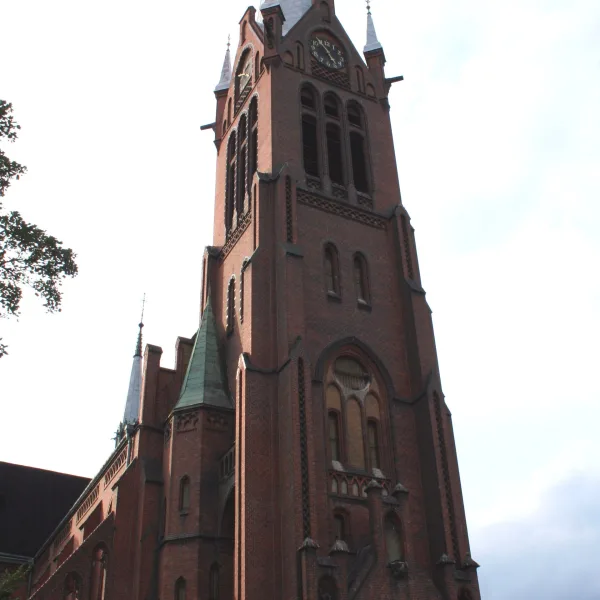
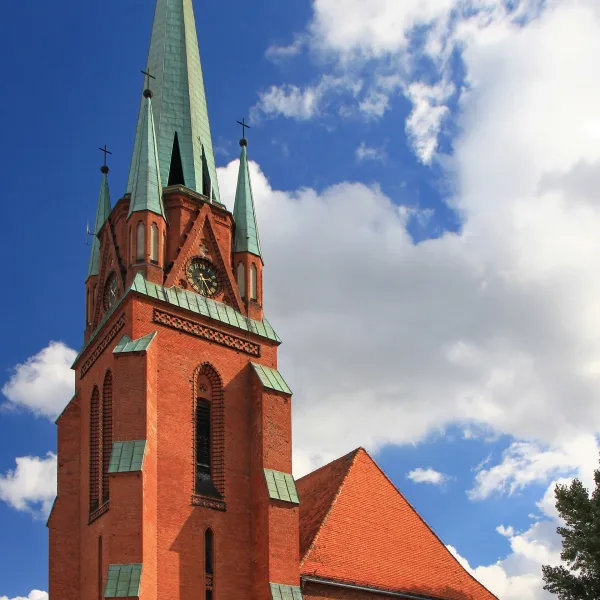
Three neo-Gothic brick churches make a separate, shorter trail through the outer districts. The Church of St Nicholas in Stara Wieś was consecrated in 1902 and entered the register of monuments in 2024. The Church of Our Lady of the Rosary in Sudół dates from 1904-1905. The Church of St Paschal in Płonia is tied to the Franciscans who settled there in 1920. A fuller list is on the page Churches and monasteries in Racibórz.
The Market Square, squares and walls: what does a walk through the Old Town look like?
You can cover the Old Town on foot in a single afternoon: from the Market Square through Wolności Square and Władysława Jagiełły Square to the surviving fragments of the defensive walls. It is a good first contact with the town, because each stop belongs to a different era.
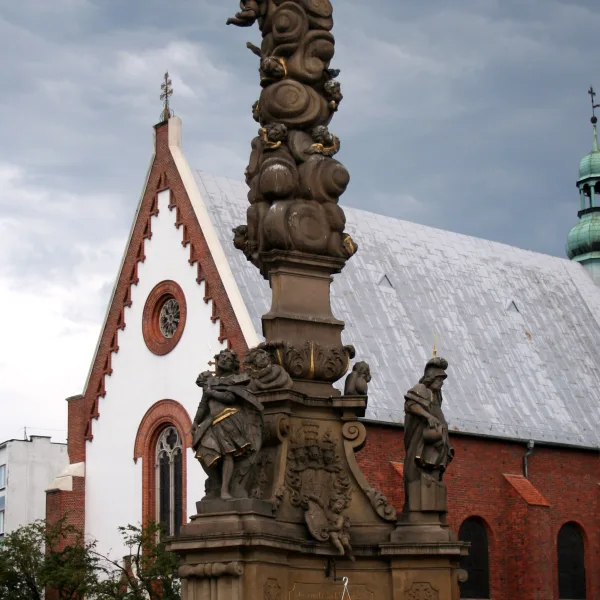
The Market Square in Racibórz is a large rectangular space, rebuilt after 1945 and open to the north towards Ostróg. In its centre stands the Marian Column, a late Baroque thanksgiving monument for the end of a plague, made in 1725-1727 by the Austrian artist Johann Melchior Österreich. In the Middle Ages the middle of the square was built up, and today it serves as the main public space of the town.
Wolności Square lies about 400 metres from the Market Square, on the site of the former Great Gate, which was pulled down in 1818. Protected natural monuments grow here, and the buildings are mostly eclectic. Władysława Jagiełły Square, once Schramm-Platz and from 1909 to 1945 Notburga-Platz, has Art Nouveau tenement houses by Herman Arwiński at numbers 4 and 5 and the neo-Gothic St Notburga House.
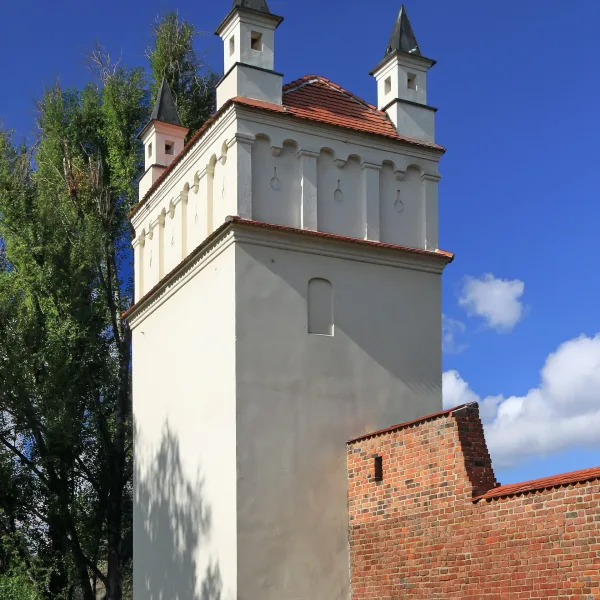
Take a look at the town walls as well. Only a few brick stretches from the thirteenth to seventeenth centuries survive, visible along Basztowa, Drzymały, Batorego, Lecznicza and Drewniana streets, yet they are enough to trace the old fortifications. Next to them stands the Prison Tower of about 1574, a former jail whose image appears on a commemorative two-zloty coin from 2007 and in the town logo.
The building on Nowa Street is the historic court building, a neoclassical seat of the former Higher Land Court from 1823-1826. It still works as a court, so you admire it from outside. Near the station lies Plac Dworcowy, with a post office from 1889, the Polonia hotel from 1850 and a steam locomotive standing as a monument.
Where to walk among greenery in Racibórz?
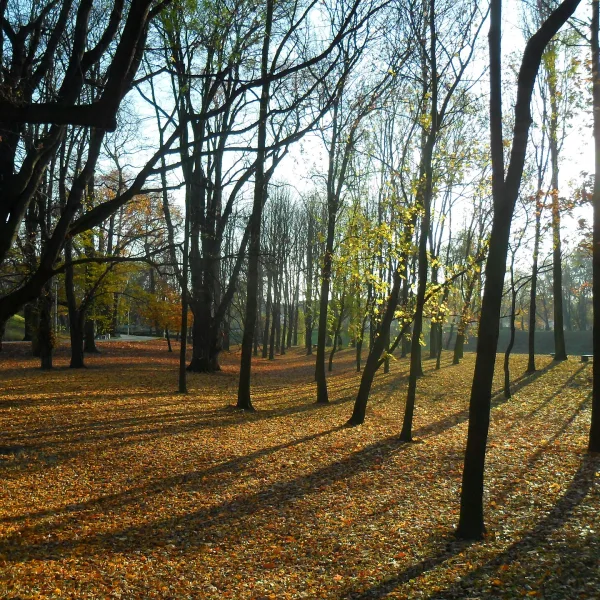
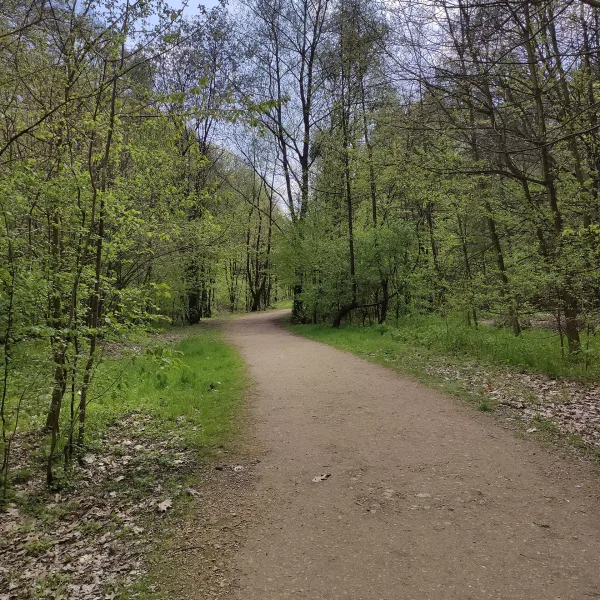
Choose the park by the pond in Nowe Zagrody or head out to the arboretum in the Obora forest. The first takes about an hour, the second half a day, because the site covers around 160 hectares, of which the garden with plant collections is about 35 hectares.
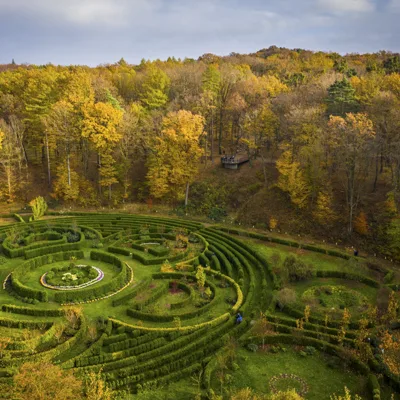
The Morava Gate Arboretum lies in the eastern part of the town, on the right bank of the Oder, and was founded in 2000. Paths for nature walks wind through it, there is a small zoo, and a platform looks down on the Enchanted Garden. At its edge is the Markowice Panorama, a viewpoint overlooking Markowice, the Łężczok reserve and the Racibórz Basin. For similar places across the region, read the article on botanical gardens and arboreta of Silesia.
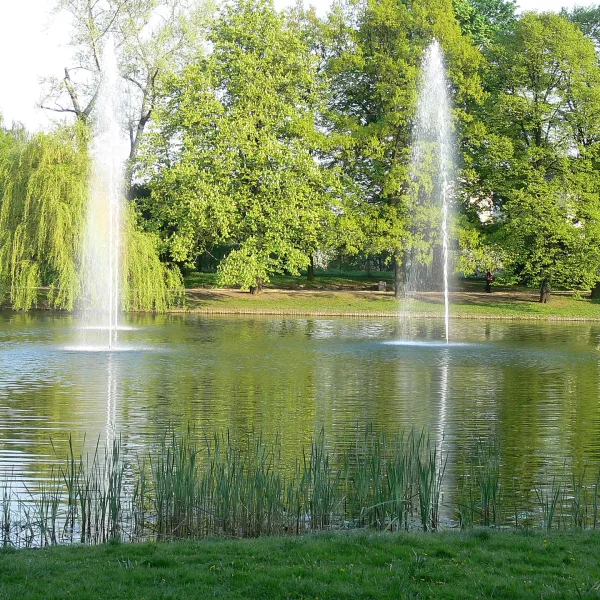
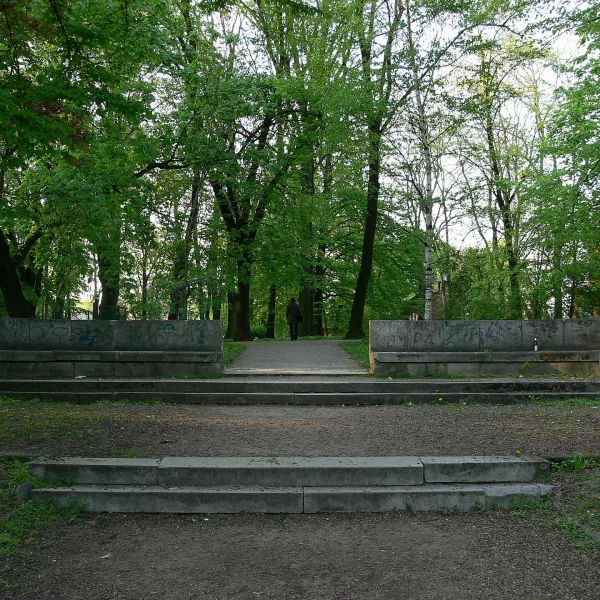
The Roth Town Park, known as the swan park, has a pond of about one hectare with a wooded islet, a fountain and four natural monuments. It was laid out partly on a former cemetery. Inside you can see the surviving balustrades and benches from the First World War memorial of 1926, designed by Hans Dammann. At the entrance from Opawska Street stands the Arka Bożek monument by Augustyn Dyrda, dated 1980.
The Captain Franciszek Stal Park lies between Głowackiego, Kolejowa and Sejmowa streets, on the site of a palace destroyed in 1945. Four protected sycamores and old bladdernut shrubs grow there. Walkers who like a longer route can follow the Polish Minority Schools Trail, a yellow footpath opened in 1985, about 85 kilometres long, linking the sites of former Polish minority schools between Rakowiec and Bierawa.
Monuments, boulders and old cemeteries of Racibórz
The monuments of Racibórz are scattered across the town, so the easiest way to see them is on the way between other stops. All stand in public space and none needs a ticket.
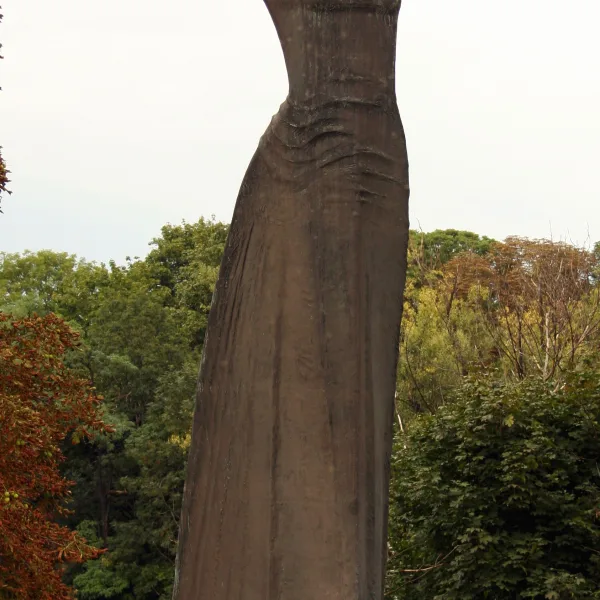
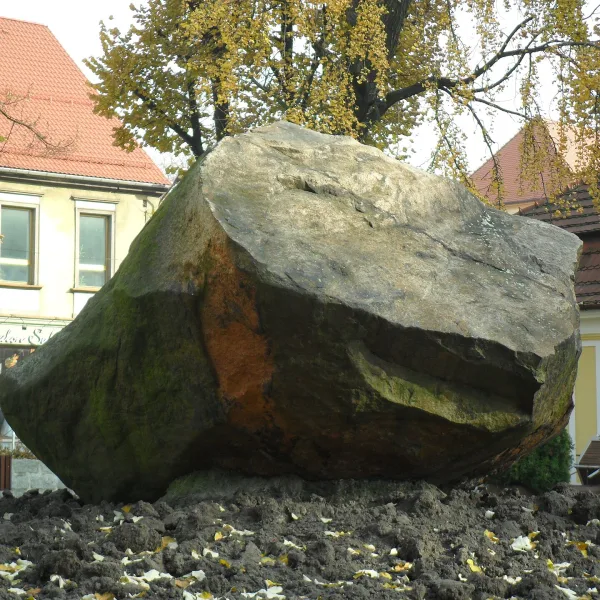
The biggest is the erratic boulder on Wolności Square, a granite block of 42.5 tonnes carried here by a glacier and protected as a natural monument since 1960. It is regarded as the largest monumental boulder in the Silesian Voivodeship. On Mostowy Square by the Oder you find the monument to the Polish Mother, a bronze sculpture by Jan Borowczak unveiled in 1973.
The two monuments to Joseph von Eichendorff are replicas. The one in the centre, at the crossing of Młyńska and Mickiewicza streets, was cast in 1994 because the original of 1909 vanished in 1945. The one in Brzezie, at the forest edge, was unveiled on 6 May 2006 as a copy of the 1907 monument. The whole group is on the page Monuments in Racibórz.
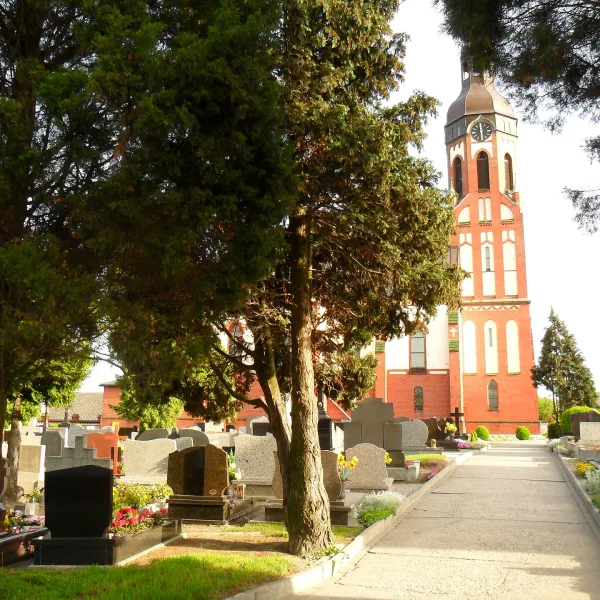
Cemeteries form a separate group, described here in a factual tone. The Jeruzalem Cemetery in Nowe Zagrody, consecrated in 1894, is the largest necropolis in town and still an active Catholic cemetery, with historic gravestones and a chapel by the gate. The Evangelical cemetery on Starowiejska Street was founded in 1920 and is now closed, yet its chapel and a memorial to the fallen of the First World War survive; details are given for the Evangelical cemetery. The cemetery on Kozielska Street, dating from 1856 and closed since the 1960s, is neglected and largely ruined, as the entry for the Kozielska cemetery says plainly.
The Jewish cemetery on Wilcza Góra was founded in 1814, and the first burials took place in 1817. Old trees and fragments of gravestones remain; the fate of such cemeteries across the region is told in an article on Jewish cemeteries in Pszczyna, Żory, Mikołów, Rybnik and Racibórz, and the site itself has its own page, the Jewish cemetery in Racibórz. In a small park by the Oder lies the Red Army soldiers' cemetery of 1946, where 348 Soviet soldiers killed in 1945 are buried.
Water towers and industrial heritage in Racibórz
Two water towers stand in town, built more than half a century apart. You see both from outside, because today they serve purposes unrelated to sightseeing.
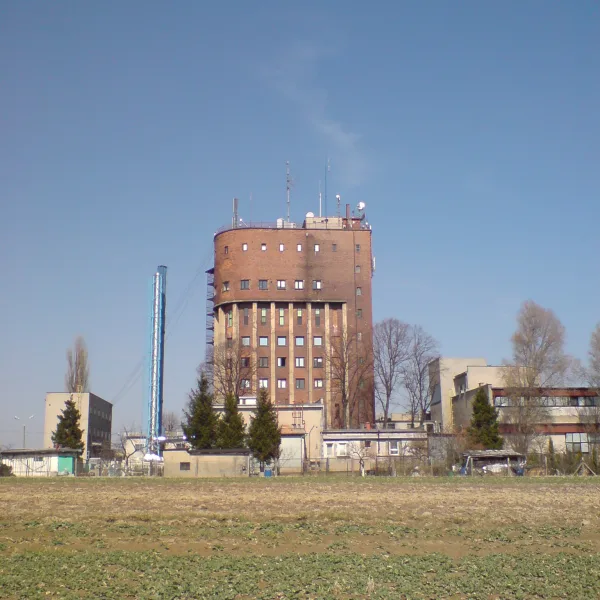
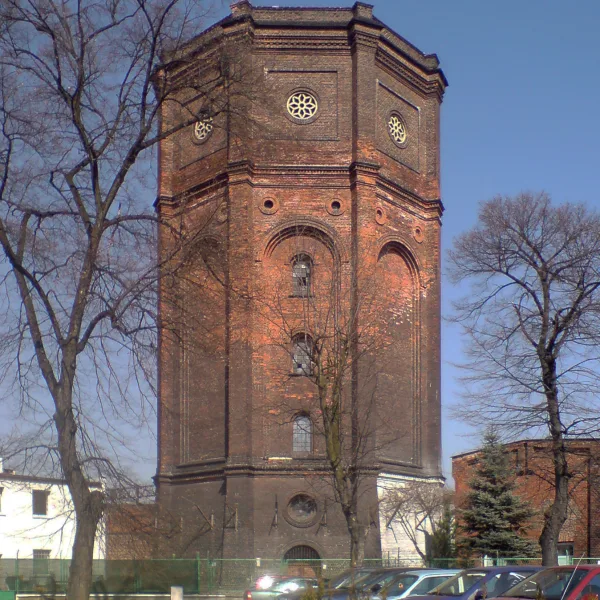
The tower on 1 Maja Street, dating from 1874, is 25 metres high and made of brick, and its tank held 500 cubic metres of water from the Oder. For decades it supplied the railway and growing industry. The tower on Starowiejska Street, from 1933-1936, is 37 metres tall with a clinker facade and stands on a rise 216 metres above sea level. It houses the plant and offices of a confectionery maker. Water towers across the region are compared in the article on the water towers of Silesia, and related sites are listed under Industrial heritage in Racibórz.
What to do in Racibórz with children or on a rainy day?
Two places suit a rainy day: the museum and the aquapark. Both lie close together by the standards of the town and combine easily with another stop on Ostróg.
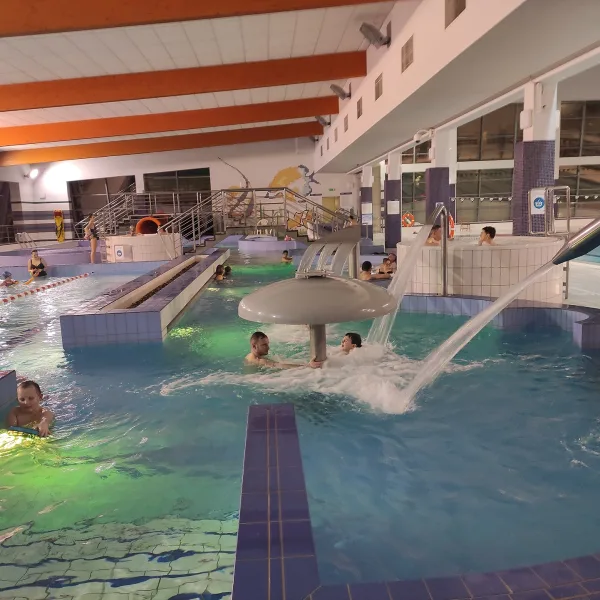
The H2Ostróg Aquapark in the Ostróg district is a swimming complex meant for recreation rather than only sports swimming. It neighbours the castle, so a swim fits neatly with a walk around the castle hill. The museum, in a Gothic building of the fourteenth century, holds about thirty thousand objects, including an Egyptian mummy, the only such display in Silesia. The exhibition "In the House of Osiris" presents it together with grave goods, and further rooms are devoted to Silesian pewter and the history of the region.
Frequently asked questions
What to see in Racibórz in one day?
Start with the castle and brewery on Ostróg, then walk to the Market Square with the Marian column and to the museum in the former Dominican nuns' church. Leave the park by the pond or Wolności Square with its boulder for the end.
Does Racibórz have indoor sights for a wet day?
Yes, the museum in a Gothic building with an Egyptian mummy and the H2Ostróg aquapark both work well in the rain. Churches are a good option too, provided no service is under way.
Which attractions in Racibórz are free?
Entering squares and parks, or standing by monuments, requires no ticket. That covers the Market Square, Wolności Square, the Roth and Stal parks, the erratic boulder and most monuments. The museum, the aquapark and the castle visit follow their own entry rules.
Where is the viewpoint in Racibórz?
The Markowice Panorama, on the edge of the Morava Gate Arboretum. It looks over Markowice, the Łężczok reserve and the Racibórz Basin.
Can you go inside the water towers in Racibórz?
No, both towers serve other purposes today. The one on Starowiejska Street houses the plant and offices of a confectionery maker, so you view them from outside.
What else is worth seeing in Silesia in a similar spirit?
For castles across the region, see the overview of castles of Upper Silesia and the Zagłębie region. For what is on in town, check the calendar of events in Racibórz.

 Historic sites