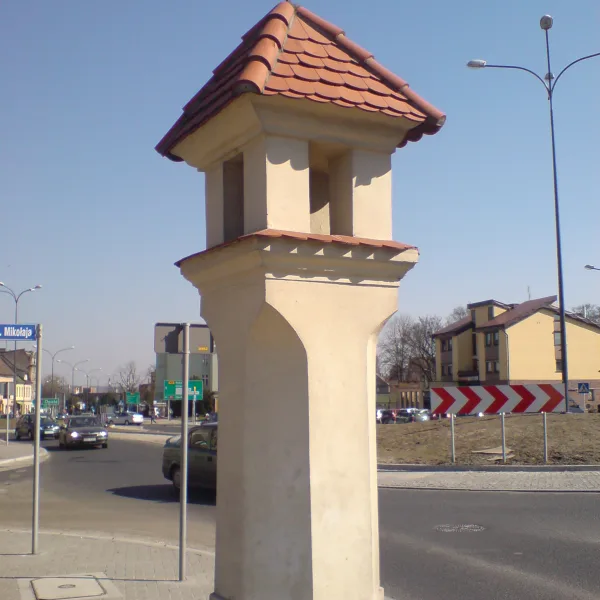
Monuments in Racibórz: the Concord shrine of 1287, an erratic boulder on Wolności Square, two Eichendorff statues and the surviving remains of a park memorial.
The monuments of Racibórz mark very different matters: a medieval reconciliation, a poet, an activist of the Polish minority and soldiers fallen in the First World War. All stand in public space, so you can see them without a ticket. For more, look at the section on monuments across Silesia or the list of attractions in Racibórz.
Which monuments can you see in the centre of Racibórz?
Three objects stand in the centre: the shrine of Concord near the castle, the bronze statue of the poet Eichendorff and a granite boulder on Wolności Square. A short route through the centre links them, and each speaks of another age: from the 13th century, through German times, to the Ice Age.
Close to the castle you will find the Monument of Concord, a small masonry chapel on a pillar. On 24 August 1287 a reconciliation closed a dispute that had lasted sixteen years, when the Wrocław duke Henry IV Probus and Bishop Thomas II settled over land held by the Church. Tales about the neighbouring stronghold appear in an article about the Racibórz castle and a stone-head legend.
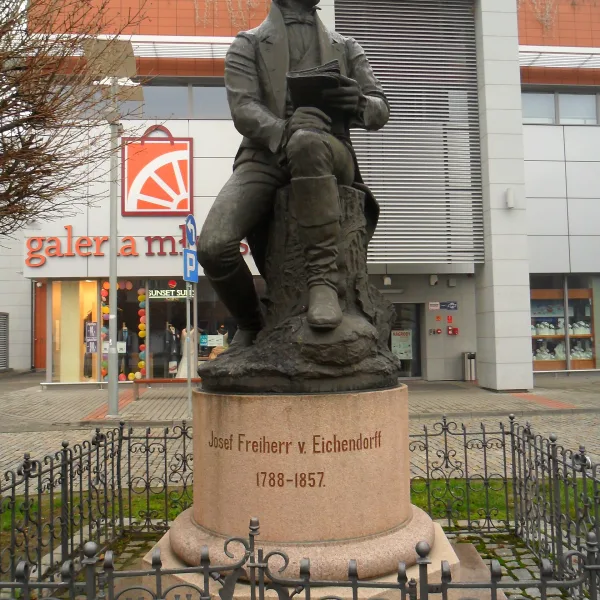
The statue of Joseph von Eichendorff stands where Młyńska and Mickiewicza streets cross, in front of the Młyńska shopping gallery. It is a bronze of 1994, a faithful copy of a figure of 1909 that vanished in 1945. The poet was born in 1788 in Łubowice and died in 1857 in Nysa.
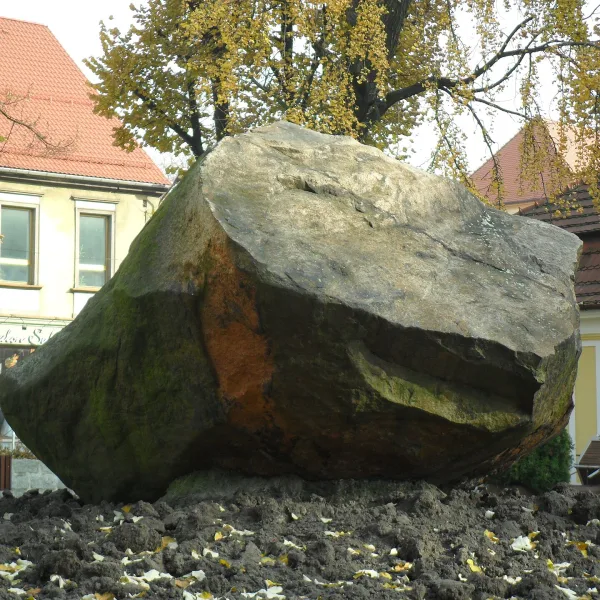
The boulder on Wolności Square is granite with red feldspar and quartz, brought by an ice sheet. Its mass reaches 42.5 tonnes and its length 3.25 m; since 1960 it has had natural-monument status. It is regarded as the largest memorial boulder in the Racibórz Basin.
Monuments in the park on Opawska Street and in Brzezie
Two more places lie a little farther from the market: the park by Opawska Street and the forest in the Brzezie district. In the park you will see the Arka Bożek monument and the remains of the memorial to the fallen, and in Brzezie a replica of the Eichendorff monument.
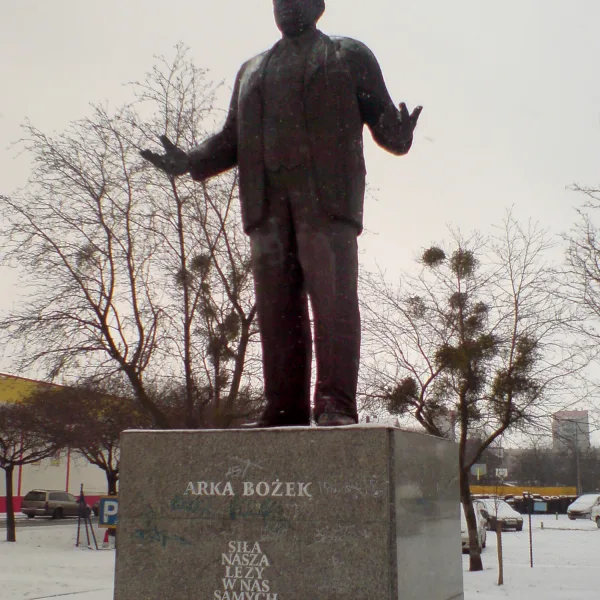
At the park entrance from Opawska Street, since 2013, stands the Arka Bożek monument, a bronze sculpture by Augustyn Dyrda from 1980. Bożek (1899-1954) was a farmer, reeve of Markowice, an activist of the Polish minority and a writer, and also a member of the National Council in exile in London.
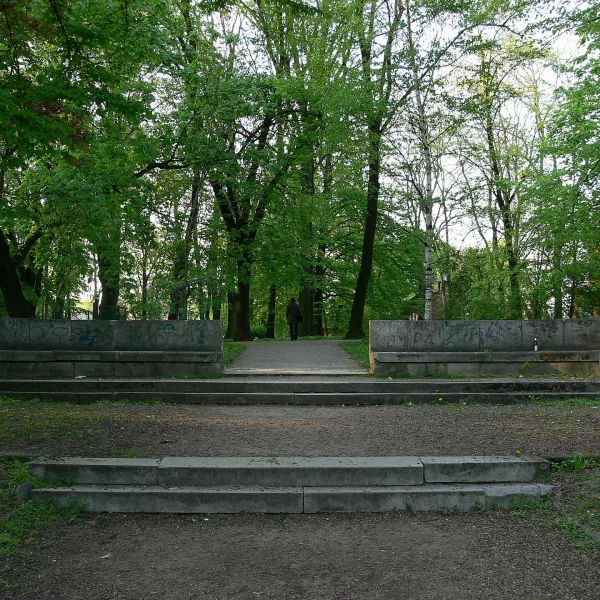
In the same park, named after the town of Roth, a fragment of a 1920s layout survives. Hans Dammann, a sculptor, drew up the First World War memorial in 1926 for a shared Catholic and Protestant cemetery. Just the lateral balustrades and their benches survived, while a footpath crosses the former centre. This is a place for reflection, so approach it quietly.
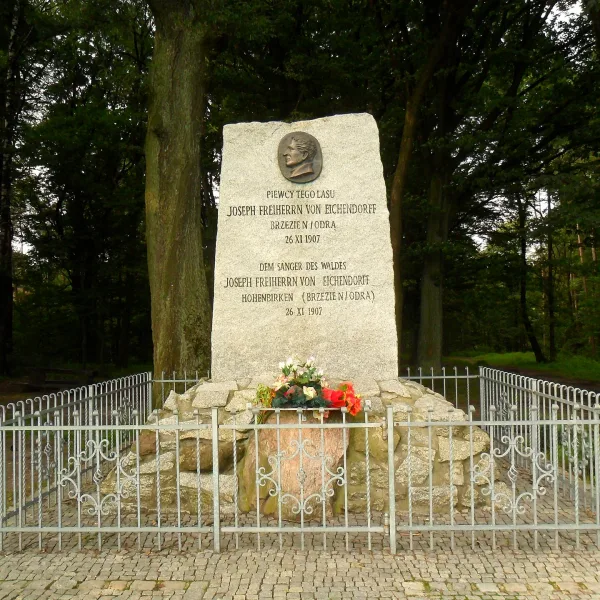
In Brzezie, at the forest edge, stands the second poet's monument, unveiled on 6 May 2006. It replicates the 1907 original, made of red granite, which no longer stands on this spot.
Frequently asked questions
How many Eichendorff monuments are there in Racibórz?
Two: a bronze one in the centre, by Młyńska and Mickiewicza streets, and a granite one in the Brzezie district, at the forest edge. Both copy older statues.
Is the erratic boulder a monument too?
Yes, though a natural one. Protection has covered the granite block on Wolności Square since 1960, and it weighs 42.5 tonnes.
What does the Concord Monument in Racibórz commemorate?
A thirteenth-century reconciliation in 1287 between a duke and a bishop. The little chapel is close to the castle, at a busy crossroads.
What is left of the memorial to the fallen in the park on Opawska Street?
Almost nothing: the balustrades and benches at the sides are the only parts of the 1926 monument that remain. A park path covers the rest.

 Cemeteries and monuments