Things to do in Bytom: the Silesian Opera, Gothic cellars, the Upper Silesian Museum, industrial heritage and over twenty churches in one city.
Bytom is one of the oldest towns in the region and also one of the most industrial: beside the medieval market square stand mine shafts, signal boxes, workers' housing and former power stations. Of seventy places, nearly every third is a church or monastery, and the city's parks and nature reserve reach all the way to the border with Tarnowskie Góry.
Where should you start sightseeing in Bytom?
Start with the Market Square and the nearby lanes, where you will find the Sleeping Lion, the Gothic Church of the Assumption, medieval cellars and the Main Post Office. After that the Silesian Opera and the Upper Silesian Museum are waiting.
The Market Square in Bytom is a medieval square in the city centre, originally a square in shape, which doubled in size after 1945 and today is a clear rectangle. In 2009 it was named one of the seven wonders of architecture of the Silesian Voivodeship. On the square lies the Sleeping Lion, a bronze sculpture of 1873 after a design by Theodor Kalide, cast at Hermann Gladenbeck's foundry in Berlin. It crowned a monument to the fallen of the Franco-Prussian War, and its history includes a disappearance and rediscovery in Warsaw.
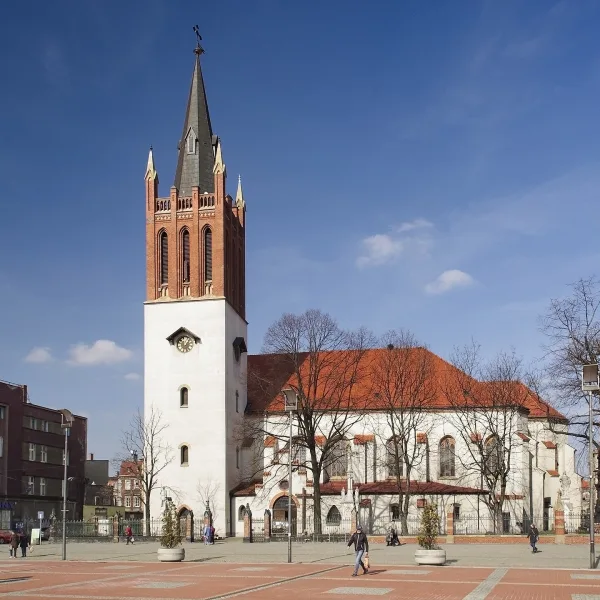
The Church of the Assumption of the Blessed Virgin Mary by the square is a Gothic brick church. It is linked with a painting of Our Lady of Bytom from about 1430. According to tradition the church was founded around 1231 by Henry the Bearded, Duke of Wrocław, and the tower and western part were built in 1515-1530. At ulica Strażacka 8, near the square, lie the Gorywoda House Cellars: Gothic vaults of the 14th century, with pointed-arch portals and a palm vault, which is rare in secular building.
The Main Post Office at Piekarska 6 is a neo-Renaissance building of 1908, with a facade of clinker brick and sandstone and reliefs on the history of the post. It was designed by Ewald von Rechenberg. Today there is no post office in the building, but the facade has kept its rich decoration.
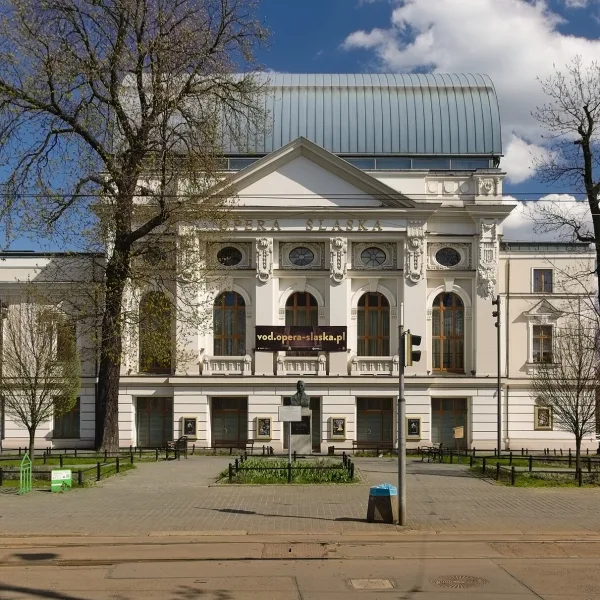
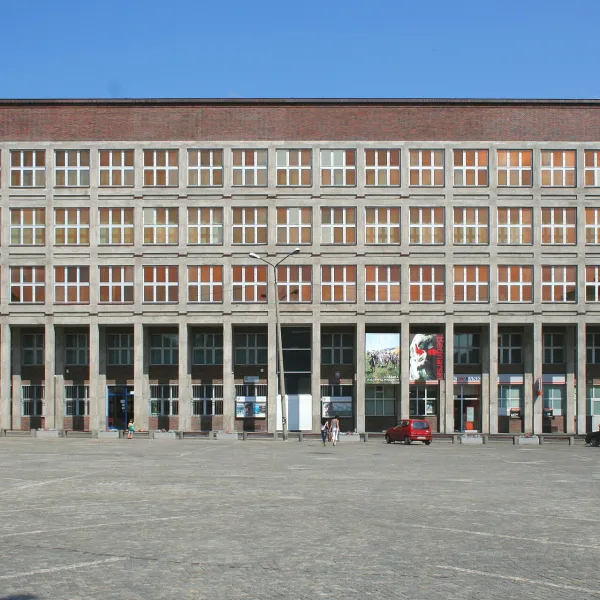
The Silesian Opera Building at Moniuszki 21 was built in 1901 as a concert hall with a municipal theatre, the first of its kind in the Upper Silesian conurbation. Its initiator was the banker and music lover Franz Landsberger. Since 1945 it has housed the Silesian Opera, whose main stage and Adam Didur Hall are in the same building. At the Upper Silesian Museum on plac Sobieskiego 2, founded in 1910, you will see collections of archaeology, ethnography, history, natural science and art, and a collection of Judaica, in a modernist building of 1929-1930. The collections number around a million items.
Which industrial monuments can you see in Bytom?
Bytom has eight sites of former industry and mining, including a power station with a clock, the Krystyna shaft, the Rozbark colliery buildings and a workers' housing estate. Several of them can only be viewed from outside.
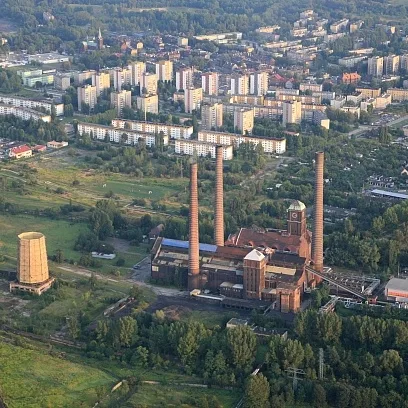
The Szombierki Power Plant is the complex of the former Bobrek power station of 1920, in operation until 2011. It covers about 17.9 hectares and includes a boiler house, an engine room, a water tower with a clock, a coal tower and three chimneys. The site is protected as a monument and belongs to the regional heritage-of-technology route, but it has no regular tour, so it is viewed from outside. Its architecture and history are described in the article on the Szombierki power plant, its Siemens clock and its fate after 1945.
The Krystyna shaft at Zabrzańska 5 is a brick winding tower of the former Szombierki colliery, about 57 metres high, with a silhouette resembling a miner's hammer. The shaft was sunk in 1870-1873 and eventually reached a depth of 835.64 metres. The buildings of the former Rozbark colliery at Chorzowska 12 include the Bończyk shaft engine house of 1907, a lamp room of 1911, a boiler house of 1915 and a retaining wall of 1886. The colliery operated from 1877 to 2004. The lamp room hosted Miners' Day celebrations, and scenes of Kazimierz Kutz's films were shot there.
Less obvious are the buildings of the former Preussen colliery in Miechowice: a winding engine house, a shaft head and an auxiliary building of a ventilation shaft, surrounded by forest. The Juliusz Marchlewski Mining Works at Siemianowicka 98 is a former zinc and lead ore mine of 1925-1928, whose buildings were designed by Emil and Georg Zillmann. It is not a museum and there is no tour route. Among the railway sites stands out the Bt gate signal box of 1935, with its control room hung over the tracks on a steel pillar, regarded as unique in the country.
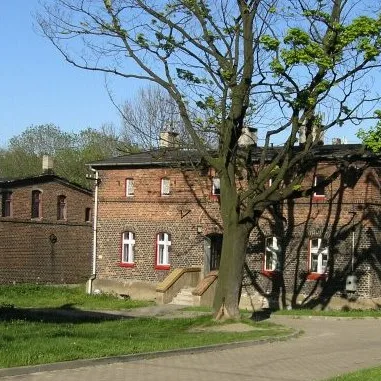
The municipal water tower on ulica Oświęcimska is a reinforced-concrete modernist structure of 1934-1936, 44.3 metres high, listed in the register of monuments in 2016. Zgorzelec Colony in Łagiewniki is a workers' estate of 1897-1901, with 34 red-brick family houses, built on the initiative of Hubert von Tiele-Winckler for the staff of the Hubertus steelworks. A full overview is given under industry and technology in Bytom, and the steelworks in neighbouring Ruda Śląska is covered by the article on Huta Pokój and the Sendzimir rolling mill.
Which churches in Bytom are worth seeing?
The town has twenty-six churches and monasteries worth attention, from neo-Gothic on an old stronghold to churches of the 1980s. It is best to choose by district or by period.
On St Margaret's Hill in Szombierki stands the Church of St Margaret, a neo-Gothic brick church of 1881 on the site of a Romanesque church founded about 1170 by Bolesław the Curly. The hill is an archaeological site of an 11th-century stronghold. Szombierki also has the neo-Romanesque Church of the Sacred Heart of Jesus of 1903-1904, funded by the Schaffgotsch family, with the crypt of Karol Godula.
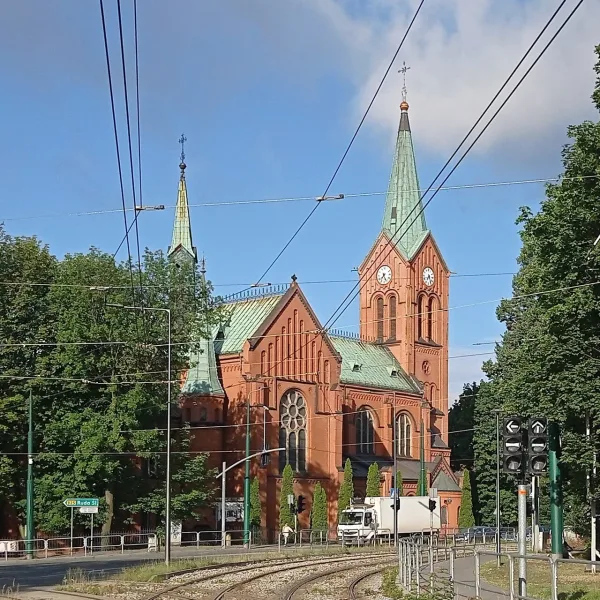
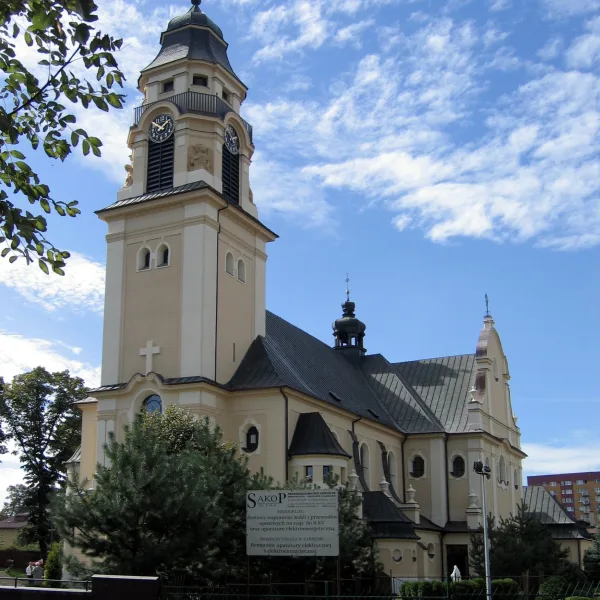
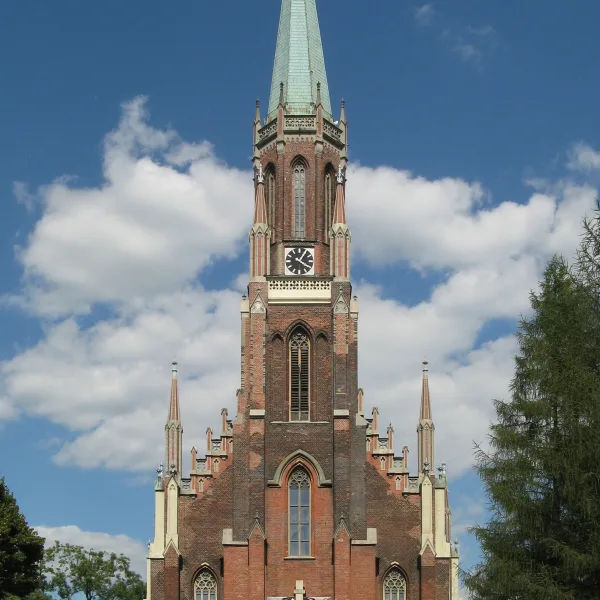
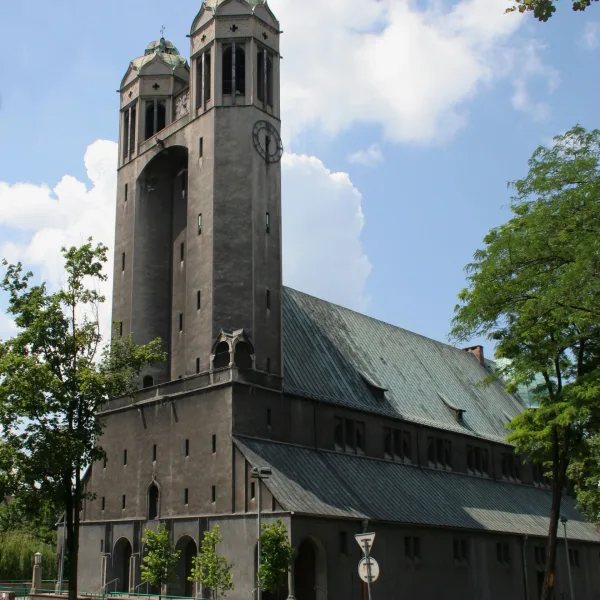
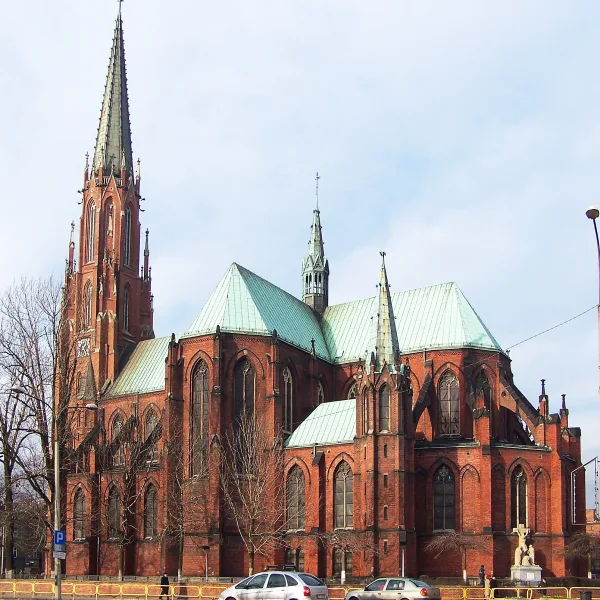
In Rozbark rises the Church of St Hyacinth, made of red brick and sandstone, with two towers 57 metres high, modelled on the cathedral in Limburg. In the same district stands the Church of St Anne of 1984-1989, octagonal and on two levels. In Miechowice you will see the neo-Baroque Corpus Christi Church of 1914-1917 with a 47-metre tower, and the neo-Gothic Evangelical-Augsburg church of 1896-1898, built on the initiative of Mother Eva von Tiele-Winckler. In Karb stands the brick Church of the Good Shepherd of 1905-1909, with two towers 56 metres high.
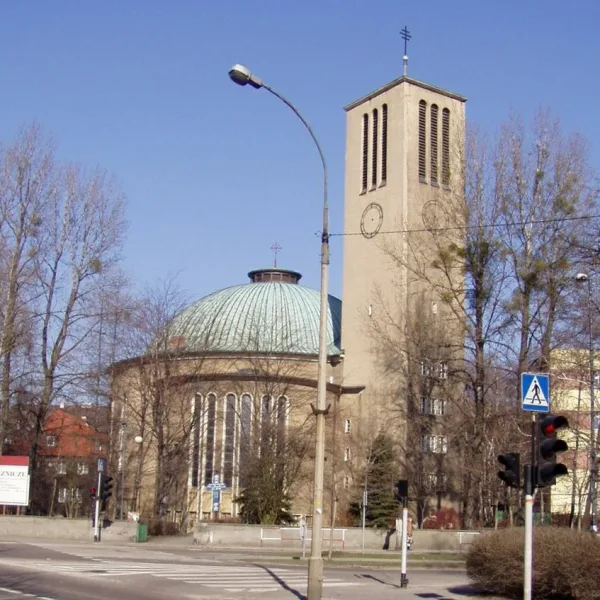
Several churches have unusual histories. The Church of the Sacred Heart at Pułaskiego 9 was built in 1925 as a sports society hall, and became a church, run by the Jesuits, in 1928. The Church of the Exaltation of the Holy Cross of 1936-1937 was built on a rotunda plan in a monumental constructivist style, and its design was chosen in a competition. The Church of St Michael the Archangel in Sucha Góra was built in 1951-1959. The authorities halted construction, and work resumed only in 1957. The Church of Christ the King in Stolarzowice, of 1928, was built within a single year, and Masses are still celebrated there in both Polish and German.
Bytom also has the Church of St Barbara of 1928-1930, with the largest organ in the Gliwice diocese. For modern churches of the region read the article on wooden churches of the 20th century, and for the full list see churches and monasteries in Bytom.
Where can you walk, hike and ski in Bytom?
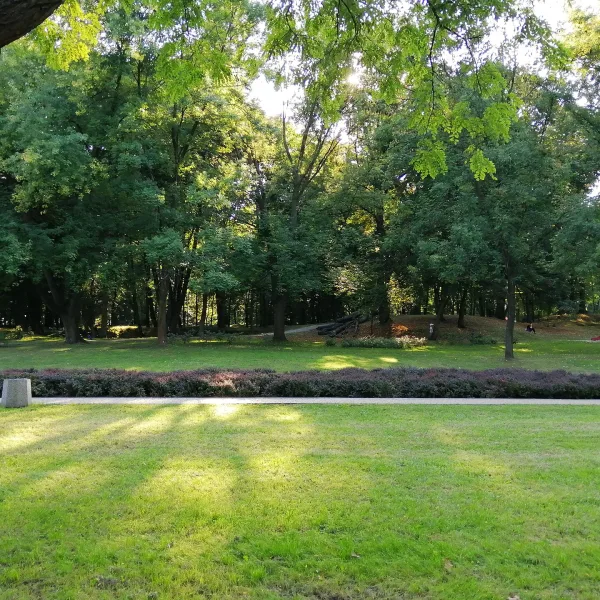
For a walk the best is Kachel Park, for woodland Fazaniec, and for nature you need to go to Segiet or Sucha Góra. Entry to the parks is free.
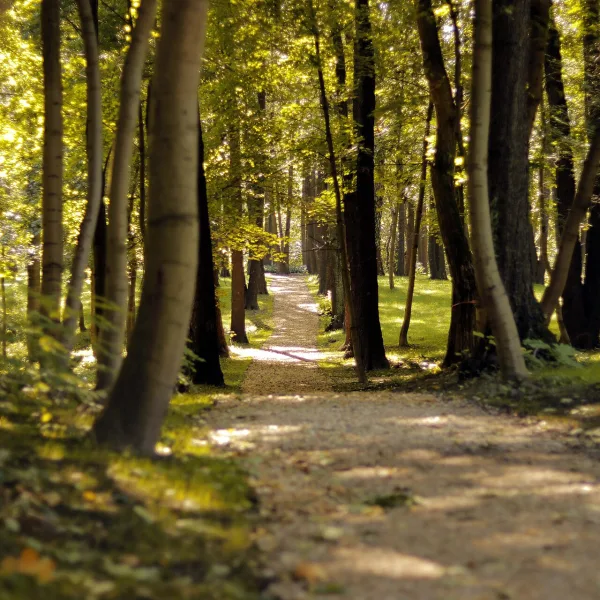
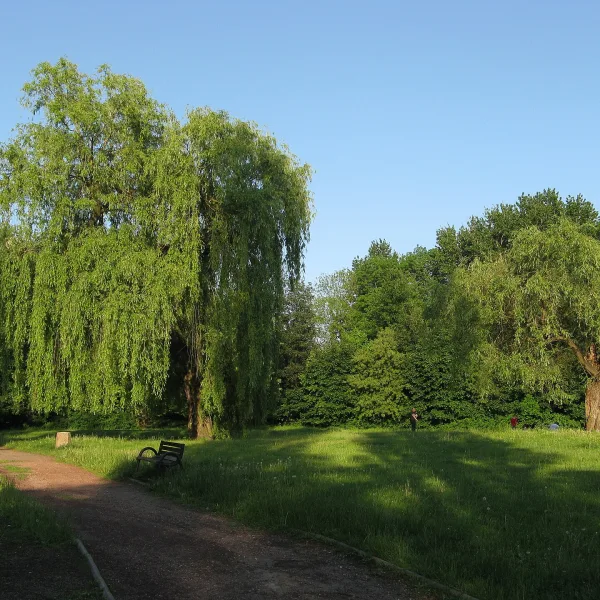
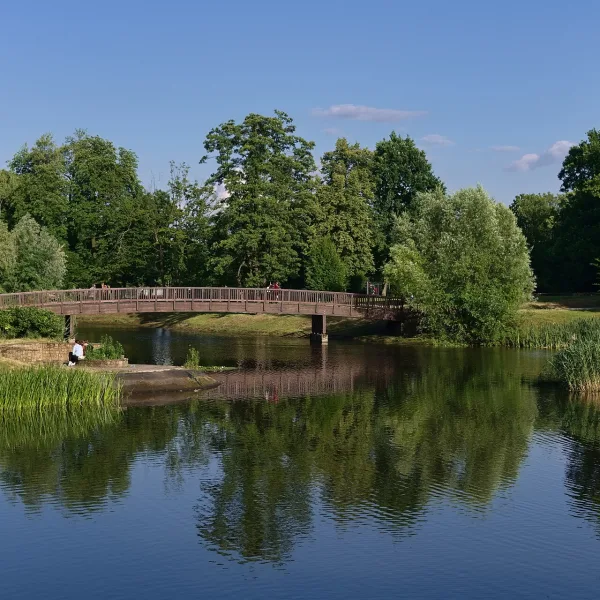
Franciszek Kachel Municipal Park is a historic city park of 43 hectares, laid out around 1840 in the north-western part of the centre. It has two ponds, a swimming spot dating to 1934 and remnants of an old zoo. The land for the park was set aside by Hubert von Tiele-Winckler, who gave the city 330 morgen. Fazaniec Park, of 18.1 hectares, lies between Szombierki, Bobrek and Orzegów. Its name comes from a pheasant farm that operated here until 1928, and the terrain is made up of two V-shaped ravines overgrown mainly with oaks. Adam Mickiewicz Park, laid out around 1930, covers 8.9 hectares and has four viewing terraces.
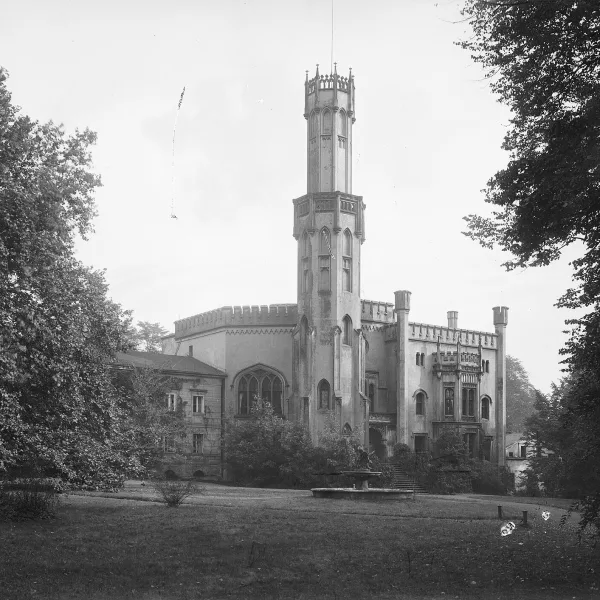
In Miechowice spreads the Tiele-Winckler Park, the oldest landscape park within the present city limits, of about 14 hectares, with a plane tree protected as a natural monument. Beside it stands the outbuilding of the Tiele-Winckler Palace, because the palace itself, built in 1812-1817, was destroyed in 1945. About ten per cent of its former volume survives, so do not expect a former residence. For families with children there is the Maria Konopnicka Park in Karb with a toboggan run, modernised in 2017.
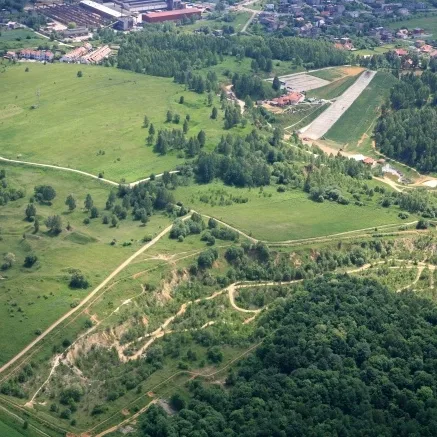
The Segiet Nature Reserve on Srebrna Góra (347 m above sea level) protects a beech forest on former mine workings, on the border of Bytom and Tarnowskie Góry. It covers 92.29 hectares and since 2017 has been part of the UNESCO World Heritage site in Tarnowskie Góry. The Suchogórski Rock Labyrinth is a nature and landscape complex of nearly twenty hectares, with post-mining ravines, ridges and sinkholes. In Sucha Góra there is also Sport Dolina Bytom, a ski and snowboard centre open since 1 December 2002, with a lift, equipment hire and a ski school. Wider context is in the article on reserves and green enclaves of the conurbation, and all the parks are gathered under parks of Bytom.
What in Bytom recalls the Jewish community and the dead?
The town has two Jewish cemeteries, the site of a synagogue and several Christian necropolises. These are places of quiet, not ordinary sightseeing.
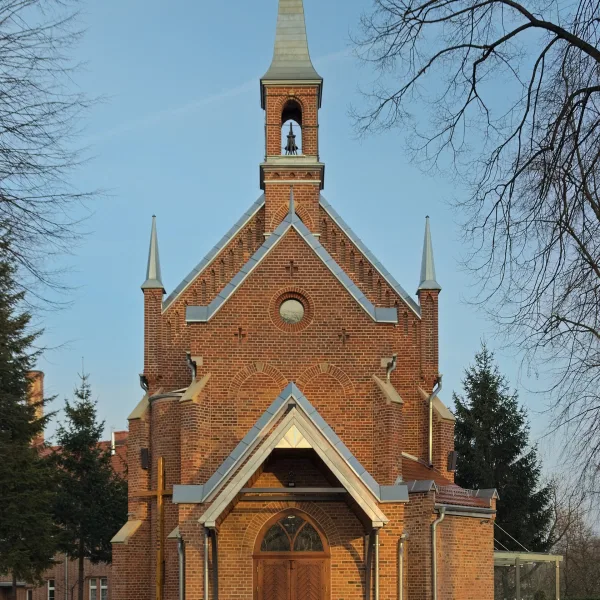
The Jewish cemetery at Piekarska 56 was founded in 1866. It is one of three Jewish cemeteries still in use in the Silesian Voivodeship. It contains a neo-Gothic funeral-preparation house of about 1890, and by the fence a Memory Wall of gravestones from the old, closed cemetery. The Old Jewish Cemetery on Piastów Bytomskich was founded in 1720 and closed in 1965. Today it is an empty plot with a plaque, and it entered the register of monuments in 2019.
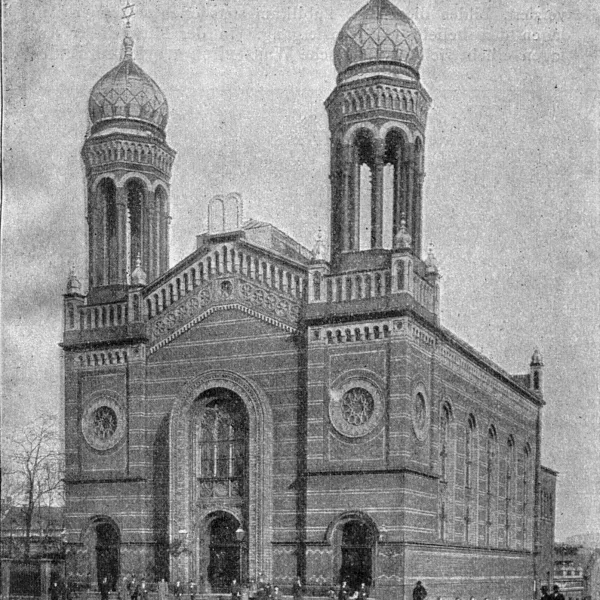
The synagogue in Bytom stood on plac Grunwaldzki. It opened in 1869, was burned on Kristallnacht in 1938, and its ruins were pulled down. A plaque of 2007 stands on the site. The Mater Dolorosa Cemetery at Piekarska 71 is a parish cemetery of 1868, still in use, with a neo-Gothic chapel. Further necropolises are listed in cemeteries and monuments.
Where can you go in Bytom when it rains, or in the evening?
When it rains choose the Silesian Opera, the Upper Silesian Museum or the Gorywoda House Cellars. For the programme check the calendar of events in Bytom, and for further ideas the categories rainy-day places and places for couples. People who prefer to sightsee alone have more than forty places in the section solo.
Frequently asked questions
How much of Bytom fits into one day?
The Market Square with the Sleeping Lion, the Church of the Assumption, the Gorywoda House Cellars and the Silesian Opera. In the afternoon add Szombierki: the power plant from outside and the Krystyna shaft.
Can you tour the Szombierki Power Plant?
There is no regular tour. The site is protected as a monument and belongs to the regional heritage-of-technology route, but you can only look at it from outside.
Does the Tiele-Winckler Palace still stand in Bytom?
Not in its original form. The palace in Miechowice was destroyed in 1945, and only an outbuilding and a landscape park survive.
Where can you ski in Bytom?
At Sport Dolina Bytom in Sucha Góra. The centre has been open since 1 December 2002 and has a lift, equipment hire and a ski school.
Is there a Jewish cemetery in use in Bytom?
Yes. The cemetery at Piekarska 56, from 1866, is one of three Jewish cemeteries still in use in the Silesian Voivodeship.

 Parks and nature