Solo in Bytom means walking past dozens of churches, industrial monuments and the Miechowice parks, with Szombierki and the Upper Silesian Museum.
Bytom is easy to explore alone: most sites lie in districts you can cover on foot in an afternoon, and most can be viewed from the outside without booking or joining a group. What to pick first, how to link neighbouring addresses and where to shelter from the rain are the main questions. A wider list for the region is in the solo section for Silesia, and other places in the city are gathered in the overview of Bytom attractions.
What to see in Bytom on your own, and where to begin?
Three stops are enough for a first day: the Upper Silesian Museum on Sobieski Square, the churches around the market square and the former industrial district of Szombierki. Together they show a city of churches, museums and old mines.
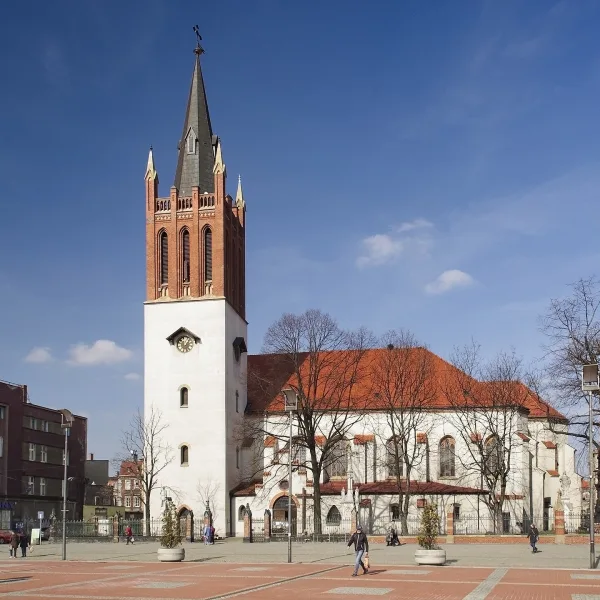
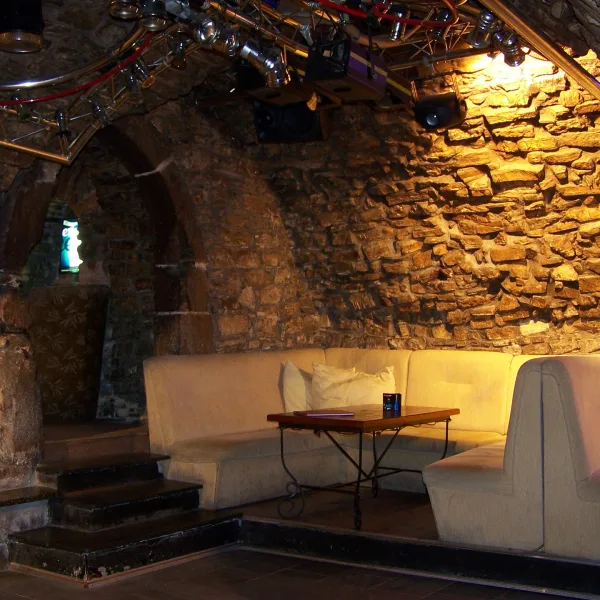
The centre is a good starting point. By the market square stands the Assumption church, a Gothic brick building that keeps the painting of Our Lady of Bytom dated to about 1430, and nearby, at Strażacka 8, are the Gothic Gorywoda House cellars with a palm vault, rare in secular building. Further on wait Rozbark and Szombierki with the power-station chimneys.
Which Bytom churches are worth a walk?
Churches are the largest group of sites here and suit solo walks well: they are often quiet, and each tells of a different period, from Gothic brick to glued timber. Split them by district and visit several at a time.
The centre and Rozbark
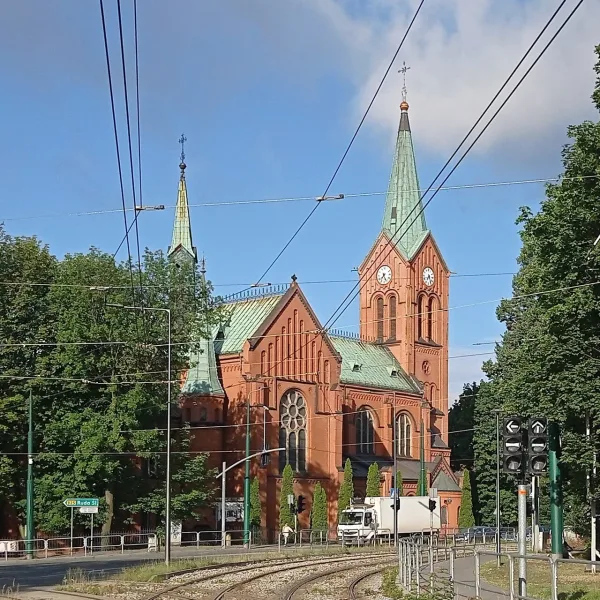
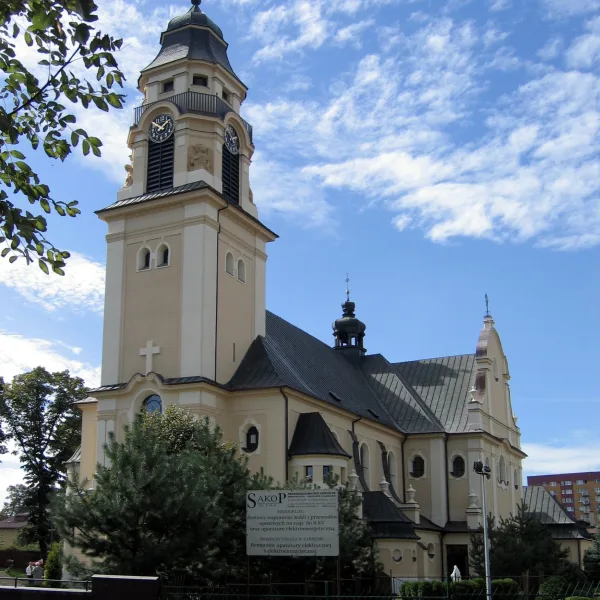
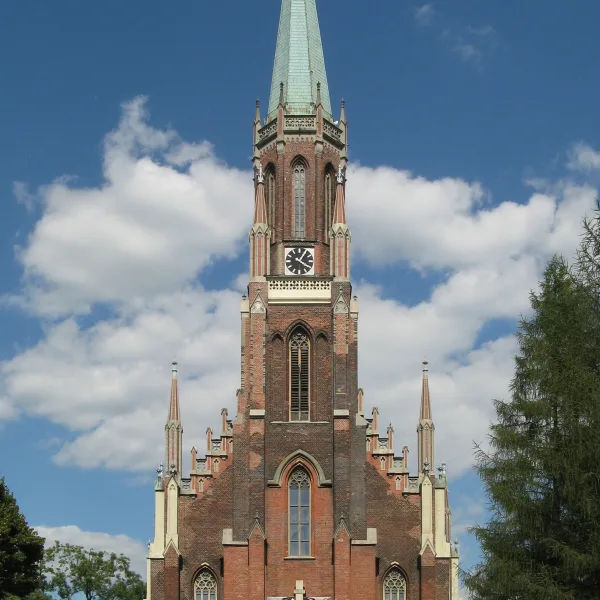
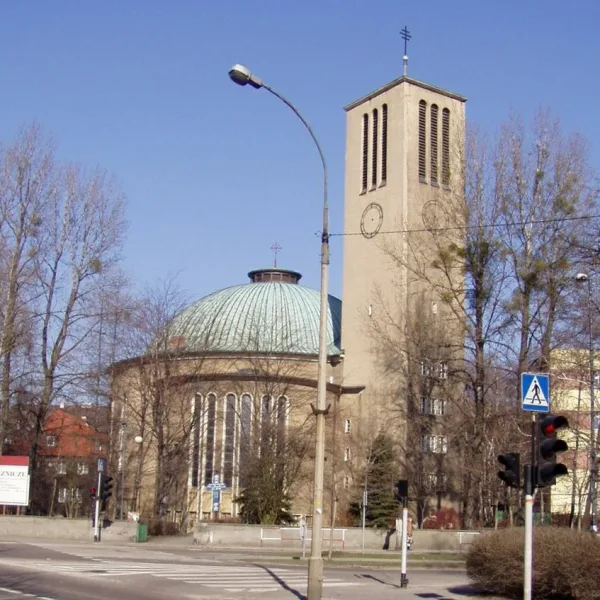
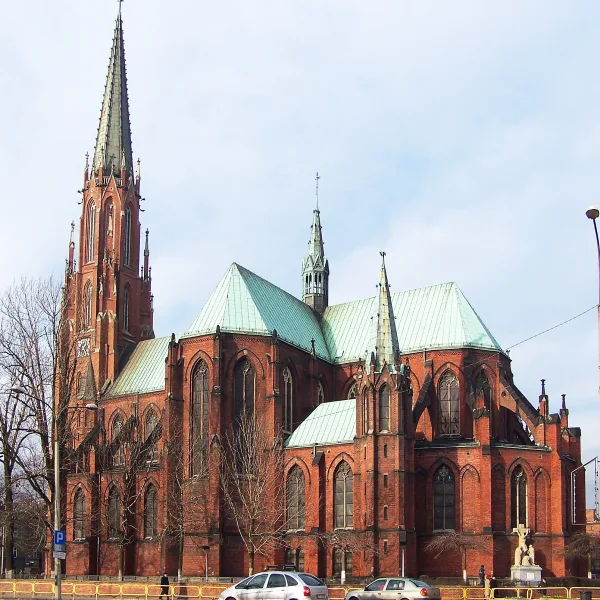
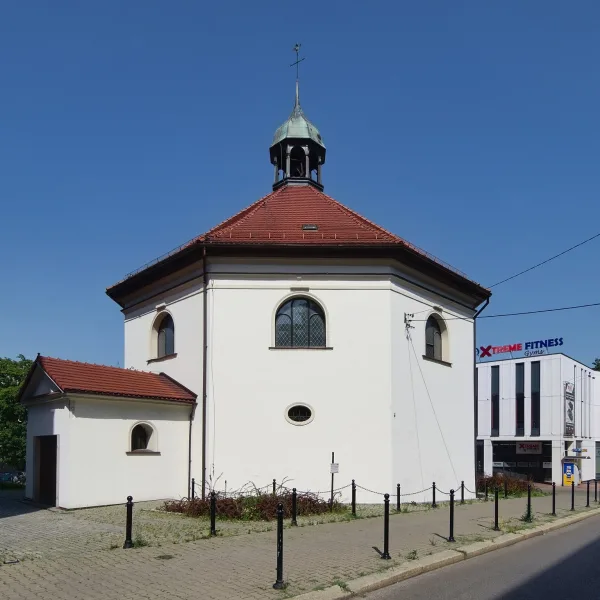
In the centre, besides the Assumption church, look into the Neo-Gothic Church of the Holy Trinity, raised in 1883-1886 and designed by Paul Jackisch; inside is a Rieger organ dating from 1926. On Plac Klasztorny stands St Adalbert's Church, a former Franciscan church from the mid-15th century, Baroque with a Gothic chancel. On Ligonia Street, the Holy Cross church stands out for its rotunda plan; it went up in 1936-1937 in the spirit of monumental constructivism. On Krakowska Street, the Church of the Holy Spirit began as a Baroque hospital chapel in 1721, built on an eight-sided plan; its organ, made by Eduard Horn in 1875, is Romantic in style.
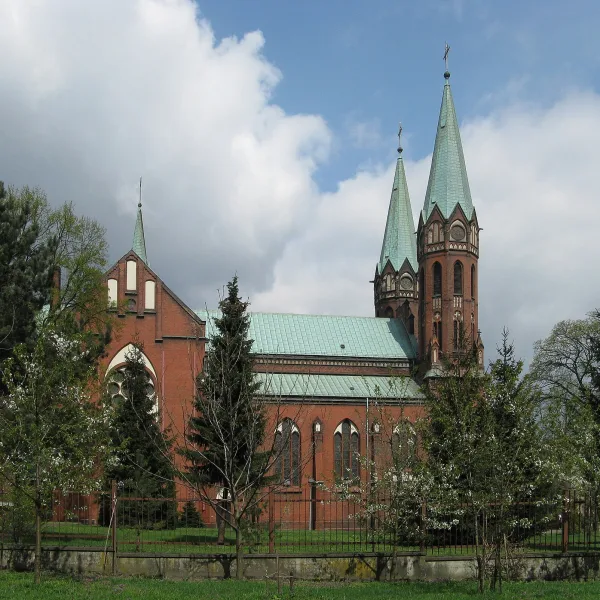
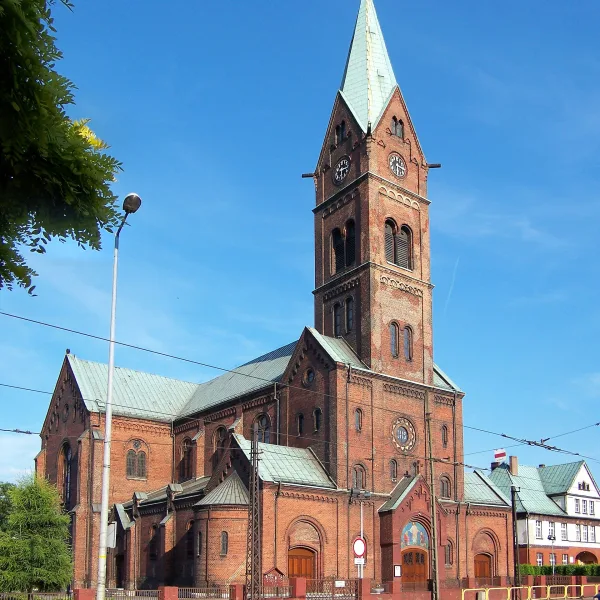
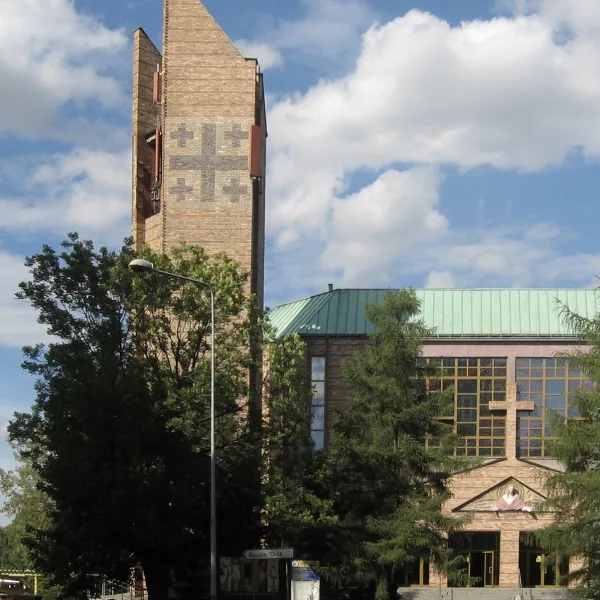
In Rozbark the Neo-Romanesque St Hyacinth's Church stands out, whose pair of 57-metre towers follows the pattern of Limburg Cathedral. Right next to it, on Chorzowska Street, is a completely different, modern St Anne's Church, octagonal and on two levels, built in 1984-1989.
Szombierki, Karb and Bobrek
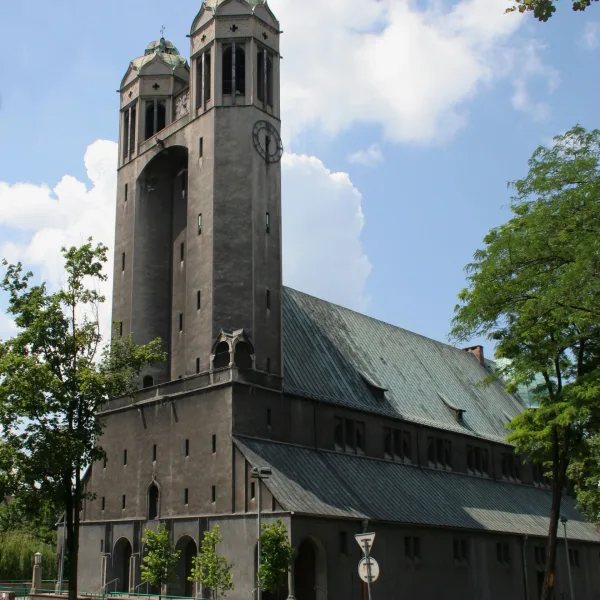
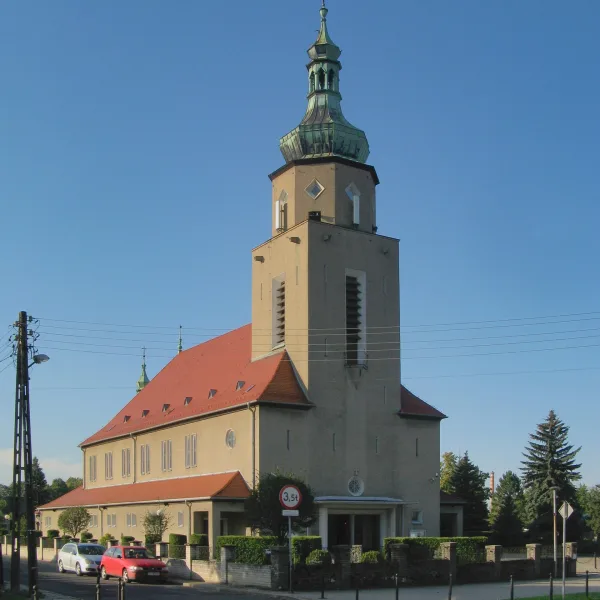
The Neo-Gothic Church of St Margaret of 1881 crowns the hill of the same name in Szombierki; a Romanesque church had stood there since around 1170, and a parish cemetery lies around it. In the same district, on Frycza-Modrzewskiego Street, is the Neo-Romanesque Sacred Heart church, which the Schaffgotsch family paid for in 1903-1904; its crypt holds Karol Godula. Note the namesake: another church with this dedication, functionalist and run by the Jesuits, stands on Pułaskiego Street in the former Kleinfeld district and began as a sports hall.
In Karb the brick Church of the Good Shepherd was finished in 1909 and has twin towers of 56 metres, and in Bobrek the Neo-Romanesque Church of the Holy Family from 1900-1902, with original furnishings and a Rieger organ. On Czarnieckiego Street check St Barbara's Church from 1928-1930, which holds the largest organ in the Gliwice diocese.
Smaller churches on the outskirts
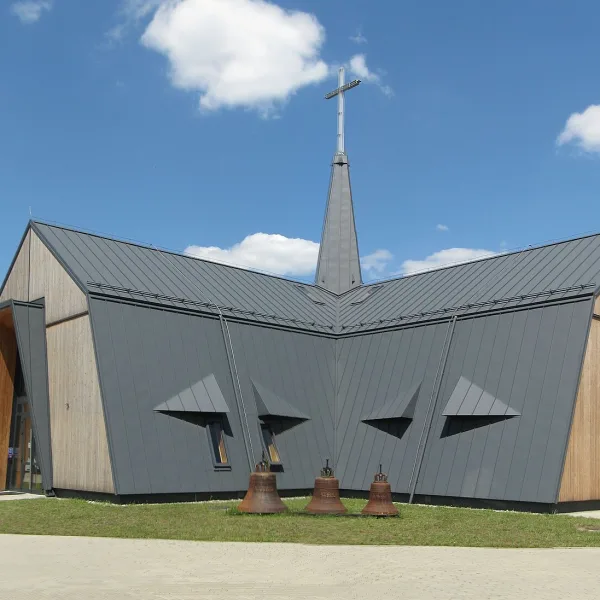
For quieter districts there are also a Christ the King church built in 1928 in Stolarzowice, where Mass is said in both Polish and German, a one-nave church dedicated to St Michael the Archangel in Sucha Góra, decorated with a mosaic by Szymon Prandzioch, and, in Vitor, St Joseph the Worker, a cross-shaped timber building put up in 2014-2015 from glued laminated wood. For more wooden churches built in the 1900s, read Wooden churches of the 20th century.
Chapels in the districts
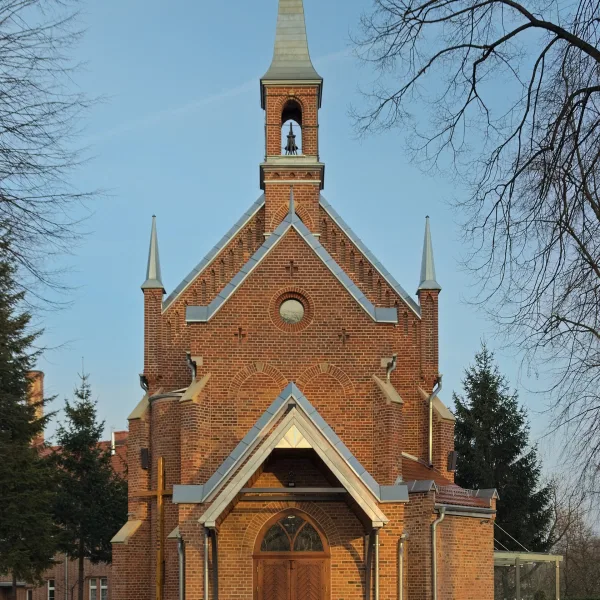
Besides the large churches, the city has kept a few chapels that are easy to fit into a route. In Szombierki, on Zabrzańska Street, stands the Neo-Gothic Chapel of the Blessed Virgin Mary and St Joseph, raised in gratitude for the area escaping cholera and consecrated in 1863. In Sucha Góra, at the crossing of Niepodległości and Strzelców Bytomskich streets, is the brick Chapel of the Blessed Virgin Mary from 1868. The third, the Chapel of Help of the Faithful on Strzelców Bytomskich Street, dates from around 1905 and was repaired after mining damage; nobody knows who designed it. That last detail captures the character of some Bytom monuments: their history is only partly known, and old walls recall mining damage.
Where to see industrial heritage in Bytom?
The most traces of industry remain in Szombierki, Miechowice, Łagiewniki and Rozbark. These monuments are best seen alone and unhurried, pausing by chimneys, winding towers and brick halls.
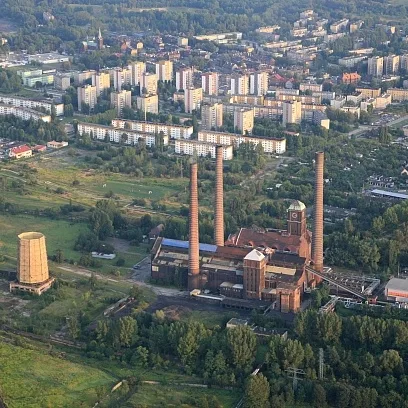
The city's best-known industrial silhouette belongs to the Szombierki Combined Heat and Power Plant, a complex that grew from the Bobrek power station of 1920 and features a clock tower, a coal tower and three chimneys. It is a listed monument, yet it has no permanent visiting arrangement, so people look at it from the street. Its design and later fortunes are the subject of a separate feature on the Szombierki plant. Szombierki also has the brick winding tower Krystyna Shaft on Zabrzańska Street, about 57 metres tall, a remnant of the Szombierki mine.
Similar in character are the buildings of the former Rozbark mine with an engine house, a lamp room and a boiler house from the early 20th century, the buildings of the Preussen mine in Miechowice on Szyb Zachodni Street, and the former Juliusz Marchlewski Mining Works on Siemianowicka Street, designed by the Zillmann brothers. The picture is completed by the water tower on Oświęcimska Street, reinforced concrete and modernist, 44.3 metres high, and the modernist Bt signal box by the railway station, whose control room hangs over the tracks on a steel pillar.
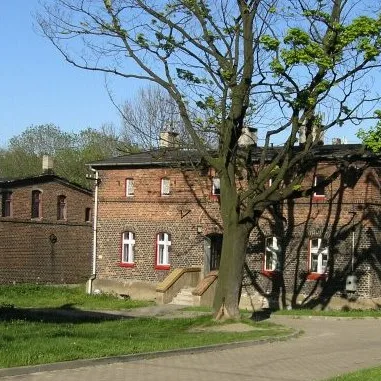
It is also worth walking to the Zgorzelec colony in Łagiewniki: a workers' estate from 1897-1901 with thirty-four brick tenement houses. Bobrek adds the steelworks power house, a works power station from the early 20th century in Neo-Romanesque style, stretching about 108 metres.
What to see in Bytom when it rains?
Shelter best in the Upper Silesian Museum, in the Museum Chamber in Miechowice or in the cellars of the Gorywoda House. For the rest of a wet day, look at the facades on Dworcowa and Piekarska streets, which only needs an umbrella.
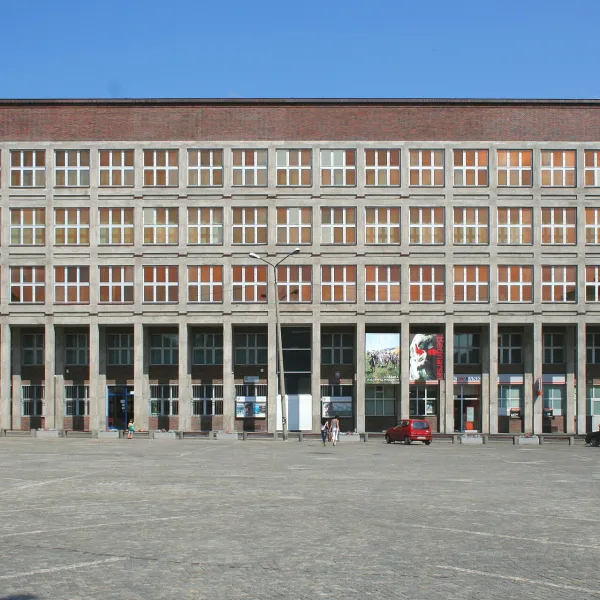
The Upper Silesian Museum has operated since 1910 and has departments of archaeology, ethnography, history, natural history and art, plus a collection of Judaica. It occupies a modernist building from 1929-1930. The Museum Chamber in Miechowice occupies a German air-raid shelter built in 1941-1942, where since 2016 the story of the district in 1945 has been told.
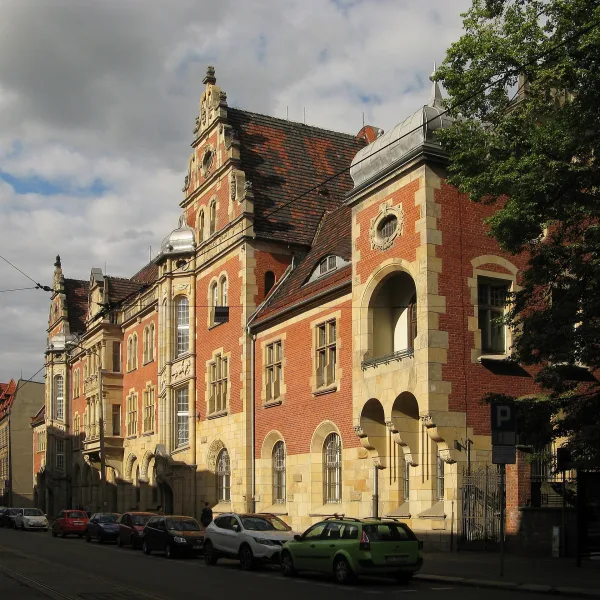
A stroll along Dworcowa Street also suits rain. The former Hotel Reichshof is a corner house in Art Nouveau style, dated 1905, whose facade shows three gables and the investor's monogram. At number 16 stands the former Hotel Sanssouci, today known as Bristol, the oldest monument on this street, with a facade of fourteen bays. On Piekarska Street 6 look at the Main Post Office: a Neo-Renaissance building from 1908 with a clinker and sandstone facade decorated with reliefs about the old post. It no longer houses a post office, so this is a visit for the eye, not for errands.
How to plan a solo walk around Miechowice?
Miechowice is a district where three churches, a chapel, a palace park and two places linked to industry and war stand in a small area. It suits a whole afternoon because everything lies in one district.
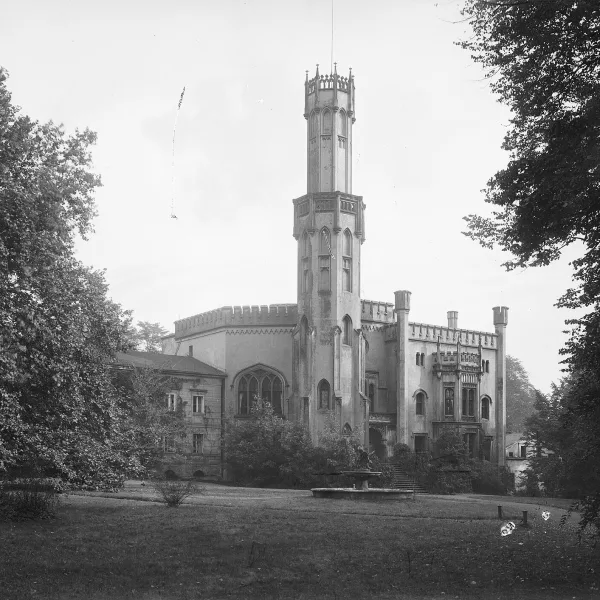
Start with the Church of the Holy Cross, Neo-Gothic, from 1856-1864, its tower reaches about 60 metres and a crypt below holds the former owners of Miechowice. Next to it is the park of the Tiele-Winckler Palace: the palace itself was destroyed in 1945, and of the former residence the outbuilding survived, roughly a tenth of the original volume, along with a landscape park from the 19th century. Farther along Kasztanowa Street stands the Neo-Baroque Corpus Christi Church from 1914-1917, a three-nave basilica with a tower 47 metres tall.
Miechowice is also tied to Mother Eva Tiele-Winckler. The brick Evangelical-Augsburg church of 1896-1898 was built on her initiative, and on the Gryca hill stands the Neo-Gothic St Barbara's Chapel from 1850, dedicated to the patron of miners and listed together with the park.
Where to go for a longer walk outside the centre?
For a day-long hike, the yellow Zygmunt Kleszczyński walking trail fits well: twelve kilometres from Bytom to Zabrze through Miechowice, the Valley of Three Ponds and Rokitnica. It leads through green areas on the northern edge of the conurbation and pairs well with visits to the Miechowice churches. Green enclaves between the cities are the subject of a feature on reserves and green areas of the GZM.
For the story of local steelworks, see Huta Pokój and the Sendzimir mill, although the works themselves lie in Ruda Śląska.
What to see in Łagiewniki and Bobrek?
Łagiewniki and Bobrek are best kept for a separate day, because each district has its own set of monuments. Łagiewniki is a workers' colony, and Bobrek has two buildings from the same era: one sacred and one industrial.
In Łagiewniki the Zgorzelec colony matters: an estate raised in 1897-1901 at the behest of Hubert von Tiele-Winckler and listed in the register of monuments in 1994. If you want to understand how miners and steelworkers lived, it is a good place for a quiet walk along red-brick streets. In Bobrek, on Konstytucji Street, stand the Church of the Holy Family, built for a growing workers' district, and the steelworks power house. One shows what residents sought on Sundays, the other how works energy supply looked.
Frequently asked questions
How many sites in Bytom can I see on my own?
Dozens: most are churches, followed by industrial monuments, townhouses, two museums and a walking trail. All lie within the city limits, in districts such as Szombierki, Miechowice, Rozbark and Łagiewniki.
Can I visit the Szombierki power plant in Bytom?
Not on a regular basis: the complex is on the register of monuments but is not open for regular visits. It is safest to view it from outside and treat it as a viewpoint on the chimneys and the clock tower.
What can I do in Bytom when it rains?
Go to the Upper Silesian Museum, the Museum Chamber in Miechowice or the cellars of the Gorywoda House. In lighter rain you can look at the facades on Dworcowa and Piekarska streets.
Bytom has two churches of the Sacred Heart; which one should I pick?
There are two: the Neo-Romanesque one in Szombierki on Frycza-Modrzewskiego Street and the functionalist one on Pułaskiego Street. They differ in style and history, so both are worth seeing.
How can I combine several places in one day?
Choose one district. Miechowice offers churches, a chapel, a park and a museum chamber, while Szombierki offers churches and industrial towers. The Kleszczyński trail extends the day with a walk towards Zabrze.

 Industrial heritage