Things to do in Gliwice: dozens of places, from Villa Caro and the Radio Tower to a Piast tower-castle, parks and old churches.
The city has more than seventy places worth a stop: museum branches scattered across several districts, churches from different centuries, parks, traces of former heavy industry and indoor play centres for children. Gliwice is easiest to see by theme: the architecture and history of the centre, the industrial heritage, the green spaces, and the places for families.
Where should you start sightseeing in Gliwice?
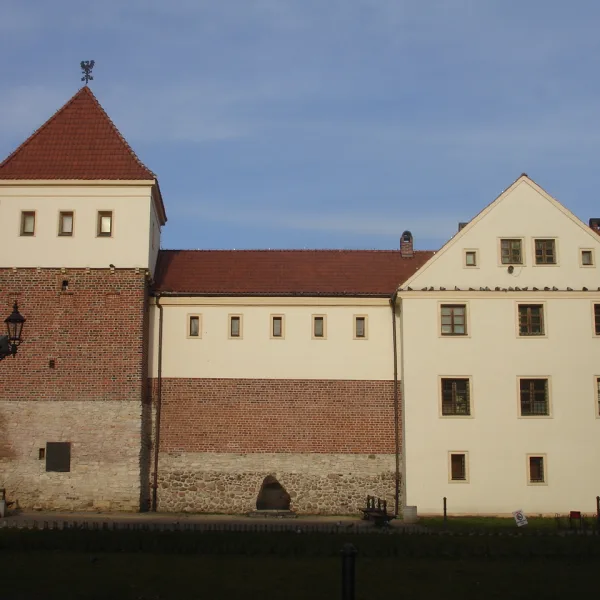
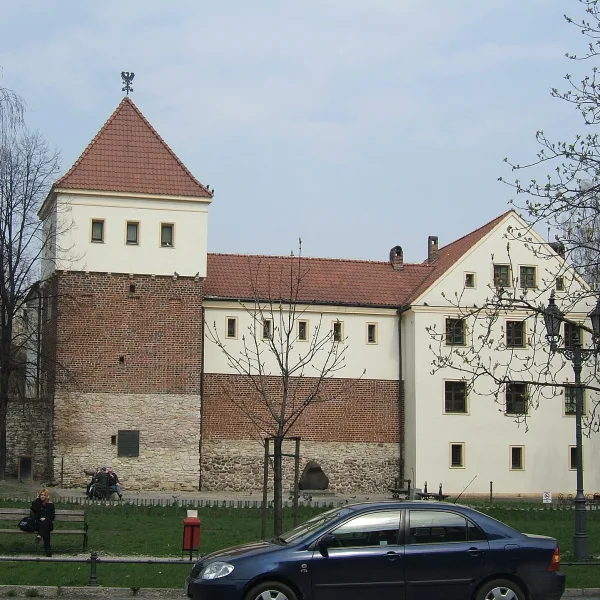
Start in the centre, with the Market Square and its town hall, the Neptune fountain, the Piast Castle on ulica Pod Murami, Villa Caro on Dolnych Wałów and the cathedral on Księcia Ziemowita. The Radio Tower on ulica Tarnogórska lies apart and needs a trip of its own.
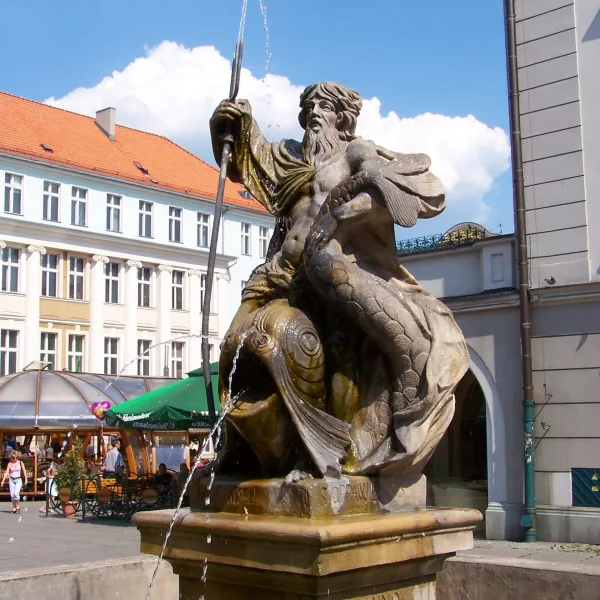
The square is a square in the literal sense, about 75 metres on each side, with two narrow streets leaving from every corner. The layout dates from the medieval founding of the town, while most of the surrounding houses are from the 19th and 20th centuries and were rebuilt after the damage of the Second World War, from 1946 onwards. On the western side stands the Neptune Fountain of 1794, the work of the Baroque sculptor Johannes Nitsche from Opava. Neptune sits on a dolphin holding a trident, and the sculpture is carved from sandstone.
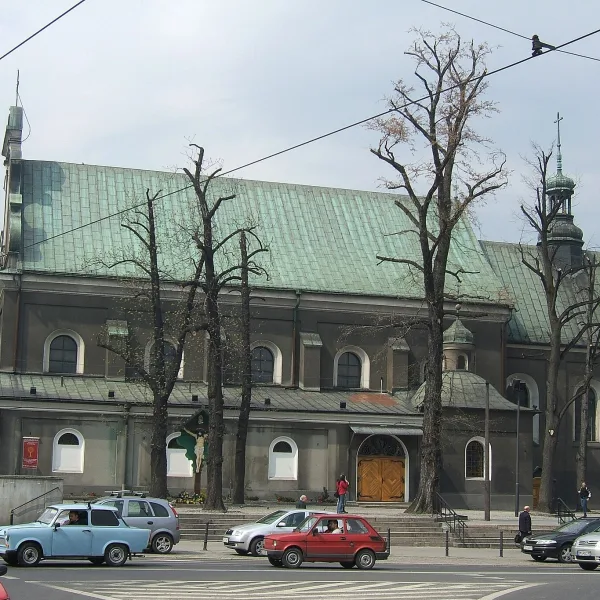
Just above the square rises the Gothic Church of All Saints. Its tower, cross included, is about 64 metres tall and is visible from the square itself, and inside there is a viewing terrace over the Old Town. All of this lies within a few hundred metres, so a first walk needs no transport.
Which branches of the Museum in Gliwice are worth visiting?
The Museum in Gliwice was founded on 22 March 1905 as the Upper Silesian Museum and today consists of five branches in different parts of the city. Each tells a different story, so there is no need to visit them all on one day.
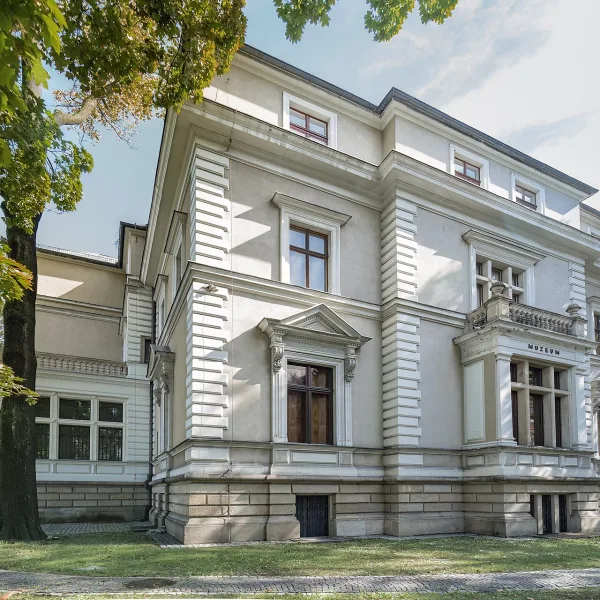
Villa Caro, at Dolnych Wałów 8a, was built in 1882-1885 for the factory owner Oscar Caro in the neo-Renaissance style. It has housed the museum since 1934. Much of the original interior decoration survives, and the permanent display reconstructs how Upper Silesian industrialists lived in the 1800s. The Piast Castle dates from the mid-14th century and, despite the name, was never a ducal castle. Two square towers were built into the town's defensive walls, and since 1960 the exhibition has told the history of the Gliwice land.
The Gliwice Radio Tower at Tarnogórska 127 is a complex from 1935 with a wooden antenna tower 111 metres high. It is listed as a Monument of History. On 31 August 1939 a German SD unit staged a fake Polish attack on the station here, intended as a pretext for war. The story of the site is told in the article on the radio station and the Gleiwitz incident.
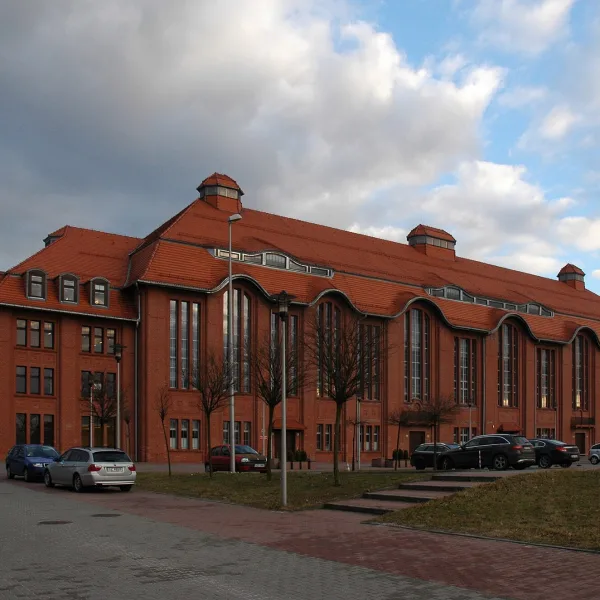
The Department of Artistic Casting is in Nowe Gliwice, in the former engine house of a colliery, at Bojkowska 37. It shows cast iron and bronze and the story of the Gliwice foundry, which started up in 1796 and produced, among other things, the first Iron Cross. The fifth branch, the House of Memory of Upper Silesian Jews at Poniatowskiego 14, is covered in the section on cemeteries and memory.
Museums also work well on a rainy day. All the branches are gathered under museums in Gliwice.
Which churches and monasteries should you see in Gliwice?
Gliwice has nearly thirty churches and monasteries worth attention, from a wooden church of the late 15th century to a reinforced-concrete basilica of the 1930s. The simplest way to choose is by period: Gothic in the centre and in Szobiszowice, neo-Gothic in the cathedral, Baroque with the Redemptorists, modernism in Zatorze.
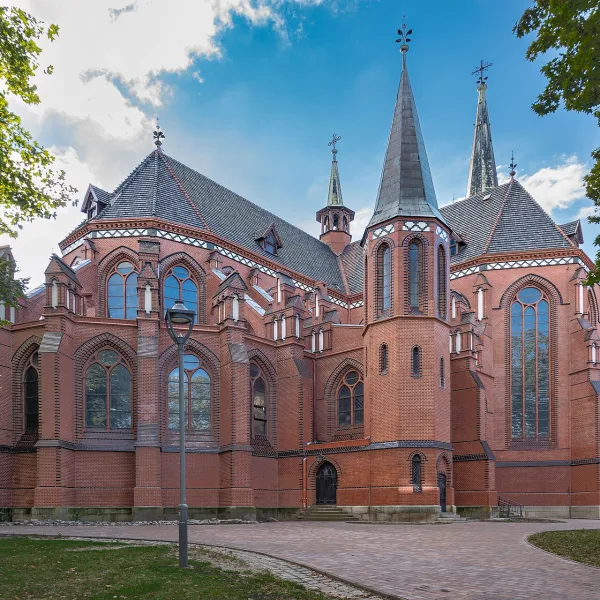
The Cathedral of Saints Peter and Paul is a neo-Gothic brick building of 1896-1900 designed by Georg Kuczora. Its tower is 75.5 metres high, and since 1992 the church has been the cathedral of the Gliwice diocese. Szobiszowice has two churches with the same patron. The new Church of St Bartholomew of 1907-1911 has a brick tower 92 metres high and the largest organ in the city, with sixty stops. The old church on ulica Toszecka is a Gothic building on a small rise, surrounded by a wall, with polychromes from the 17th century.
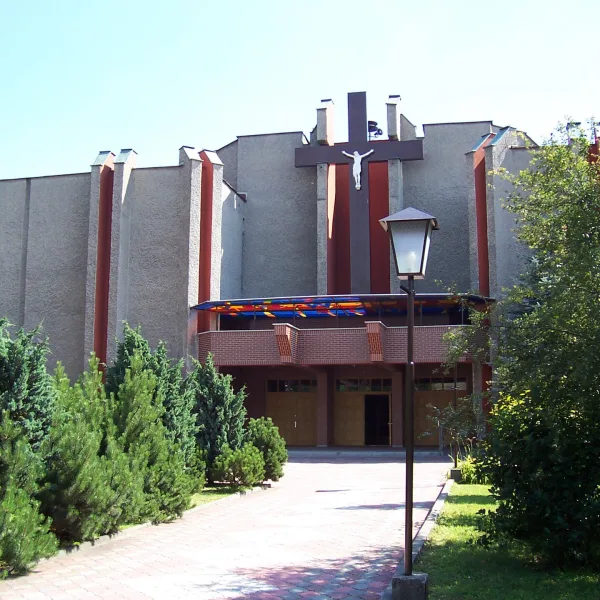
The Church of the Exaltation of the Holy Cross at Daszyńskiego 2 is a Baroque church with a Redemptorist monastery, rebuilt after a fire of 1677 and a Marian shrine since 2015. In Zatorze stands the Church of Christ the King of 1934-1935, designed by Karl Mayr: its reinforced-concrete frame and a form resembling a ship set it apart from other Gliwice churches.
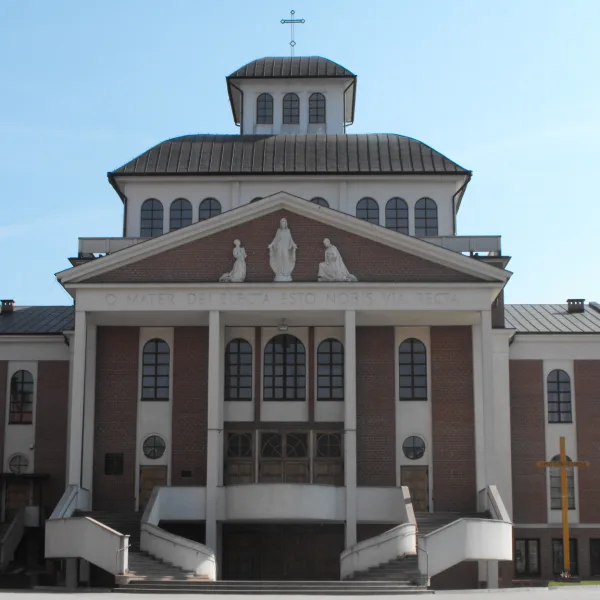
More recent buildings have their own stories. The Church of Our Lady of Kochawina on the Kopernika estate echoes the Baroque, is run by the Jesuits and since 2020 has been the diocesan shrine of Our Lady of Good Journey. The Church of Our Lady of Częstochowa in Trynek was built in the 1980s and consecrated in 1991.
A curiosity of its own is the wooden Church of the Assumption at Kozielska 29. It was built in 1493 in Zębowice near Olesno, came to Gliwice in 1925 and was moved once more in 1997-2000, to the grounds of the former Old Kozielski Cemetery. The full list is under churches and monasteries in Gliwice.
Where can you walk in Gliwice: parks, forest and nature reserve?
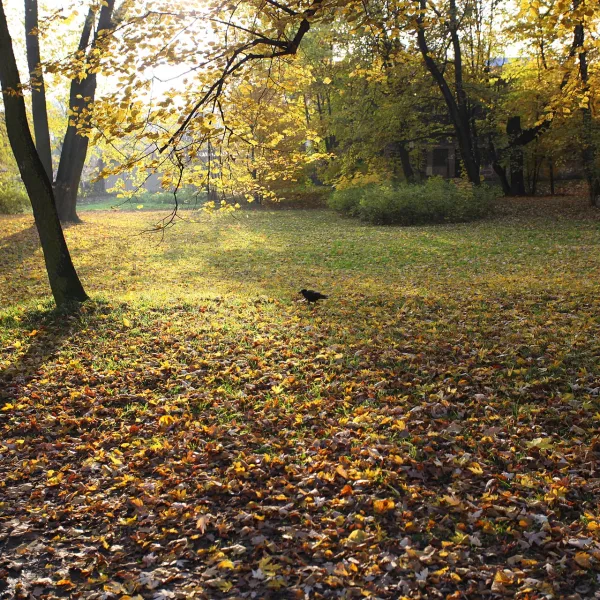
For a short walk the best choice is Chopin Park with the neighbouring palm house, for a longer one the forest of the Park of Culture and Recreation, and for quiet the Las Dąbrowa reserve on the western edge of the city. Entry to the parks is free.
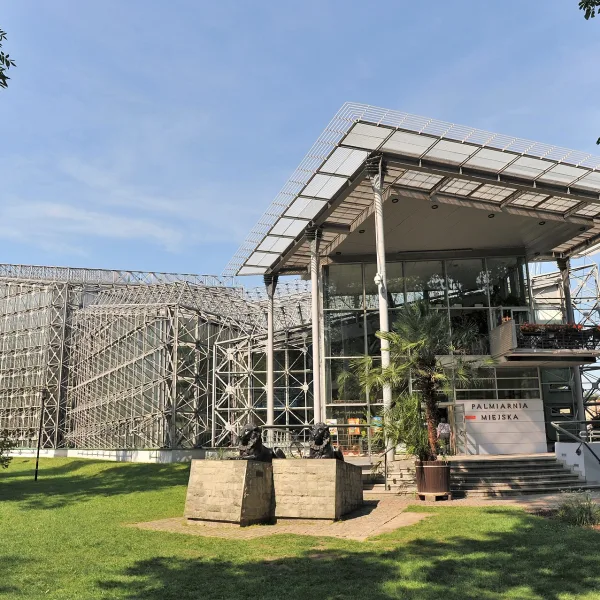
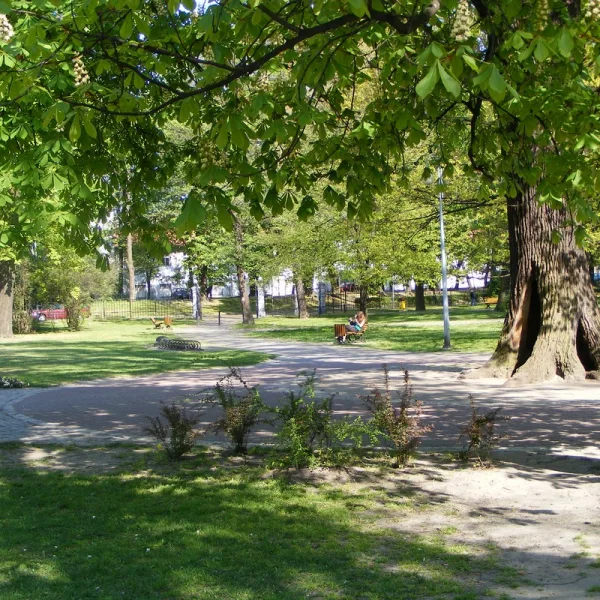
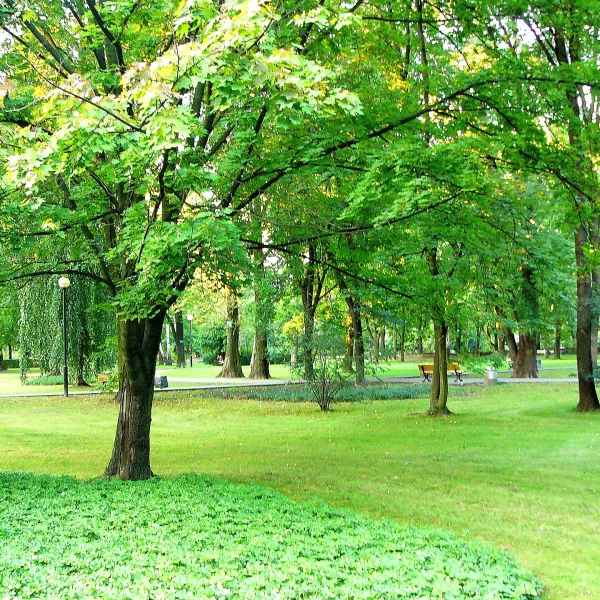
Fryderyk Chopin Park dates from about 1880 and lies where the Kłodnica river meets the Kłodnica Canal. Today it covers a little under six hectares and has old oaks, maples and limes, a Chopin monument, Schadow's lions and a natural monument. Next to it stands the Municipal Palm House at Fredry 6: five pavilions with useful, tropical and historic plants, succulents and aquariums. More than 5,600 plants grow there, and the oldest specimens are over 150 years old.
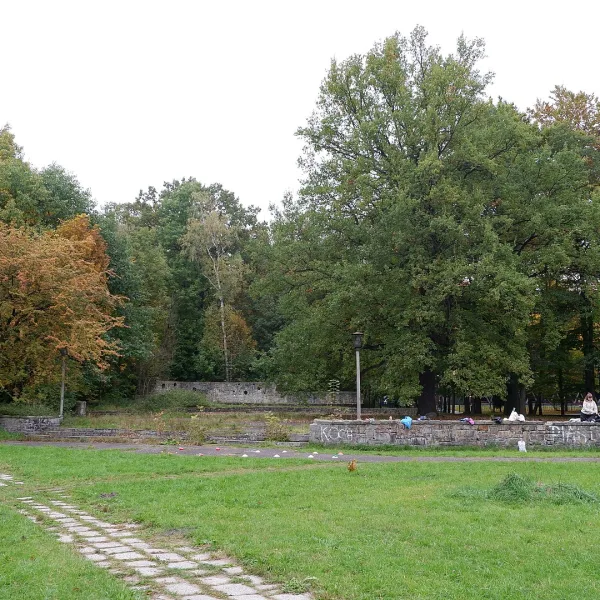
In the Politechnika district lies Bolesław Chrobry Park of 1913-1915, about ten hectares in area. In Wójtowa Wieś you will find Grunwaldzki Square Park, formerly Preussenplatz, entered in the register of monuments in 2013. Starokozielski Park, of about six hectares, was created on the site of a multi-faith cemetery founded in 1858 and has kept its layout with the main avenue.
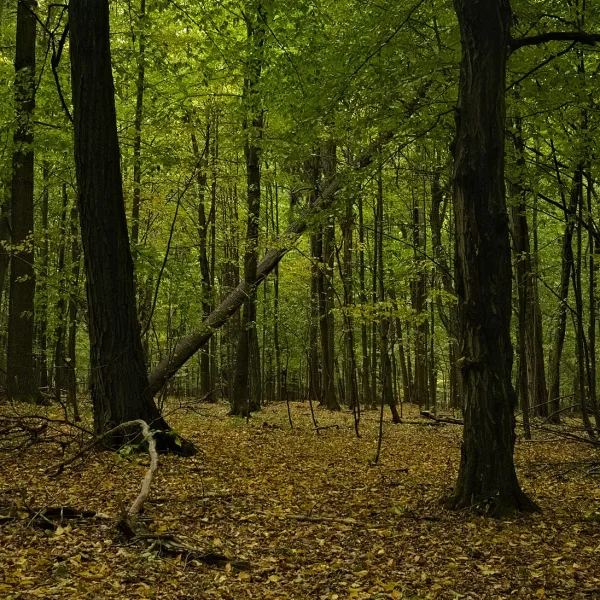
The Park of Culture and Recreation is in fact a municipal forest in Zatorze of about 197.6 hectares. It has an educational trail, two playgrounds and a salt graduation tower with deckchairs. The Las Dąbrowa Nature Reserve of 2008 covers 76.63 hectares of forest, partly in the municipality of Sośnicowice, and protects riparian woodland and a rare blackcurrant alder swamp. The white-backed woodpecker lives here. For urban nature across the region, read the article on reserves and green enclaves of the conurbation, and for botanical gardens and palm houses the text on botanical gardens and arboreta of Silesia.
Walkers have one more option, the Tourism Centenary Trail: a green waymarked footpath about 143 kilometres long, running mostly through forests from Rybnik to Tarnowskie Góry.
What historic buildings and architecture can you see in the centre?
A short architecture route fits on ulica Zwycięstwa: a hotel from the end of the 19th century, a department store by Erich Mendelsohn and a cast-iron fountain with fauns. They stand only a few house numbers apart.
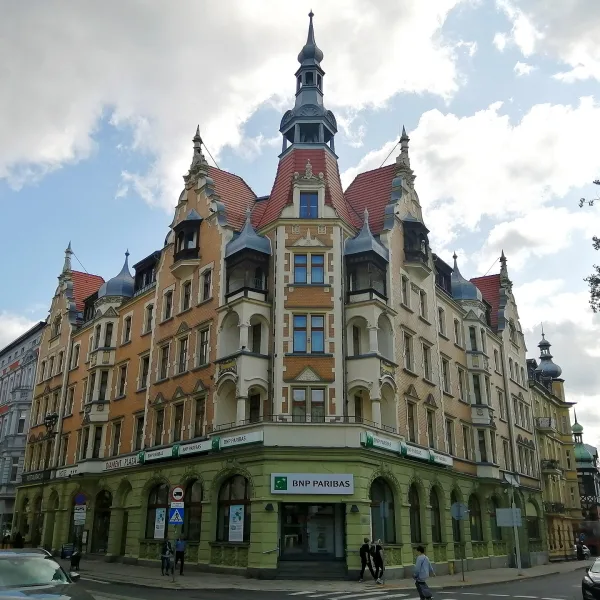
Hotel Diament at number 30 is an eclectic building of 1895, formerly the Schlesischer Hof, listed in the register of monuments. It still works as a hotel. At number 37 is the Weichmann Textile House of 1921-1922, one of the first designs by Erich Mendelsohn and an important example of German modernism in Poland. In front of the Town Hall, the former Hotel Haus Oberschlesien, stands the fountain with three fauns. It was cast in iron at the Gliwice Steelworks in 1928, and locals call it the Little Devils.
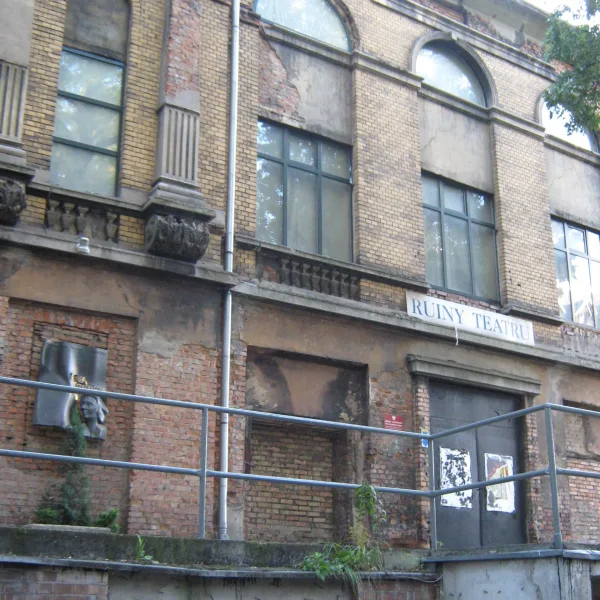
A different kind of monument is the ruins of the Victoria Municipal Theatre on aleja Przyjaźni. The building of 1890 burned in 1945 and was never rebuilt, and today the permanent ruin serves as a stage for artistic events. The auditorium once held about 1,100 people. For a wider overview see architecture in Gliwice and historic buildings in Gliwice.
What was Gliwice's heavy industry and where can you see its heritage?
The industrial past of Gliwice left four places: remains of the steelworks, a water tower, the casting department and the Ironworkers' Cemetery. They lie in different districts, so this makes a good separate outing.
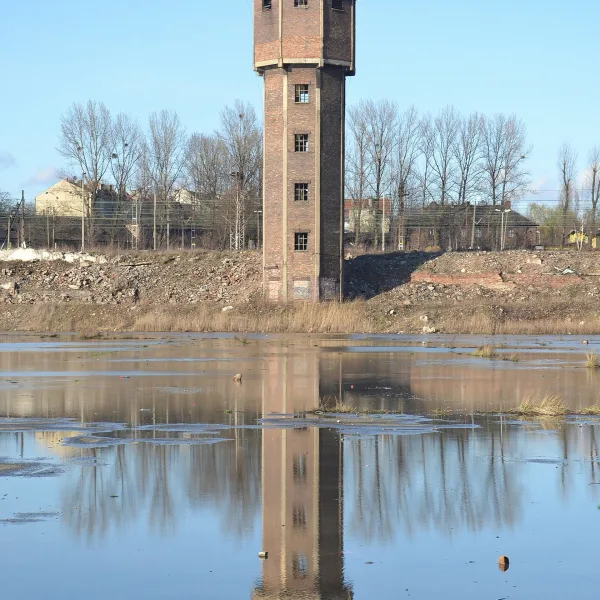
The Gliwice Steelworks were founded in 1867 as the pipe works Hahn und Huldschinsky and operated until 2000. Of the whole complex, only a water tower and the management building survive. The water tower at Sobieskiego 20a is 50 metres high and 26 metres across, made of brick in the neo-Gothic style, and was taken out of use in 1985. The Ironworkers' Cemetery was founded in 1808 for the staff of the Royal Iron Foundry, and an association has been restoring it since 2002. The theme continues in industrial heritage in Gliwice and in the text on Villa Caro, the Gliwice Canal and the Silesian University of Technology.
Where can you go in Gliwice with children, or when it rains?
With children, pick one of four indoor places: Kolejkowo, House of Air, Dżungla or Bricks 4 Kidz. All suit rainy weather, and parents get a few quiet hours as well.
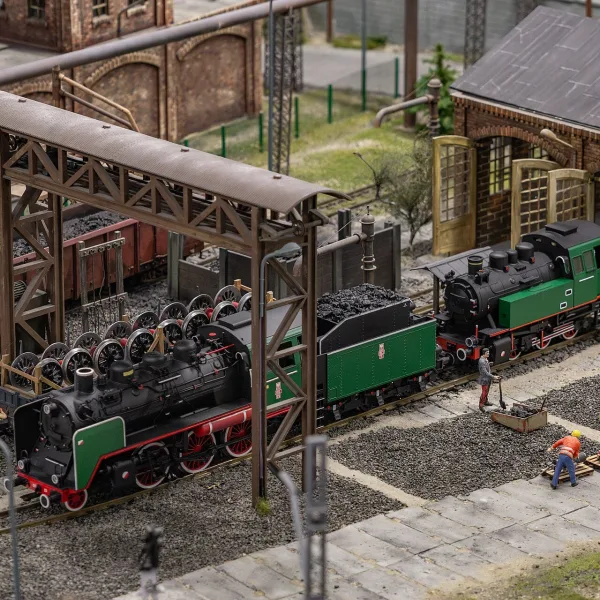
Kolejkowo, an interactive model of a miniature world, is in the Europa Centralna shopping centre. It covers more than 700 square metres, with over 500 buildings, twelve rail vehicles and more than 5,000 figurines. House of Air at Pszczyńska 315 is an indoor trampoline park of more than 3,000 square metres, with a separate Kids Zone for the youngest. The main trampoline area is meant for children from the age of four and requires non-slip socks.
Dżungla at Świętojańska 57 is a play centre with slides and an obstacle course, a separate room for children under five and a café for parents. At Bricks 4 Kidz at Zawiszy Czarnego 22 children learn through play with LEGO bricks, and the centre also runs birthday parties and holiday day camps. More ideas are gathered under things to do with children in Gliwice and the list of places for a rainy day.
In the evening the City Theatre at Nowy Świat 55-57 is a good choice. It was founded in 1952 as the Silesian Operetta, from 2001 to 2016 it was called the Gliwice Musical Theatre, and today it is a drama theatre with four stages in the city. Current programmes are in the calendar of events in Gliwice.
Where are the cemeteries and places of remembrance in Gliwice?
The cemeteries are part of the city's history, and alongside them stand places tied to the history of Upper Silesian Jews. These are places of quiet and reflection, not of entertainment.
The Central Municipal Cemetery on ulica Kozielska was built between 1920 and 1927 as a Latin cross inside a rhombus and covers 22 hectares. Among the graves are those of prisoners who died on the death march. The Lipowy Cemetery in Zatorze, dating from 1885, is multi-faith and has plots of soldiers of the First World War. Fifty-six children who died in March 1919 in a fire at a concert hall are also buried there.
The New Synagogue stood at Dolnych Wałów 15; in November 1938 it was set on fire and then demolished with explosives. Today its site is an empty square with two plaques, and the memory of the building is kept by the entry on the site of the New Synagogue. The funeral-preparation house of 1903 beside the new Jewish cemetery is now a branch of the museum, and its history is described in the article on the House of Memory of Upper Silesian Jews. All the necropolises are gathered under cemeteries and monuments.
Frequently asked questions
What can you see in Gliwice in one day?
The centre is enough: the Market Square with the Neptune fountain, the Church of All Saints, the Piast Castle and Villa Caro. If time remains, add Chopin Park with the palm house. Leave the Radio Tower for a separate trip.
Was the Piast Castle in Gliwice a ducal castle?
No. Despite the name, the mid-14th-century building was never a ducal castle, and its original purpose remains uncertain. The two towers in the defensive walls probably served as the town arsenal.
Where can you go with a child in Gliwice when it rains?
To Kolejkowo, House of Air, Dżungla or Bricks 4 Kidz. You can also choose a museum or the palm house in Chopin Park, and parents can rest in the café at Dżungla.
Which places in Gliwice are free to enter?
Entry is free to the parks, the Las Dąbrowa reserve and the cemeteries, which adds up to a few dozen places. Museums, the palm house and children's venues have their own entry rules.
How many branches does the Museum in Gliwice have?
Five: Villa Caro, the Piast Castle, the Radio Tower, the House of Memory of Upper Silesian Jews and the Department of Artistic Casting. The main seat is in Villa Caro.

 For children