Cemeteries in Gliwice: five places, the Central, the Ironworkers', the Lipowy and two Jewish cemeteries, old and new, from the 19th and 20th centuries.
Gliwice's burial grounds show how the city changed: from a factory cemetery beside a foundry, through the multi-faith Lipowy, to the Central Cemetery founded in the 1920s. Two Jewish cemeteries in different parts of town complete the picture. It is a route for those who want to learn Gliwice's history through its places of burial. Related subjects across the region are gathered under cemeteries and necropolises in Silesia; whatever lies in the city itself is on the page for Gliwice.
Where should a walk round Gliwice's cemeteries begin?
With the Central Municipal Cemetery, the most extensive of the five, on Kozielska Street where Stare Gliwice meets Wojska Polskiego. It spans 22 ha and was built between 1920 and 1927.
The layout follows the plan of a Latin cross, and the design joined a necropolis with a park. It was drawn up by Karl Schabik, the municipal building inspector, together with the city's garden inspector. The grounds also hold graves of death-march victims. Closer to the centre, in the Zatorze district, lies the Lipowy Cemetery of 1885, multi-faith, covering about 6 ha. It has First World War plots where Germans, Russians and Romanians rest, as well as a mass grave of 56 children from March 1919.
Where in Gliwice can you see a factory cemetery?
At the Ironworkers' Cemetery, in the Politechnika district, off Robotnicza Street. The management of the Royal Iron Foundry laid it out in 1808 for its own people.
It is a small multi-faith necropolis of 0.57 ha. Since 2002 an association has been restoring it through volunteer work. A gate opened the main avenue, and the whole site was marked out near the foundry, as a rectangle. For anyone interested in the city's industrial history, it is one of the more rewarding stops.
How can you trace the former Jewish community of Gliwice?
Through two cemeteries: the old one on Na Piasku Street in the centre and the new one on Poniatowskiego Street. The old one dates from 1815, the new one from 1902-1903.
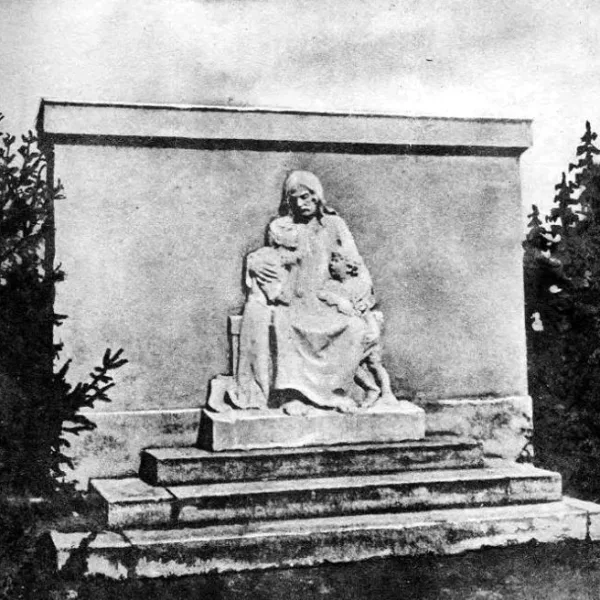
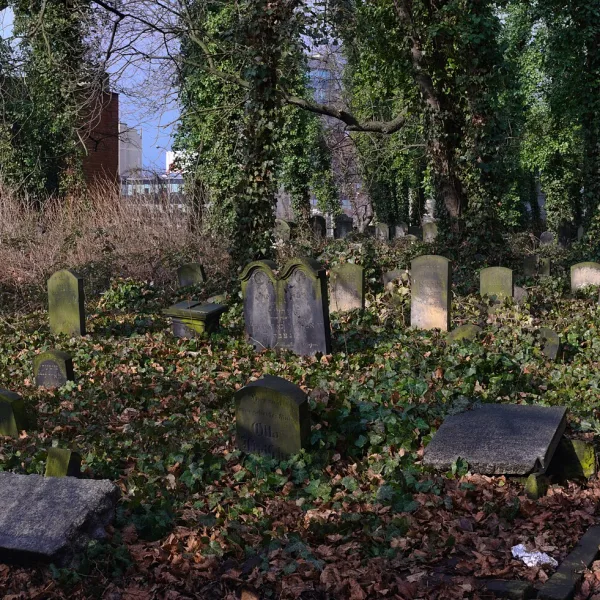
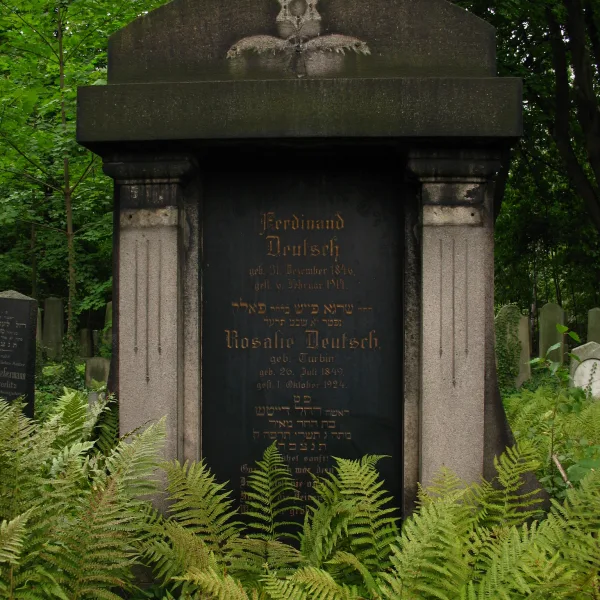
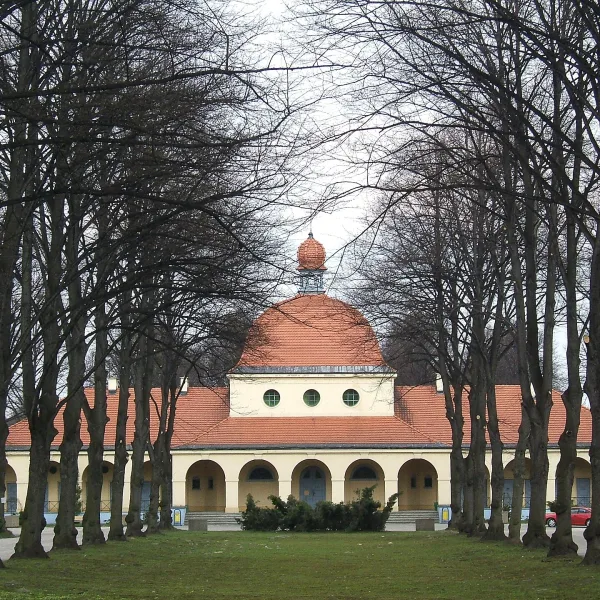
The old burial ground has 0.63 ha, with roughly half a thousand matzevot remaining. Gliwice has no older trace of Jewish culture. The new one covers 1.7 ha, is still in use and has about six hundred gravestones. It contains a funeral preparation house of 1905 and a monument to Jewish soldiers who fell in the First World War, erected in 1932. The story of that house is told in the article the House of Remembrance of Upper Silesian Jews.
Frequently asked questions
Does Gliwice have two Jewish cemeteries?
Yes. The earlier one dates from 1815 and sits downtown; the later one was created in the early 20th century on Poniatowskiego Street and still receives burials.
Which Gliwice cemetery has the longest history?
Of the five described, the oldest is the Ironworkers' Cemetery of 1808, followed by the old Jewish cemetery of 1815 and the Lipowy of 1885.
Is entry to Gliwice's cemeteries paid?
No, entry to all five necropolises is free.
Where are the graves of the death-march victims in Gliwice?
At the Central Cemetery on Kozielska Street, whose plan is modelled on a Latin cross.

 Cemeteries and monuments