Cemeteries and monuments in Gliwice: the Central Cemetery, two Jewish cemeteries, cast-iron lions and the Chopin monument. See what to visit.
Gliwice is known for iron founding, which is why cast-iron lions stand out among its monuments. The city's cemeteries span several faiths and eras, from a historic burial ground by the foundry to the vast Central Cemetery. Visit them quietly; some are still used for burials.
Which cemeteries in Gliwice are worth seeing?
Three matter most: the Central Cemetery on Kozielska Street, the multi-faith Lipowy Cemetery in Zatorze and the small Ironworkers' Cemetery from 1808. They differ in size, age and history.
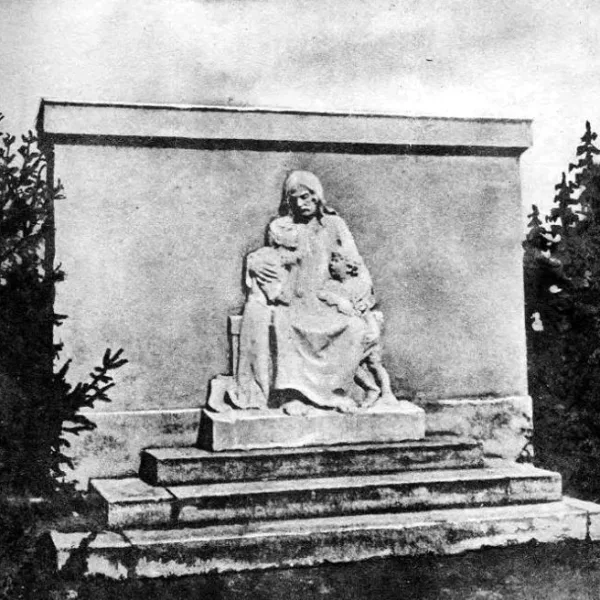
The Central Municipal Cemetery covers 22 hectares and was laid out in 1920-1927 as a combined cemetery and park. Its plan is a Latin cross set inside a rhombus, designed by Karl Schabik and Richard Riedel. It holds the graves of victims of the death march. Lipowy Cemetery, dating from 1885, covers about six hectares and contains plots of First World War soldiers. A mass grave holds fifty-six children who died in a concert-hall fire, and Paul Ondrusch made the memorial.
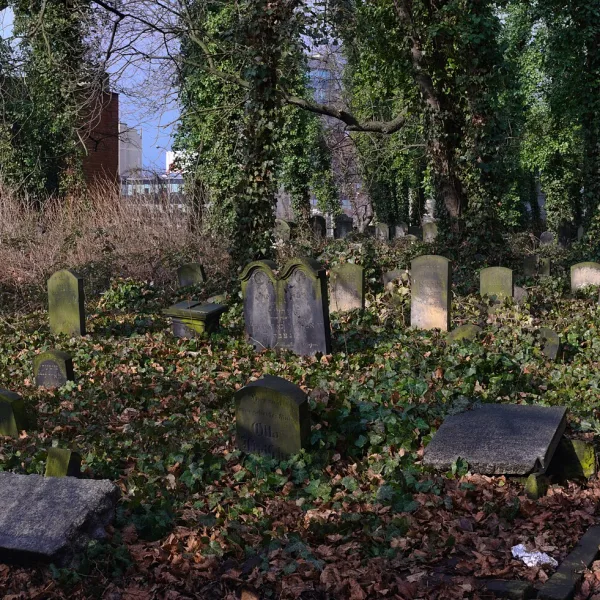
The Ironworkers' Cemetery on Robotnicza Street was set up in 1808 by the management of the Royal Iron Foundry. It measures just 0.57 hectares and has been gradually restored through volunteer work since 2002. The avenue once began with a gate guarded by cast-iron lions after a model by Johann G. Schadow.
What do we know about the Jewish cemeteries in Gliwice?
Gliwice has two Jewish cemeteries. The old one, from 1815, lies in the centre, and the new one, from 1902-1903, is still used for burials.
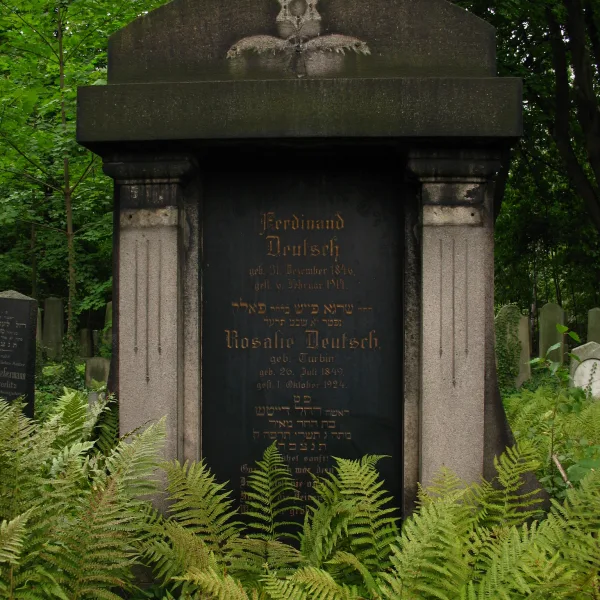
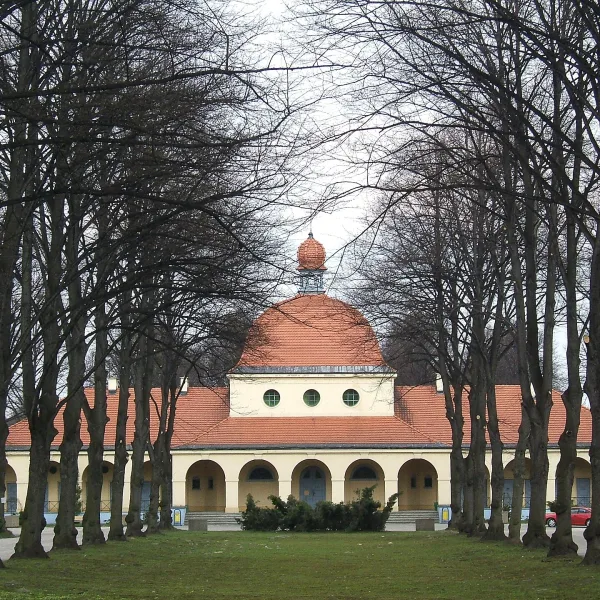
The Old Jewish Cemetery on Na Piasku Street covers 0.63 hectares and about five hundred gravestones survive. It is the oldest surviving monument of Jewish culture in the city. After the railway was built it ended up right beside the tracks. The New Jewish Cemetery on Poniatowskiego Street has 1.7 hectares and about six hundred gravestones. A pre-burial house was opened in 1905 and a memorial to Jewish soldiers of the First World War was built in 1932. An article describes it as a pre-burial house and Memorial House of Upper Silesian Jews. The nearest landmark is the Gliwice Radio Station, covered in a text on the events of 31 August 1939.
Where can you see cast-iron lions in Gliwice?
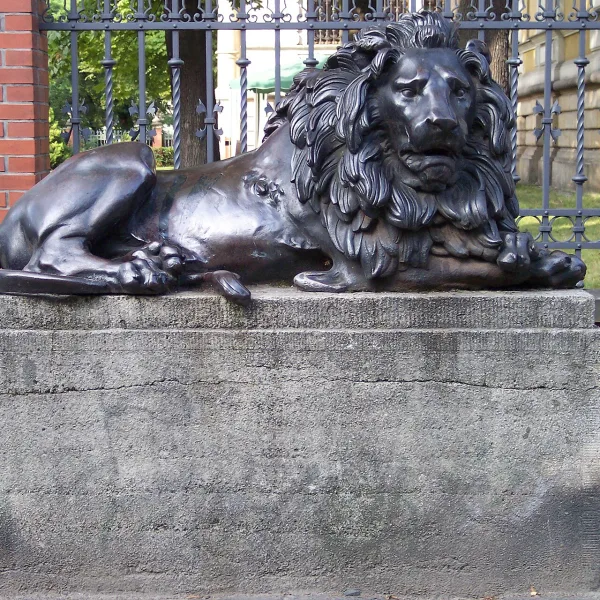
Three cast-iron lion sculptures were cast in the Gliwice foundry. They are easy to see on one walk through the centre and Chopin Park: in front of Villa Caro, on Valenciennes Square and before the Palm House.
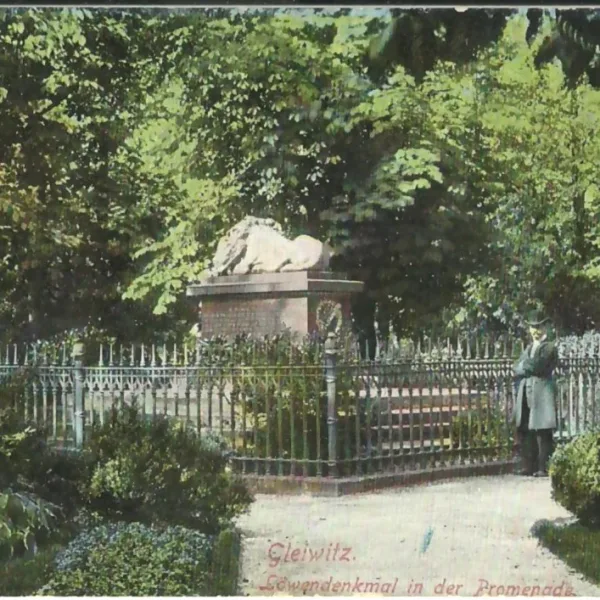
The Watching Lion stands on Dolnych Wałów Street, in front of Villa Caro. It was cast in 1824 to a design by Theodor Kalide. The Sleeping Lion on Valenciennes Square is a copy of 2009 of a monument from 1849 that honoured Prussian soldiers who died in a field hospital; the original was taken down after 1945. The Reclining Lions of 1830, after Schadow, rest in Chopin Park before the Municipal Palm House. Villa Caro and the city's ironworking past are covered in an article on Gliwice, Villa Caro and the Gliwice Canal.
What other monuments stand in Gliwice?
A marble monument to the composer stands in Chopin Park, and an Armenian khachkar in front of the Holy Trinity church.
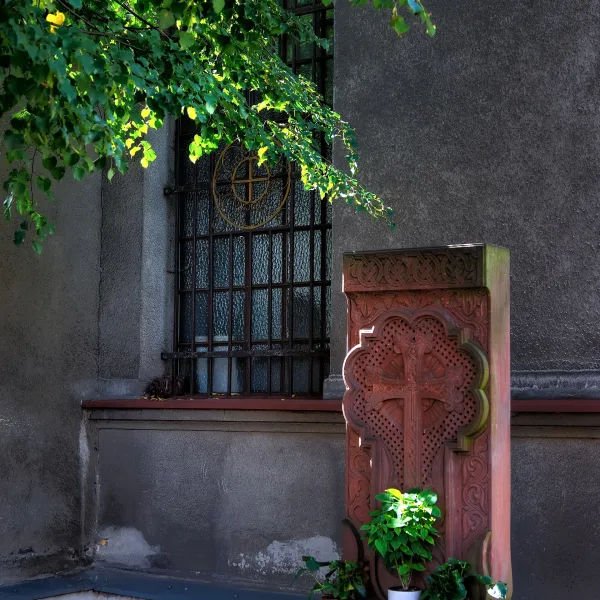
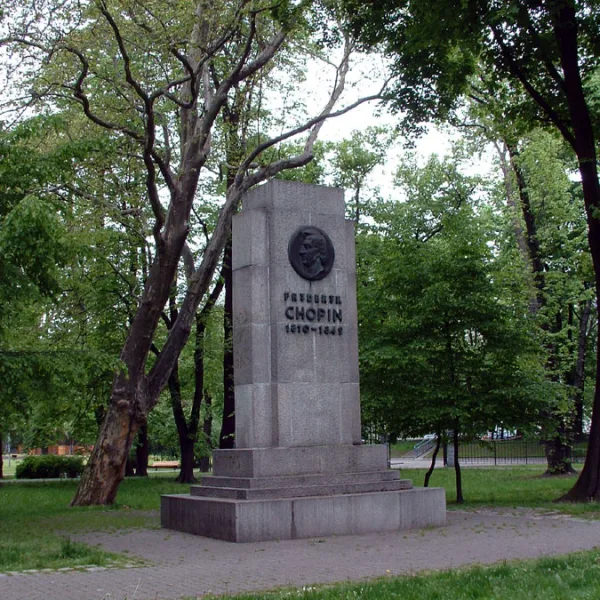
The Frédéric Chopin Monument was unveiled on 17 June 1949, on the hundredth anniversary of the composer's death. It is 6.25 metres tall and carries a bronze medallion with Chopin's profile. The Khachkar on Mikołowska Street is an Armenian stele of red tuff, a sign of remembrance of the Armenian genocide and a gift from the Armenian nation.
After the cemeteries and monuments, see the historic sites of Gliwice, its parks and nature or the museums. The whole city is described on the page for Gliwice.
Frequently asked questions
Which cemetery in Gliwice is the biggest?
The biggest is the Central Cemetery on Kozielska Street, covering 22 hectares. It was founded in 1920-1927.
Which Jewish cemetery in Gliwice is still used?
The new Jewish cemetery on Poniatowskiego Street, from 1902-1903. The old cemetery on Na Piasku Street dates from 1815.
Where are the Gliwice lions?
The Watching Lion in front of Villa Caro, the Sleeping Lion on Valenciennes Square and the Reclining Lions in Chopin Park, before the Municipal Palm House.
When was the Chopin monument in Gliwice unveiled?
On 17 June 1949, a hundred years after the composer's death. The initiator was Marcin Kamiński, founder of the State Music School in Gliwice.

 Cemeteries and monuments