Free things to do in Racibórz: parks, monuments, cemeteries and a viewpoint in Markowice. Seventeen places you can visit without buying a ticket.
Racibórz lies on the Oder and many of its sights can be seen in the open air. This selection gathers places that need no ticket: parks, sculptures, cemeteries and a trail. For the full list of the town's landmarks, including those with an entrance fee, see things to do in Racibórz.
What can you see in Racibórz for free, and where to start?
Start with the parks, the easiest walk: the Castle Park on Ostróg, Roth Town Park with its fountain, and Captain Franciszek Stal Park. Then add the monuments in the centre and finish at the viewpoint in Markowice. The whole set fits into two relaxed afternoons.
The seventeen places fall into a few groups: three parks and one panorama, a dozen or so monuments and sculptures, and four cemeteries, one of which is still in use. All are within the town limits, and some lie in former villages that are now districts, such as Markowice or Brzezie. More places of this kind across the region are gathered under free things to do in Silesia.
Which parks in Racibórz are worth visiting?
Racibórz has three parks of different character: a riverside park around the castle with old poplars, a park with a pond and a fountain in Nowe Zagrody, and a park on the site of a burnt palace. Each makes a separate walk, and the first two combine easily with other sights.
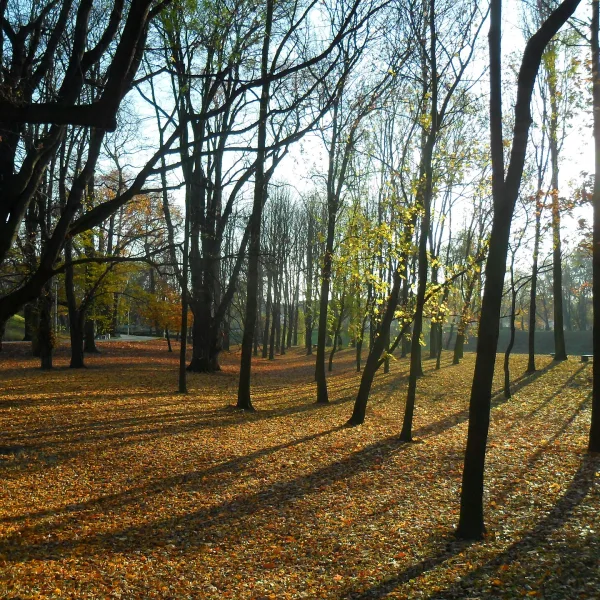
Castle Park in Racibórz lies in the Ostróg district, on the right bank of the Oder, around the castle and the sports and recreation stadium. More than twenty black poplars grow here, with trunks four to over six metres in circumference, and the oldest are more than two hundred years old. They survive from a former willow-poplar floodplain forest, so a walk along the paths pairs well with a look at the castle hill.
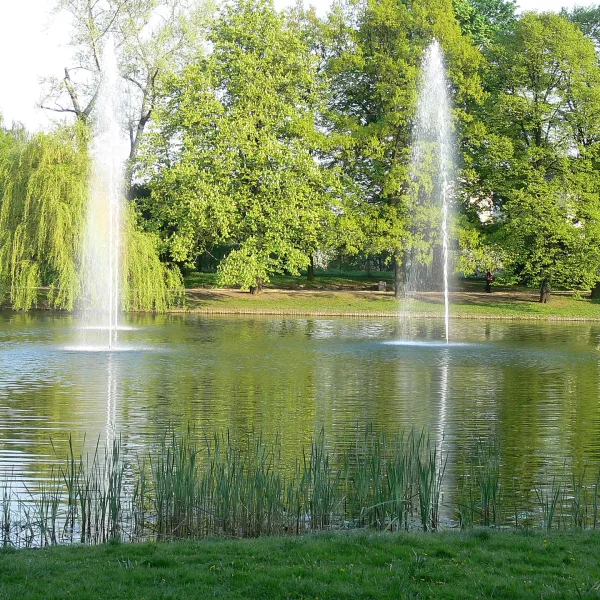
Roth Town Park, also called the swan park, is in Nowe Zagrody, between Opawska, Bema and Kochanowskiego streets. A pond of about a hectare with a wooded islet fills the middle, and a three-nozzle fountain throws water about twelve metres high. The park has four natural monuments. Its name honours the Bavarian town of Roth, Racibórz's partner town. Part of the park lies on a former Catholic and Evangelical cemetery, which a small monument described below recalls.
Captain Franciszek Stal Park lies between Głowackiego, Kolejowa and Sejmowa streets, near the Drzymały estate. It was once a marshy site with a floodplain forest on the Oder; a palace built after 1856 later stood here, burnt in 1945 by Red Army soldiers, and its ruins were pulled down in the 1960s. Today the old trees remain: four monumental sycamores and bladdernut shrubs.
What monuments and sculptures stand in the centre of Racibórz?
The centre and the riverbank hold several works you can see on a single walk: a Baroque column on the main square, a bronze mother-and-child figure by the river, an erratic boulder on Wolności Square and two monuments to Eichendorff. All stand outdoors and cost nothing.
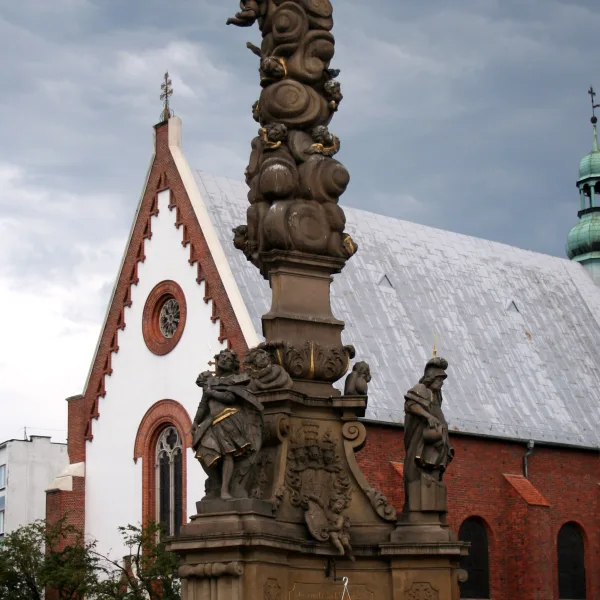
The Marian Column in the middle of the Market Square is a late Baroque sandstone sculpture from 1725-1727 by Johann Melchior Österreich, given in thanks when a plague ended. Above a three-sided pedestal rise carved coats of arms and little angels, and a statue of the Virgin Mary crowns the whole.
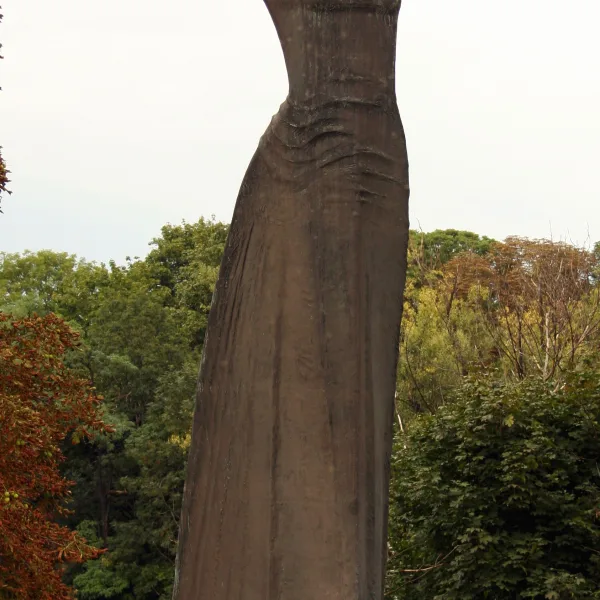
On the riverbank, on Mostowy Square, stands the Monument to the Polish Mother. The bronze woman with a child in her arms, a work of Jan Borowczak unveiled in 1973, stands 6.7 metres tall and weighs three tonnes. It was cast in Gliwice in thirty pieces, and residents sometimes call it the Silesian Nike.
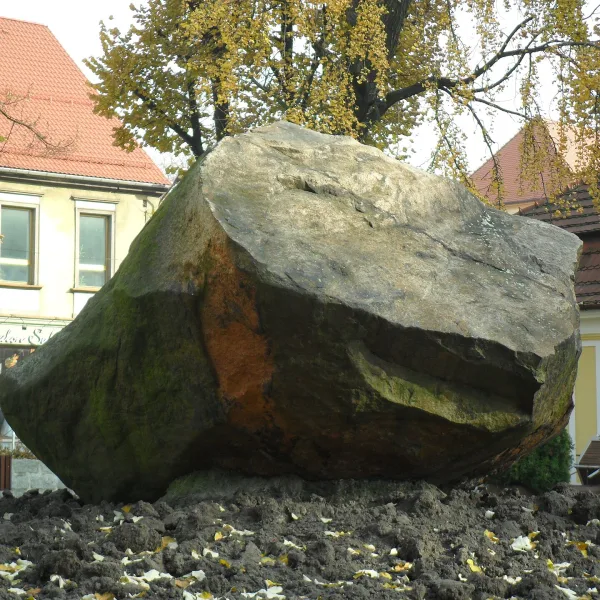
On Wolności Square lies an erratic boulder: a granite block 3.25 metres long and 2.25 metres high, weighing 42.5 tonnes, carried from Scandinavia by a glacier. It has been a natural monument since 1960 and was found in a sand pit in 1927.
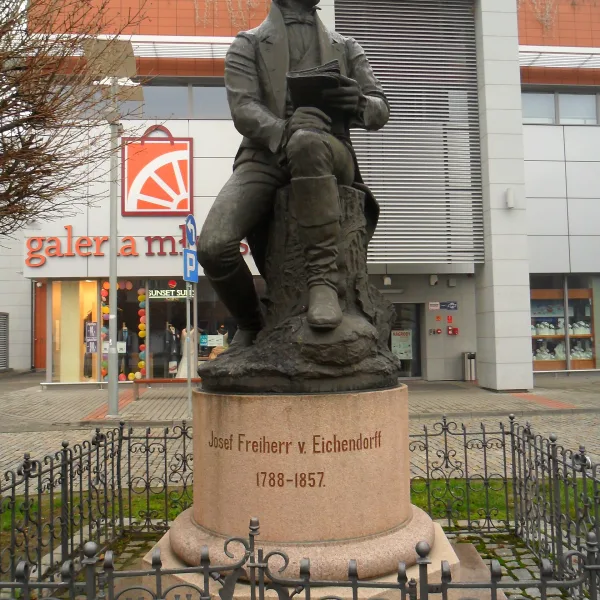
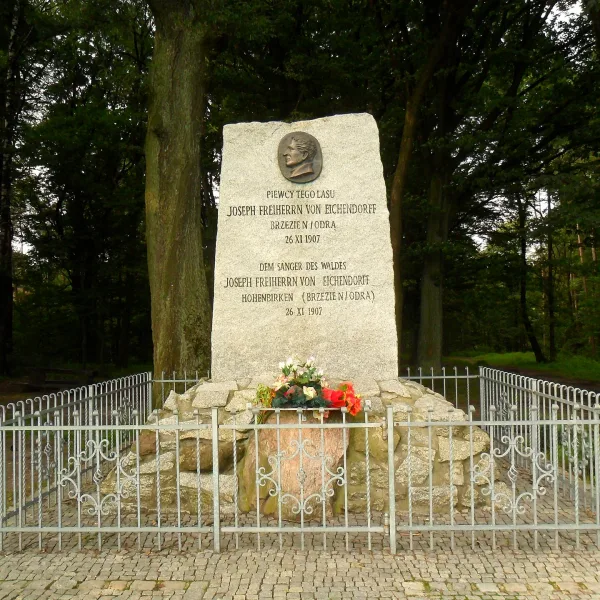
Two monuments honour the poet Joseph von Eichendorff. The bronze one in the centre faces the Galeria Młyńska shopping centre, where Młyńska meets Mickiewicza Street. It was made in 1994 as a copy of a work by Johannes Boese that vanished during the war. The second, in Brzezie, is a replica from 2006 at the edge of the Widok forest, recreating a granite monument of 1907 that was destroyed in autumn 1945.
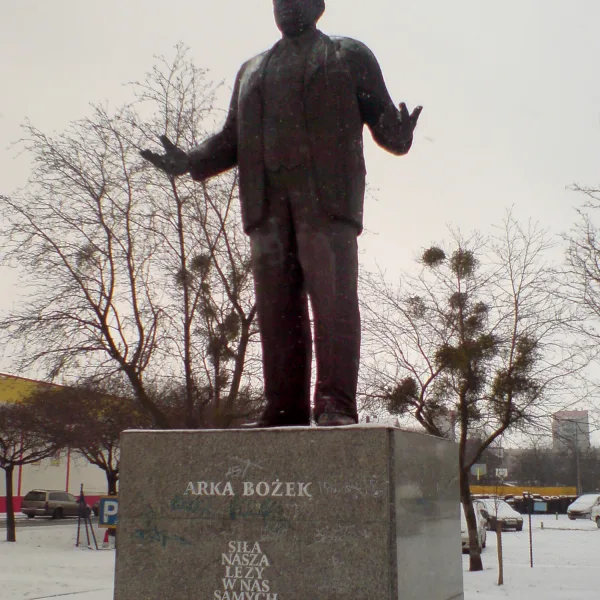
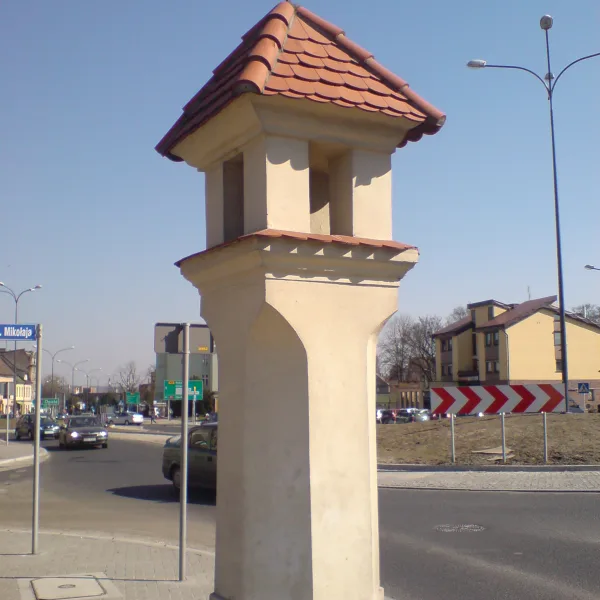
Two smaller monuments complete the route. The Concord Monument is a masonry wayside pillar close to the castle, raised to mark the settlement of 1287 that ended a sixteen-year quarrel between a duke and a bishop. The Arka Bożek Monument stands at the park entrance from Opawska Street and honours a Polish community activist who became deputy voivode of Silesia after the war; the bronze was made by Augustyn Dyrda and unveiled in 1980.
What remains of the old cemeteries and the war memorial?
Racibórz's four cemeteries and one monument in the park tell of communities that no longer see themselves in the town in the same way: Evangelical, German Catholic and Jewish. Entry is free, but these are places of remembrance, so keep quiet and show respect.
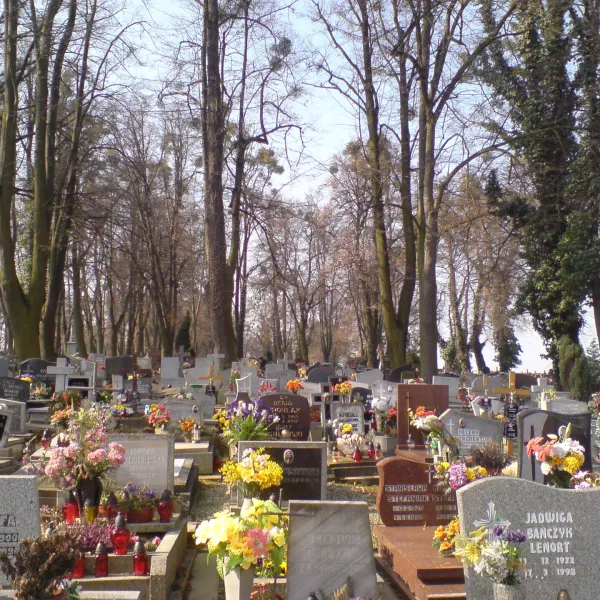
Jeruzalem Cemetery in Nowe Zagrody is the town's largest necropolis and still an active Catholic cemetery. It was consecrated in 1894 and has a chapel by the gate, together with historic gravestones. The other three cemeteries are closed to burials.
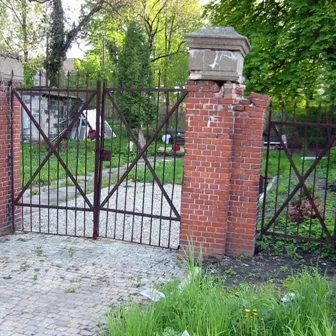
The Evangelical cemetery on Starowiejska Street was founded by the congregation in 1920 on 1.41 hectares. It was closed in 1974, and by 1984 it held 719 graves. A chapel and a memorial to the First World War dead survive, and a parish from Rybnik looks after the site.
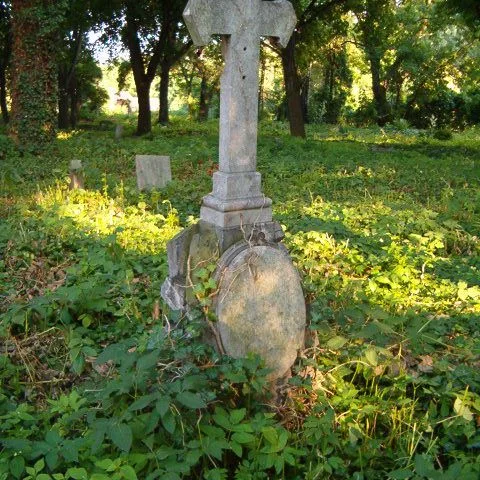
The Catholic cemetery on Kozielska Street, from 1856, served mainly the German population; the last burials took place in the 1960s. Today it is abandoned and many old gravestones are damaged.
The Jewish cemetery was founded in 1814 on a hill known as Wilcza Góra, by Głubczycka and Fojcika streets. The last burials date from the turn of 1940 and 1941, and the necropolis was liquidated in 1973; the site covers 2.03 hectares and has old trees. The fate of similar burial grounds is told in the article on the cemeteries in Pszczyna, Żory, Mikołów, Rybnik and Racibórz.
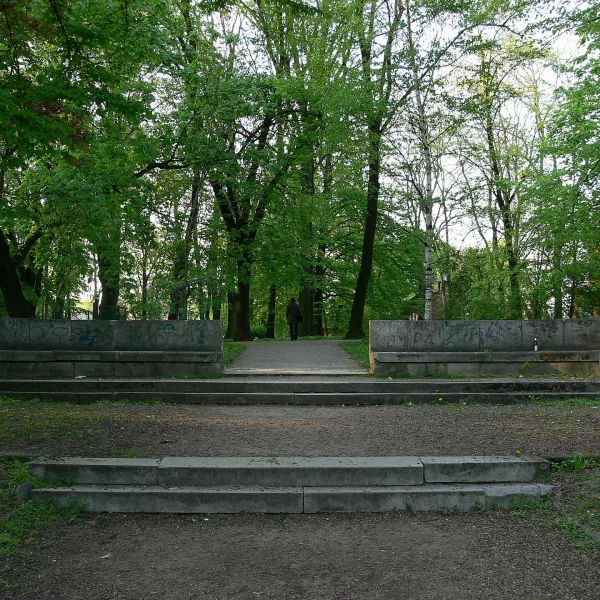
Something else survives in Roth Park: the monument to the fallen of the First World War from 1926, designed by the sculptor Hans Dammann. Of a monument twelve metres wide only the side balustrades with benches remain, and a park path runs through the middle of the former layout.
Where in Racibórz can you go for views and a longer walk?
For views choose the Markowice Panorama, and for a longer hike the yellow trail of the Polish minority schools. Both are free and lie outside the strict centre, so plan them as a separate outing.
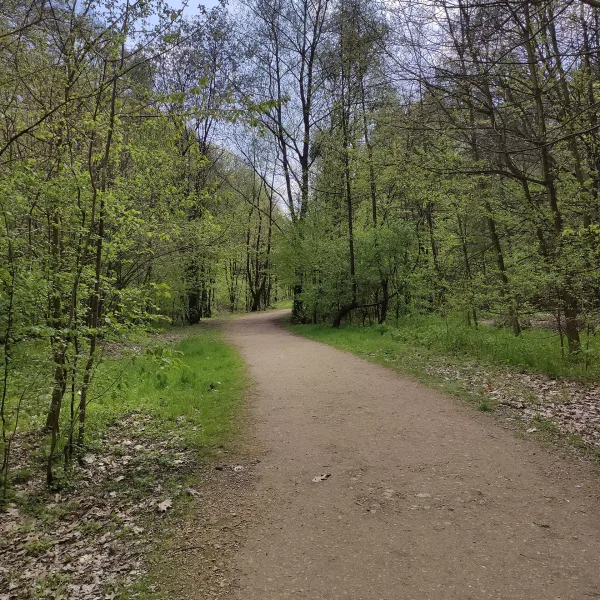
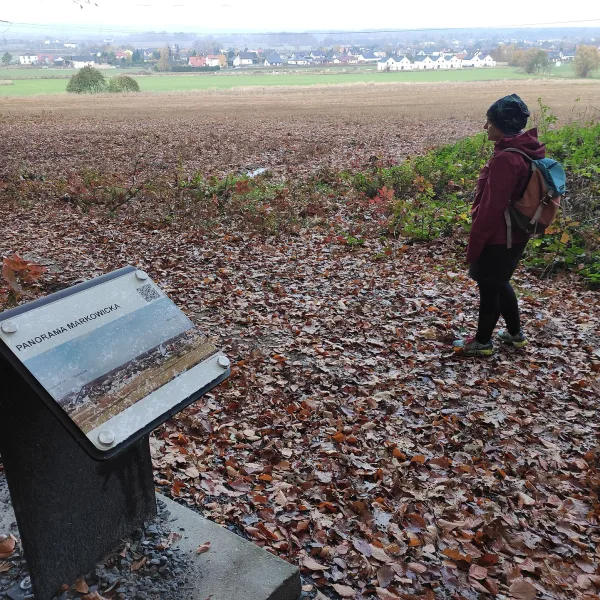
The Markowice Panorama marks the spot where the Moravian Gate Arboretum ends: the Markowice district, on the rim of the Obora town forest. The view reaches over the roofs of Markowice, past its neo-Gothic church, to the forests of the Łężczok reserve and the Racibórz Basin. It suits a quiet afternoon for one or two people, and you can read about other gardens of the region in the article on botanical gardens and arboreta of Silesia.
The Polish Minority Schools Trail is a yellow waymarked hiking trail from 1985, about eighty-five kilometres long. It starts at Rakowiec, passes Chałupki, Tworków and Racibórz, and ends at the station in Bierawa; part of the route lies in the Opole Voivodeship. In Racibórz you may walk any section.
How to plan a free route around Racibórz?
The simplest plan is two walks. The first is the centre and Ostróg: the Market Square with its column, Mostowy Square, the Concord Monument and the Castle Park. The second is Nowe Zagrody: Roth Park, the war monument, the Arka Bożek Monument and Jeruzalem Cemetery, all in one district.
With more time, add Wolności Square with the boulder, Eichendorff in front of Galeria Młyńska and Stal Park. Leave farther places such as Brzezie and Markowice for a separate day. The castle on Ostróg and its chapel are covered in the article on castles of Upper Silesia and the Zagłębie; the castle deserves more time than a park stroll.
Frequently asked questions
Are all the places on this Racibórz list free?
Yes, these are places with no entrance fee: parks, monuments, cemeteries, a viewpoint and a trail. The castle, museum exhibitions and the brewery are a separate category, with tickets, and are not part of this selection.
Which places in Racibórz are closest to each other?
In the centre the closest are the Market Square with the column, the Concord Monument and the Castle Park on Ostróg. In Nowe Zagrody, Roth Park with the war monument and the Arka Bożek Monument lies close to Jeruzalem Cemetery.
Can you visit cemeteries in Racibórz?
Yes, entry is free. Jeruzalem Cemetery is active, while the other three necropolises covered here are closed, and some are in poor condition. Behaviour appropriate to a burial ground applies.
What can you see in Racibórz with children without a ticket?
Children will enjoy the fountain and pond in Roth Park, the erratic boulder on Wolności Square and the large Polish Mother monument. A walk through the Castle Park with its huge poplars also works well.

 Parks and nature