Architecture in Zawiercie: the ruins of Bąkowiec castle in the Jura, a Neo-Gothic basilica of red brick, Art Nouveau villas and a former synagogue.
Zawiercie is associated with factories and railways, but its monuments reach back beyond the nineteenth century. The districts of Skarżyce and Kromołów hold churches and ruins from earlier ages, while the centre has brick buildings of the industrial era.
What to see in Zawiercie from the Middle Ages and Renaissance
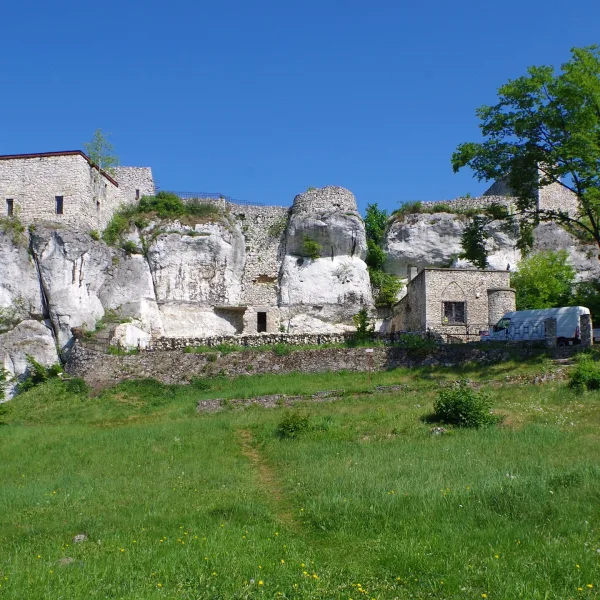
The oldest trace is Bąkowiec castle, also known as Morsko castle. What remains of the medieval stronghold are ruins on a rock called Tygrys; they lie in Skarżyce and form part of the Eagles' Nests Trail across the Kraków-Częstochowa Upland.
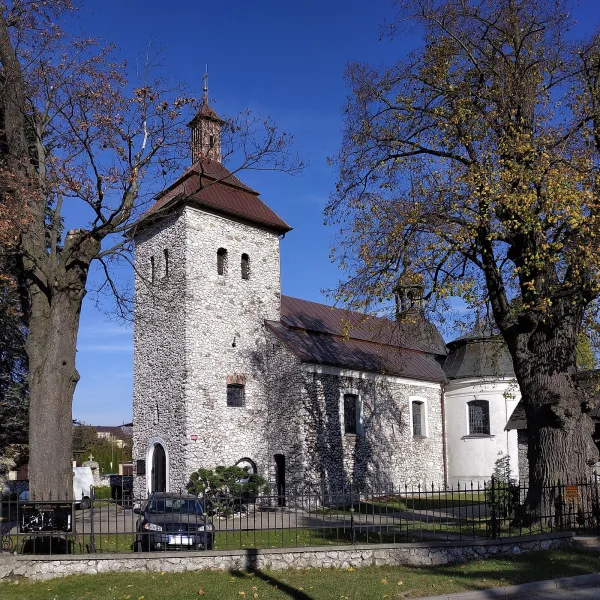
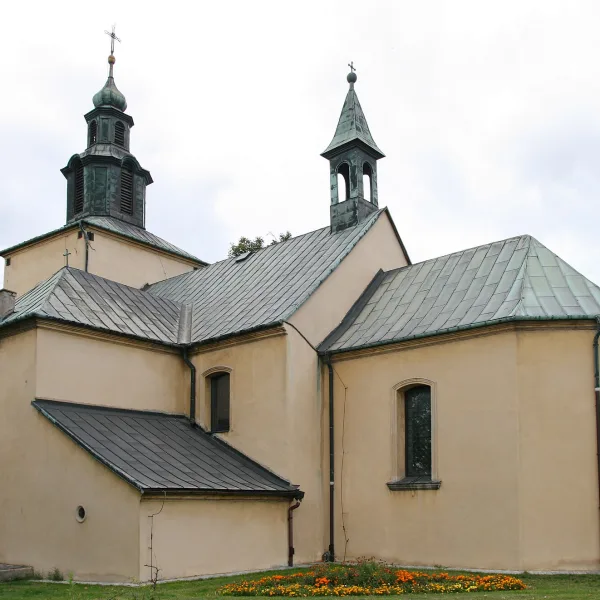
In the same district, on Skarżycka Street, stands the Trinity and St Florian church. The stone building was consecrated in 1598. Three round chapels stand for the Holy Trinity, and the church is a Marian shrine. In Kromołów look for St Nicholas's church, a single-nave brick building regarded as the oldest Catholic church in Zawiercie, with a bell from 1508.
Which nineteenth- and early twentieth-century buildings to see
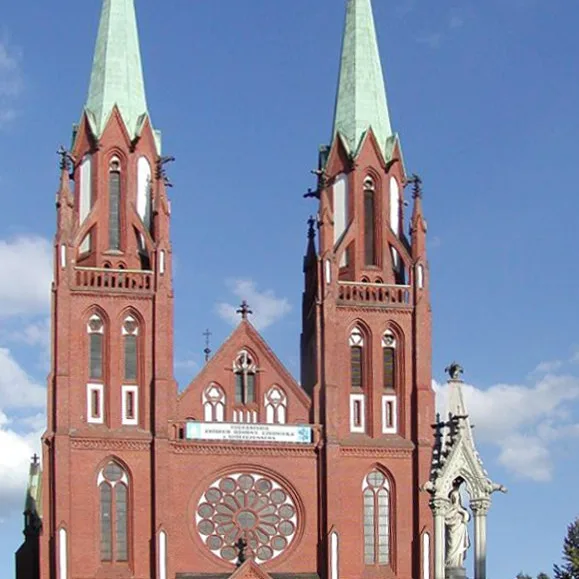
In the town centre the red collegiate basilica on Sienkiewicza Street makes the strongest impression. The Neo-Gothic church went up between 1896 and 1903; two towers flank the façade, a historic fence runs around it, and the church became a minor basilica in 2009.
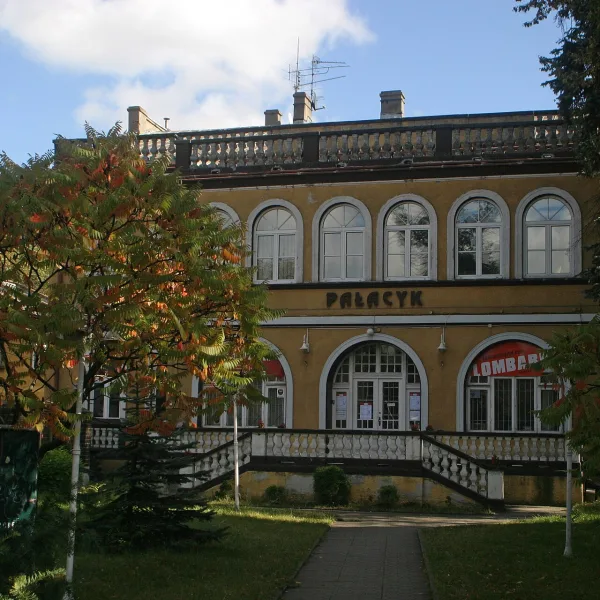
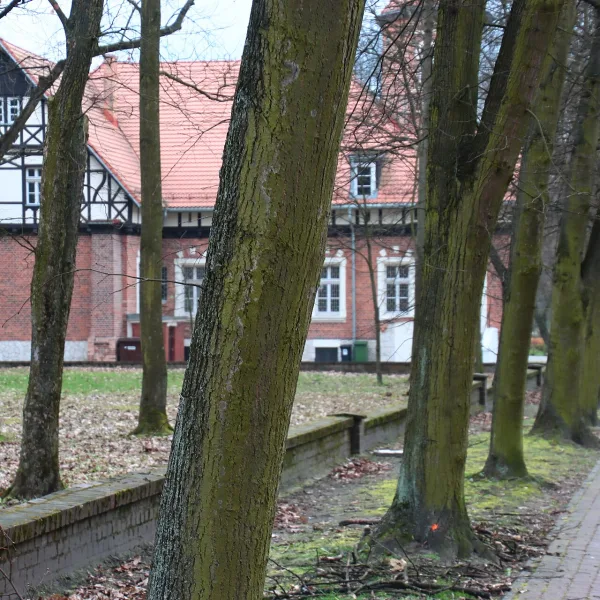
The second Neo-Gothic building is the former Evangelical church on Bohaterów Westerplatte Street, with pointed-arch forms. After post-war rebuilding it works as a Craft House, so you will hardly recognise a church in it. The industrial age is well shown by the Director's Villa, a brick residence from 1897 set in a park. It was built for the director of the local joint-stock company, and a library and a memorial room work in it now. Holenderski Villa on 3 Maja Street represents a quite different style: an Art Nouveau villa with a garden, put up before 1914 and listed as a monument.
What remains of Jewish buildings in Zawiercie
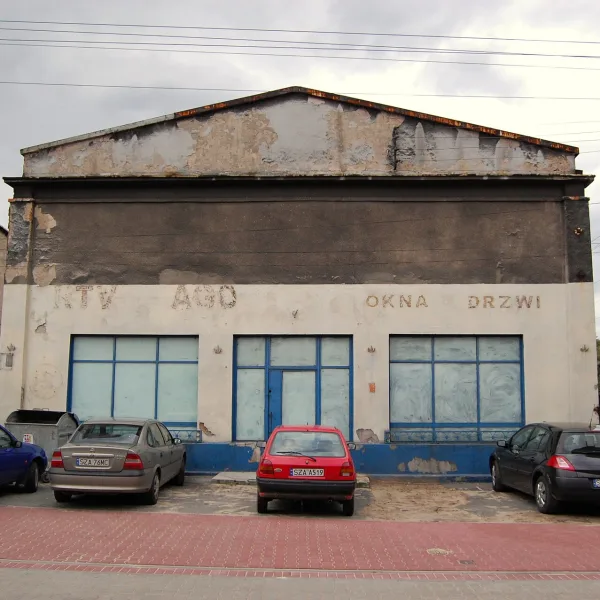
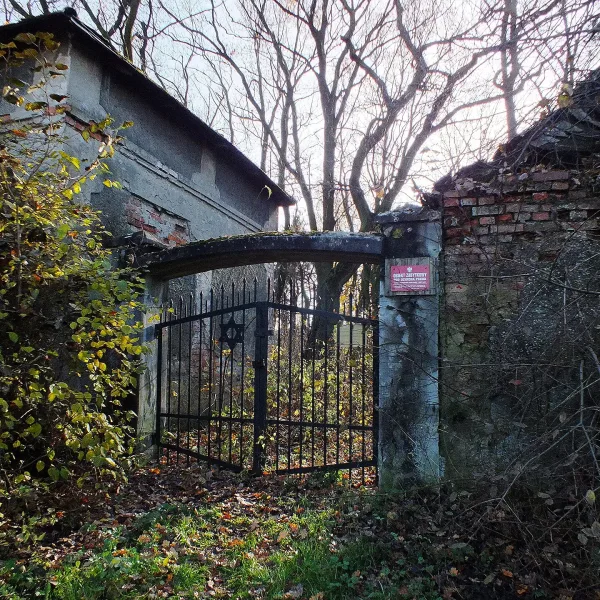
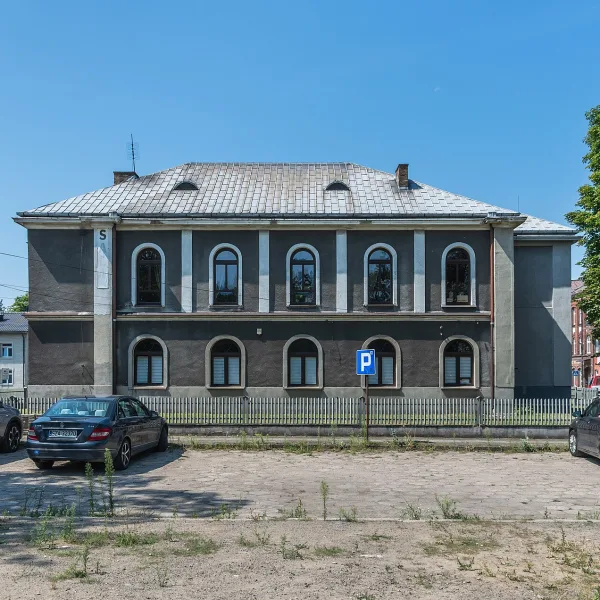
The synagogue at Marszałkowska 41 was built in 1880. It no longer serves religious purposes, and after wartime devastation and later alterations it has lost its original look; it needs renovation and awaits revitalisation. In Kromołów, on Piaskowa Street, lies the Jewish cemetery, among the old Jewish burial grounds that still stand in the Jura, holding about 920 gravestones. Enter in silence and with respect.
For the factories and the railway, see the feature on Zawiercie's industry. Other historic places are on the architecture page, and the whole town in the list of Zawiercie attractions.
Frequently asked questions
Which building in Zawiercie is the oldest?
Bąkowiec castle, whose ruins stand on a rock called Tygrys in Skarżyce. Among churches, St Nicholas in Kromołów is regarded as the oldest Catholic one.
Can I visit the synagogue in Zawiercie?
No, the building on Marszałkowska Street is closed and waits for renovation. You can look at it from outside.
Where in Zawiercie can I see Neo-Gothic?
In the basilica of Peter and Paul on Sienkiewicza Street and in the former Evangelical church on Bohaterów Westerplatte Street.
What is inside the Director's Villa?
Today a library and a memorial room, and the house stands in a park. It was built in 1897 for the director of the local joint-stock company.

 Historic sites