Theatre in Silesia means more than twenty stages in historic buildings and unusual venues, from Katowice to Cieszyn, Rybnik and Częstochowa.
This overview helps you choose a stage by town, audience and building. It covers large drama theatres, puppet theatres for children, a musical theatre, an independent company and halls set up in former industrial buildings. Katowice has its own page: theatres in Katowice.
Which theatre should you start with?
Anyone new to the region's theatre map should begin with a large building that has a past: the Stanisław Wyspiański Silesian Theatre in Katowice, the Adam Mickiewicz Theatre in Cieszyn or the Zagłębie Theatre in Sosnowiec. Each has a building worth seeing even without a performance.
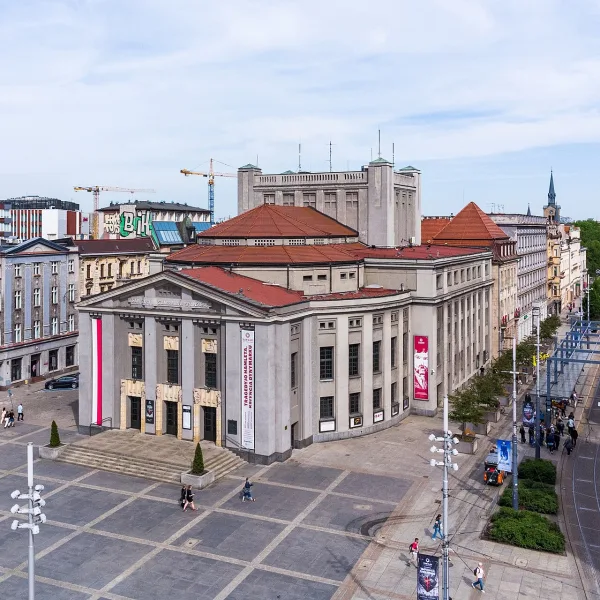
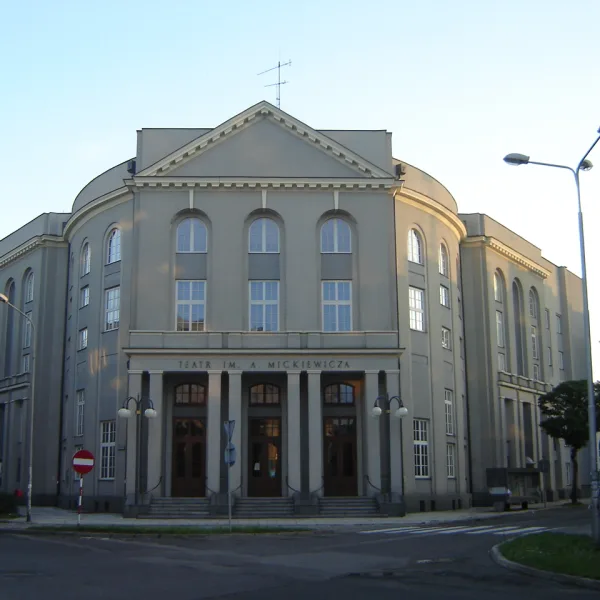
The biggest drama stage of Upper Silesia sits in a neoclassical edifice from 1907, right by the Market Square in Katowice. The Cieszyn theatre dates from 1910, came from the drawing boards of the Viennese architects Fellner and Helmer, and its auditorium holds six hundred and thirty. The Zagłębie Theatre opened in 1897 as the Winter Theatre, and its interior carries paintings by Rudolf Sarbiewski.
Where in Silesia can you see theatre in historic buildings?
The region's oldest theatre houses were put up between the 1880s and 1910s, and today all of them are under heritage protection. Treat them as destinations in their own right: the architecture matters as much as the repertoire.
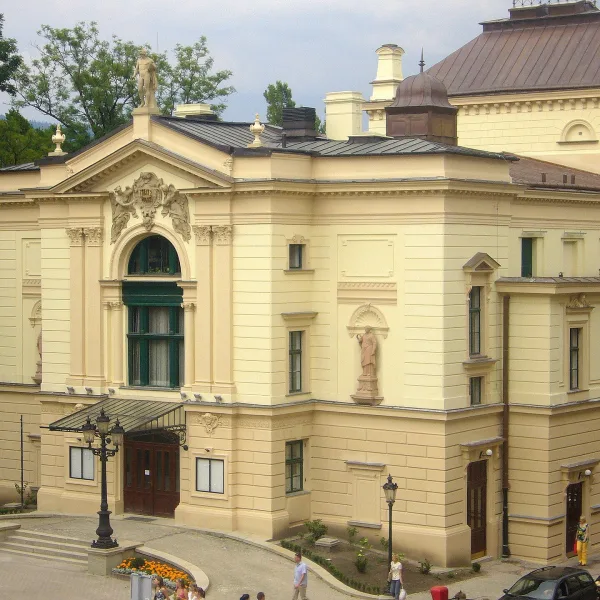
The Polish Theatre in Bielsko-Biała rose between 1888 and 1890 from a plan by Emil von Förster, an architect from Vienna. It stands in the Dolne Przedmieście district next to the Sułkowski Dukes' Castle, and Apollo and the muses stand as statues on the façade. It makes a good starting point for a walk around the historic part of town.
Częstochowa has the Adam Mickiewicz Theatre, housed in a brick building from 1928-1931 on Kilińskiego Street. Among the city's public stages, only this one keeps a salaried troupe of actors, and the building itself appears in the register of monuments.
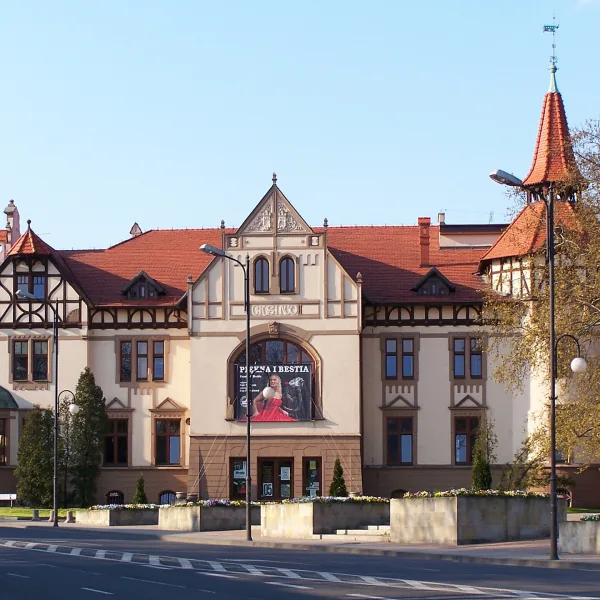
Two theatres occupy buildings that once served a completely different purpose. The Nowy Theatre in Zabrze has played since 1959 in a brick building that was put up as a casino for the Donnersmarck steelworks. The Teatr Rozrywki in Chorzów is a musical theatre: actors, singers, dancers and an orchestra belong to one ensemble, and its home is a former hotel, later a culture house, in central Chorzów.
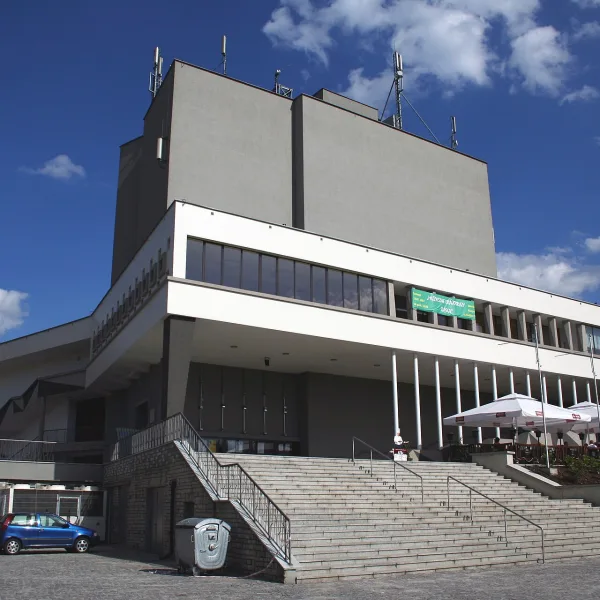
The Rybnik Land Theatre is a different chapter. The building from 1958-1964 on the square named after Kazimierz Kutz is an example of post-war cultural architecture. The main auditorium seats six hundred and fifty, and a chamber stage and the Oblicza gallery complete the house. The building has held monument status since 2023.
Which theatres are there in Katowice?
Katowice has the most entries here, six, and each works differently: from a large drama stage to small companies and a club in a former cinema. The full list is on the page Teatr: Katowice.
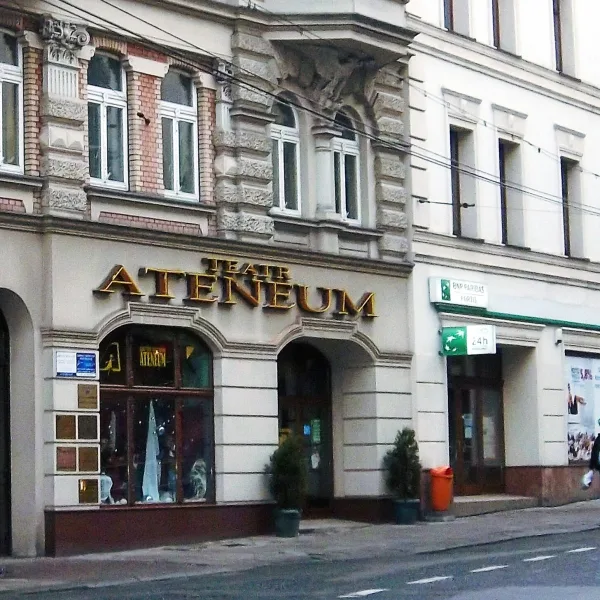
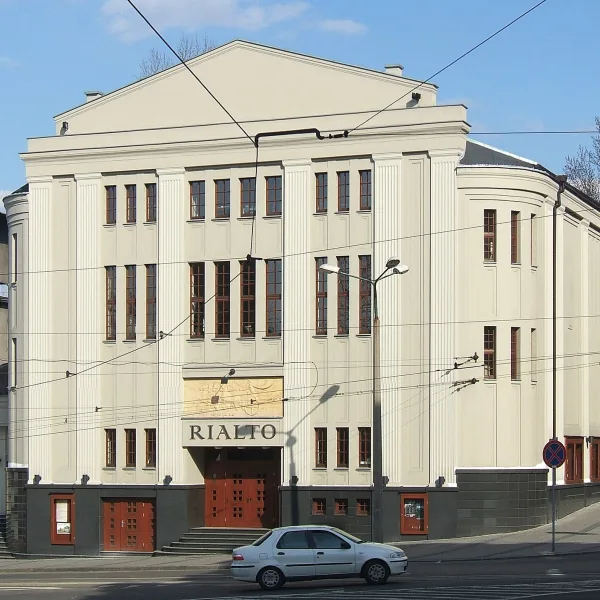
In the centre, on Świętego Jana Street, two stages stand side by side. The Rialto Cinema-Theatre opened in 1913; today it is an arthouse cinema whose programme includes concerts and stage shows next to films. Number ten houses the Ateneum Theatre, the Silesian Puppet and Actor Theatre, which has played mostly for children since 1945.
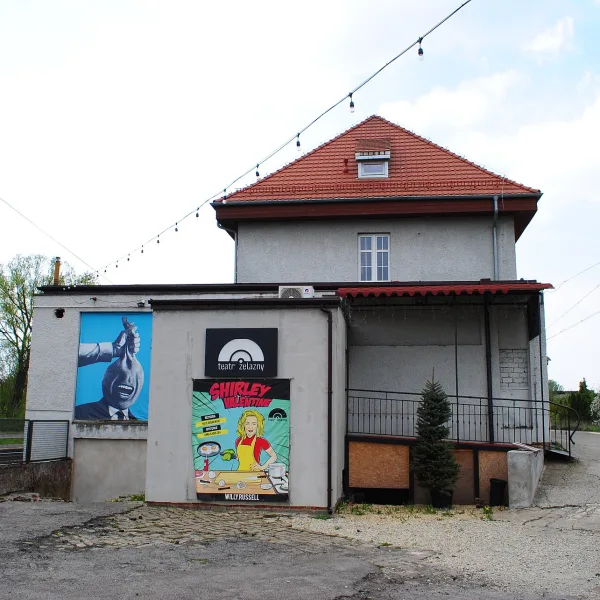
The Teatr Bez Sceny is a small stage founded in 1997 with a repertoire of contemporary comedies and dramas, nominated many times for the Golden Masks. The Teatr Żelazny has a different character: an independent repertory theatre in the Załęże district that plays for adults and children and performs in a temporary hall that holds a hundred and thirty-nine people.
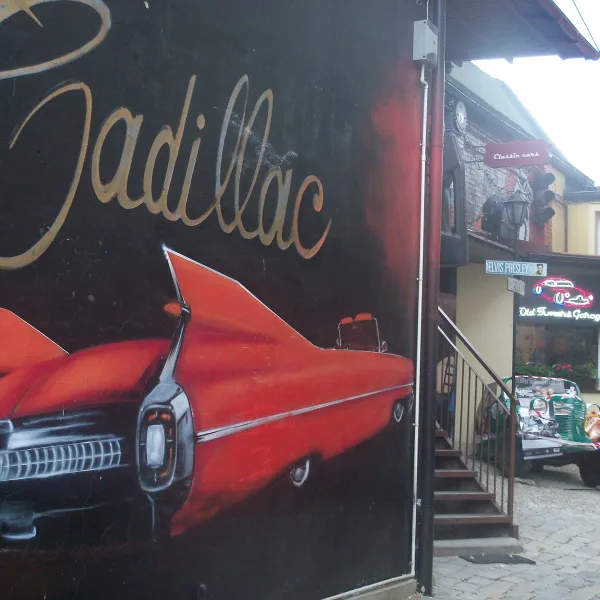
Outside the strict centre, Old Timers Garage in Piotrowice is a music club and theatre in the restored hall of the former Piast cinema, where part of a vintage car collection is also displayed. It suits anyone looking for an evening in an unusual setting.
Which theatre in Silesia is best with children?
With children, a puppet theatre is the safest choice. The region has three of them, each in a different part of the voivodeship, and all three aim their repertoire mainly at the youngest audience.
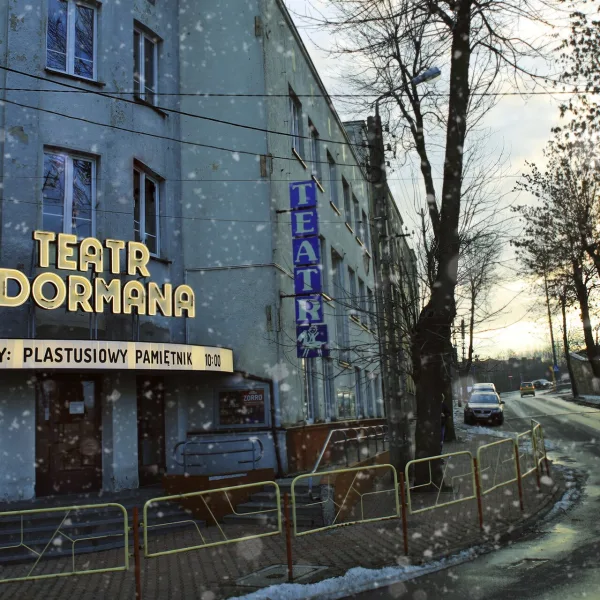
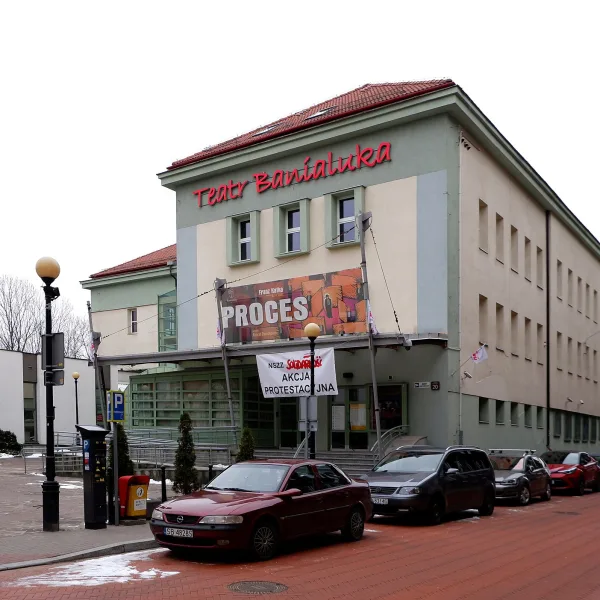
The Banialuka Puppet Theatre in Bielsko-Biała was founded in 1947, plays in a building from 1934 on Mickiewicza Street and has been behind the International Puppet Art Festival since 1966. In Będzin you will find the Dzieci Zagłębia Theatre, founded by Jan Dorman, with shows for children, young people and adults. The third is the Ateneum in Katowice, mentioned above.
Parents of young children can also visit the Teatr Mały in Tychy. There are no resident actors: it is an impresario theatre that hosts outside companies. The building from 1962-1965 is adapted for visitors with disabilities, which makes a visit easier.
Where can you see a show in an unusual place?
Some Silesian stages were created where people once worked, ate or went to the cinema. For anyone who likes to combine theatre with industrial history, this is the most interesting group.
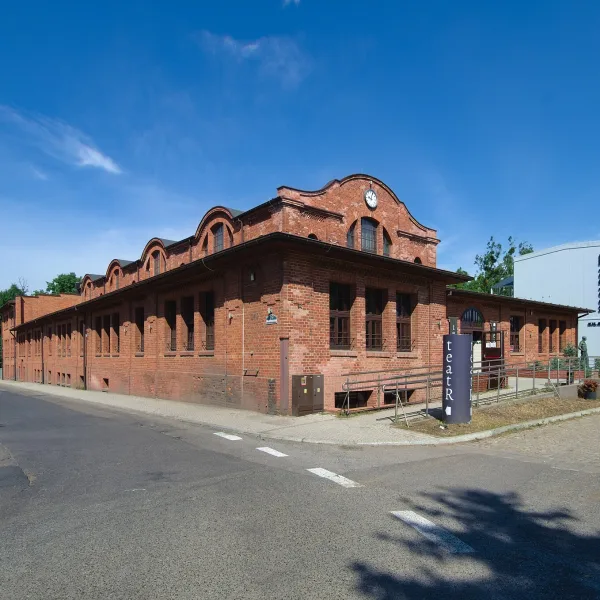
In Bytom, the former pay hall of the Rozbark coal mine, a brick building from 1911 listed as a monument, houses the Rozbark Dance and Movement Theatre of Bytom. Czeladź has the Henryk Kuźniak Mine of Culture occupies a building from 1912 that first served as a canteen for miners. It now has a performance hall, a cinema, workshops and a café.
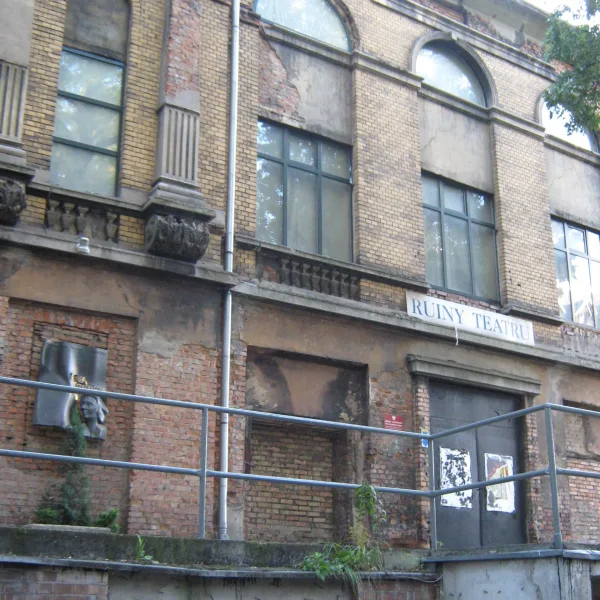
The ruins of the Victoria Municipal Theatre in Gliwice are an exception. The structure from 1890 ceased to be a theatre after a fire in 1945 and remains a ruin to this day. It has been adapted for artistic events, so it is more a venue for events than an ordinary theatre building.
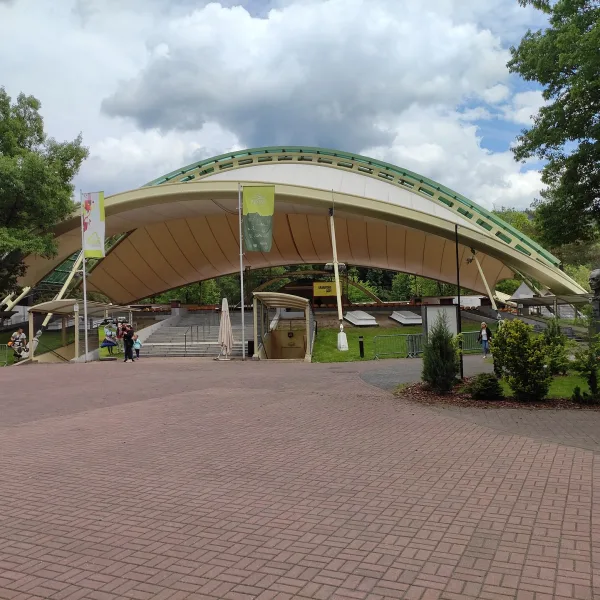
The Stanisław Hadyna Amphitheatre in Wisła offers an open-air stage: a roofed amphitheatre in a park in the town centre, where the Beskid Culture Week takes place. It is a concert and show stage, not a theatre with a repertoire. The Gliwice City Theatre, the former Silesian Operetta of 1952 and now a drama theatre with several stages in the city, completes the overview.
How to plan a visit to the theatre in Silesia
The theatres on this list work indoors, so they suit any weather. It is best to combine them with a short walk: in Bielsko-Biała the Sułkowski castle stands next to the theatre, in Sosnowiec the cathedral basilica is a few hundred metres from the Zagłębie Theatre, and in Rybnik steps lead up to the building from the Plac Wolności.
Repertoires and dates change, so check the events calendar before you go. Stages with a permanent company play regularly, while impresario theatres such as the Teatr Mały in Tychy present invited companies on their own schedule. Katowice has the most stages, Bielsko-Biała and Gliwice have two each, and the rest are spread across the region. The full overview is theatre in Silesia.
Frequently asked questions
What is the largest theatre in Silesia?
The Stanisław Wyspiański Silesian Theatre in Katowice holds that title for the whole of Upper Silesia. Its home from 1907 stands on the Market Square and contains three stages.
Where in Silesia is there a theatre for children?
Puppet theatres play for children: the Ateneum Theatre in Katowice, the Banialuka Puppet Theatre in Bielsko-Biała and the Dzieci Zagłębia Theatre in Będzin. All three aim their repertoire mainly at the youngest audience.
Which theatre in Silesia is the oldest?
The oldest building among these theatres belongs to the Zagłębie Theatre in Sosnowiec, which began work on 6 February 1897 under the name Winter Theatre. In the order in which permanent stages appeared in Polish lands, it counts as the sixth.
Can you see anything besides a performance in a Silesian theatre?
Yes. Old Timers Garage in Piotrowice shows part of a vintage car collection, the Rialto screens arthouse films, and the Mine of Culture in Czeladź has a cinema and a café. The Teatr Rozrywki in Chorzów plays musicals and shows with its own orchestra.
Can you enter the ruins of the Victoria Theatre in Gliwice?
The ruins serve as a venue for artistic events rather than a permanent stage. Check the event calendar to see whether anything is on at a given time.

 Theatre and opera