Tenement houses in Silesia range from Art Nouveau and eclectic to modernist, in Katowice, Częstochowa, Bytom, Bielsko-Biała and Tarnowskie Góry.
These buildings are best seen from the street, so they suit a solo walk with a camera. They include former banks, a hotel and apartment houses, and every address has its own story. Katowice and Częstochowa have separate lists: tenement houses in Katowice and tenement houses in Częstochowa.
Which tenement houses should you see in Katowice?
Four buildings in the Katowice city centre show how urban architecture changed during the first half of the twentieth century. They stand close together, so one short walk covers them all.
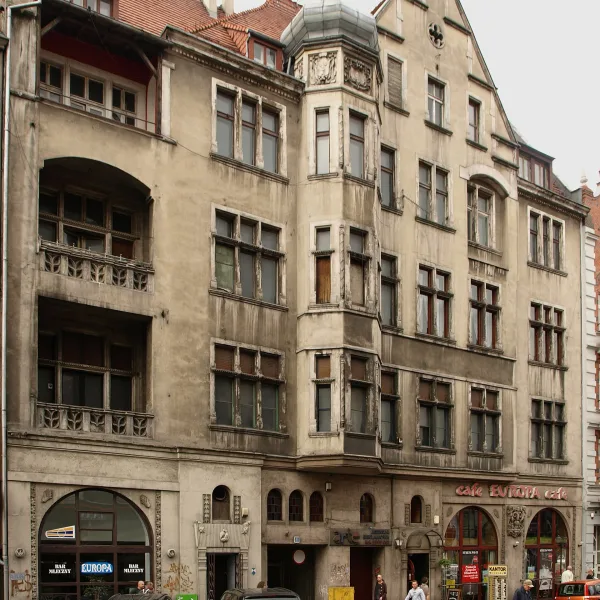
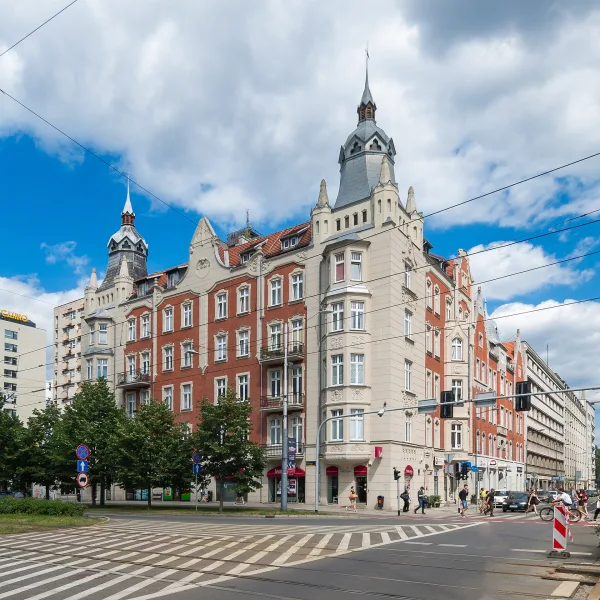
The oldest is the house at Mickiewicza 8, dating from 1900, where a restaurant opened in 1935 and a café called Wojko followed. The group of four houses at Piastowska 3, designed by Louis Dame, belongs to the turn-of-the-century pattern and is recognisable by the helmet roofs on its corners.
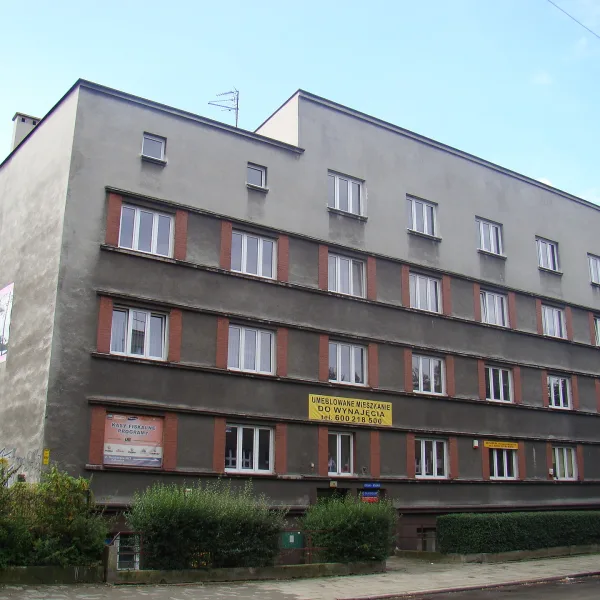
Two houses represent modernism. The house of engineer Jan Piechulek at Raciborska 48 dates from 1932 and has a corner oriel. The Wędlikowski House at PCK 10 has five storeys, a rounded corner and its original staircase. It is considered an emblem of modernist Katowice.
Which tenement houses are worth seeing in Częstochowa?
Częstochowa has three houses built in the early twentieth century, two of them on the main promenade, Aleja Najświętszej Maryi Panny. Two once housed banks, while the third was built for a private owner.
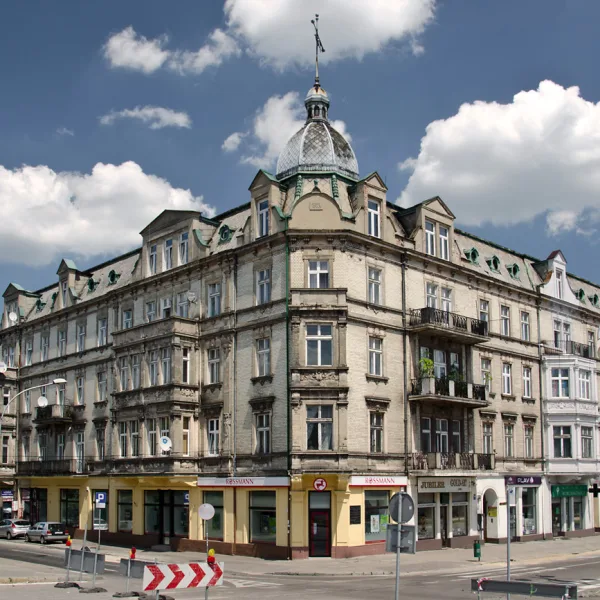
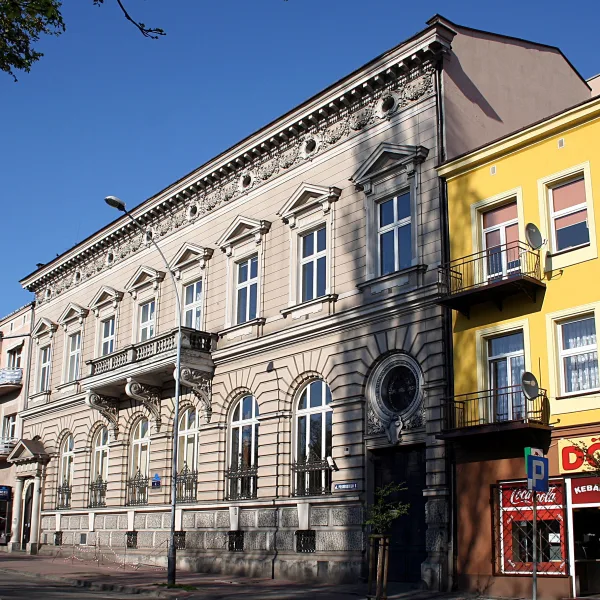
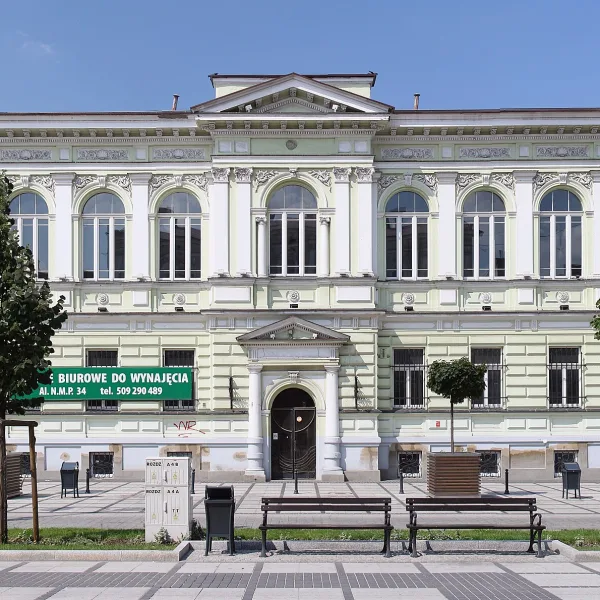
The Franke House stands at the corner of the Aleja and Wilsona Street. It is a four-storey eclectic building from 1901-1903, raised for Adolf Franke. On the Second Avenue you will see the Bank Polski building in a Renaissance-Art Nouveau style, linked with two notorious bank robberies. Piłsudskiego Street has the Bank Handlowy building, with a neo-Renaissance façade and a banking hall with a gallery.
Where to find tenement houses outside the conurbation?
The remaining three addresses lie in different parts of the voivodeship and each calls for its own trip: Bielsko-Biała, Bytom and Tarnowskie Góry.
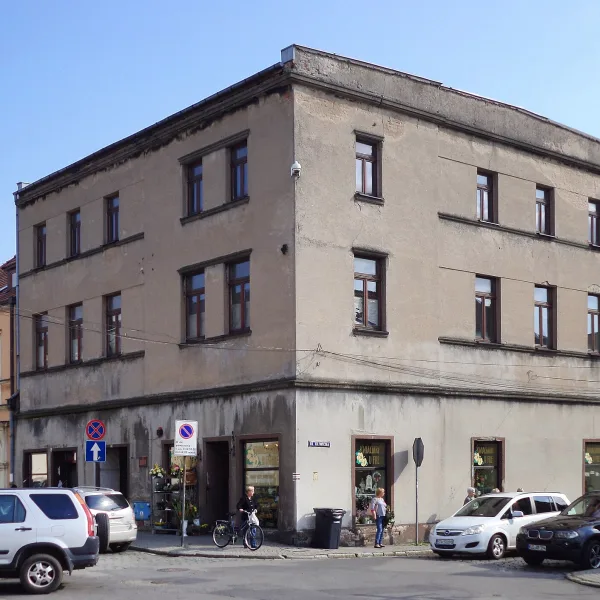
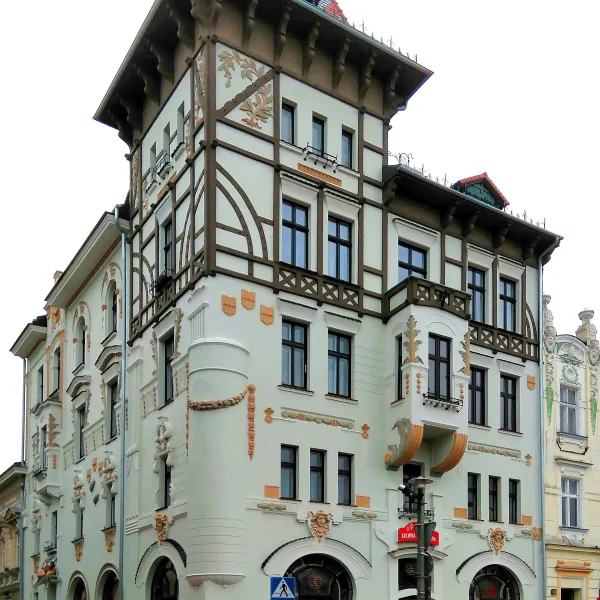
In Bielsko-Biała the Pod Żabami Tenement House of 1903 attracts attention with a doorway decorated with two frogs in tailcoats. Its façade imitates half-timbering, and the house faces the Martin Luther Church. In Bytom the former Hotel Reichshof of 1905 stands at the corner of Dworcowa and Moniuszki streets, with Art Nouveau façades and three gables. The oldest is the Florczak House in Tarnowskie Góry, beside Gwarków Square, with foundations from the early sixteenth century. Local lore calls it the first brick building in the town, and today it serves as housing and shops.
Frequently asked questions
Which Silesian tenement house has an Art Nouveau façade?
Art Nouveau façades belong to the Pod Żabami house in Bielsko-Biała and the former Hotel Reichshof in Bytom. Elements of the style also show on the Bank Polski building in Częstochowa.
Which Katowice tenement houses represent modernism?
The Wędlikowski House on PCK Street and the Piechulek house on Raciborska Street are both modernist. Both stand in the city centre.
Can you go inside these houses?
Most are residential or commercial buildings that you view from outside. The Florczak House serves residents and shops today, and the former Wojko café building recalls its restaurants but is seen from the street.
Which of these houses is the oldest?
The oldest is the Florczak House in Tarnowskie Góry, with foundations from the early sixteenth century. The rest were built around 1900 or in the 1930s.

 Historic sites