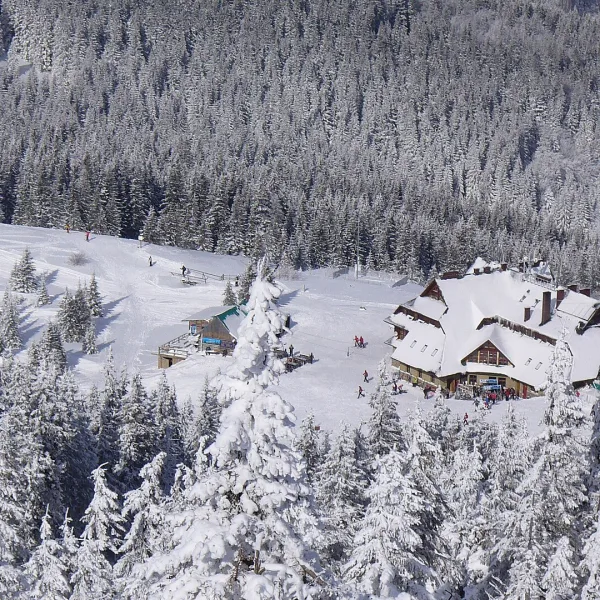
Mountains in Silesia mean the Silesian, Żywiec and Little Beskids and the rocks of the Jura: over a hundred places, from Skrzyczne to Góra Zborów.
The list suits walkers, families and anyone who wants to spend a night below a summit. It covers peaks, passes, mountain huts and cabins, as well as cable cars that shorten the climb.
Which mountains in Silesia should you see first?
Start with Skrzyczne, Barania Góra and Klimczok. These are peaks of the Silesian Beskids with views, trails and a mountain hut near the summit, so they combine easily with an overnight stay or a shorter hike. If you prefer the Żywiec Beskids, begin at Rysianka.
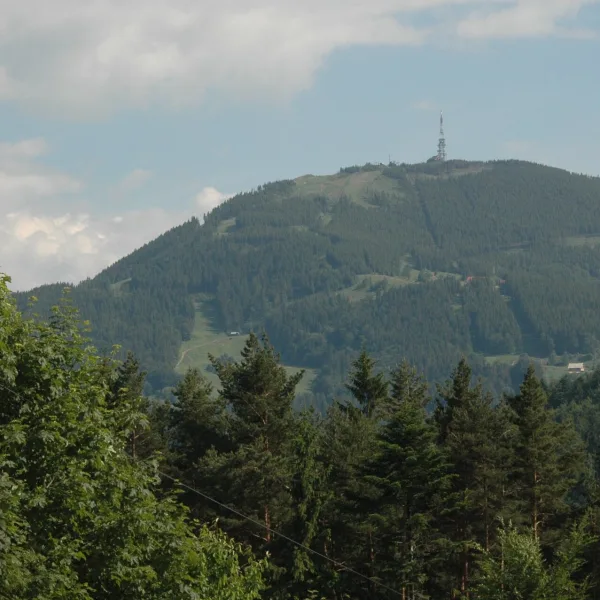
Skrzyczne is 1,257 m above sea level and is the highest summit of the Silesian Beskids, above Szczyrk. It belongs to the Crown of Polish Mountains, and at the top there are a mountain hut, a mast and ski runs. A chairlift runs to the summit, so even people who do not plan a long march can reach it.
Barania Góra is 1,215 m high and is the second highest peak of the Silesian Beskids. It has a viewing tower, a nature reserve on the summit and the sources of the Vistula on its slopes. The article on where the Vistula begins explains what actually flows out of the mountain.
Klimczok (1,117 m) lies on the border of Bielsko-Biała and Szczyrk. The mountain hut is a few hundred metres from the summit, so a short walk is enough to get from one to the other. In the Żywiec Beskids the starting point is often Rysianka (1,322 m), where three ridges meet and a hall opens onto wide views.
Which peaks and passes should you choose in the Silesian Beskids?
The Silesian Beskids have the densest network of trails and the easiest access from the conurbation. The highest peaks are Skrzyczne and Barania Góra, the most visited area is around Bielsko-Biała and Szczyrk, and the Salmopol and Karkoszczonka passes serve as junctions for walkers.
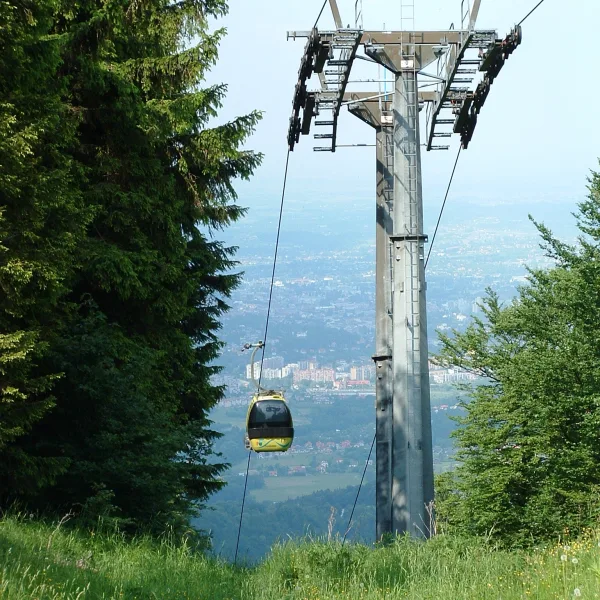
The Szyndzielnia cable car starts in Olszówka in Bielsko-Biała. The 1953 gondola lift is described as the first gondola lift in Poland. Szyndzielnia rises to about 1,028 m and offers a historic mountain hut, an alpinarium and a viewing tower. A short stretch of ridge separates it from Klimczok, so the two peaks fit into one route.
Lower but scenic is Błatnia (917 m). From its viewing mound you can see Skrzyczne and Barania Góra, and a mountain hut dating from 1926 stands on the summit. At trail junctions you will find the Salmopol Pass (934 m), also called Biały Krzyż, with the road from Szczyrk to Wisła, and the Karkoszczonka Pass (723 m) on the border of Brenna and Szczyrk.
For families a good choice is a trip to a summit with a ready-made stop: the huts on Szyndzielnia, Klimczok and Błatnia stand just below the tops, so the walk can be split in two. At trail junctions such as Karkoszczonka it is easy to change plans and descend another valley.
Around Wisła and Brenna
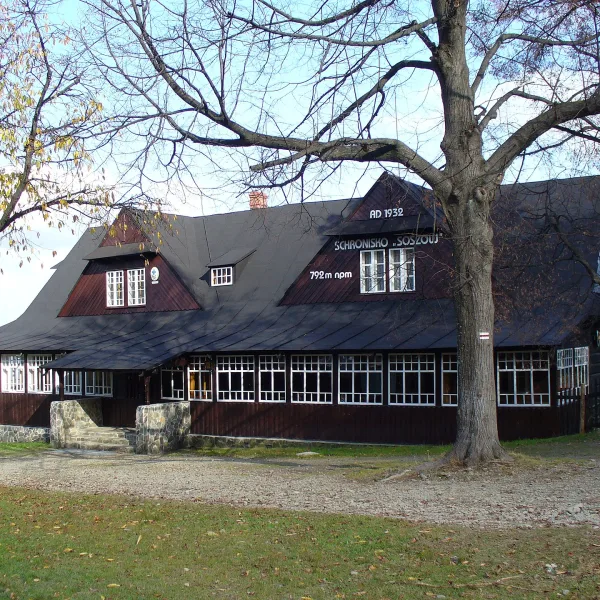
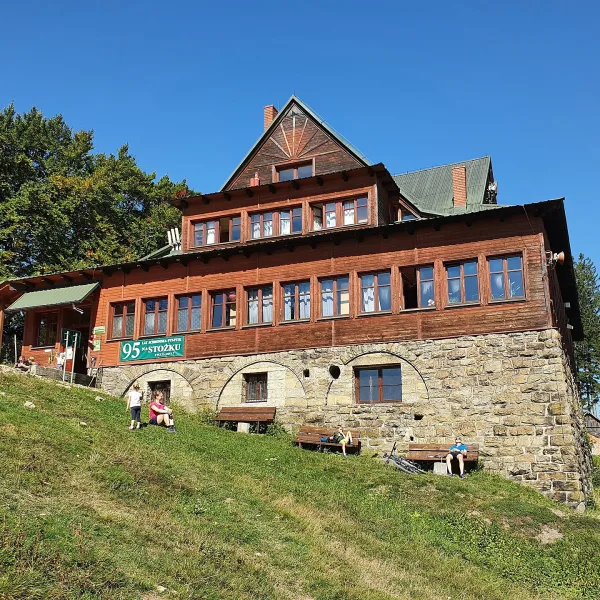
Near Wisła stands the Stożek mountain hut, opened in 1922 below Stożek Wielki near the Czech border. It is regarded as the oldest surviving Polish mountain hut in the Silesian Beskids. The private hut on Soszów Wielki dates from 1932 and sits on the ridge at a trail junction, while the hut at Przysłop (951 m) is a base for three trails up Barania Góra and a nature trail.
Where to look for halls and mountain huts in the Żywiec Beskids?
The Żywiec Beskids offer open mountain meadows with views of successive ranges and a network of huts spread along the ridges. The highest points are Romanka (1,366 m), Rysianka and Pilsko, and huts and bacówkas stand on many of the meadows.
Romanka is the highest peak of the Lipowski Wierch and Romanka group in the Żywiec-Orawa Beskids. The summit itself is in forest and offers no views, so for a panorama it is better to walk to the meadows below. The nearest village is Sopotnia Wielka, and on the slope of Romanka stands the private Słowianka tourist station at 856 m with 24 beds.
Around Rysianka it is easy to plan a two-day ridge walk. The PTTK hut on Hala Rysianka stands at 1,290 m and has operated since 1937. From there it takes about a quarter of an hour to reach the hut on Hala Lipowska, from 1932. Towards Żabnica you descend to the hut on Hala Boracza, built in the 1920s by a Jewish sports society, with views of Romanka.
Rycerzowa, Racza and Pilsko
On the western side of the ridge is the hut on Wielka Racza (1,236 m, built 1934) and lower down the hut at Przegibek, a pass on trails towards Rycerzowa and Wielka Racza. The PTTK bacówka on Rycerzowa is a wooden hut on the meadow, opened in 1975 as the first of the PTTK bacówkas. The bacówka on Krawców Wierch (1,038 m) stands in the Żywiec Landscape Park, and the hut on Hala Miziowa lies on the slopes of Pilsko by the Main Beskid Trail and has a restaurant.
Is the Little Beskids a good choice for a short trip?
Yes. The Little Beskids are lower and quieter than the Silesian Beskids, and their huts stand on clearings that you reach from the village without trouble. They suit families and anyone who wants to combine a walk with a rest in a cabin, without a long climb.
The hut on Magurka Wilkowicka (909 m) was built in 1913 on the initiative of German tourists and stands above Wilkowice near Bielsko-Biała. From the same village a trail leads to Chatka na Rogaczu, a student hut in a former gamekeeper's lodge on a clearing. In the Łękawica commune stands Chatka pod Potrójną, open all year in a highlander cottage from 1911, and the Gibasówka cottage from 1925, known as Lutecja, stands on the Gibasy pass and after renovation welcomes guests again.
Close to the city is the hut on Kozia Góra, called Stefanka, from 1912, at 676 m. The Hrobacza Łąka tourist and retreat house in Międzybrodzie Bialskie is being rebuilt after a fire in 2017, so check before you travel whether it takes guests.
What to see in the hills of the Kraków-Częstochowa Upland?
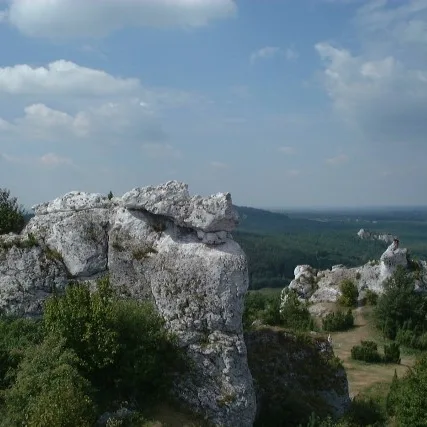
The Jura is a different landscape from the Beskids: limestone rocks, caves and castle ruins instead of long ridges. The easiest start is Góra Zborów with Głęboka Cave in Podlesice, and the red trail along the castles heading towards Częstochowa.
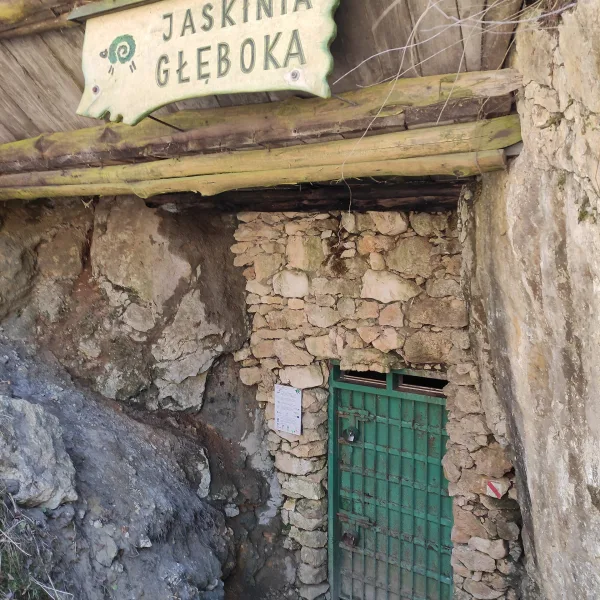
Góra Zborów is a limestone hill and nature reserve, one of the main climbing areas of the region. In its western part lies Głęboka Cave, 190 m long and the only cave in the northern part of the Jura open to visitors. The history of the rocks and the legend of the witches are described in the article on Góra Zborów.
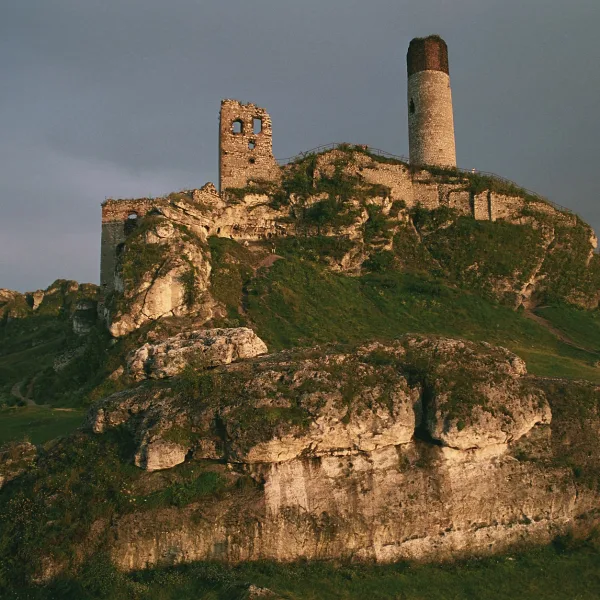
The Trail of the Eagles' Nests is a red hiking trail 163.9 km long that runs across the Kraków-Częstochowa Upland past medieval castles. Within the voivodeship it passes through Ogrodzieniec and its surroundings, so you can walk one section without planning the whole route.
The Jura complements the Beskids well, because it offers a different kind of trip: shorter, rocky and without a climb to a high ridge. For someone who already knows Skrzyczne and Barania Góra, Zborów is a good contrast, and the village of Podlesice and its surroundings can fill a whole day.
How to choose a mountain hut or cabin for the night?
First check who runs the place and whether it takes guests today. The region has PTTK huts, private lodgings, student cabins and former huts that have become restaurants or await renovation, so check the details of each place before you go.
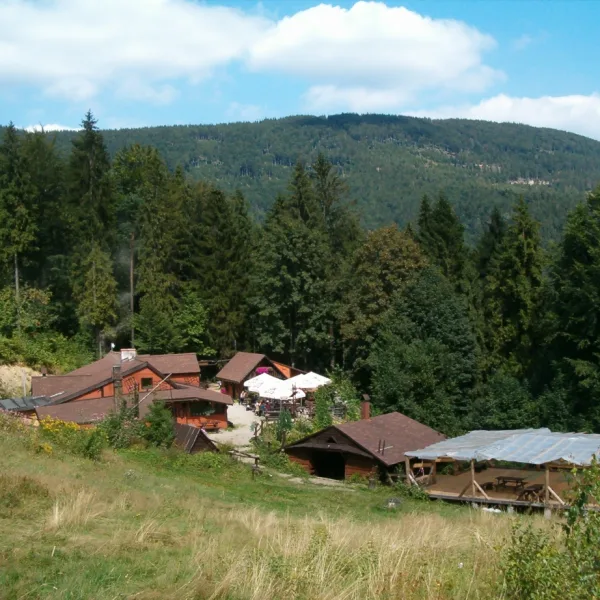
PTTK huts are the classic choice on the main trails: Skrzyczne, Szyndzielnia, Klimczok, Błatnia, Stożek, Rysianka, Wielka Racza. Private places such as Gawra in Złatna-Huta, with a buffet and a campfire shelter, have fewer trails around them but a calmer setting. Student cabins, for example Chata na Zagroniu in Ujsoły, run by Katowice Beskid guides, offer a simpler standard and the feel of an old highlander cottage.
Not every former lodging works as a hut today. The former hut Pod Tułem in Cisownica is now a restaurant with rooms, and the Oźna hut below Wielka Racza is being renovated after years of closure. Also note that Chata Wuja Toma in Szczyrk is a year-round hut in a highlander cottage from 1918, just below the Karkoszczonka Pass.
How to build a route from several stops?
The simplest way is to link places on one ridge or at one trail junction. Natural combinations are Szyndzielnia with Klimczok, Rysianka with Hala Lipowska, and Przysłop with Barania Góra.
The first combination begins with the gondola lift to Szyndzielnia, passes the alpinarium and ends at the Klimczok hut, which stands at 1,052 m between the Magura summit and the Siodło pass (Klimczok PTTK hut). The second consists of two huts about fifteen minutes apart. The third relies on the trails from Przysłop to the summit, with a viewing tower and the sources of the Vistula at the end.
When the weather ruins visibility, summits without views such as Romanka lose their point, and lower goals work better: Głęboka Cave on the Jura or a walk around Wilkowice. More summits and viewpoints in other parts of the region are collected in the viewpoints category, and places with nature in the valleys in parks and nature.
Where are most mountain places concentrated?
Most places cluster around Wisła, Bystra, Żabnica and Brenna. Wisła has six, Bystra and Żabnica four each, Brenna three, and Katowice several near the districts of Murcki and Giszowiec.
Separate lists cover individual towns: mountains in Wisła, mountains in Bystra, mountains in Żabnica, mountains in Brenna and mountains in Katowice.
Frequently asked questions
What is the highest peak of the Silesian Beskids?
The highest is Skrzyczne, 1,257 m above sea level, above Szczyrk. The second is Barania Góra (1,215 m). Both have mountain huts and marked trails.
Can you reach a summit without a long climb?
Yes. A gondola lift runs to Szyndzielnia from Olszówka in Bielsko-Biała, and a chairlift goes to Skrzyczne from Szczyrk. At the top it is easy to combine either with a short walk.
Where in Silesia can you see a cave?
Głęboka Cave in the Góra Zborów reserve in Podlesice is the only cave in the northern Jura open to visitors, 190 m long.
Where to sleep in the mountains in Silesia?
Choose a PTTK hut on a main trail, a private lodging or a student cabin in the Little or Żywiec Beskids. Check before you go whether the place takes guests, as some former huts now serve as restaurants or await renovation.
Which mountains are good with children?
With children it is easiest to pick goals with a lift, such as Szyndzielnia, or lower peaks such as Błatnia with its viewing mound and hut. Longer routes in the Żywiec Beskids are better left for older children.

 Mountains