Parks and nature in Katowice: Forest Park, Kościuszko Park, Zadole and nature reserves. Dozens of green places in almost every district.
Katowice is a city where greenery grows on former spoil heaps, beside ponds left by mining subsidence and in workers' housing estates. It has large forest parks, smaller district parks, nature reserves and squares with monuments. Entry to every place on the list is free, so you choose by distance, facilities and the kind of walk you want.
Which parks in Katowice should you see first?
Start with Katowice Forest Park, Tadeusz Kościuszko Park and Zadole Park. They are the three largest recreation areas in the city, each in a different part of Katowice and each with its own character: woodland, a landscape park and a park with sports facilities.
How do the three biggest parks differ?
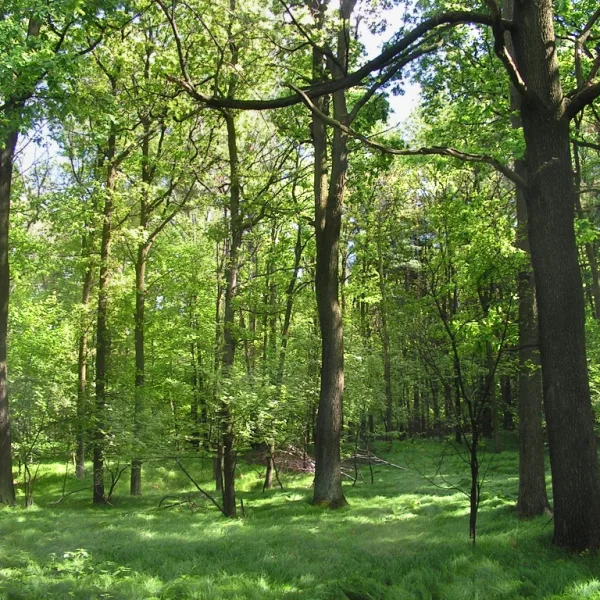
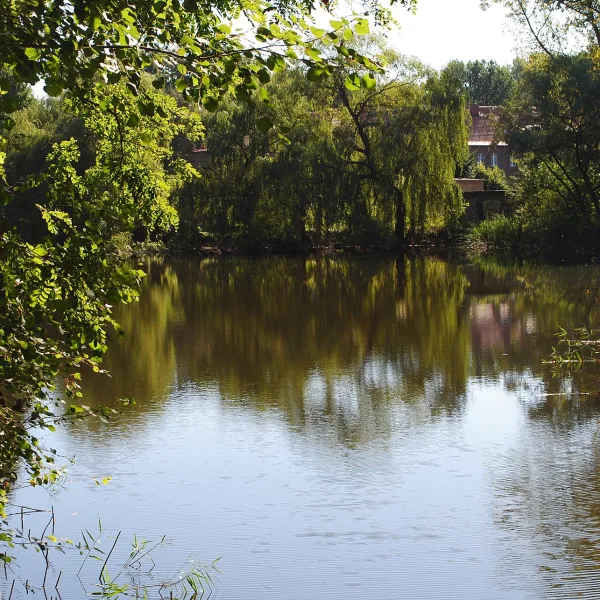
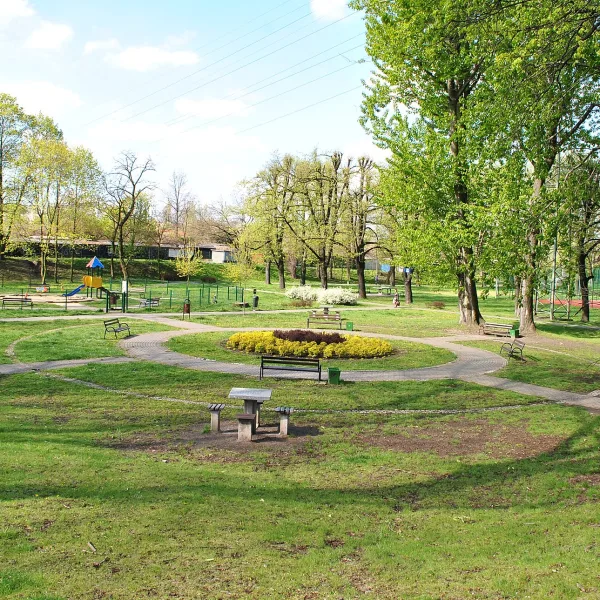
Katowice Forest Park is the largest area of landscaped greenery in the city. It stretches along the valley of the Leśny Stream, and its busiest part is the Valley of the Three Ponds. There is a four-kilometre roller-skating track, and the mixed woods of oak, birch and pine are what remains of the old Silesian Forest. The park lies in the Osiedle Paderewskiego-Muchowiec district.
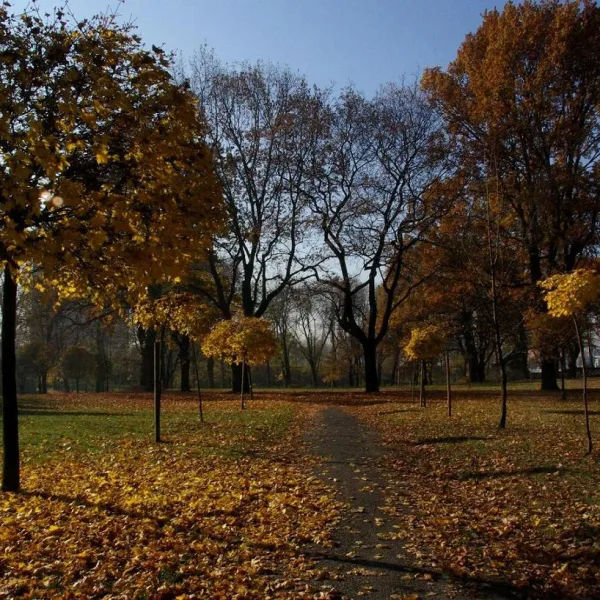
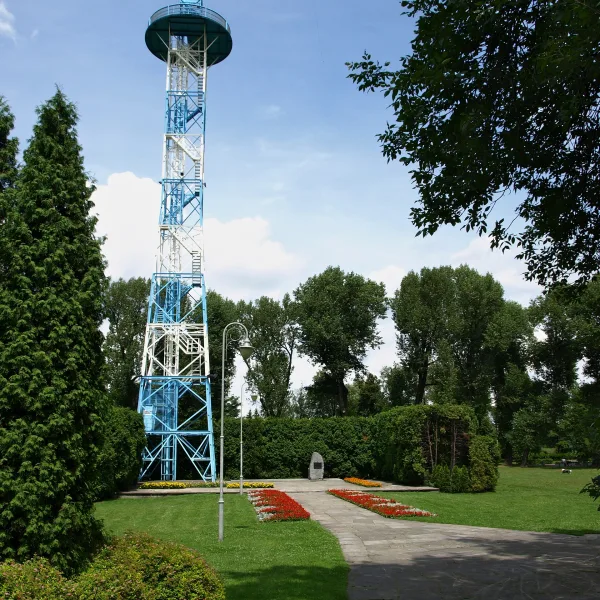
Kościuszko Park in Brynów covers about fifty-one hectares and was laid out in 1888. Its composition follows English landscape parks, and the entire area has been protected as a monument since 1993. Inside stand a timber church dating from about 1510 and a parachute tower, so a walk combines greenery with heritage.
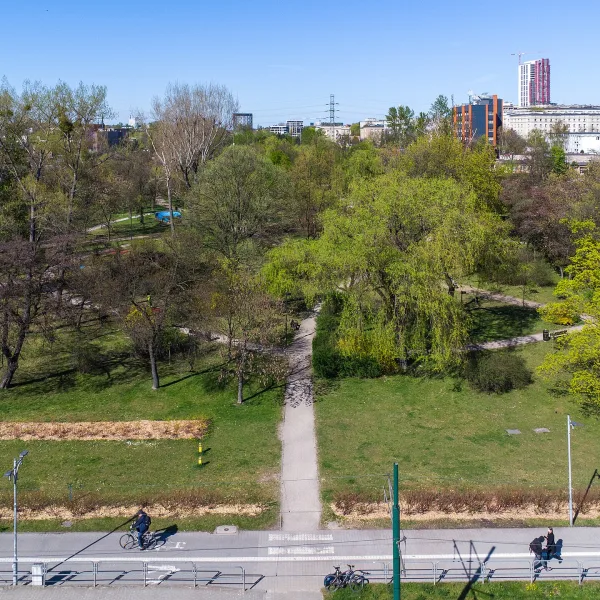
Zadole Park in Ligota covers 7.76 hectares. Facilities include an amphitheatre, courts, a skateboarding track and a salt-brine inhalation tower, while woodland further on reaches Mikołów and the Panewniki forests. A walk through all the city's parks is also described in the article Parki Katowic jeden po drugim.
Which district parks are worth knowing?
District parks are green spaces for an afternoon, usually with a playground, a pitch or a stage. Many of them have a history tied to mining and to company-built housing estates.
Bogucice Park lies right next to the Silesian Museum and the seat of the Polish National Radio Symphony Orchestra. It has playgrounds, an outdoor gym, a dog area and a small amphitheatre, and the Upper Silesian Mining History Trail runs through it. In 2022 a figure of the Silesian goblin Ferdynand was placed here. The same trail passes through Wełnowiec Park, laid out on a wooded former colliery heap. Since its renovation it has gained a pumptrack, a dog run and two playgrounds.
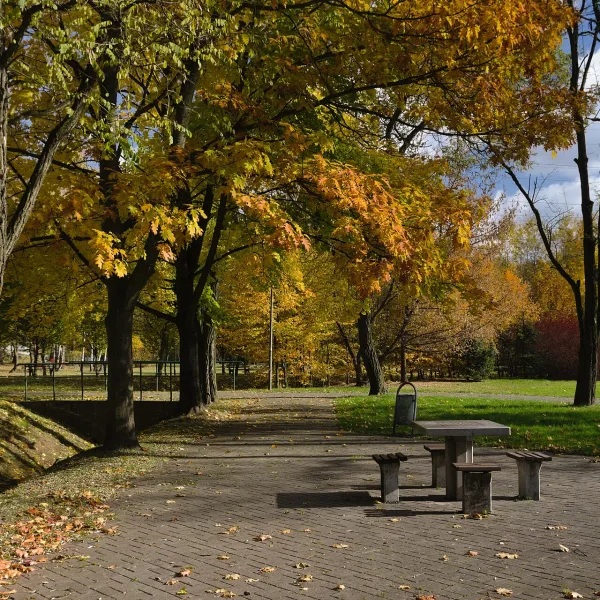
Giszowiec Park is the green heart of the Giszowiec company estate, created in 1907-1910 along with the colliery housing. Old beeches survive from the original forest, and a concert shell dates from about 1910. Nearby, in the Janów-Nikiszowiec district, Bolina Park lies beside two ponds. It has pitches, nine chess tables, two table-tennis tables, a playground and a covered barbecue spot.
In Murcki, Murcki Park is a woodland park with old beeches and cycle route number 101. In Koszutka, Alojzy Budniok Park has playgrounds, a fitness zone and pitches.
Where is the wild nature and where are the nature reserves?
Three places come closest to wild nature: the reserve in Murcki, the pond complex in Szopienice and the reserve in Ochojec. All lie within the city limits, and each protects something different.
Las Murckowski Nature Reserve preserves a surviving piece of the former Silesian Forest. Mixed woodland with ancient beeches covers the slopes of Wanda Hill, where the Przyrwa stream rises. After the enlargement of 2022 the reserve covers more than 140 hectares. Murcki Park lies next to it, so a visit to both is easy to combine.
The “Szopienice-Borki” Nature and Landscape Complex is a set of ponds in old sand workings, where Katowice meets Sosnowiec and Mysłowice. It covers about 157 hectares, and a breeding colony of black-headed gulls nests on the ponds. Bring sturdy shoes and binoculars rather than a pushchair.
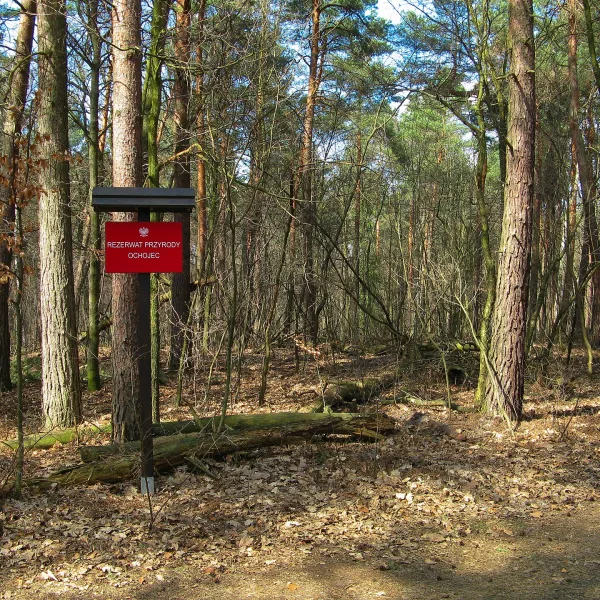
Ochojec Nature Reserve in Piotrowice-Ochojec covers just under twenty-six hectares and was established in 1982. It protects a site of clasping-leaved twisted-stalk (liczydło górskie), a rare mountain plant, at an altitude of about 290 metres. It is a place for people who like to watch nature, not for those looking for a playground.
What are the squares and small parks in the city centre and Koszutka?
In the centre, greenery takes the form of squares with fountains, sculptures and monuments. A walk around them takes a few minutes each and fits well into city sightseeing.
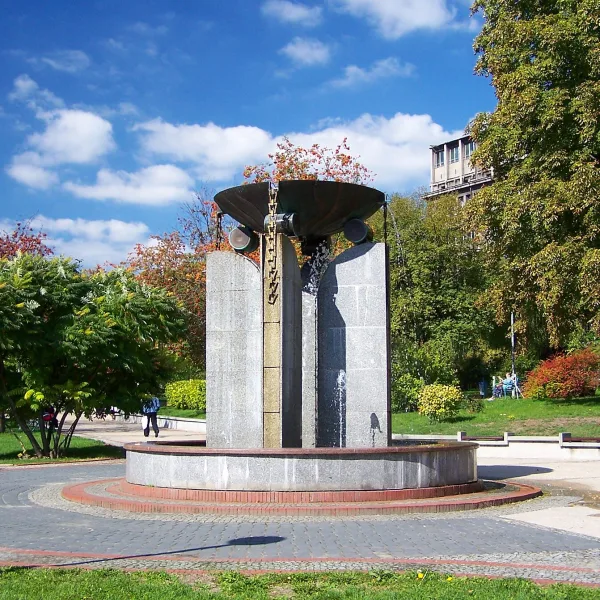
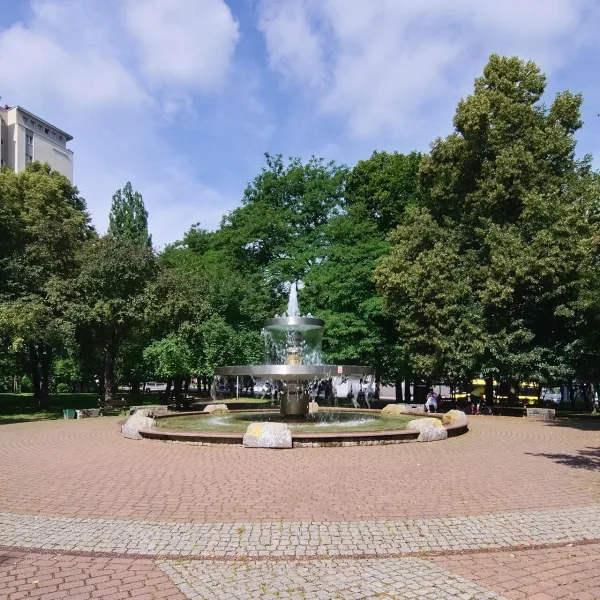
Cardinal August Hlond Square in Śródmieście has paths, benches and the Kaskada fountain with two basins, whose upper jet can rise as high as ten metres. Close by lies Plac Andrzeja with the Jędruś fountain, and Friends of Miskolc Square on Sokolska Street has rainbow benches and fountains after a rebuild in 2011. Silesian Insurgents Park is a small area with monuments whose trees survive from the old garden of the Tiele-Winckler manor house.
In Koszutka, Grunwaldzki Square keeps the Olympic fountain, sculptures and the Artists' Gallery of bronze reliefs of people connected with Katowice. Gwarków Square is framed by buildings of the Central Mining Institute; a sculpture named "Kula" and a playground stand nearby.
What is there to see in Szopienice, Nikiszowiec and other districts outside the centre?
Outside the centre, greenery is tied to the history of the housing estates. Most small parks and squares are in Szopienice-Burowiec, where you will find Anton Uthemann Park by the Szopienice tram terminus, Olympians' Park with a playground and cycle route number 5, and Hilary Krzysztofiak Square with a rain garden, a skate point and a playground.
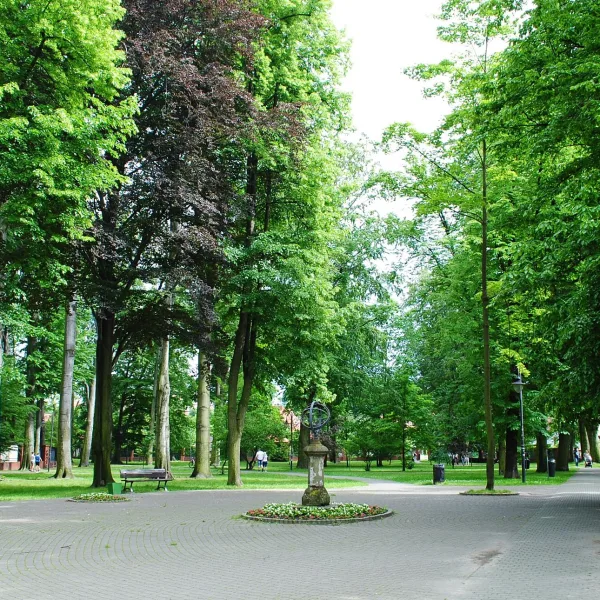
In Nikiszowiec, look in at Emil and Georg Zillmann Square, dedicated to the architects of the estate. In Giszowiec the small Ewald Gawlik Square bears the name of a self-taught painter. Ligota has Partner Cities Square with an illuminated granite globe, a playground and a dog run.
In Dąbrówka Mała the chestnut avenue survives, a row of twenty-eight old trees from the former Tiele-Winckler farm. In Załęże, Załęże Park was created on the site of a 1938 children's garden and today offers football pitches, a playground, a splash pad and an open-air pool in summer.
Where to go with children and where for a quiet walk?
With children, Bolina Park, Załęże Park, Wełnowiec Park and Bogucice Park work best, because they have playgrounds, and some also have pitches, a pump track or a water playground. Zadole with its skate track and Budniok Park with pitches and a fitness zone add to the list.
For a quiet walk, choose Giszowiec Park, Murcki Park or the Las Murckowski reserve, where the old beeches are the main draw. Rollerblading and cycling belong to Katowice Forest Park with its skating track and to Murcki Park with route number 101.
Squares and small parks with monuments
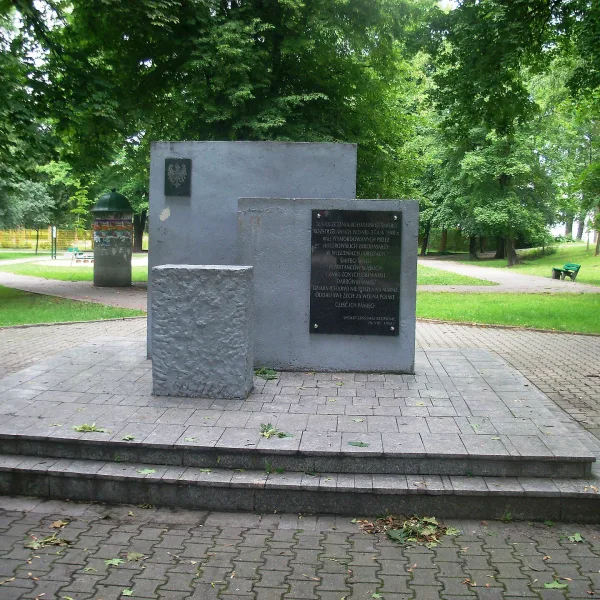
Several squares in the city also serve as places of remembrance, and they deserve a respectful approach. September Soldiers Square in Dąbrówka Mała stands on the site of a former children's garden and has a monument from 1960 to residents of the district shot in 1940. Wincenty Wajda Square in Bogucice, the former village market, has a monument for people who died during the Silesian Uprisings or the Second World War. Walenty Fojkis Square in Wełnowiec has a monument to veterans of the Silesian Uprisings. Plac Andrzeja has a monument to the victims of Katyn and a plaque honouring Home Army soldiers. More such places are described on the page places of remembrance in Katowice, and a general overview of the city is under things to do in Katowice.
Frequently asked questions
Which park in Katowice is the largest?
The largest area of landscaped greenery in the city is Katowice Forest Park. Kościuszko Park in Brynów covers about fifty-one hectares and is in the register of monuments. Zadole covers 7.76 hectares.
Do you pay to enter the parks in Katowice?
No. Entry to all the places on this list is free: parks, squares, small parks and nature reserves.
Where can you go rollerblading in Katowice?
A four-kilometre roller-skating track runs through Katowice Forest Park. Quieter cycling is possible in Murcki Park, which cycle route number 101 crosses, and in Olympians' Park with route number 5.
Where can you see a nature reserve in Katowice?
Within the city limits there are the Las Murckowski reserve in Murcki and the Ochojec reserve in Piotrowice-Ochojec. Alongside them, the “Szopienice-Borki” complex of ponds is worth knowing.

 Parks and nature