Places of remembrance in Katowice: Silesian Uprising monuments, Katyn, the Wujek mine and cemeteries. Over a dozen addresses tied to regional history.
The city holds monuments to the three Silesian Uprisings, memorials to September 1939 and the German occupation, memorials to the crimes of 1940, a monument to the victims of the Stalinist period and the site of the pacification in December 1981. Each address concerns a different event, so they are described separately and not joined into one story.
Which places of remembrance does Katowice have?
You will find more than a dozen addresses: monuments to the Silesian Uprisings in the centre, Szopienice, Nikiszowiec and Stara Ligota, the parachute tower and the scouts' monument, memorials to the victims of Katyn and the prisoners from Ostashkov, a monument to victims of Stalinism in Panewniki, the Wujek mine with its museum, cemeteries and the site of the Great Synagogue. Most stand in squares and small parks, so no ticket or booking is needed.
Where are the monuments to the Silesian Uprisings?
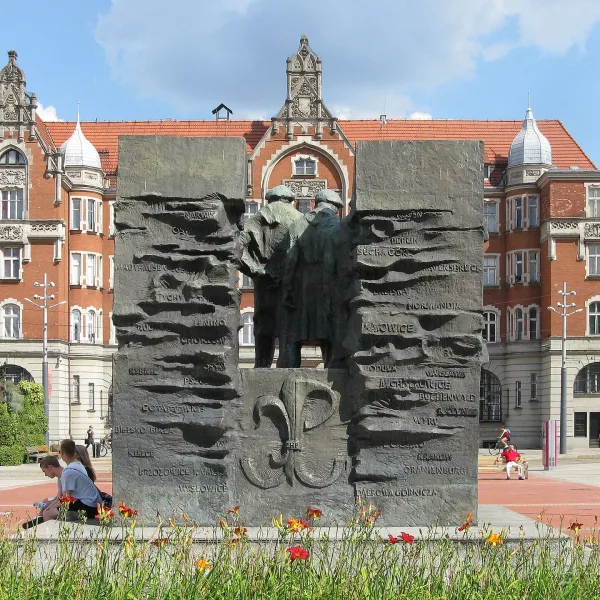
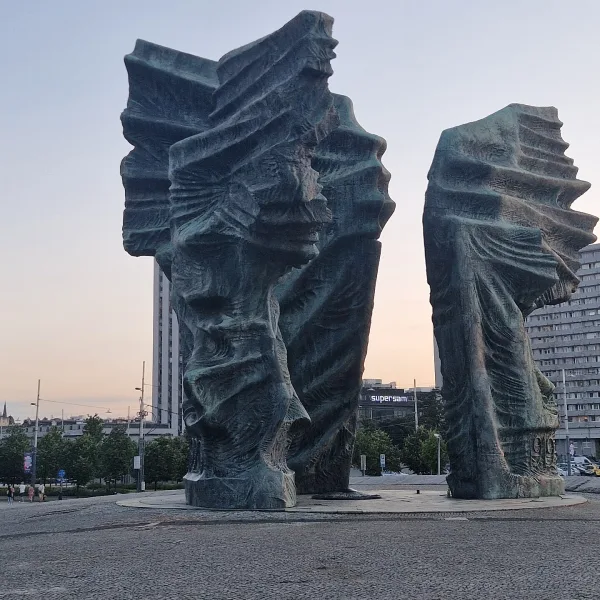
The best known is the Monument to the Silesian Insurgents in the centre, on Korfantego Avenue near the General Ziętek roundabout. Three bronze wings stand for the successive risings of 1919, 1920 and 1921. The unveiling took place on 1 September 1967.
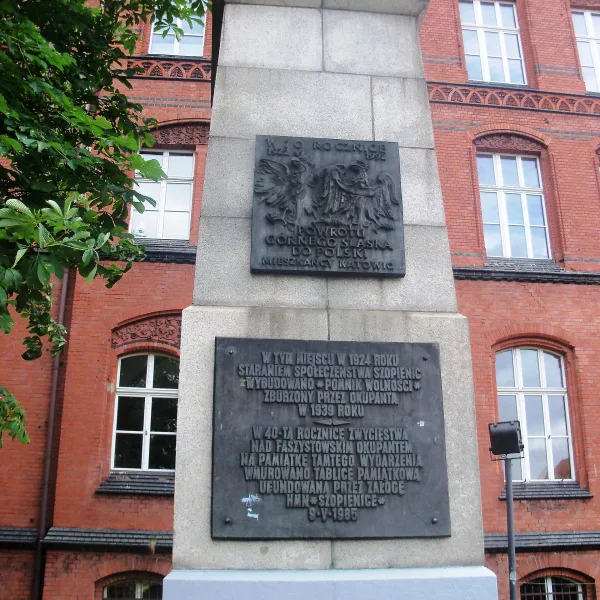
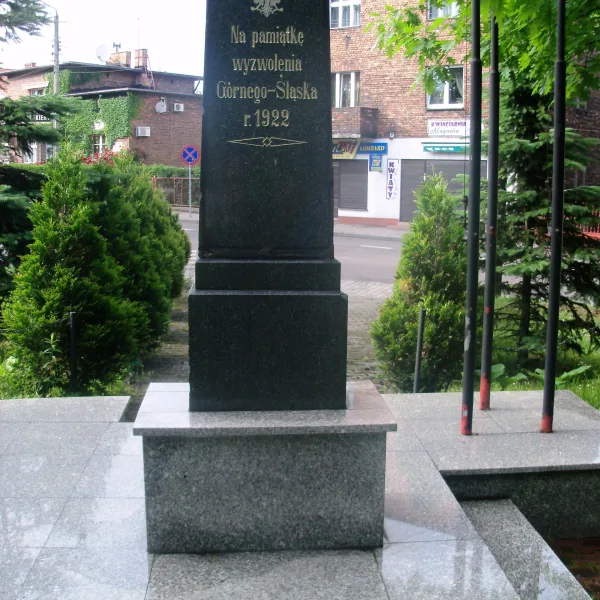
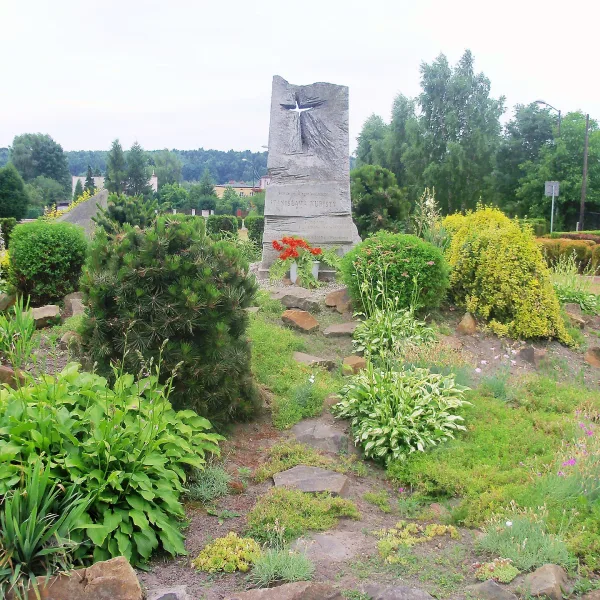
Smaller monuments stand in the districts. In Szopienice the Monument to the Silesian Insurgent is an obelisk with two plaques; its predecessor, the Freedom Monument of 1924, was destroyed in 1939. In Janów-Nikiszowiec the monument to the Heroes of the Silesian Uprisings stands in a small park on Zamkowa Street and replaced an older monument of 1922 that was pulled down in September 1939. In Stara Ligota a boulder with an eagle at the corner of Ligocka and Hetmańska streets was unveiled in 1922, rebuilt in 1936 and recreated after the war.
What commemorates September 1939?
The September Scouts Monument, from 1983, stands on Obrońców Katowic Square. The bronze group shows four young people in scout uniforms, two with hands bound behind their backs, it honours scouts who stood up to German troops, together with those who fell or were killed under the occupation.
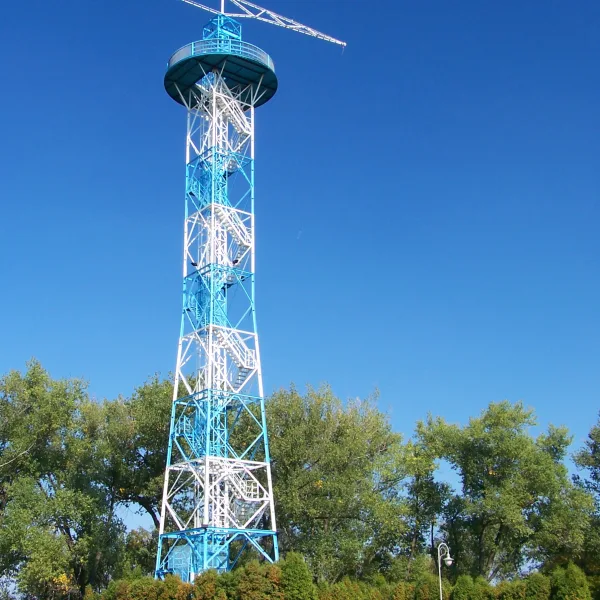
The parachute tower in Kościuszko Park rises thirty-five metres and is the one parachute tower left in the country. Construction ended in 1937, and it opened in June 1938. Today it works as a memorial to the town's defenders who were killed by the Germans in 1939.
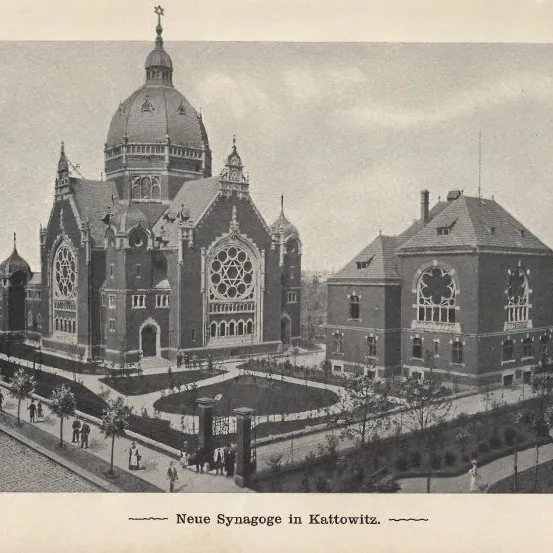
Some memorials mark an absence. The Great Synagogue, the main synagogue of pre-war Katowice, opened in 1900 on Mickiewicza Street, was burned on 8 September 1939 and then pulled down. The building no longer exists, and Synagogue Square, with a monument, lies on its site. The occupation also frames the story of Blessed Stanisław Kubista of Kostuchna, who died at Sachsenhausen in 1940; a monument from 2000 stands in a small park named for him, next to the Holy Trinity church.
Where are the victims of Katyn and Ostashkov commemorated?
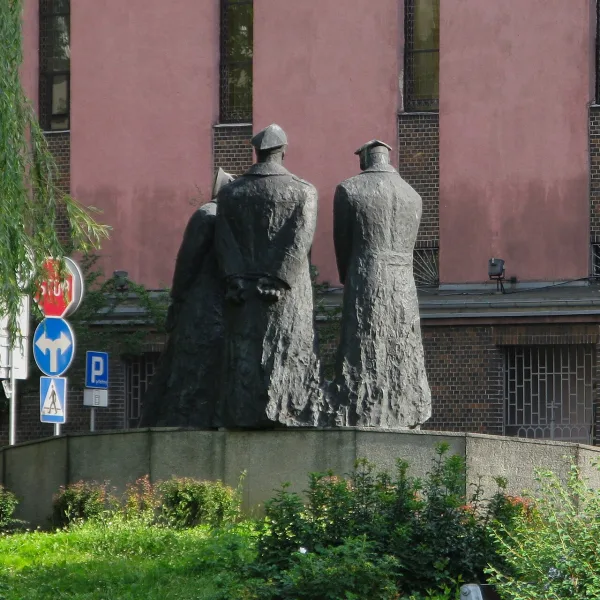
The Monument to the Victims of Katyn stands on Plac Andrzeja and honours Polish Army officers murdered in 1940. It was unveiled on 24 May 2001. The sculpture shows a policeman and two officers standing over a death pit, and the plinth lists Katyn, Kharkiv, Mednoye and other killing sites.
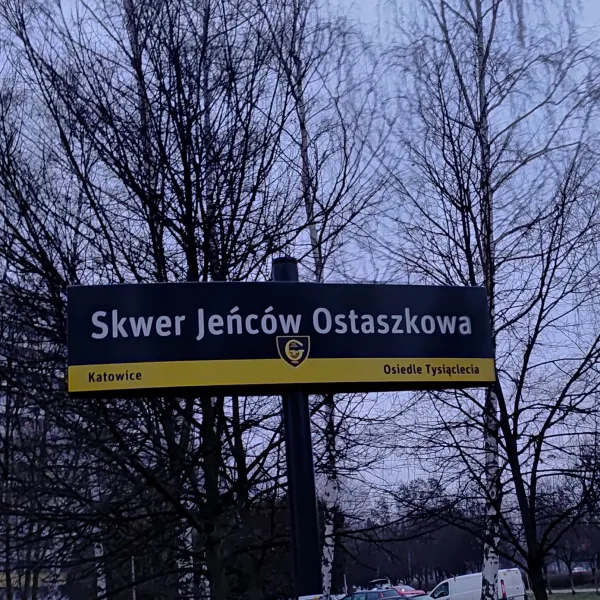
The Ostashkov Prisoners Square on Osiedle Tysiąclecia takes its name from over 6,300 Poles who were kept in the Ostashkov camp and murdered by the NKVD in spring 1940. You will find it around Chorzowska, Ułańska and Chrobrego streets, not far from the Silesian Park's main gate; an information board stands there.
What is the Wujek mine and its memorial museum?
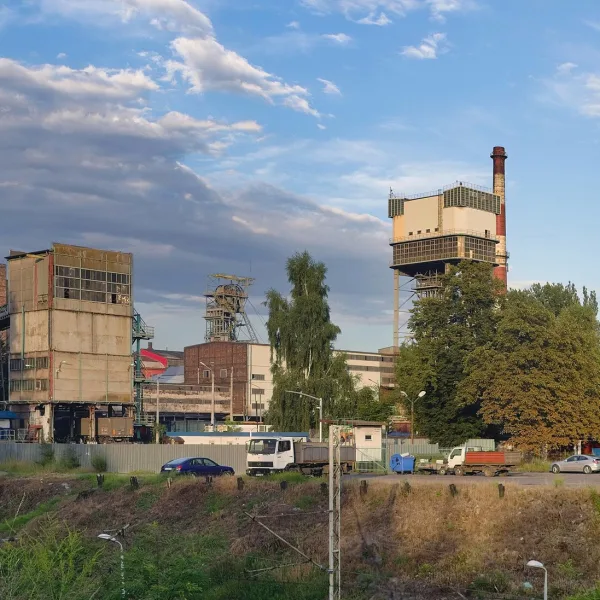
The Wujek mine in Załęska Hałda-Brynów produced coal from 1900 until the end of November 2021. It began as Oheim and took its new name in 1922. On 16 December 1981 a strike here was pacified, with the deaths of nine miners.
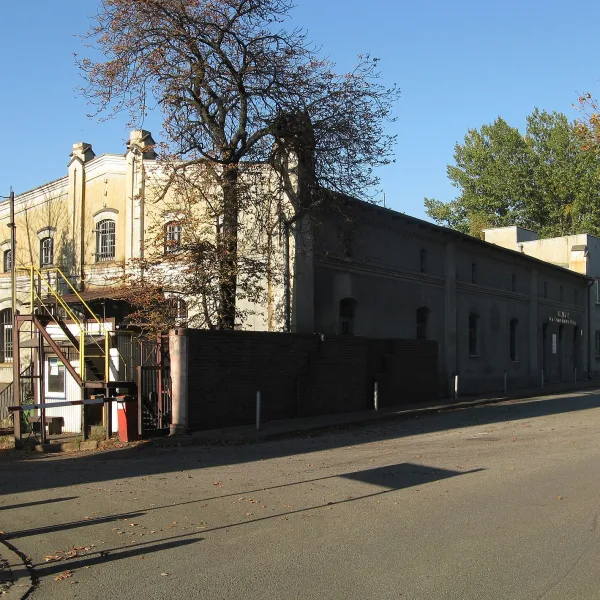
What happened in December 1981 is told at the Wujek Mine Memorial Room Museum at 38 Wincentego Pola Street, in the mine's former clothing store. The Silesian Centre for Freedom and Solidarity runs it. It is the right place to learn how the occupation strike unfolded after martial law was imposed and what happened to the victims.
What does the monument in Panewniki commemorate?
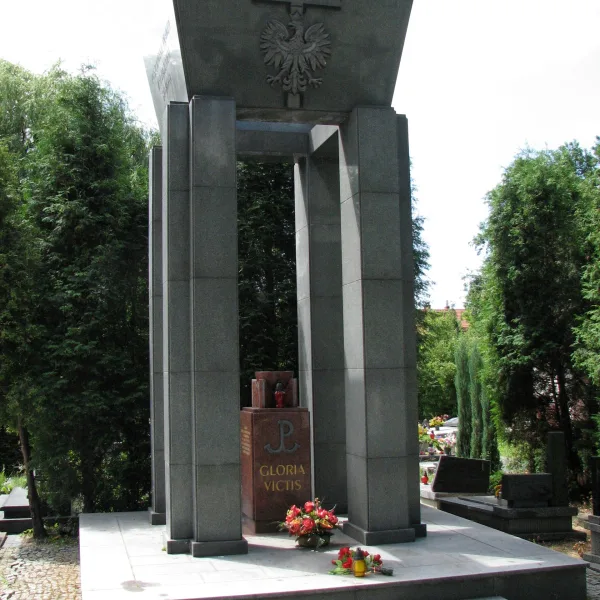
The Monument to the Victims of Stalinism stands in the municipal cemetery at 45 Panewnicka Street. It commemorates soldiers of the independence underground and political prisoners of 1945-1956 who were murdered and buried in secret. Among the formations named are the Conspiratorial Polish Army, the National Armed Forces and Freedom and Independence.
Whose grave lies in the forest in Murcki?
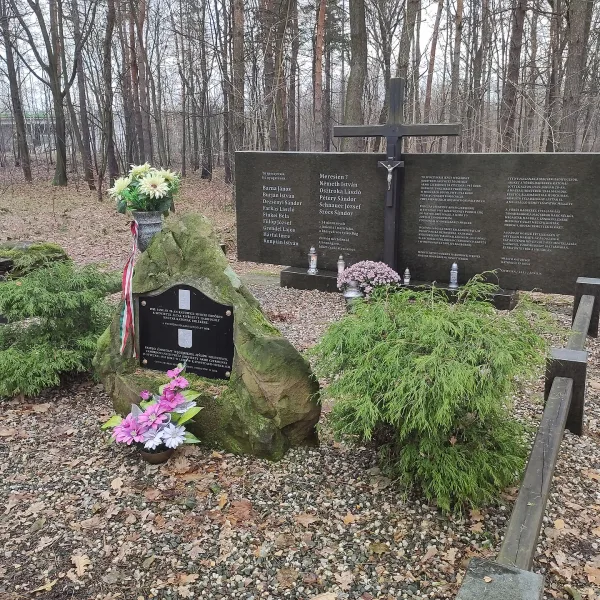
In a forest in Murcki, near Węgierska Street, lies the grave of Hungarian soldiers. Twenty-nine anti-aircraft gunners are buried there, shot on 28 January 1945 after surrendering to the advancing Soviet forces. The plaques at the grave date from 2011 and 2013.
Which cemeteries belong on this list?
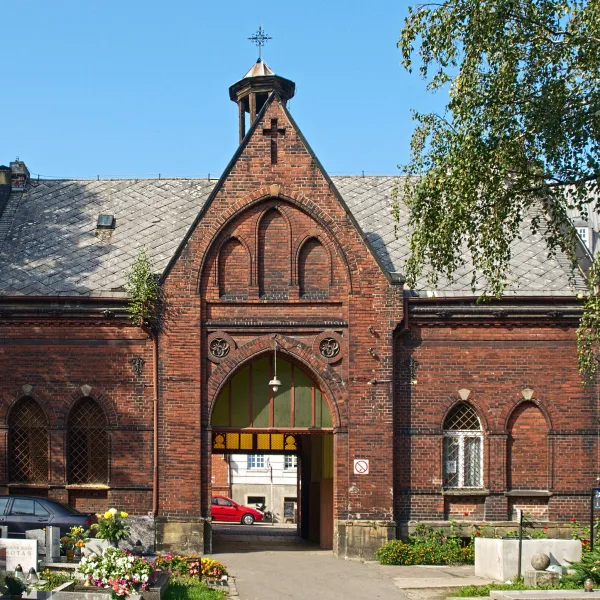
The cemetery on Francuska Street was founded in 1870 beside the church of the Immaculate Conception. It is one of the oldest necropolises in the city and is still in use; among those buried there are Wojciech Korfanty, Józef Rymer and Adam Didur. On its south side lies a Protestant cemetery, and both have been listed monuments since 1993.
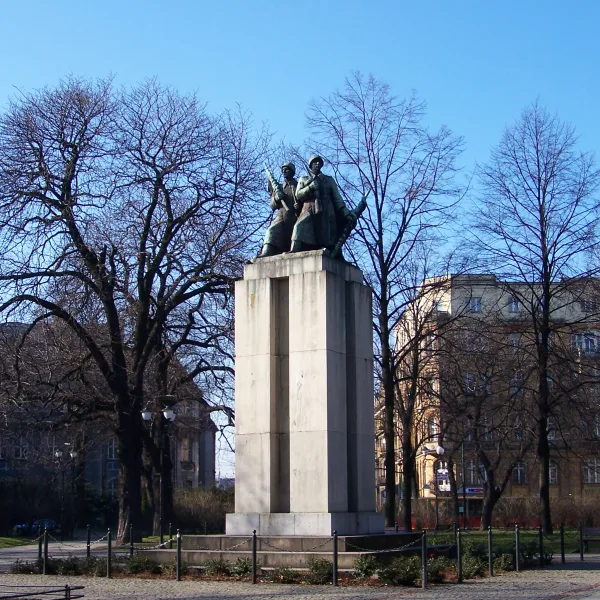
In Kościuszko Park lies the Soviet soldiers' cemetery. Since 2014 it has held a sculpture of two Red Army soldiers, once part of a monument of 1947 whose original form no longer exists.
How to visit places of remembrance in Katowice?
These addresses are sites of commemoration, not ordinary sightseeing stops, so quiet and respect are expected. Monuments in squares and small parks are open at all times, cemeteries follow their own rules, and the museum at Wujek is an institution with its own opening hours, which you should check before visiting.
When planning a route, combine places that are close: the Silesian Insurgents Monument and Plac Andrzeja are both in the centre, and the parachute tower and Soviet soldiers' cemetery are both in Kościuszko Park. Other cemeteries and monuments are gathered on the page cemeteries and monuments in Katowice, and the city's historic buildings on the page monuments in Katowice. A general overview is at things to do in Katowice.
Frequently asked questions
Which Silesian Uprising monuments are in Katowice?
The largest stands in the centre on Korfantego Avenue, in the form of three bronze wings. Smaller ones are in Szopienice, Nikiszowiec and Stara Ligota.
Where is the Katyn Victims Monument in Katowice?
On Plac Andrzeja in the city centre, unveiled on 24 May 2001.
What took place at the Wujek colliery?
A strike was broken up there on 16 December 1981, leaving nine miners dead. The Wujek Mine Memorial Room Museum at 38 Pola Street tells the story.
Does the Great Synagogue in Katowice still stand?
No. It was burned on 8 September 1939 and then pulled down. Today Synagogue Square with a monument lies on its site.
Is the parachute tower in Kościuszko Park a listed monument?
Yes, it is a listed monument. No other parachute tower has survived in Poland, and this one stands as a memorial to those who defended Katowice in 1939.

 Places of remembrance