Cemeteries and necropolises in Katowice: from the oldest burial ground in Bogucice to the Jewish and Evangelical cemeteries. A guide with addresses and history.
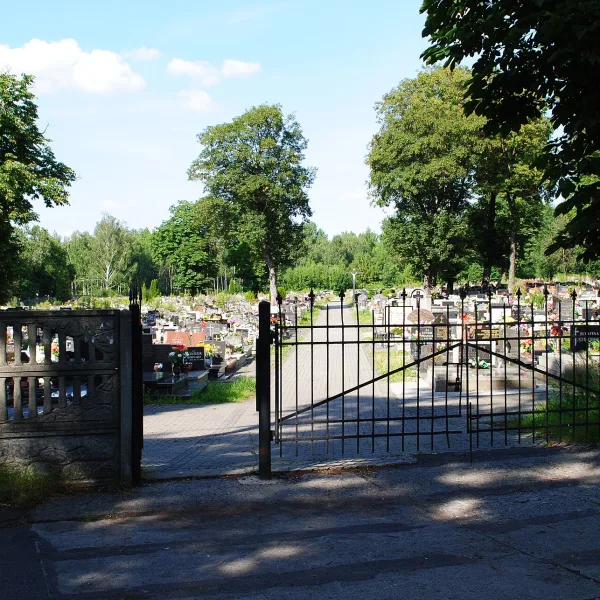
Cemeteries in Katowice are first of all burial places that families visit. Some also have historical value and appear on the heritage register. This overview helps you choose a necropolis for a quiet visit and see what distinguishes it. A full list for the region is gathered in Cmentarze i nekropolie, and an overview of the whole city sits at Katowice.
How should you visit cemeteries in Katowice with respect?
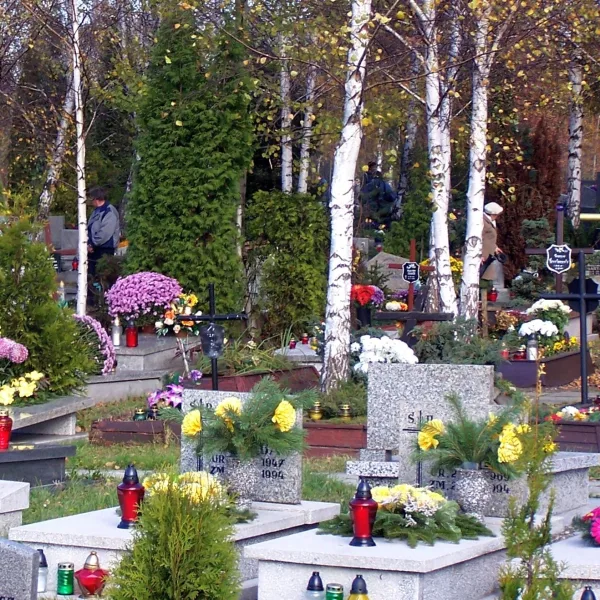
Cemeteries are places of burial and remembrance, so quiet and respect are expected. Dress modestly and do not disturb people visiting the graves of loved ones.
Many necropolises are historic monuments, but not museums: they remain places of mourning. Photograph with restraint and do not enter sections where a funeral is under way. It helps to plan a short route by type of cemetery and by district.
Which necropolises in the centre have the greatest historical weight?
Three important cemeteries lie in Śródmieście: on Sienkiewicza Street, the Jewish one on Kozielska and the Evangelical one on Francuska. Each belongs to a different community and has its own history.
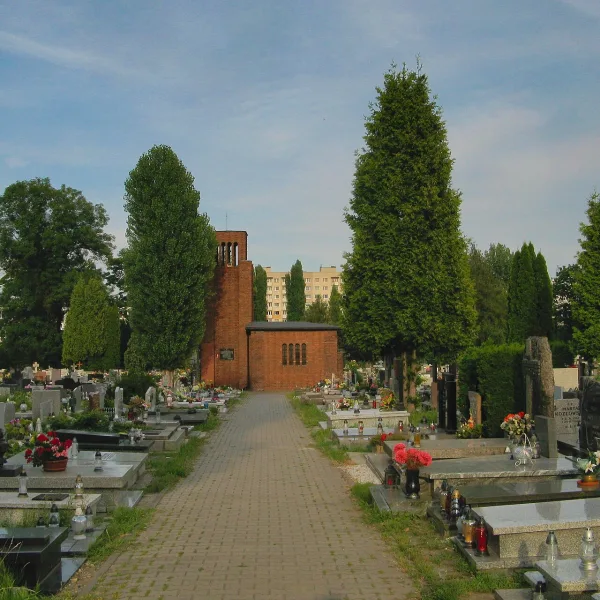
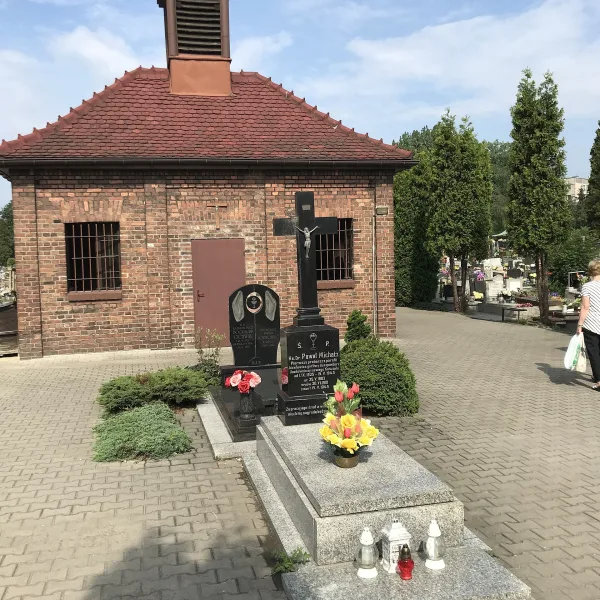
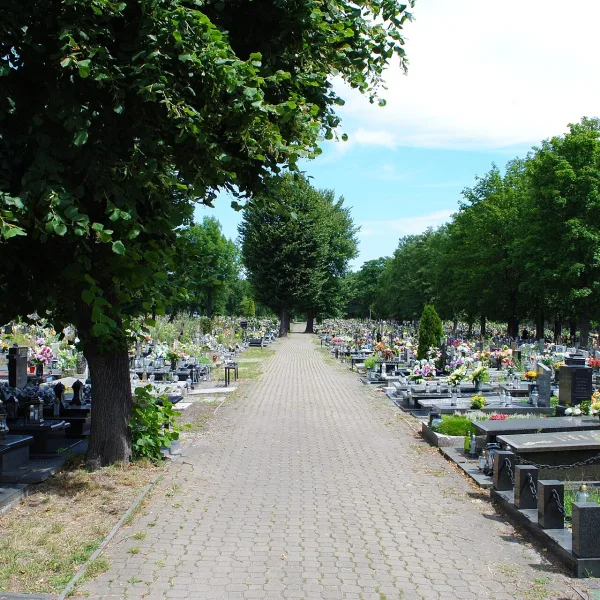
The cemetery on Sienkiewicza Street was founded in 1911. It belongs to the Katowice parish of Saints Peter and Paul, and a short distance separates it from the Cathedral of Christ the King. Its most characteristic feature is a brick modernist funeral chapel from the interwar period, whose tower has two mosaics. Among those buried here are two well-known composers, Wojciech Kilar and Henryk Mikołaj Górecki.
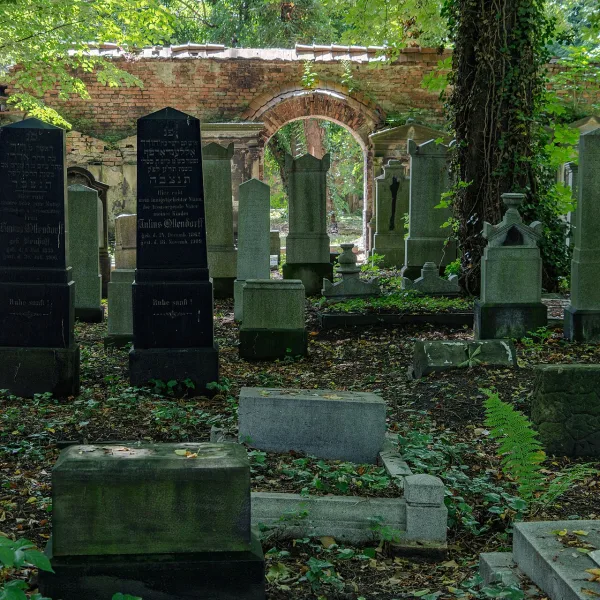
The Jewish Cemetery at ulica Kozielska 16 has existed since 1869 and still receives burials. As a listed monument it protects the grounds, the gravestones, the funeral hall, the Burial Brotherhood building and the forged-iron gate in the fence. Visitors find roughly 1,400 tombstones and a Holocaust memorial. In 1868 the Jewish community bought the land from Josef Ludnowski, and in 1927 the grounds were enlarged.
The Evangelical Cemetery on Francuska Street dates from 1884. It is an active necropolis of the Evangelical-Augsburg parish, on the heritage register, between Francuska, Powstańców Śląskich and Damrota streets. It borders the Catholic cemetery on Francuska. People linked to the city rest here. On the same street the life of Wojciech Korfanty ends, as we describe in the article Wojciech Korfanty: od Sadzawek do cmentarza przy Francuskiej.
Where do you find the oldest necropolis and other parish cemeteries?
The oldest necropolis in the city is the cemetery in Bogucice, while the other districts hold parish cemeteries from the 19th and 20th centuries. Many have insurgents' monuments, chapels and miners' graves.
The cemetery on Wróblewskiego Street in Bogucice is regarded as the oldest burial ground in Katowice. The first mention of it comes from 1598, from a parish visitation record. Today it is active, on the heritage register, and preserves gravestones from the 19th century. It is a resting place, not a park, so enter gravely.
In Ligota-Panewniki, opposite the Franciscan basilica, lies the municipal cemetery on Panewnicka Street from 1911. Its plots include graves of Franciscan friars and a common grave of Katowice's defenders in 1939. In Dąb, on Bracka Street, stands a parish cemetery from 1894 with a neo-Gothic chapel and a collective grave of miners from the "Cleophas" mine. It now covers over 2.3 hectares.
In Załęże, on Pośpiecha Street, spreads the parish cemetery of St Joseph, founded around 1898. Miners rest here, and plaques of Italian families hang on the wall. The history of the cemetery is linked to the 1896 fire in the "Cleophas" mine, in which over a hundred miners died.
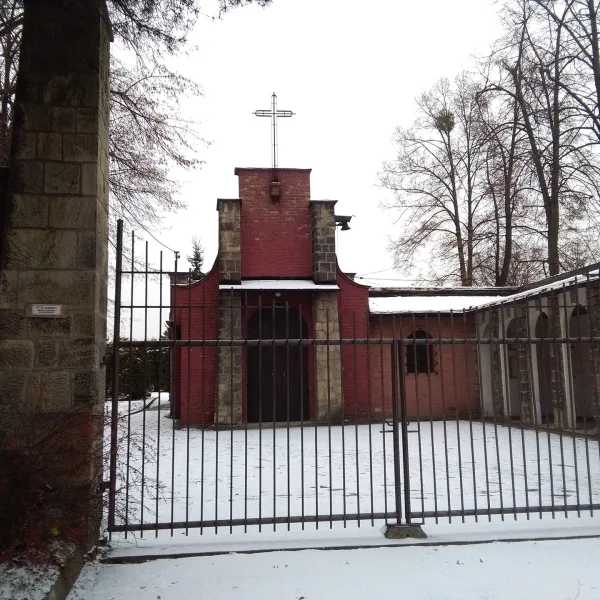
In Szopienice-Burowiec, on Brynicy Street, lies the cemetery of the parish of St Hedwig of Silesia, covering 3.957 hectares and opened in the 1870s. In Janów, on Cmentarna Street, lies the cemetery of the parish of St Anne from 1910, with the Janów pond beside it. In Wełnowiec-Józefowiec, on Józefowska Street, there is a cemetery from 1923 with a modernist gate and a historic chapel. In Podlesie, on Michałowskiego Street, a cemetery from 1922 has a brick chapel and two parts with different layouts; it is visited mainly by people of the district.
The small cemetery on Górniczego Stanu Street in Giszowiec was opened in 1949. It is the only necropolis in the estate, and Olympic athletes, among others, are buried there.
Where do insurgents and the war dead rest?
Several cemeteries have special military plots and monuments. Do not treat these places as an ordinary stop on a route, because they serve to commemorate the fallen.
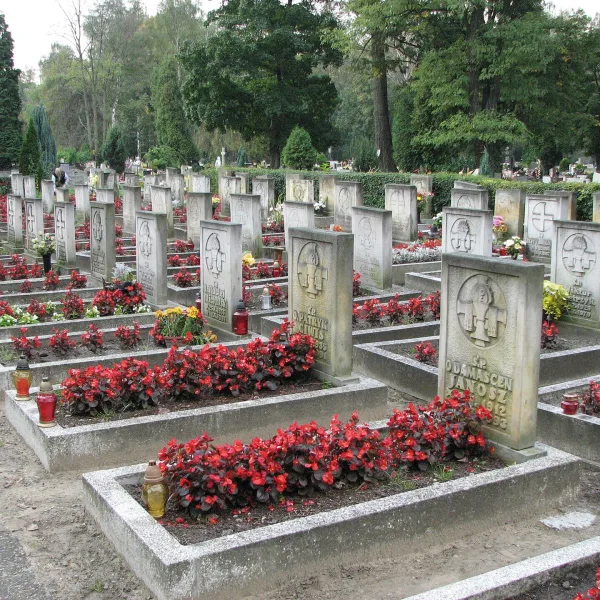
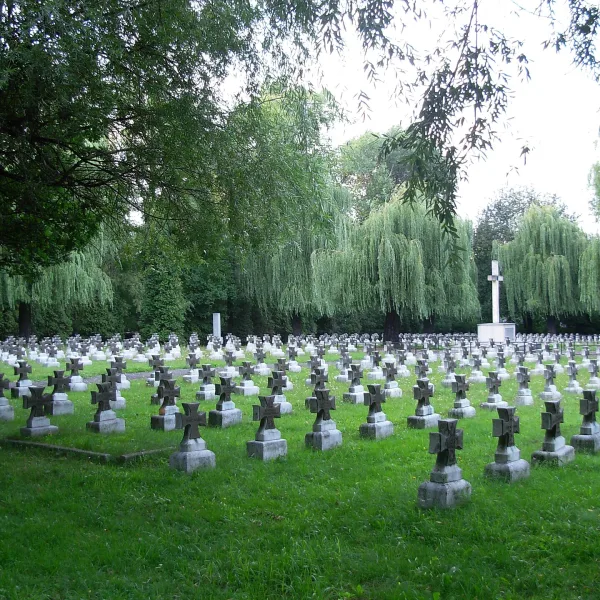
The Garrison Cemetery in Brynów, between Meteorologów and Ceglana streets, was created in the 1920s on the site of a prisoner-of-war cemetery from 1917. A main avenue divides it into two parts, graves are marked with uniform crosses, and leaders of the Silesian uprisings lie around the main square. In Dąbrówka Mała, on Le Ronda Street, the parish cemetery from 1913 preserves war graves and a memorial honouring the fallen of the uprisings and of World War II. Count Tiele-Winckler donated the land.
In Kościuszko Park the Red Army Soldiers Cemetery was opened in 1967, a war necropolis entered in the heritage register. The soldiers buried here died in the fighting for Katowice in 1945. More about burial places of war victims is in the article Cmentarze wojenne i mogiły zbiorowe w województwie śląskim.
How can you plan a route among the cemeteries of Katowice?
The simplest is to combine necropolises in the same district. In Śródmieście lie three cemeteries, and the others need separate journeys.
- Śródmieście: Sienkiewicza, the Jewish and the Evangelical cemeteries.
- Brynów: the Garrison Cemetery and the Red Army Soldiers Cemetery in Kościuszko Park.
- Bogucice and Dąb: Wróblewskiego and Bracka.
- Szopienice, Janów and Giszowiec: Brynicy, Cmentarna, Górniczego Stanu.
- Załęże, Ligota-Panewniki, Józefowiec, Podlesie, Dąbrówka Mała: separate trips.
Frequently asked questions
Where should you start if you are interested in the history of the city?
A good beginning is Bogucice: the necropolis there, by Wróblewskiego, ranks as the oldest in the city and a document from the late 16th century mentions it.
Where is the Jewish cemetery in Katowice?
The Jewish cemetery is at ulica Kozielska 16 in Śródmieście. It was opened in 1869 and is active.
Can you visit the cemeteries in Katowice?
You can visit them with respect, because they are active burial and remembrance places. Do not treat them as museums and keep quiet.
Where do the composers Wojciech Kilar and Henryk Mikołaj Górecki rest?
They are buried in the cemetery on Sienkiewicza Street, in Katowice's Śródmieście district.
Where in Katowice are the graves of the Silesian insurgents?
Insurgents rest in the Garrison Cemetery in Brynów, among others. Insurgents' graves are also found in the cemeteries on Brynicy Street in Szopienice and Le Ronda Street in Dąbrówka Mała.

 Cemeteries and monuments