Sculpture in Katowice: monuments to politicians and artists, memorial benches, a hanging bluesman and bebok figurines. Where to find them in the city.
Sculptures stand on squares, outside universities, in a park and beside busy streets. Seeing them needs no ticket or booking, only a walk. Most lie in Śródmieście, so you can see many of them on one outing. A broader selection for the region is in Rzeźba, and an overview of the city is at Katowice.
What is the best sculpture to see first in Katowice?
Pick three to begin with: the hanging bluesman on Mariacka Street, the Korfanty monument on Silesian Sejm Square and the monumental Polish Soldier Monument. Each shows a different kind of city sculpture: contemporary, official and monumental.
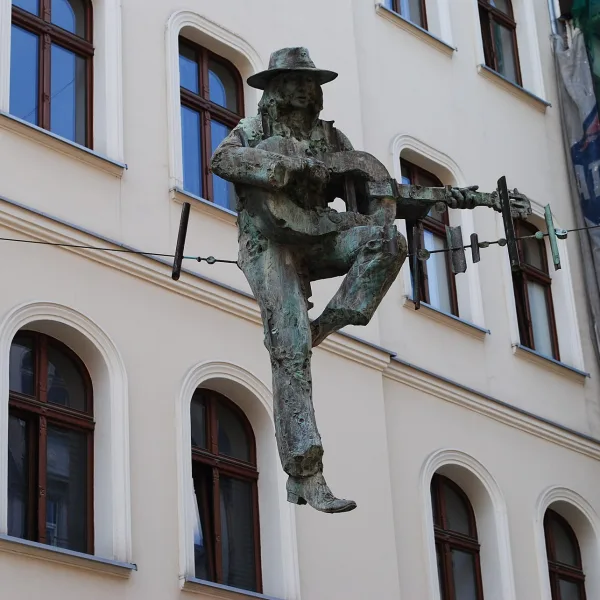
The Bluesman Monument is a 2016 work by Jerzy Kędziora: a figure with a guitar suspended on steel cables five metres above Mariacka Street. The idea came from Leszek Winder, a musician of the Silesian Blues Group, who wished to honour Silesian bluesmen. A plain bench was planned at first, but the result is a sculpture that seems to balance above the cobbles.
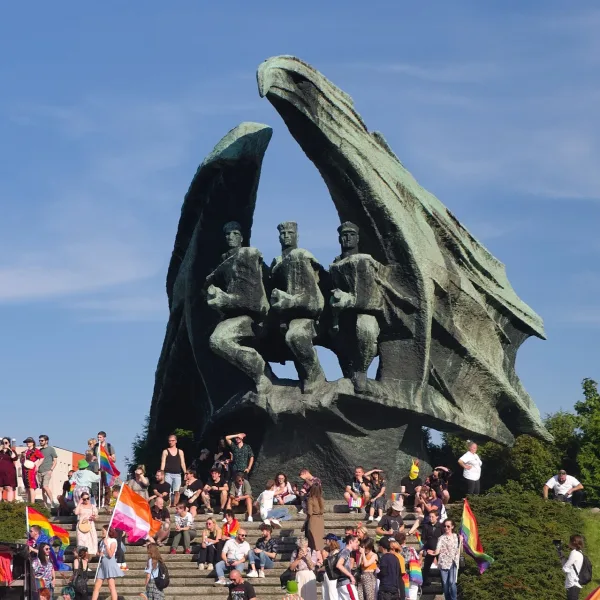
The Monument to the Polish Soldier stands on an artificial hill on the Paderewski estate. It was unveiled on 6 October 1978. The author is Bronisław Chromy, who designed the patinated bronze structure, weighing 80 tonnes, with the architect-engineer Jerzy Pilitowski. The names of battlefields appear on it, and the monument is among the larger ones in Upper Silesia.
Where in the centre can you find monuments to historical figures?
Śródmieście itself holds the most monuments to people tied to the history of the region and the country. Most stand on two neighbouring squares, so it is easy to see several on one walk.
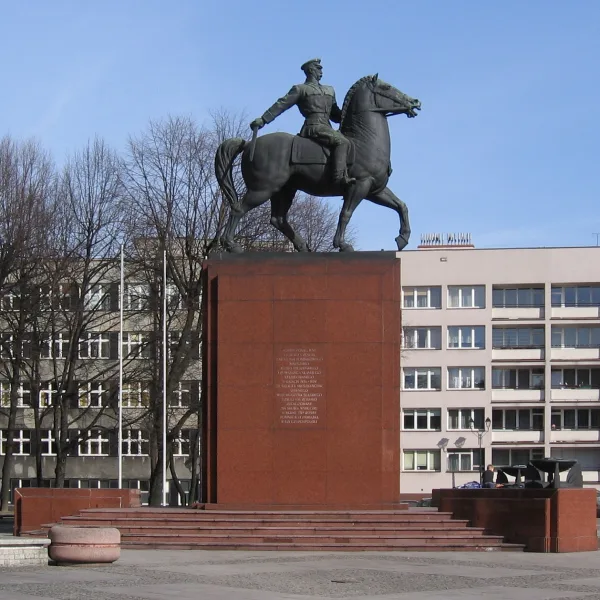
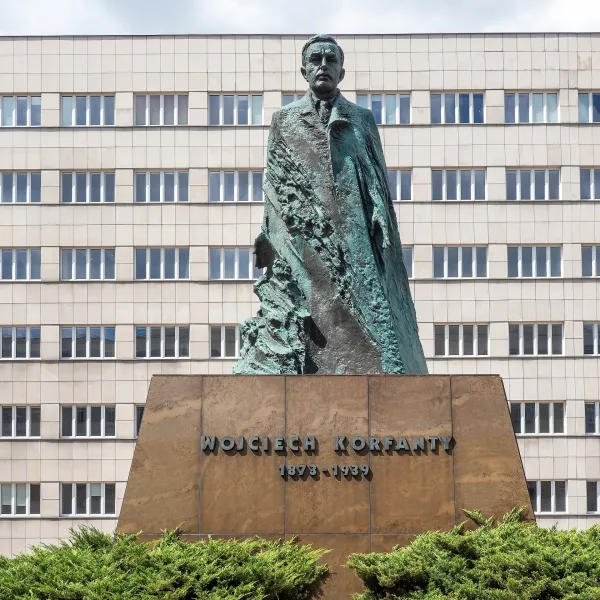
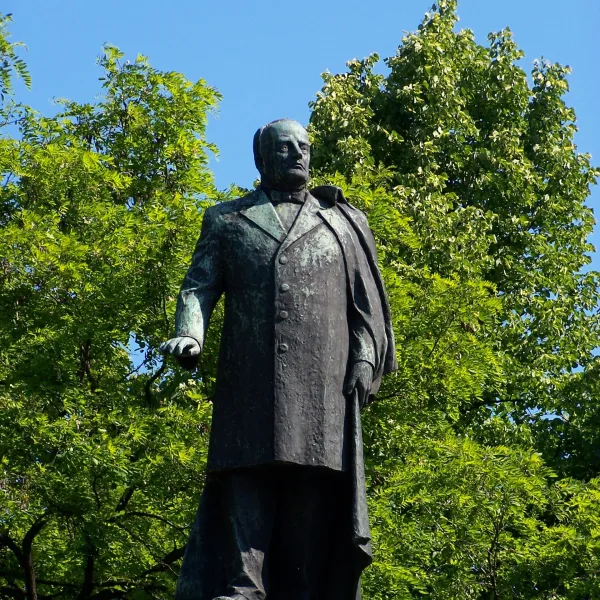
On Silesian Sejm Square, flanked by the voivodeship office and a government office block, stands the Wojciech Korfanty Monument. It was unveiled in 1999 and is the work of the sculptor Zygmunt Brachmański. The statue was placed on a pre-war plinth prepared for a planned monument to Piłsudski. That one has a different place today: the equestrian monument to Józef Piłsudski has its place on Chrobry Square, opposite the voivodeship offices. The rider was cast before the war, yet Katowice showed it publicly only in 1993.
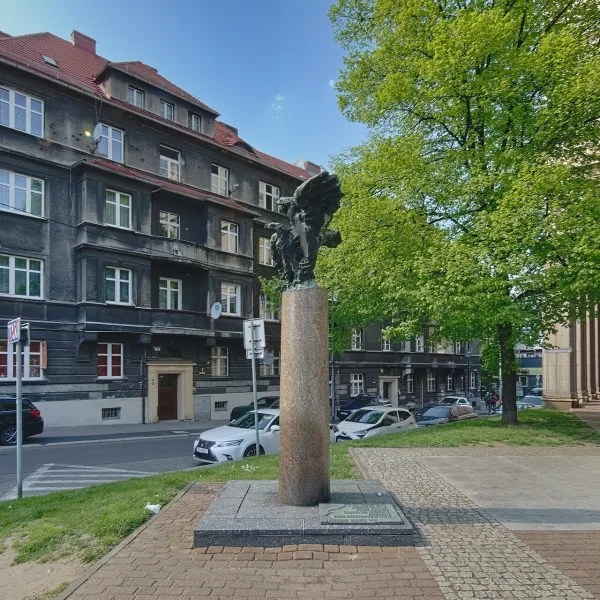
On that square, in the corner by Lompy and Jagiellońska streets, stands the Obelisk of the Silesian Eagles, unveiled in 1984. Two eagles taking off crown it, and the author is again Brachmański. Its site is tied to a pre-war scheme for a new Silesian Museum building. In the Silesian Insurgents Park you meet the monument to General Jerzy Ziętek, a bronze figure on granite, the work of Kazimierz Gustaw Zemła, shown to the public in November 2005.
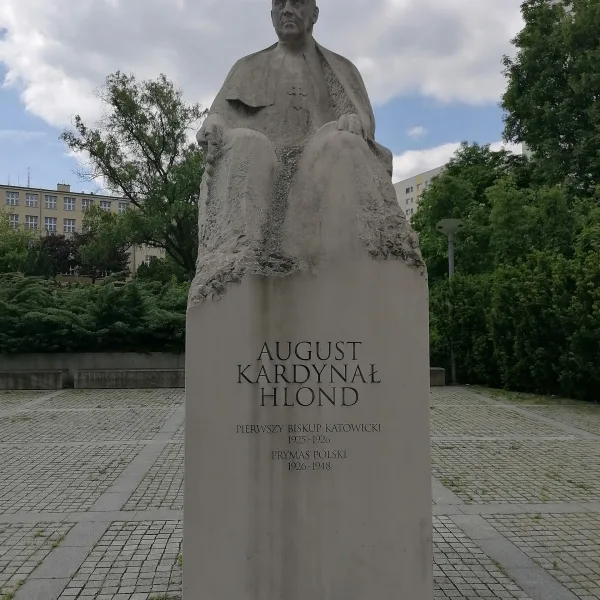
On Karol Miarka Square stands the Stanisław Moniuszko Monument. Members of Silesian choral societies funded the bronze statue of the composer; destroyed in the war, it was recreated in 1959. By the seminary, where Wita Stwosza meets Jordana street, Cardinal August Hlond sits with a rosary in his hand. The sandstone sculpture is 4.3 metres tall, weighs 23 tonnes and gazes at the Cathedral of Christ the King. It was unveiled in July 2016.
What modern sculptures and artistic figures stand in the city?
Besides monuments in the strict sense, Katowice has sculptures that join art with everyday life: a student before a university, a family on an estate square, miners above a skatepark and small bebok figurines scattered across the districts.
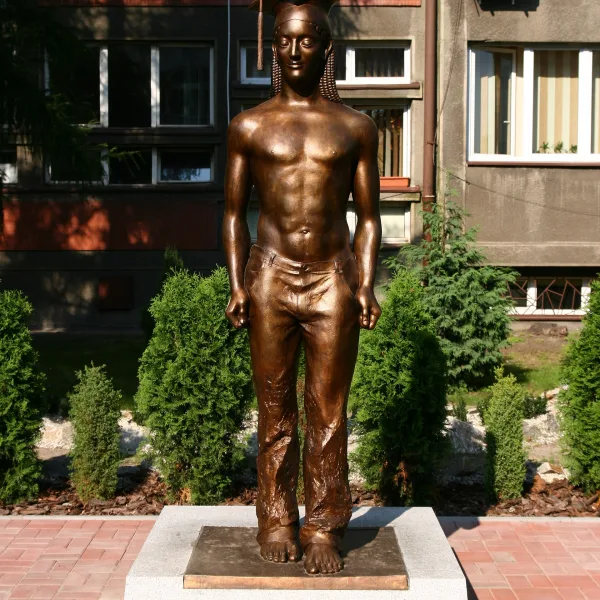
The Student Monument by the university rectorate at ulica Bankowa 12 is a two-metre bronze of a young man in a square cap, bare-chested, unveiled in 2008. Prof. Jerzy Fober and Prof. Andrzej Szarek of the Institute of Art of the University of Silesia in Cieszyn created it. In Koszutka, on Grunwaldzki Square, stands the "Family" monument of 1963 by Jerzy Kwiatkowski. Parents lift a child up, and a mosaic, recreated in 2016, covers the reinforced-concrete and glazed-ceramic sculpture.
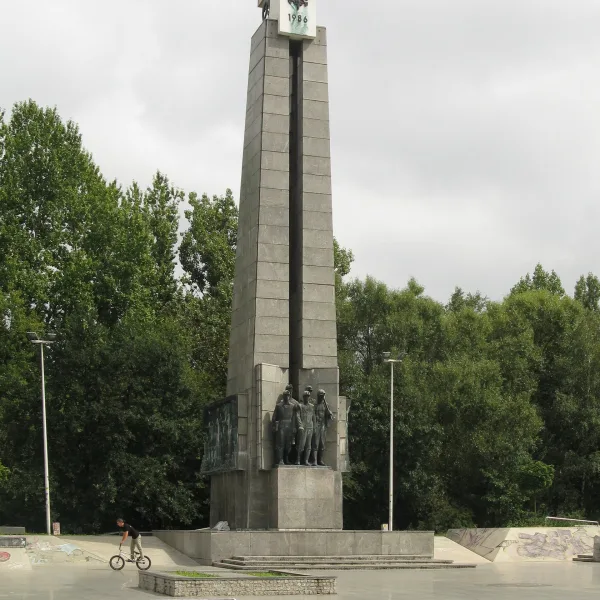
In the Paderewski-Muchowiec district, on ulica Pułaskiego, you will see the Monument to Miners' Toil. Tadeusz Łodziana designed this reinforced-concrete monument of 1986. The main sculpture shows miners, and bas-reliefs depict work underground. Today the surroundings serve as a skatepark dating from 2011. In Załęże, at ulica Gliwicka 107, a small bronze figurine called Cukerzołza, from 2025, shows a girl bebok with a cake and a wand. It is one of over a hundred figurines in the bebok series that Grzegorz Chudy has been making since 2021.
Which sculptures commemorate particular people?
Several sculptures are dedicated to people from various fields: artists, Himalayan climbers, writers and clergy. They stand by the institutions the people were linked to, so check what is next to them.
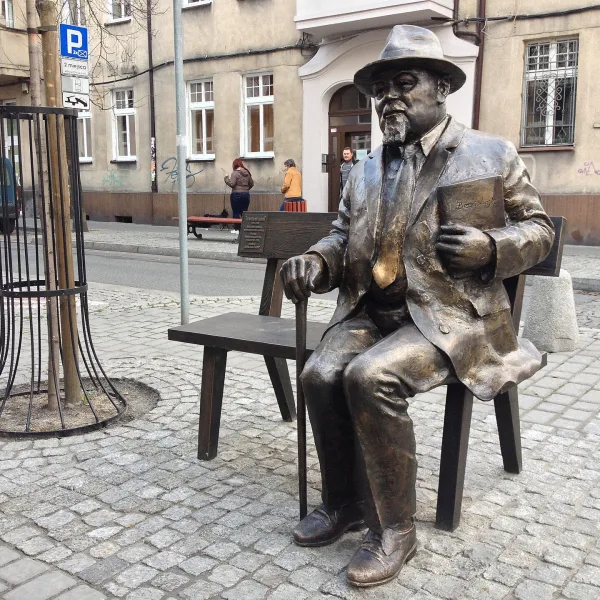
In Ligota-Panewniki, on the square named after the composer at the crossing of Piotrowicka and Panewnicka, stands the Bolesław Szabelski Bench of marble and bronze, crowned with the composer's bust and opened in 2019. Its author is Bogumił Burzyński. In Śródmieście, at ulica Ligonia 29, outside the radio station, Stanisław Ligoń, a writer, painter and director of the broadcaster, sits on a garden bench. Marian Molenda's bronze bench was unveiled in 2012 for the broadcaster's 75th anniversary.
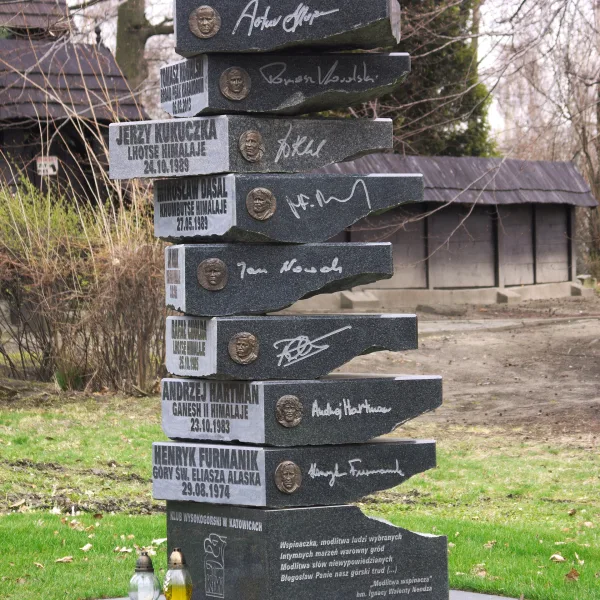
Two monuments relate to mountains. The Alpinists' Monument in Kościuszko Park, from 2015, recalls eight climbers from the Katowice high-mountain club who never returned from the peaks. In front of the Academy of Physical Education on ulica Szmausa stands a bust of Jerzy Kukuczka, patron of the university, also by Burzyński and unveiled in 2015.
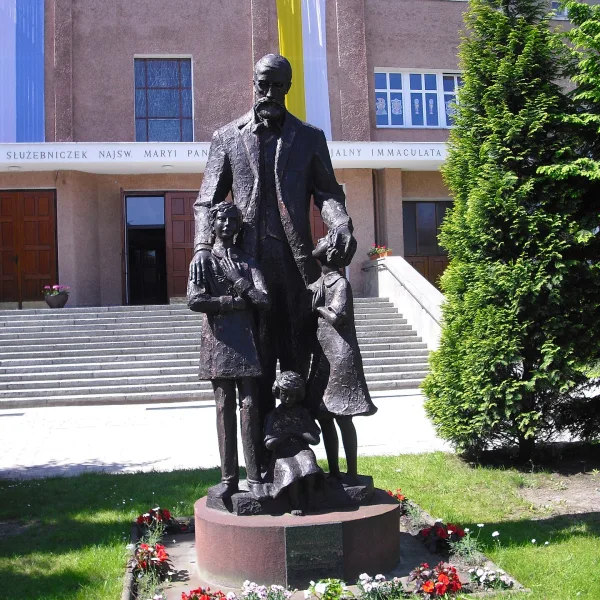
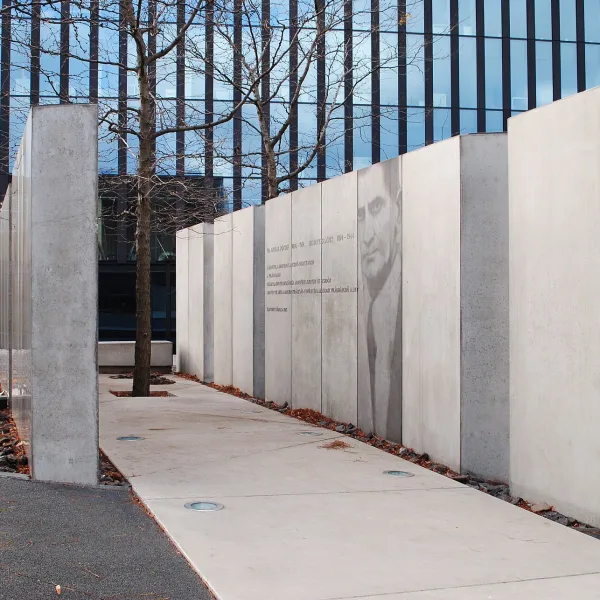
In Panewniki, in front of the convent at ulica Panewnicka 63, stands the Edmund Bojanowski Monument with three children, designed by Sister Czesława Marek. In front of the International Congress Centre stands the monument to Henryk Sławik and József Antall Senior, made of two steel walls with portraits of both men and a text in Polish and Hungarian. It recalls two heroes of the Second World War whose actions saved the lives of at least five thousand Polish Jews.
How do you plan a walk past the sculptures of Katowice?
The simplest is to choose Śródmieście: from Ligoń through Miarka Square and Chrobry Square to Sejm Square, then to Mariacka Street. Sculptures outside the centre are separate trips.
- Śródmieście: Moniuszko, Piłsudski, the Silesian Eagles, Korfanty, Hlond, Ligoń, the bluesman, the Student and Kukuczka.
- Koszutka: the "Family" monument and the Sławik and Antall monument at the Congress Centre.
- Paderewski-Muchowiec: the Polish Soldier Monument and the Miners' Toil Monument.
- Ligota-Panewniki: the Szabelski bench and the Bojanowski monument.
- Kościuszko Park in Brynów: the Alpinists' Monument.
Frequently asked questions
Do you have to pay to see the sculptures in Katowice?
No, every sculpture mentioned above is outdoors, in public space, and free to look at.
Where in Katowice is the sculpture hanging above the street?
The Bluesman Monument hangs on steel cables five metres above Mariacka Street in Śródmieście. It is a 2016 work by Jerzy Kędziora.
Which monument in Katowice is the biggest?
Among the larger monuments of Upper Silesia is the Polish Soldier Monument on the Paderewski estate. The patinated bronze cast weighs 80 tonnes and stands on an artificially raised hill.
What are beboks?
They are small bronze outdoor sculptures made by the Katowice artist Grzegorz Chudy. The project has run since 2021, and there are already over a hundred figurines. One of them is Cukerzołza in Załęże.
Where can you see the monuments to Piłsudski and Korfanty?
The Piłsudski monument stands on Bolesław Chrobry Square, and the Korfanty monument on Silesian Sejm Square. Both are in Śródmieście.

 Cemeteries and monuments