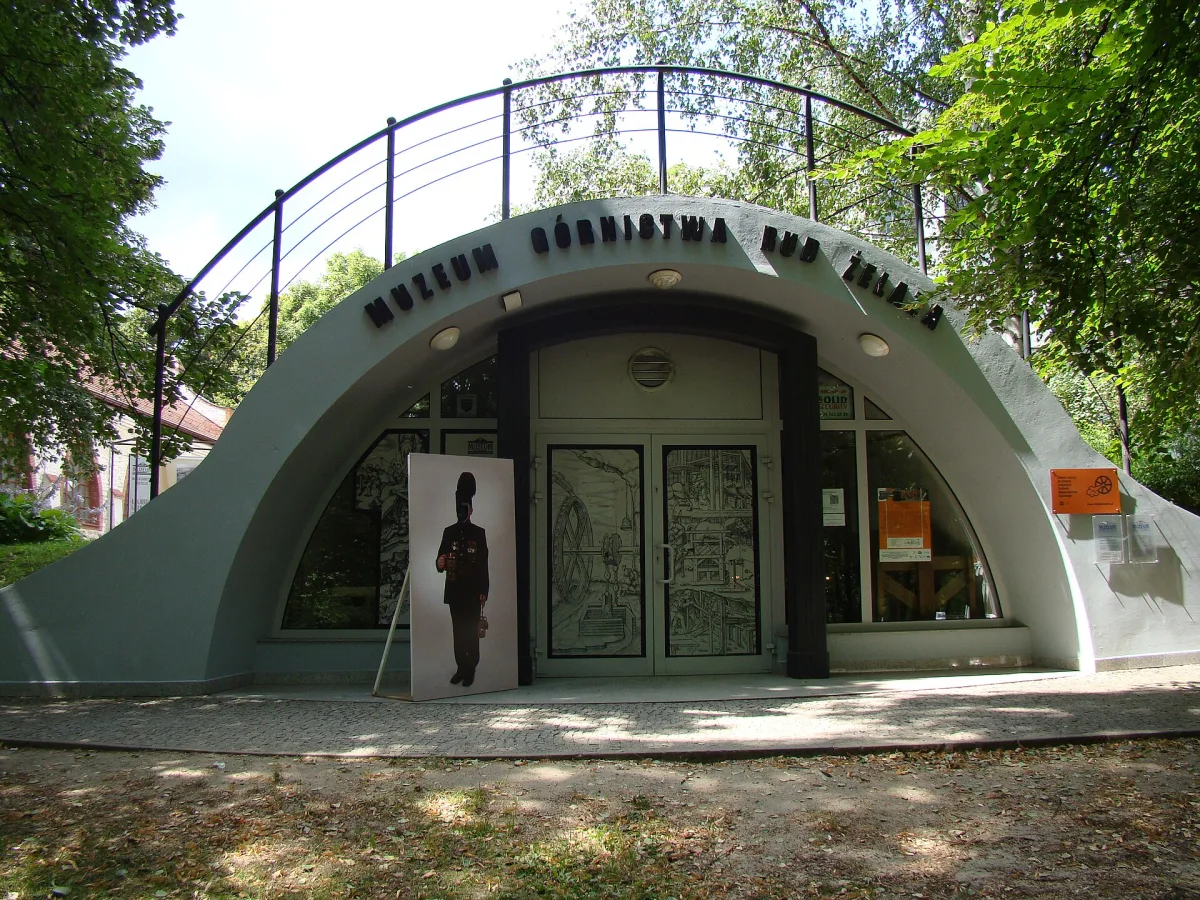
An underground exhibition in corridors from 1974-1976 showing, at full scale, the workings and machinery of iron ore mines of the Częstochowa region.
The Iron Ore Mining Museum in Częstochowa is an underground exhibition in corridors dug in 1974-1976 between the exhibition pavilions of the Częstochowa Museum in Stanisław Staszic Park, not far from the monastery on Jasna Góra. According to the museum it is the only such institution in the country, showing the history of ore mining in Poland, and at the same time a site on the Industrial Monuments Route of the Silesian Voivodeship.
The exhibition is a full-scale model of the underground workings most characteristic of iron ore mining.
You will see gallery workings with timber and steel supports, a pump chamber and a fragment of a longwall face with supports and machinery. In the galleries and chambers original machines and means of transport are on display, and in the exhibition hall, divided into stations, the tools and machines used in miners' work are shown. Numerous kinds of supports, miners' lamps and minerals have been gathered, along with historical methods of extracting ore. The exhibits come from mines of the Częstochowa region, among them Rudniki, Wręczyca and Barbara, and the most from the Szczekaczka mine in Brzeziny. Visitors can use a multimedia guide and watch the film “From the History of Iron Ore Mining”, made at the end of the operation of the last ore mines in the region.
Częstochowa lies in the middle of an ore-bearing belt from Zawiercie to Wieluń and from the 14th century was a centre of mining and metallurgy.
When, at the end of the 1960s, ore extraction began to be wound down, the museum was created as an independent branch of the Częstochowa Museum. It was opened in 1968 in pavilion “A” in the park near Jasna Góra. At the end of the 1970s one of the mines being closed down, Szczekaczka, was designated a historic mine, opened in 1980 but closed down by 1983. The mining open-air museum in the basement of the pavilion operated from 1989 to 1996, when, after the renovation of the pavilion, the passage to the underground was walled up. The museum with its permanent exhibition was reopened on 15 May 2008, with a separate entrance. The script was based on the work of the engineer Tadeusz Loster of the Coal Mining Museum in Zabrze, the artistic arrangement was made by Bożena Mazur, and the senior circles of mining associations of technicians from Częstochowa cooperated. In 2009 the site was added to the Industrial Monuments Route.
Tickets are bought in the exhibition pavilion, and tours take place every half hour.
A guided tour must be requested at least seven days in advance, and an audio guide in Polish and English can be downloaded from the museum's website as an MP3 file. The Częstochowa Museum is closed on public holidays, including New Year's Day, Epiphany, Corpus Christi, Christmas Eve and Christmas Day.
The museum lies about 300 m from Jasna Góra, so the two visits are easy to combine.
About 200 m from the museum begin the Parks below Jasna Góra, and about 900 m further stands the Częstochowa Museum.

Be the first! Add a comment.
You need to log in to add a comment.
Log in