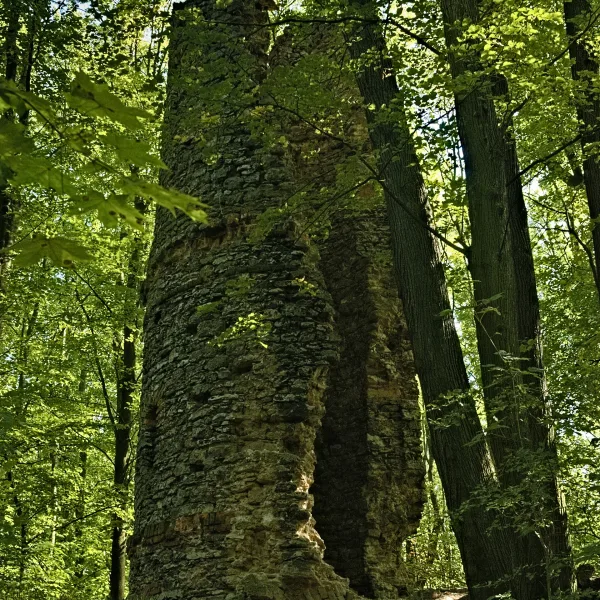
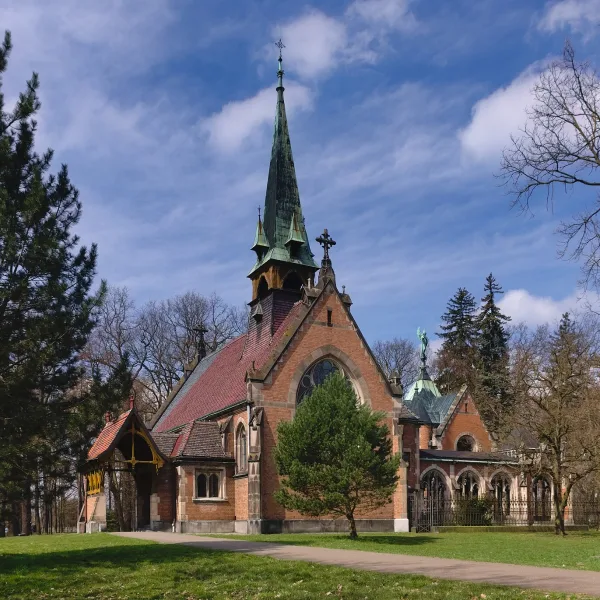
Świerklaniec's buildings recall the Donnersmarck family: a neo-baroque palace, a church in neo-Gothic style with a mausoleum, and artificial ruins.
Świerklaniec was the seat of the princely Henckel von Donnersmarck family. The surviving buildings show what the residence looked like and what surrounded it.
Which monuments in Świerklaniec can you see in a day?
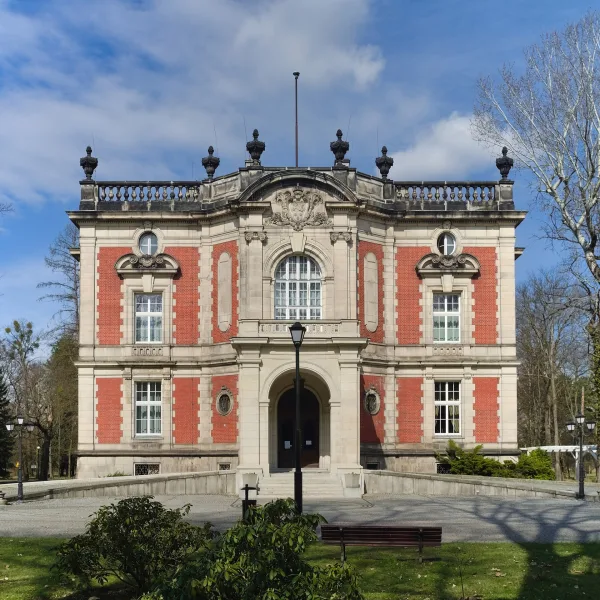
Set in a historic park at 30 Parkowa Street, the Kawaler Palace is a neo-baroque residence of red brick. Ernst von Ihne designed it as accommodation for visitors of the princely family, and it went up early in the twentieth century, in 1903-1906. It numbers among the best preserved buildings of the former residential complex.
In the northern part of the park, at number 38a, stands the Church of the Good Shepherd with a mausoleum joined by a cloister. The neo-Gothic church was built in 1896-1897 to a design by Julius Carl Raschdorff; today it is a branch church of a Catholic parish.
East of Orzech, right at the border with Świerklaniec, stand the romantic ruins: a nineteenth-century imitation of a castle, of which mainly a tall tower remains. The fall of the palace and the return of its gate are described in the article Pałac w Świerklańcu zwany Małym Wersalem. Other monuments are listed under architecture and on the page for Świerklaniec.
Frequently asked questions
Who built the Kawaler Palace?
Guido Henckel von Donnersmarck commissioned it as a guest house, and Ernst von Ihne designed it.
Are the ruins in Orzech a real castle?
No. It is an artificial nineteenth-century structure imitating a medieval castle that never existed.

 Historic sites