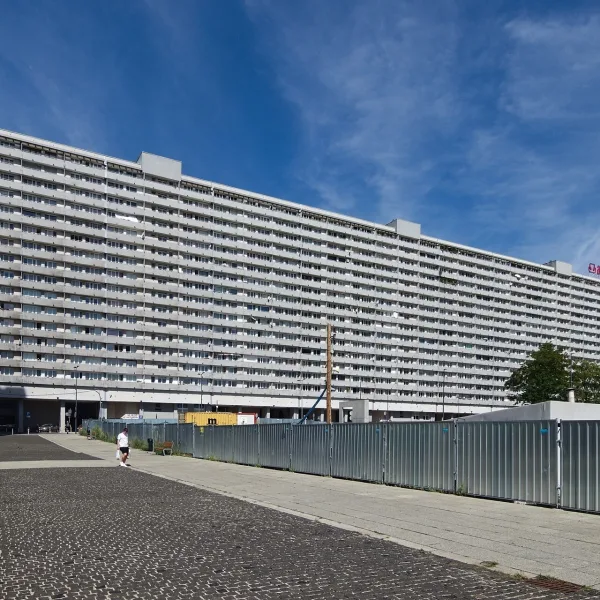
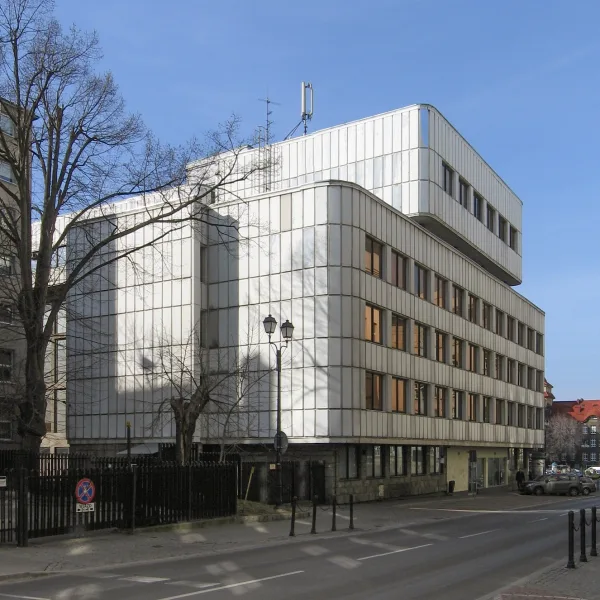
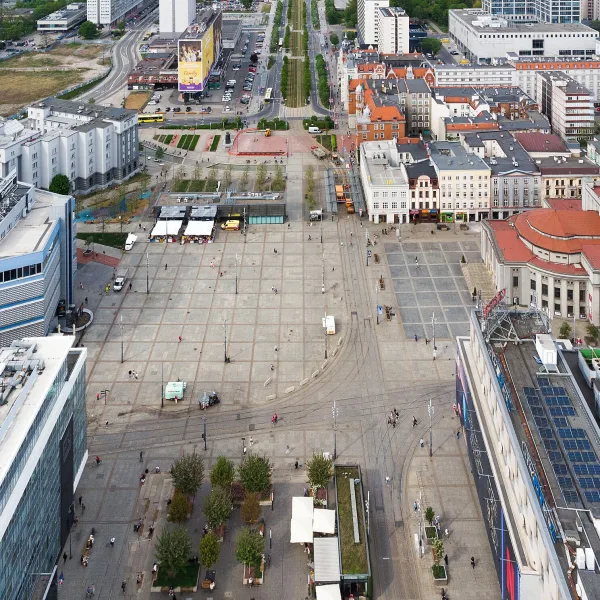
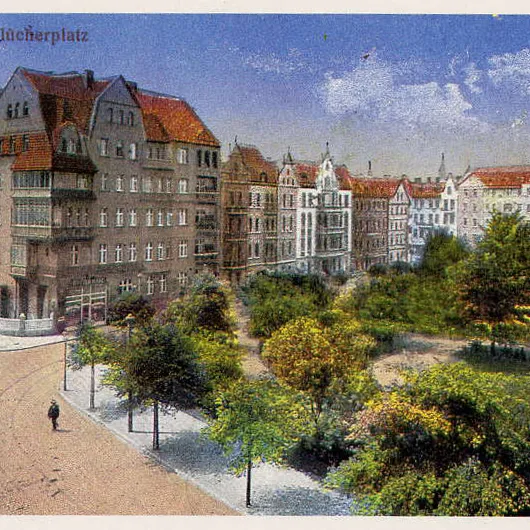
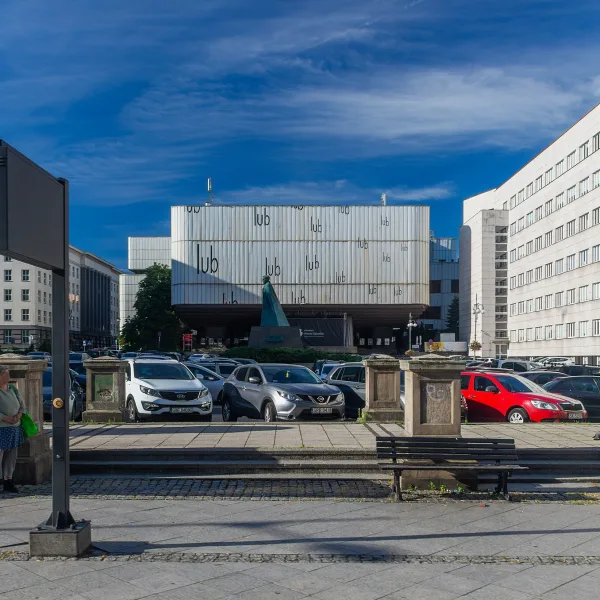
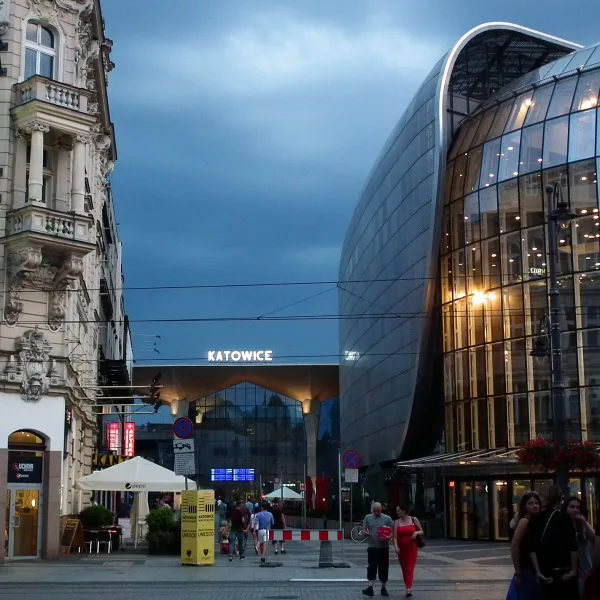
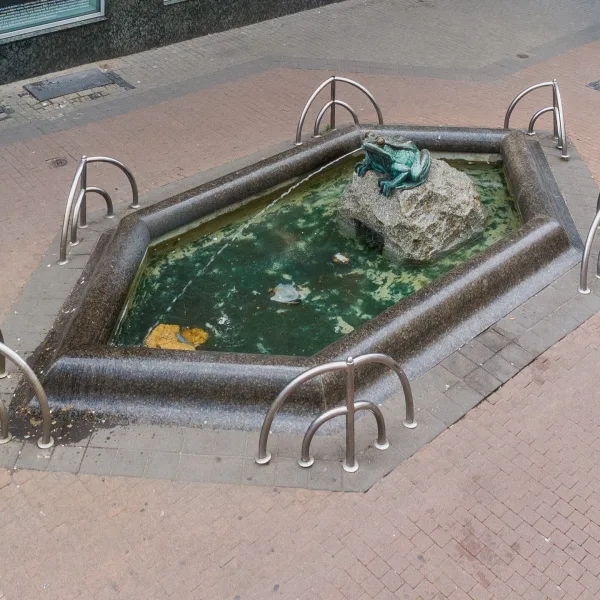
Atmospheric places in the Katowice city centre: the Market Square, Freedom Square, Mariacka Street, the Superjednostka and the Frog Fountain.
The Śródmieście district of Katowice is best explored on foot: squares, pedestrian streets and modernist buildings lie close together. Below are places for a short walk round the centre, from historic tenement houses to a huge housing block of the 1960s.
Which squares in central Katowice are worth seeing?
Begin with the Market Square and Freedom Square, then follow the chain of squares: Miarki, Chrobry and Silesian Sejm. Each has its own character, from a 19th-century hexagon to the square by the parliament building.
The Market Square is the central square of the city, with tram tracks and a theatre building, and since its rebuilding in 2016 it has been open in full. Freedom Square is a hexagon with five streets leading away from it, among them 3 Maja and Sokolska. Listed tenement houses surround it, together with the Goldstein Palace.
Karol Miarka Square is a patch of greenery in the middle of the centre, with many tree species, a statue of Moniuszko and the Karlik fountain beside it. Bolesław Chrobry Square recalls the former Silesian Museum, which before the war counted among the most modern museum buildings in Europe and was demolished in 1941. Today the square is decorated with the Silesian Eagles obelisk and a statue of Marshal Piłsudski. Silesian Sejm Square opens onto the parliament building of 1924-1929, with a monument to Wojciech Korfanty in the middle.
By the station is Maria and Lech Kaczyński Square with the Galeria Katowicka and a historic neo-Baroque tenement. It is one of the city's main interchange points, so it is a good place to start a route.
Where can you stroll along a pedestrian street and to a fountain?
For a short and calm stretch, choose Mariacka Street, pedestrian-only since 2008, and the Frog Fountain on Stawowa Street. A few minutes' walk along 3 Maja Street separates the two.
Mariacka Street runs from the crossing with Dworcowa and Mielęckiego streets to the Mariacka church, from which it took its name. Tenement houses from the turn of the 20th century line it. The Frog Fountain at Stawowa 13 is a brass sculpture from 1980 by Joanna Ambroziak-Hanasiewicz. The frog, weighing over a hundred kilograms, sits on a granite boulder and recalls an old pond at the end of the street.
Which modern buildings in the centre are worth seeing?
Three large modern complexes stand in the centre: the Superjednostka of the 1960s, the University of Silesia campus and the Katowice City of Gardens cultural institution.
The Superjednostka on Korfantego Avenue is a housing block of 1966-1970, 187.5 metres long, with 764 flats. Until 1973 it was the largest residential building in Poland. The University of Silesia Campus occupies the site of a former botanical garden. Newer buildings, a library and the Film School, stand next to the university's modernist blocks. Katowice City of Gardens at Plac Sejmu Śląskiego 2 organises music, film and visual-arts events.
For a longer walk, pick the historic sites of Śródmieście, its museums or the theatres and opera. The whole district is covered on the page for Śródmieście.
Frequently asked questions
Where should you start exploring central Katowice?
At the station and Maria and Lech Kaczyński Square, then along 3 Maja Street to the Market Square and Freedom Square. From there it is easy to reach Mariacka Street or Silesian Sejm Square.
Where is the Superjednostka in Katowice?
On Korfantego Avenue, in the city centre. It is a modernist block from 1966-1970, 187.5 metres long.
Which street in the centre is pedestrian-only?
Mariacka Street, a pedestrian precinct since 2008. It leads to the Mariacka church.
Where did the former Silesian Museum building stand?
On Bolesław Chrobry Square, between Jagiellońska, Lompy and Reymonta streets. The building was demolished in 1941.

 Places with character