What to see in Śródmieście, Katowice: the archcathedral, the Market Square, theatres, museums and modernist architecture at dozens of addresses.
Śródmieście is the heart of Katowice and the city's largest cluster of places: churches and theatres, art galleries, squares, cemeteries and monuments. The overview below groups them by what you want to see and ends with advice on joining neighbouring addresses into one route.
What to see first in Śródmieście, Katowice?
For a first walk choose the Cathedral of Christ the King on ulica Plebiscytowa, the Market Square and the Katowice History Museum. These three show well how the city grew from the mid-19th century to the age of modernism.
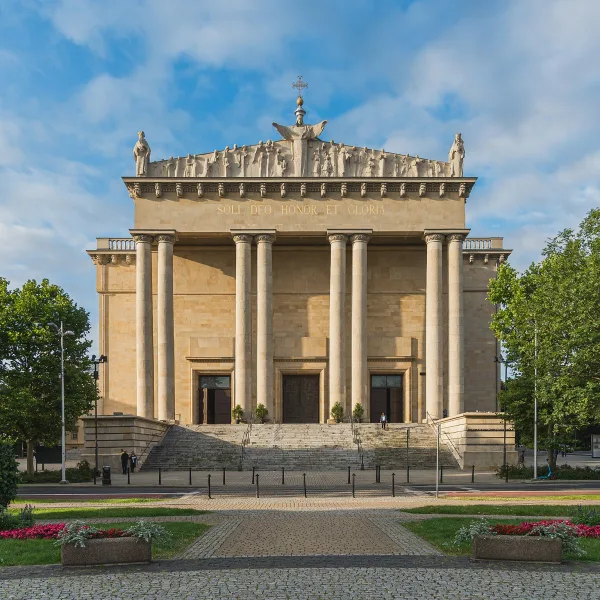
The cathedral is a monumental church with a low dome and a portico of eight columns. Construction took more than a quarter of a century, because the diocese was founded in 1925 and the church was consecrated only in 1955. The interior and the viewing terrace impress even if church architecture is not your main interest.
The Market Square is the central square of the city, laid out in the second half of the 19th century. Tram tracks run across it and the theatre building stands beside it. The History Museum occupies a townhouse from 1910 at ulica księdza Józefa Szafranka 9 and tells the story of the city, with branches including one in Nikiszowiec.
Which museums and galleries are worth visiting in Śródmieście?
Śródmieście has several small museums and contemporary art galleries that are easy to combine into one afternoon. If you like art, start with the BWA Contemporary Art Gallery at aleja Korfantego 6 and walk on to Parnas and Ateneum.
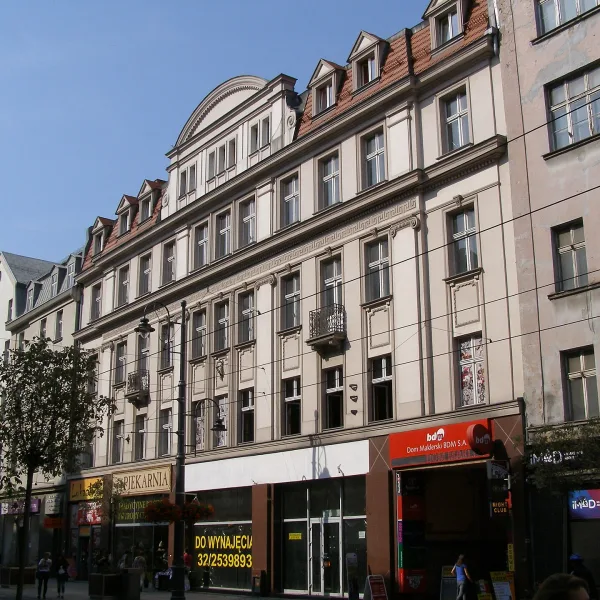
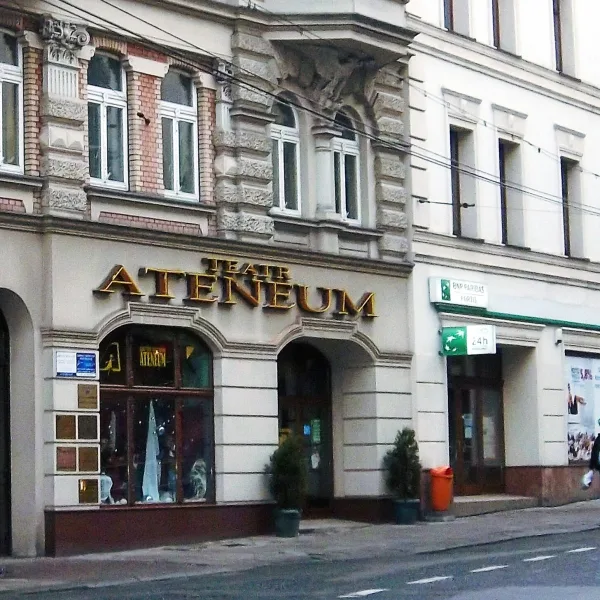
The municipal BWA gallery has operated since 1949, has about 800 sq m of exhibition space, its own collection and runs the Polish Poster Biennale. The Parnas Contemporary Art Gallery has operated since 1993 and shows painting, graphic art, sculpture and unique glass, while the Ateneum Gallery in a townhouse at ulica 3 Maja 25 presents stage design projects and theatre puppets.
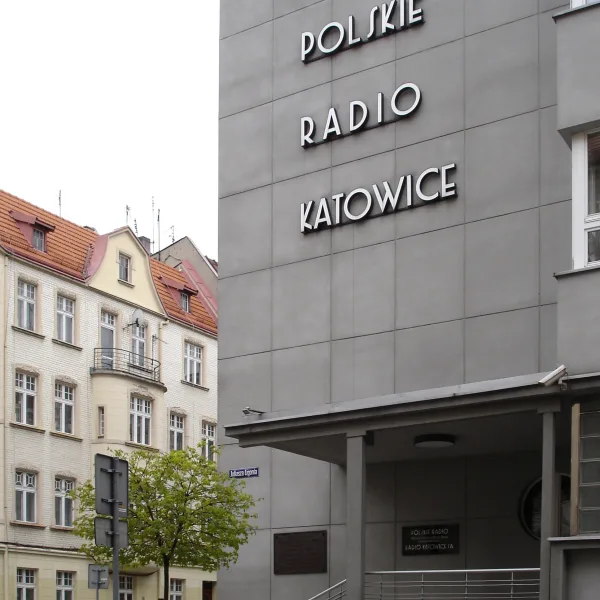
For smaller exhibitions there are two more addresses. The Polish Radio Museum Room at ulica Jana Ligonia 29 collects radio sets, microphones and studio equipment. The Barbara and Stanisław Ptak Museum is a permanent display in the preserved two-level flat of a stage designer and an actor, at ulica Kopernika 11.
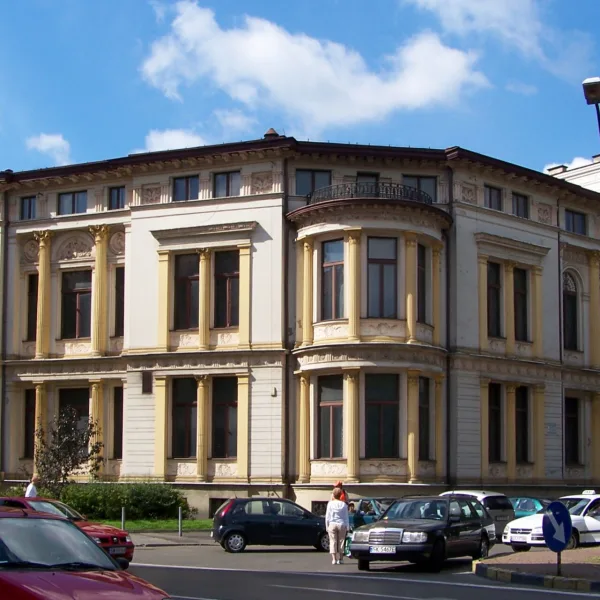
Two addresses in the museum category are not open today like an ordinary museum. The Archdiocesan Museum at ulica Henryka Jordana 39 is temporarily closed, and the building at aleja Korfantego 3, the former Grand Hotel and former seat of the Silesian Museum, now serves technical purposes and is not open to visitors. You can look at it from outside, but there is nothing to see inside.
All venues of this kind are gathered under museums in Śródmieście.
Where to go for theatre, cinema and concerts in Śródmieście?
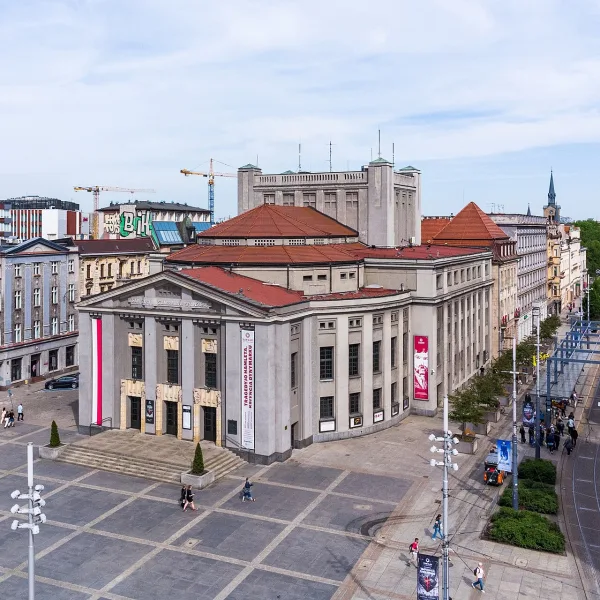
Most stages cluster around the Market Square and ulica 3 Maja and ulica Świętego Jana. The Stanisław Wyspiański Silesian Theatre at Rynek 10 is the largest drama stage in Upper Silesia, in a neoclassical building from 1907, with a repertoire that also includes plays in the Silesian dialect.
For younger audiences there is the Ateneum Theatre, the Silesian Puppet and Actor Theatre at ulica Świętego Jana 10, active since 1945. Intimate comedies and dramas are staged by Teatr Bez Sceny at ulica 3 Maja 11, founded in 1997 and nominated many times for the Golden Masks.
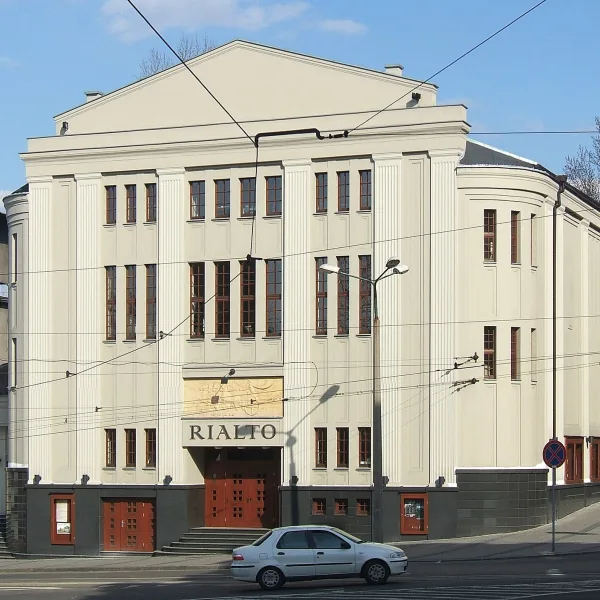
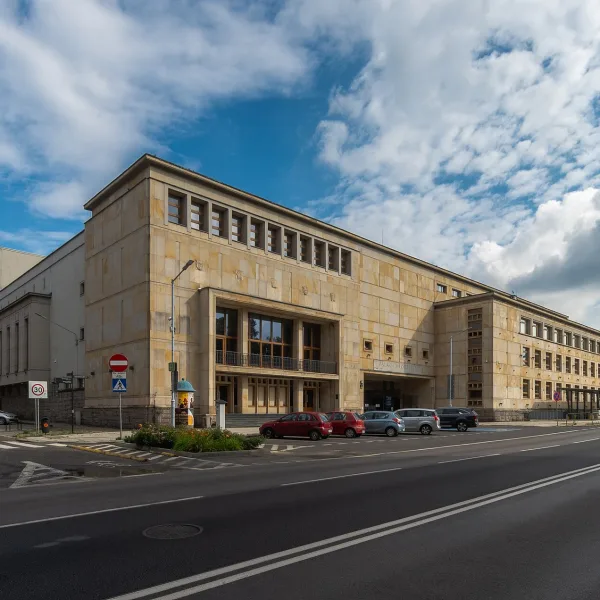
Cinema and concerts in one place are offered by the Rialto Cinema-Theatre at ulica Świętego Jana 24, open since 1913, now an arthouse cinema with concerts, plays and meetings. Music is also heard in the Culture Zone: Katowice City of Gardens at plac Sejmu Śląskiego 2 organises music and visual arts festivals, and the Symfonia Centre for Science and Music Education at ulica Wojewódzka 33 has a 470-seat concert hall.
What is on the programme is best checked in the events calendar for Katowice. Theatres are also listed under theatres and opera in Śródmieście.
What architecture to see in Śródmieście?
Śródmieście suits anyone who likes looking at buildings: from the eclecticism of the turn of the century, through interwar functionalism, to the huge blocks of the 1960s. All of them have their own section: historic sites in Śródmieście.
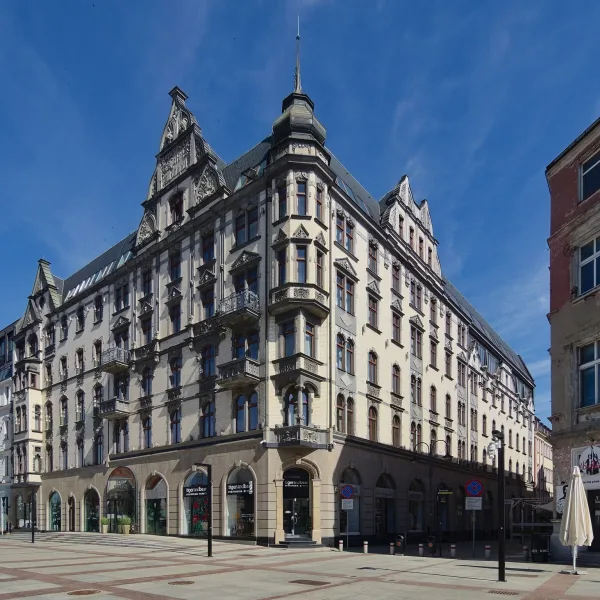
The Hotel Monopol at ulica Dworcowa 5, built of white clinker brick and opened in 1902 opposite the former station, still receives guests. The neo-Renaissance Goldstein Palace stands at plac Wolności 12a. It is a former villa of sawmill industrialists from 1872 and today houses a registry office, so you see it from outside.
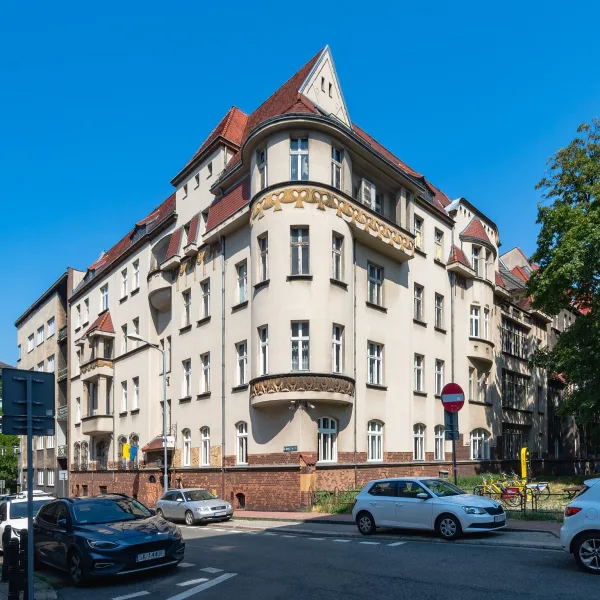
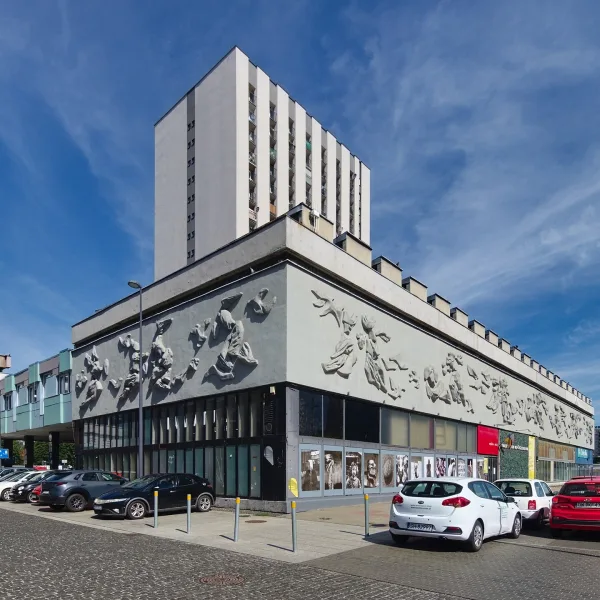
The interwar years are represented by Drapacz Chmur at ulica Żwirki i Wigury 15, a fourteen-storey skyscraper completed in 1934, and by the Wędlikowski House at ulica PCK 10, a modernist townhouse with a rounded corner and an original staircase. The next chapter is the Superjednostka at aleja Korfantego 16-32, a residential block from 1966-1970, 187.5 m long, with 764 flats.
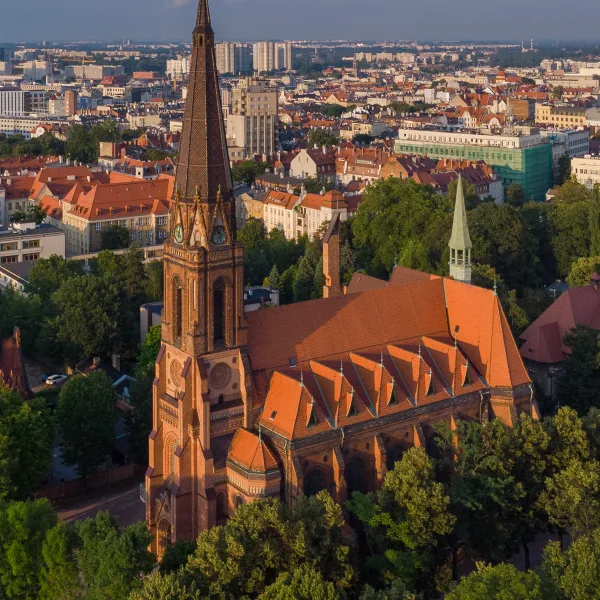
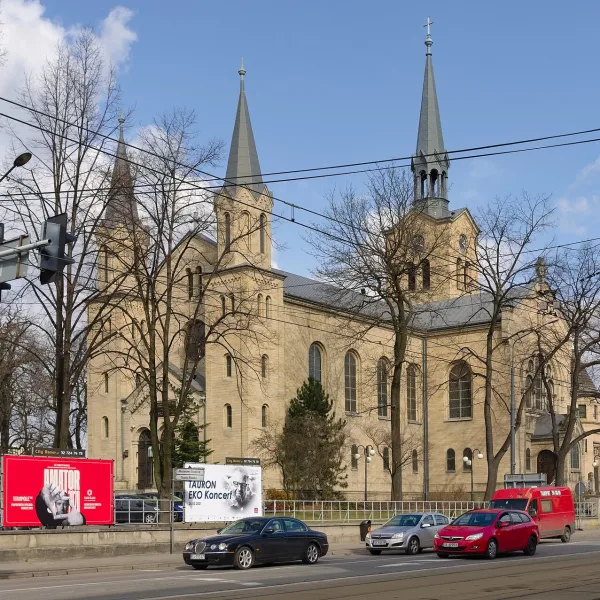
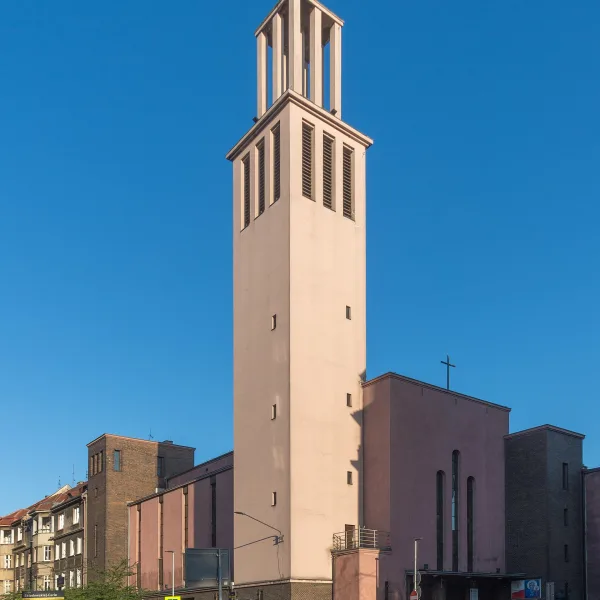
Brick Neo-Gothic churches are complemented by the Church of Saints Peter and Paul at ulica Mikołowska 32, with an 86-metre tower, which served as a cathedral for more than thirty years. Next door, at number 26, stands the Youth Palace, ten buildings put up between 1948 and 1951, entered in the register of monuments.
Among newer buildings see the Scientific Information Centre and Academic Library at ulica Bankowa 11a, opened in 2012, and the University of Silesia campus with modernist buildings from the 1960s and 1970s. Technology fans can glance at the railway water tower at the main station, completed in 1951. It stands on railway property, so you view it from a distance, not from inside.
Where to rest on squares and in green spaces?
Śródmieście has several squares for a break from sightseeing. Freedom Square is hexagonal, following the city plan of 1856, and the streets 3 Maja, Sokolska, Gliwicka, Matejki and Sądowa radiate from it. Townhouses entered in the register of monuments surround it.
Karol Miarka Square is a green square with a monument to Moniuszko from 1930 and the Karlik fountain. Silesian Insurgents Park lies between aleja Korfantego and aleja Roździeńskiego and keeps the trees of the former garden of the Tiele-Winckler manor. Entry to the park and the squares is free.
What memorial sites and cemeteries are in Śródmieście?
Śródmieście contains several places commemorating events from the history of the region and the city, together with historic cemeteries. These are places for quiet and respect.
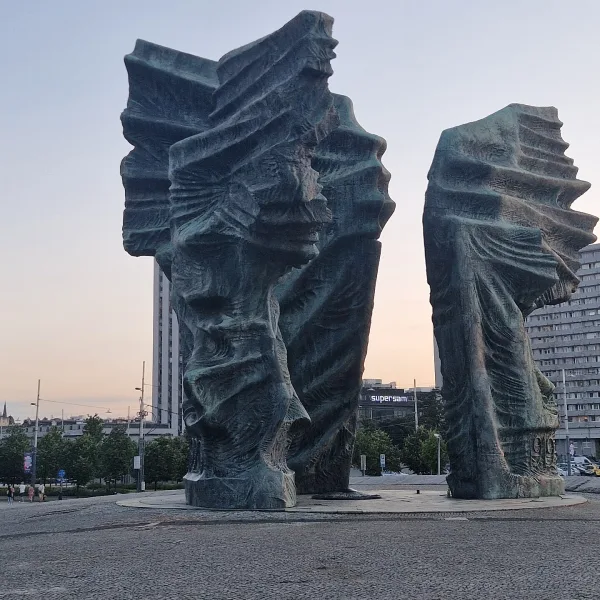
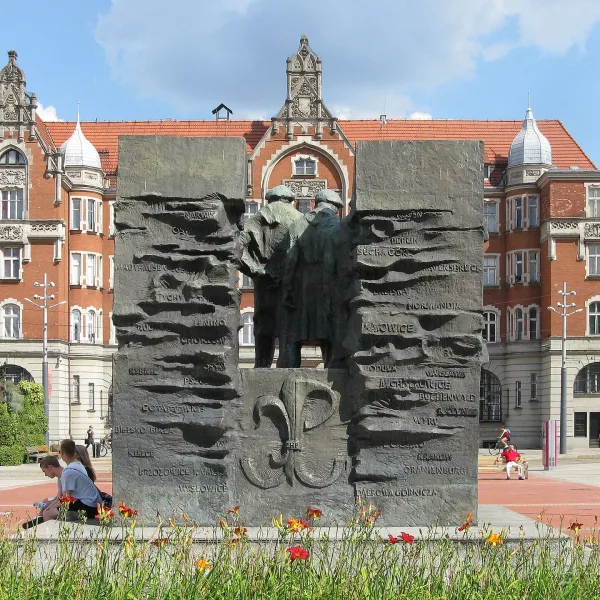
The Monument to the Silesian Insurgents, in the form of three bronze wings, recalls the three Silesian uprisings, of 1919, 1920 and 1921, and was unveiled in 1967. On plac Andrzeja stands the Katyn Victims Monument, unveiled in 2001. At plac Obrońców Katowic stands the Monument to the Scouts of September, from 1983, dedicated to the scouts who resisted German soldiers in 1939 and those who fell or were killed during the occupation. The square itself has a separate page for plac Andrzeja.
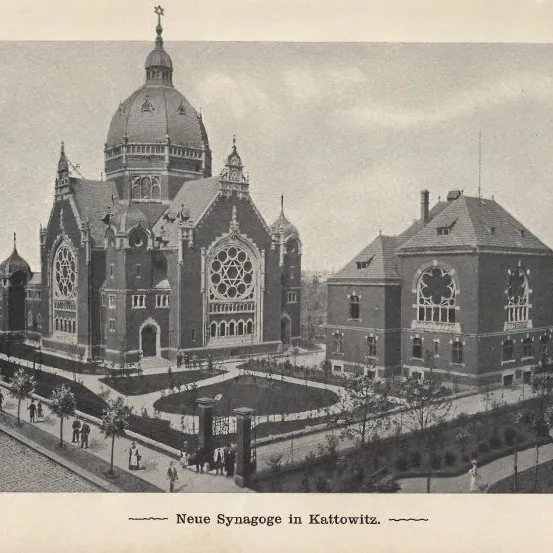
After the Great Synagogue, opened in 1900, burned in 1939 and demolished, what remains is plac Synagogi with a monument. At ulica Kozielska 16 lies the Jewish cemetery from 1869, with about 1,400 gravestones and a Holocaust monument; it is active and entered in the register of monuments.
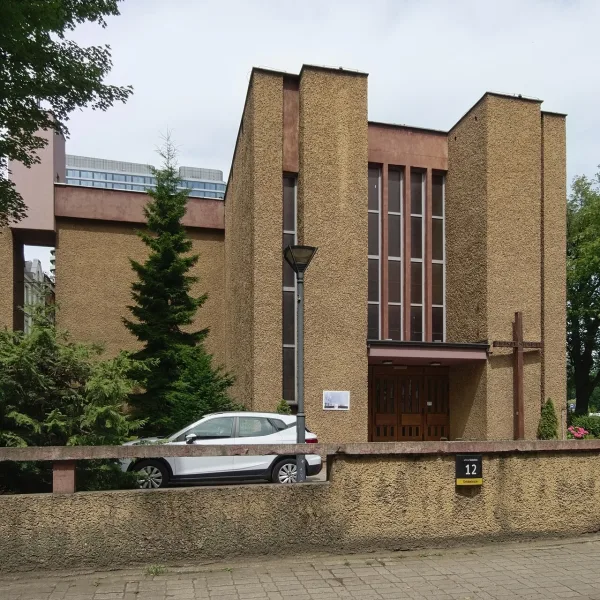
Two Catholic cemeteries are here: the cemetery on ulica Francuska, from 1870, with the graves of Adam Didur, Józef Rymer and Wojciech Korfanty, and the cemetery on ulica Sienkiewicza, from 1911, with a modernist chapel, where Wojciech Kilar and Henryk Mikołaj Górecki are buried. Both are active. A full list is under memorial sites and cemeteries and monuments.
Where to go with children or on a rainy day?
With younger children an indoor playground such as Fit4Kids in the Galeria Katowicka works well, with classes and birthday parties, as does a show at the Ateneum Theatre, whose repertoire is aimed mainly at children. Older children and families may enjoy Kręgielnia Galaktyka at ulica Dąbrówki 10, with eight lanes, next to a billiard room and a restaurant.
On a rainy day choose places under a roof: museums and galleries, theatres, the academic library on ulica Bankowa or the History Museum. They all lie within a few blocks, so travelling between them takes little time.
How to plan a route through Śródmieście?
The simplest way is to follow neighbouring addresses. The first route runs along ulica 3 Maja: plac Wolności with the Goldstein Palace, Teatr Bez Sceny, the Ateneum Gallery and the Market Square with the Silesian Theatre. Ulica Świętego Jana with the puppet theatre and the Rialto lies along the same route.
The second route follows aleja Korfantego: the former Grand Hotel at number 3, BWA at number 6, the Superjednostka at numbers 16-32 and the park with the Insurgents' monument. The third links the Culture Zone with the university: City of Gardens, Symfonia, the library on ulica Bankowa and the campus. Its advantage is that the buildings lie close together. The full list for the district is under things to see in Śródmieście.
Churches and monasteries such as the archcathedral and the Church of Peter and Paul complete these routes, described in churches and monasteries in Śródmieście, as do the green places in parks and nature. Places with a distinct mood are collected under atmospheric places.
Frequently asked questions
What to see in Śródmieście, Katowice, with one day?
Start with the archcathedral, walk to the Market Square, visit the History Museum and finish on plac Wolności or in the Culture Zone. It is a route along neighbouring addresses that you can walk without changing transport.
Which places in Śródmieście are free?
Entry is free in squares and parks such as plac Wolności, plac Andrzeja and Silesian Insurgents Park, and in cemeteries, among them the Jewish one and the one on ulica Sienkiewicza.
Where to go in Śródmieście on a rainy day?
To museums and galleries, for example the History Museum, BWA and the Polish Radio Museum Room, to the theatres and to the Rialto cinema. The Scientific Information Centre on ulica Bankowa is a good address too.
Can I enter the Archdiocesan Museum in Śródmieście?
No, the museum is temporarily closed. Likewise, the building at aleja Korfantego 3 is not open to visitors.
How to walk from the Culture Zone to the Market Square?
From plac Sejmu Śląskiego head towards the centre. For orientation: the Market Square lies on the axis of ulica 3 Maja, ulica Warszawska and ulica Staromiejska, and the Silesian Theatre stands at number 10.

 Theatre and opera