Memorial sites in central Katowice: the Silesian Insurgents monument, the square of the Great Synagogue, the Katyn monument and a historic cemetery.
The five places in the city centre are linked to different events of the 20th century: the Silesian Uprisings, September 1939 and the German occupation, the Katyn crime and the history of Katowice's Jews. Each concerns a separate history and separate victims, so they should not be mixed. All lie in the Śródmieście district and can be seen from the street.
Which places in Śródmieście recall the Silesian Uprisings and September 1939?
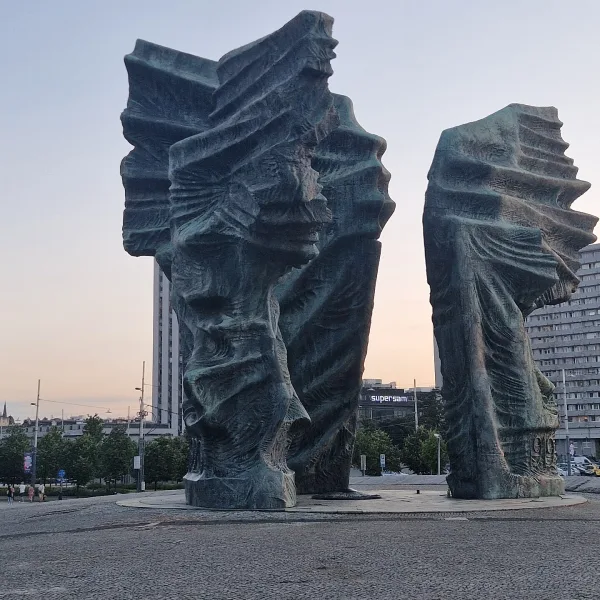
The Silesian Insurgents Monument on Korfantego Avenue refers to the three uprisings of 1919-1921, while the Scouts of September Monument on Obrońców Katowic Square refers to the fate of scouts in wartime.
The first was unveiled on 1 September 1967 in Silesian Insurgents Park, not far from the Gen. Jerzy Ziętek roundabout. Three bronze eagle wings stand for the successive armed risings of the Silesian population against German rule, which were intended to bring Upper Silesia into Poland. The sculpture was designed by Gustaw Zemła. The second monument dates from 1983: four young figures in scout uniforms stand on a granite plinth, two with hands bound behind them. It remembers scouts who in September 1939 resisted German soldiers entering the city, and those who died or were murdered during the occupation years.
Where did the Great Synagogue stand in Śródmieście?
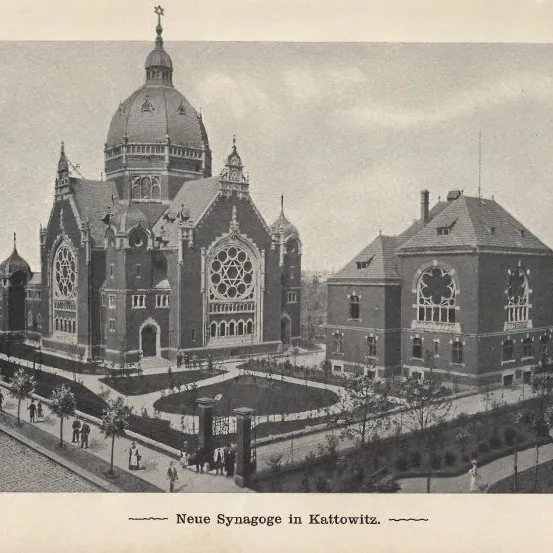
On Mickiewicza Street, and today the site is a square with a monument. The Great Synagogue no longer exists.
It was the principal house of prayer of pre-war Katowice, opened in 1900. Fire destroyed it on 8 September 1939, after which the building was taken down. The thought of a larger temple came around 1890, since the existing one proved too cramped and the local community was split between conservatives and supporters of reform and assimilation. Only the place is left of the structure.
What does the monument on Andrzeja Square commemorate?
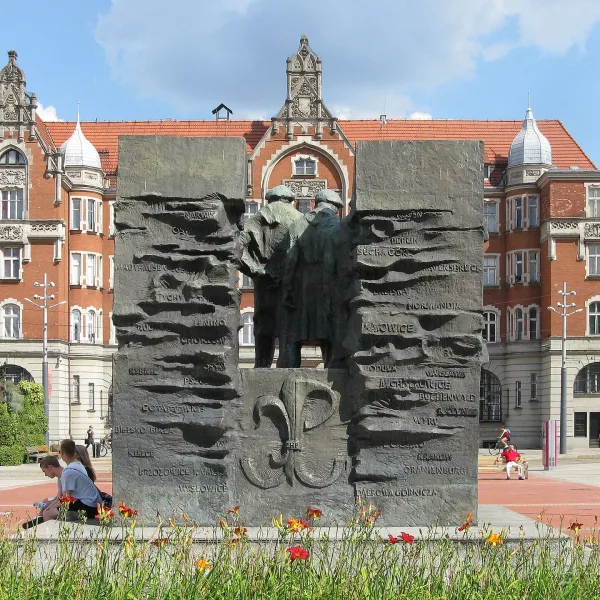
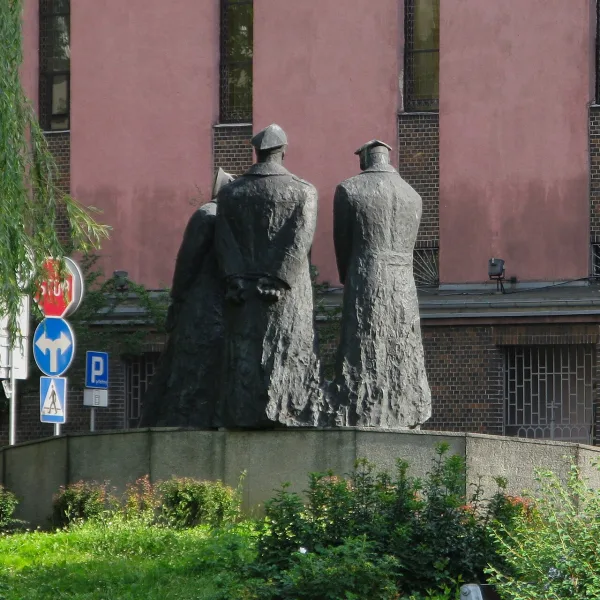
The Katyn Victims Monument, unveiled on 24 May 2001, is dedicated to Polish Army officers who died at Soviet hands in 1940.
It was designed by the sculptor Stanisław Hochuł and the architect Marian Skałkowski. A policeman and two officers stand beside a pit, and the words on the plinth list Katyn, Kharkiv, Miednoje and other sites of the crime across the former USSR. This history shares neither perpetrator nor circumstances with September 1939, which is why it is treated apart from the rest.
Who rests in the cemetery on Francuska Street?
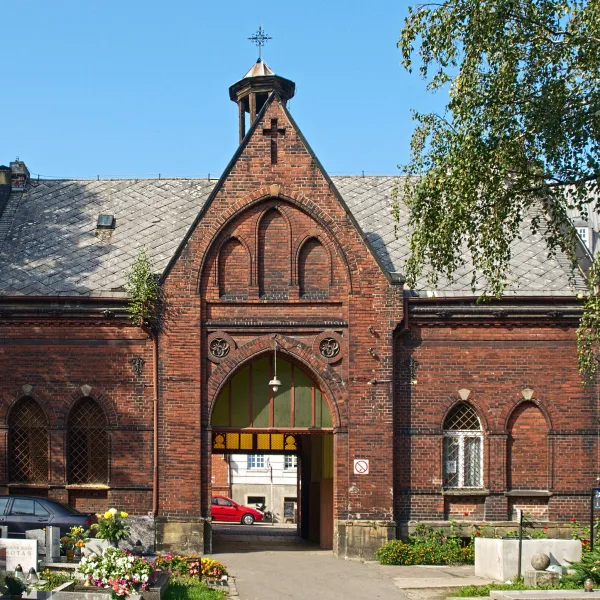
The Roman Catholic cemetery at number 26 was founded in 1870, and the graves include Adam Didur, Józef Rymer and Wojciech Korfanty.
It came into being together with the Church of the Immaculate Conception and ranks among the oldest necropolises of the city. The parish runs it and burials still take place. It adjoins the Evangelical cemetery, and both were listed in the register in 1993. From the street side you can see the neo-Gothic building of the former mortuary. One approaches a cemetery with respect. The remaining addresses of the centre are collected on the pages Śródmieście, cemeteries and monuments in Śródmieście and memorial sites in Silesia.
Frequently asked questions
Does the Great Synagogue exist?
No, a fire destroyed it in September 1939 and the ruins were cleared. The site is now Synagogue Square.
When was the Silesian Insurgents Monument unveiled?
In 1967, on 1 September. You will find it in the park named after the insurgents.
Whom does the monument on Andrzeja Square commemorate?
Officers of the Polish Army, killed by the Soviets in 1940.
Is the cemetery on Francuska Street still used?
Yes. The parish runs it, and alongside ordinary graves lie people of merit to the region.

 Places of remembrance