Cemeteries and monuments in central Katowice: three burial grounds, monuments to Korfanty and Ziętek, and a bluesman hanging over a street.
The centre of Katowice has three cemeteries, Catholic, Lutheran and Jewish, and a dozen or so monuments and sculptures dedicated to politicians, artists, scholars and sportsmen. The monuments are seen outdoors, in the city's public space.
Which cemeteries in central Katowice are worth knowing?
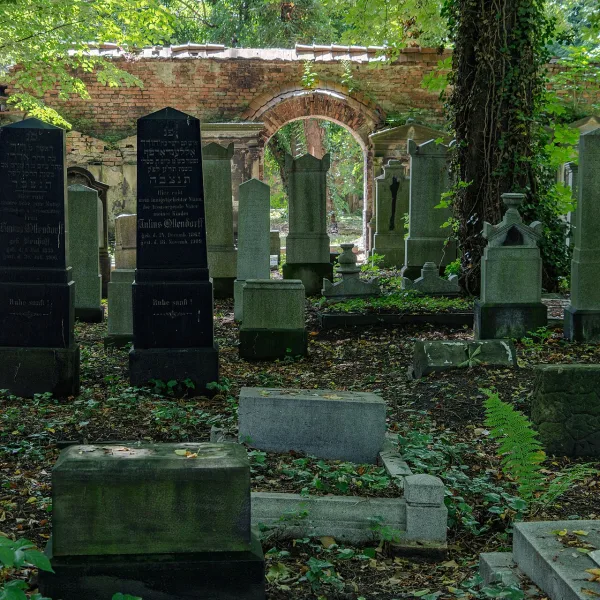
The three burial grounds lie in the city centre and tell of three communities of the city. The cemetery on ulica Sienkiewicza is Catholic, the one on ulica Francuska Lutheran and the one on ulica Kozielska Jewish.
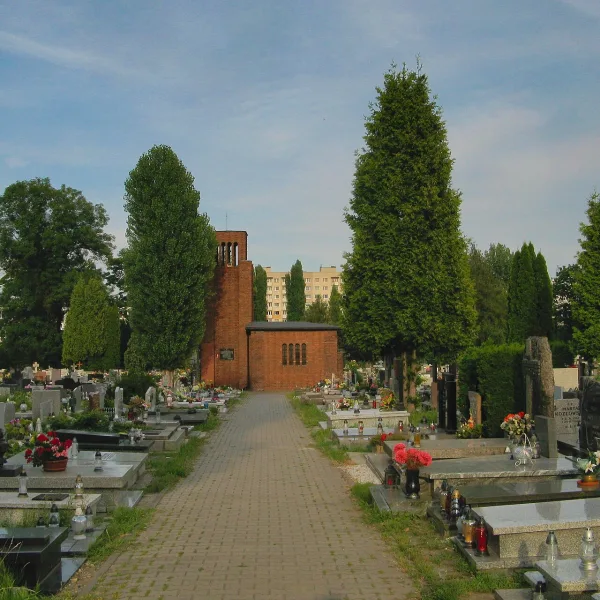
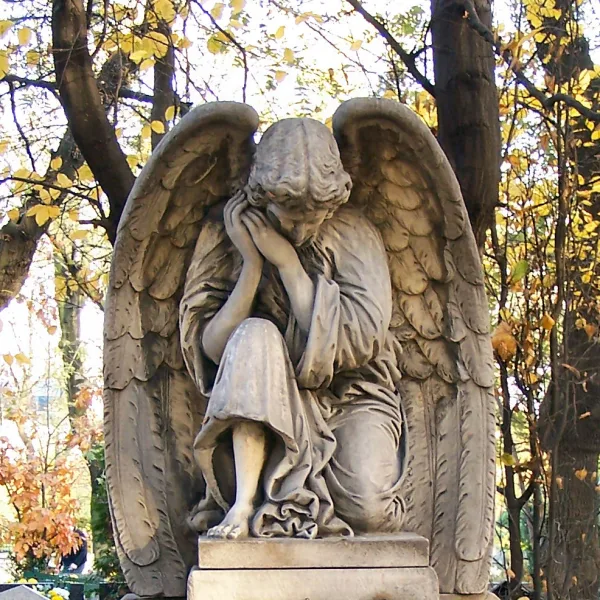
The cemetery on ulica Sienkiewicza was founded in 1911 near Christ the King Cathedral. It has a brick Modernist funeral chapel with mosaics on its tower, and the graves of Wojciech Kilar and Henryk Mikołaj Górecki. The Lutheran cemetery of 1884 lies between ulica Francuska, ulica Powstańców Śląskich and ulica Damrota; it is still in use and entered in the register of monuments. The Jewish cemetery at ulica Kozielska 16 is the oldest of the three, dating from 1869. About 1,400 gravestones and a Holocaust memorial stand there, and the funeral building and the gated fence are protected as monuments too. Enter these burial grounds with respect and follow the rules of the place.
What monuments stand by plac Chrobrego and plac Sejmu Śląskiego?
The neighbouring squares hold the monuments to Piłsudski and Korfanty and the Obelisk of the Silesian Eagles. Each has its own history reaching back before the war.
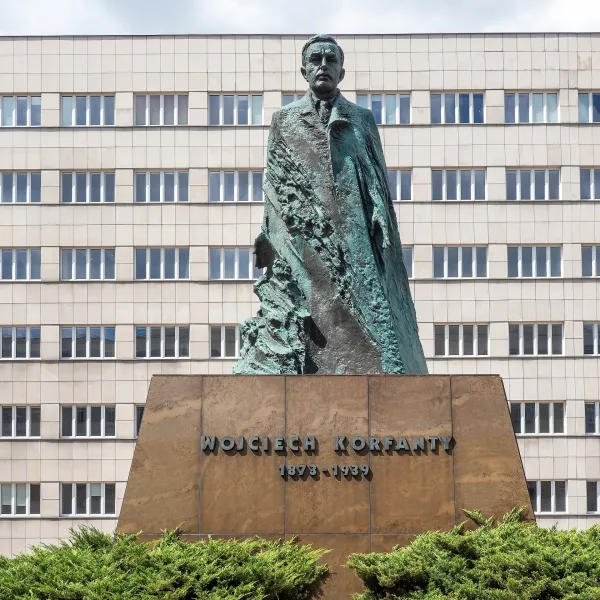
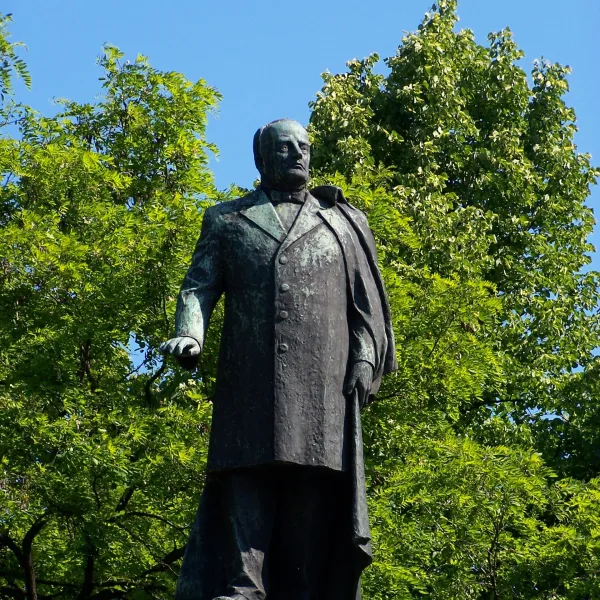
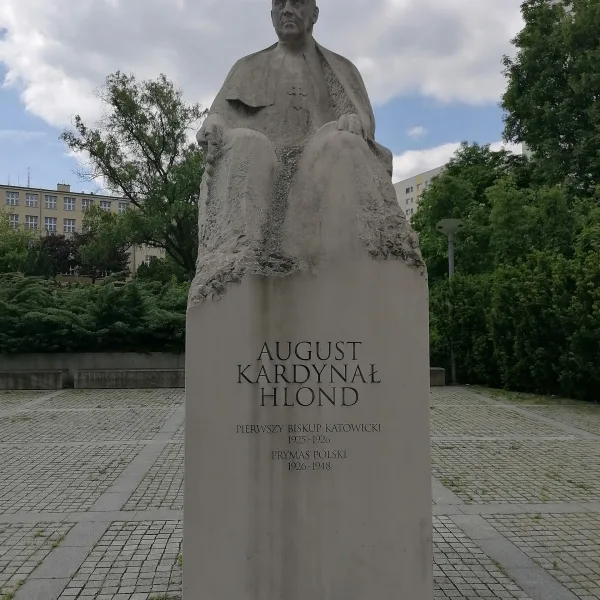
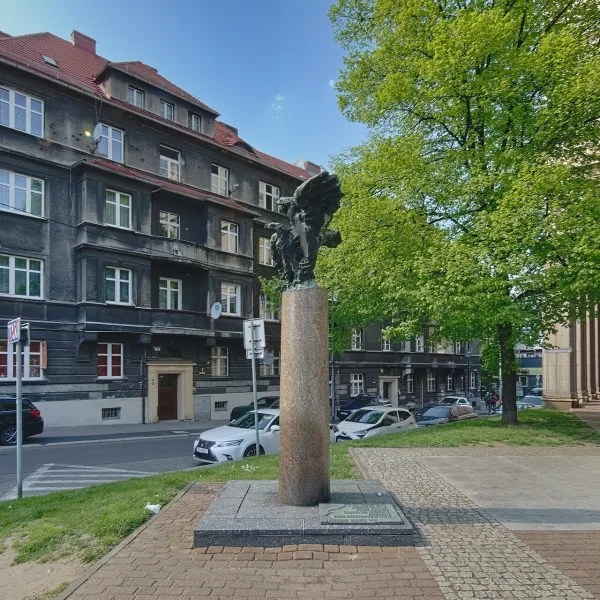
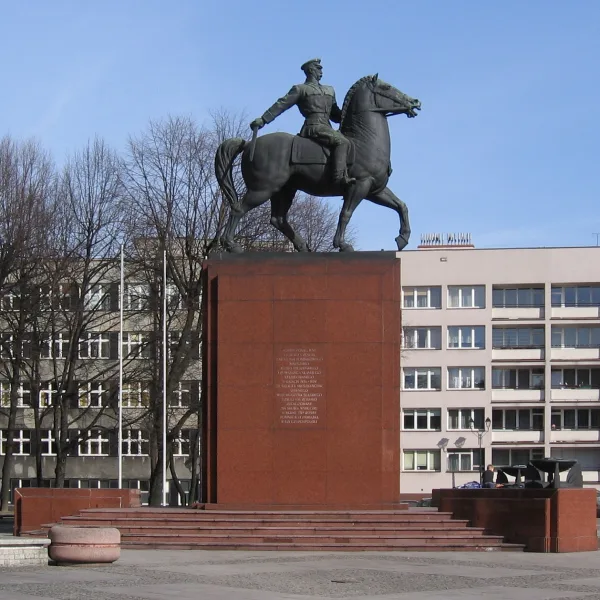
The equestrian monument to Piłsudski stands on plac Bolesława Chrobrego, in front of the Silesian Voivodeship Office. The sculpture was made in 1937-1939 and unveiled in Katowice in 1993. The monument to Wojciech Korfanty, carved by Zygmunt Brachmański, stands in the middle of plac Sejmu Śląskiego, on the prewar plinth meant for a planned Piłsudski monument. The same sculptor made the Obelisk of the Silesian Eagles of 1984, at the corner of ulica Jagiellońska and ulica Lompy, raised where a building of the Silesian Museum was planned before the war. In the Park of the Silesian Insurgents stands the monument to General Jerzy Ziętek by Kazimierz Gustaw Zemła, from 2005, and by the seminary the monument to Cardinal August Hlond of 2016: a sandstone sculpture of a seated figure, 4.3 metres tall.
Where can you see monuments to artists, scholars and sportsmen?
Here the monuments stand by institutions with which the commemorated people were connected.
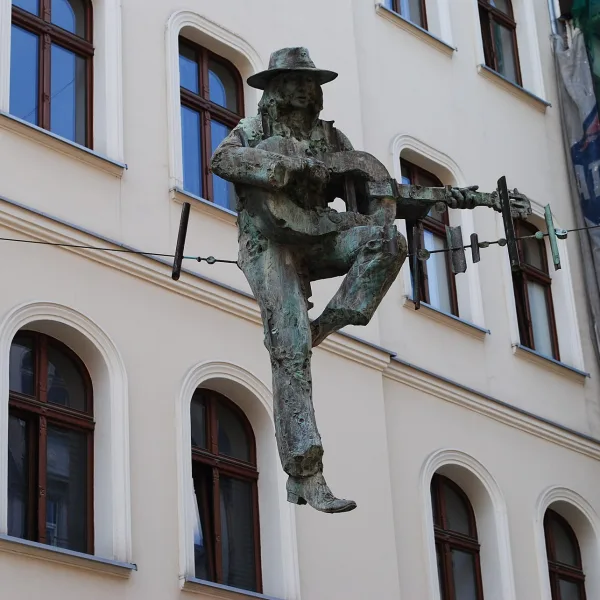
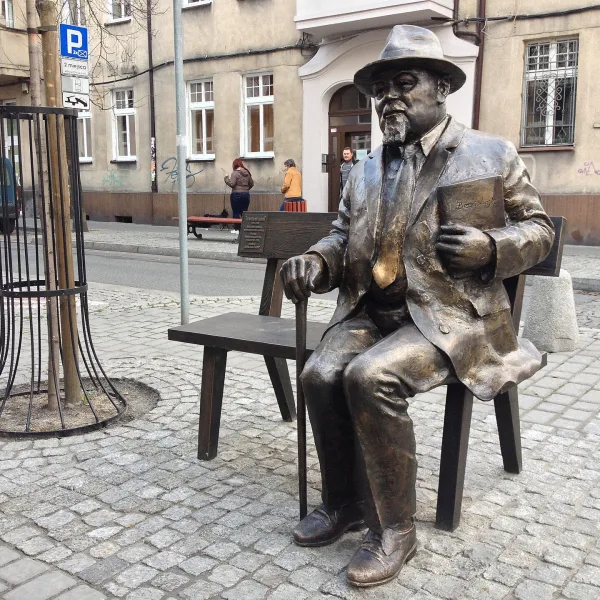
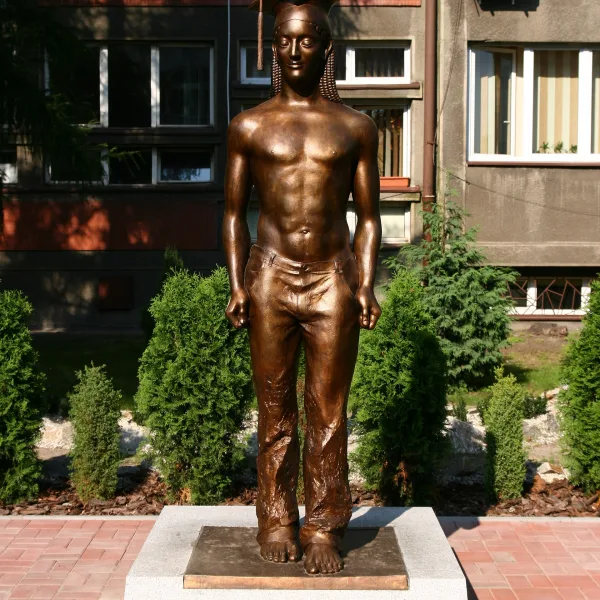
The monument to Stanisław Moniuszko stands on plac Karola Miarki; it was funded by Silesian choral societies, the war destroyed it, and it was made anew in 1959. At the seat of the Katowice radio you will see the bench of Stanisław Ligoń, a bronze work by Marian Molenda from 2012. On ulica Mariacka, five metres above passers-by, hangs the bluesman monument by Jerzy Kędziora, from 2016. At the Academy of Physical Education stands a bust of Jerzy Kukuczka, and in front of the University of Silesia rectorate, at ulica Bankowa 12, the Student Monument of 2008. Other places in the district are on the page things to do in Śródmieście, while the cemeteries and monuments category covers the whole region.
Frequently asked questions
Who is buried in the cemetery on ulica Sienkiewicza in Katowice?
Among others Wojciech Kilar and Henryk Mikołaj Górecki rest there. The cemetery was founded in 1911.
Is the Jewish cemetery in Katowice still in use?
Yes, the cemetery on ulica Kozielska is in use and protected as a monument.
Where does the bluesman monument hang in Katowice?
Over ulica Mariacka, on steel cables, five metres above the pavement. The sculptor is Jerzy Kędziora.
Where is the Korfanty monument in Katowice?
In the middle of plac Sejmu Śląskiego, between the Silesian Voivodeship Office and the building of the Non-integrated Offices.

 Cemeteries and monuments