Churches in Czerwionka-Leszczyny: five places of worship, from a Baroque church in Dębieńsko to a modernist one in Leszczyny, in Silesia.
The town grew out of several former villages, so its churches show different eras and denominations: Baroque, interwar modernism, a converted mining building and the brick Lutheran church. There are no monasteries among them, only churches. You can see all of them in a single day by driving between the districts.
Which church in Czerwionka-Leszczyny best shows the town's mining past?
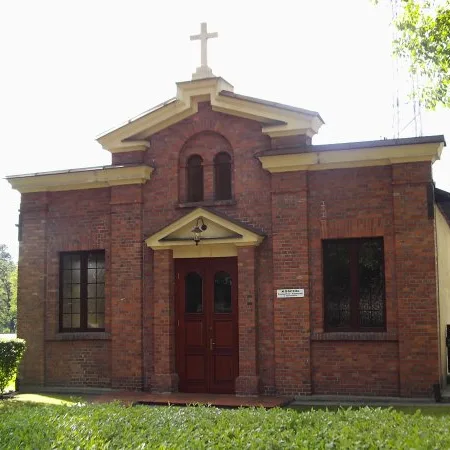
Two of them tell it most clearly. The Sacred Heart church was fitted out in 1926-1928 inside a miners' hall belonging to the Dubensko colliery, and the Lutheran church looks like an industrial building on the grounds of the former Dębieńsko mine.
In Czerwionka the parish was established in 1925, and the mine's workers' house was handed over to the church authorities by the company that owned the mine. The parish belongs to the Dębieńsko deanery of the Katowice archdiocese. The Evangelical Church of the Augsburg Confession stands on 3 Maja Street. It was built of brick in 1926 as a single-nave church in a classicising form. The interior had a major renovation in 1998, and the whole building fits the mining history of the town well.
What to see in Leszczyny and Czuchów?
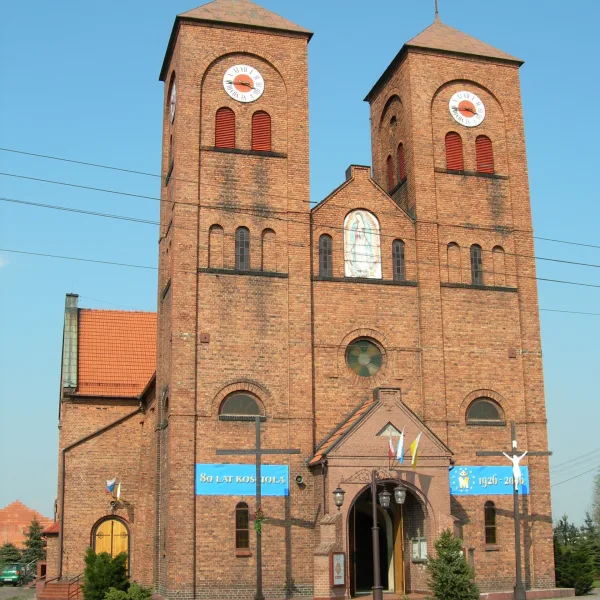
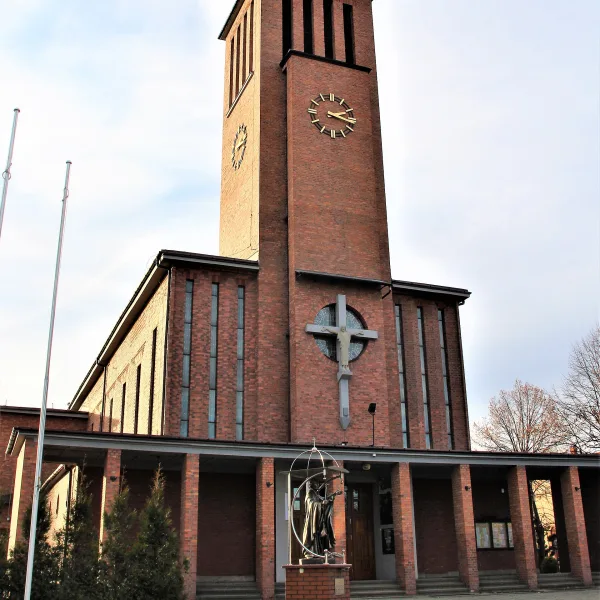
In Leszczyny start with St Andrew Bobola's Church, a modernist building from 1937-1944, and in Czuchów with the parish church dedicated to Mary, built in 1926.
Construction of the Leszczyny church began in 1937 to a design by Rafał Szymura. Inside there are stained-glass windows and an organ with more than two thousand pipes. The history of the site reaches further back, because Leszczyny once had a wooden church of the Holy Trinity from the turn of the 17th century. It was moved to Palowice in 1981, and in 2006 the foundations and three gates were recreated on the old spot. The Czuchów parish church was built on a cross plan, with a single nave, a transept and a chancel. The concrete vaults were designed by the Berlin master mason Carl Rabitz, and a double brick tower rises above the entrance. It was consecrated on 21 May 1933.
Where to find the oldest church?
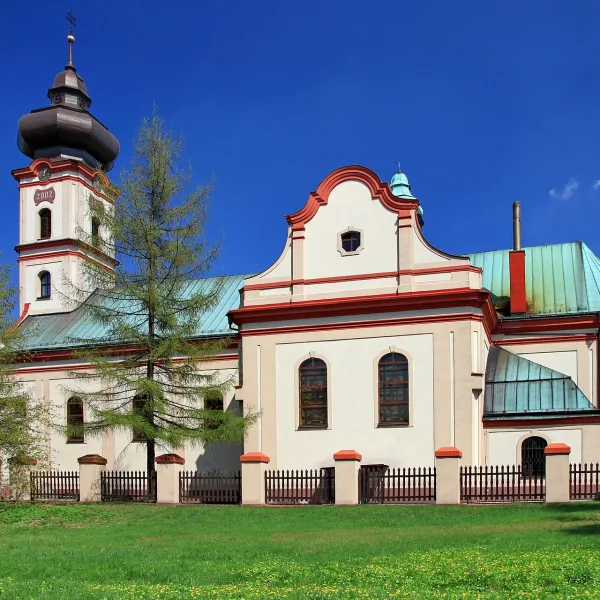
The oldest surviving church stands in Dębieńsko Wielkie, part of the town: the Baroque St George's Church, consecrated in 1800 and extended in 1912 into a cross plan.
A wooden church was pulled down here in 1798, and the main altar, pulpit, font, liturgical vessels and a copper monstrance, which survives to this day, were moved from the old building. The furnishings are older than the walls: the pulpit dates from 1774, and the three bells were cast in the 16th century. The church is on Zabrzańska Street, which makes it simple to add to a drive round the other districts. Other historic sites of the town are collected under monuments in Czerwionka-Leszczyny, a wider overview of the region is in churches and monasteries in Silesia, and everything in the town is on the Czerwionka-Leszczyny page.
Frequently asked questions
How many churches are there in Czerwionka-Leszczyny?
There are five churches: in Leszczyny, Czerwionka, Czuchów, Dębieńsko and the Lutheran church on 3 Maja Street. There are no monasteries.
Which church is the oldest?
The oldest surviving one is the Baroque St George's Church in Dębieńsko, consecrated in 1800. The wooden church from Leszczyny, dating from the 16th century, was moved to Palowice.
Is there a Lutheran church in the town?
Yes. The Evangelical Church of the Augsburg Confession from 1926 stands on 3 Maja Street and belongs to the Katowice diocese of the Lutheran Church in Poland.
Which church is linked to a mine?
The Sacred Heart church in Czerwionka, which took over a house built for the miners. The Lutheran church is also tied to the Dębieńsko mine.

 Churches and monasteries