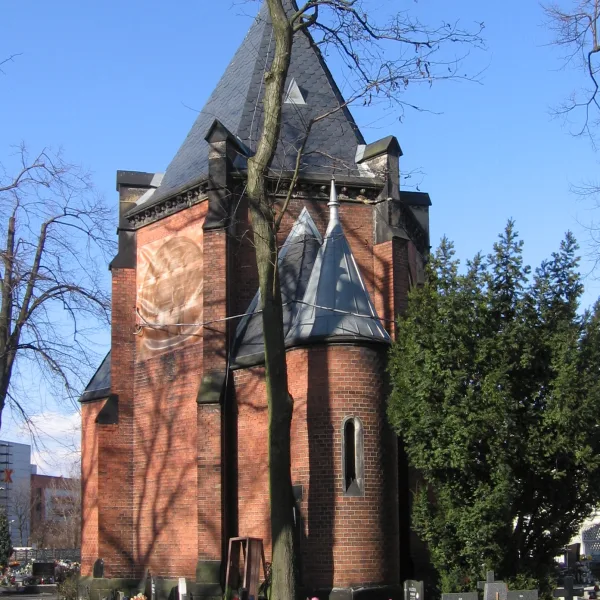
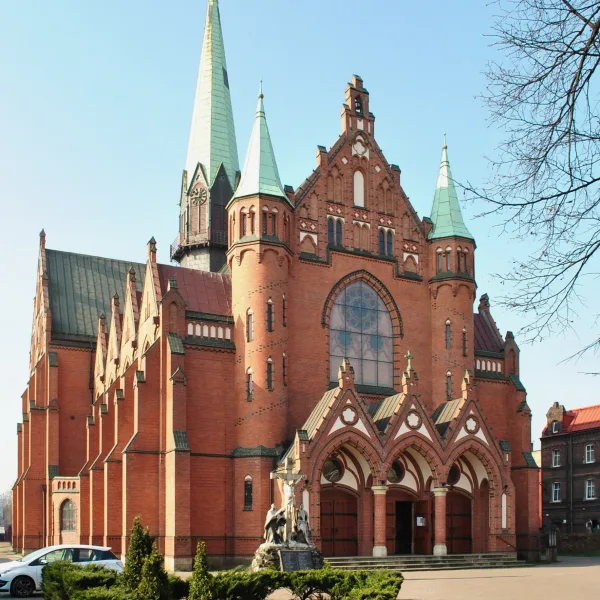
Churches in Załęże, Katowice: the Neo-Gothic Church of St Joseph, a Pentecostal congregation with a huge dome and the cemetery Chapel of the Good Thief.
Three places of worship, all along the same street: two Neo-Gothic buildings from the 19th century and a modern Pentecostal congregation built in 1989-1997.
Which church in Załęże was a votive offering after a mining disaster?
The St Joseph's Church at Gliwicka 76 was built in 1898-1900 as a vow kept after the 1896 catastrophe in the Cleophas mine, which cost the lives of over a hundred miners. It was designed by Ludwig Schneider, and the tall tower above the crossing dominates the area.
What stands out about Betania and the Chapel of the Good Thief?
The “Betania” Pentecostal Church Congregation at Gliwicka 267 stands on a circular plan with a dome nearly 40 metres across. It was designed by Kazimierz Poniatowski.
The Chapel of the Good Thief at Gliwicka 32 is a cemetery chapel in the Neo-Gothic style, dating from 1875 and designed by Alexis Langer. Old Catholics used it for years, and it has been listed as a monument since 2011.
A wider context of the district is given in the article on the Charlotte and Cleophas mines. See also the monuments in Załęże, the district Załęże and the category churches and monasteries.
Frequently asked questions
Why was St Joseph's Church in Załęże built?
As a votive offering after the disaster in the Cleophas mine in 1896. Before that, residents belonged to a parish in Bogucice, about 4 km away.
How big is the dome of the Betania congregation?
It is bowl-shaped, 39.6 metres across, and rests on a rotunda 8.5 metres high. It was built from 1989 to 1997.

 Churches and monasteries