Cemeteries and monuments in Cieszyn: Jewish, Catholic and Lutheran burial grounds, the Cieszyn Nike and the Mieszko I monument. Free entry.
Seven places in Cieszyn show the town through memory, from a Jewish cemetery of the 17th century to monuments of the 1930s. Some are active burial grounds, so visits call for quiet and respect.
What are the main burial grounds in Cieszyn?
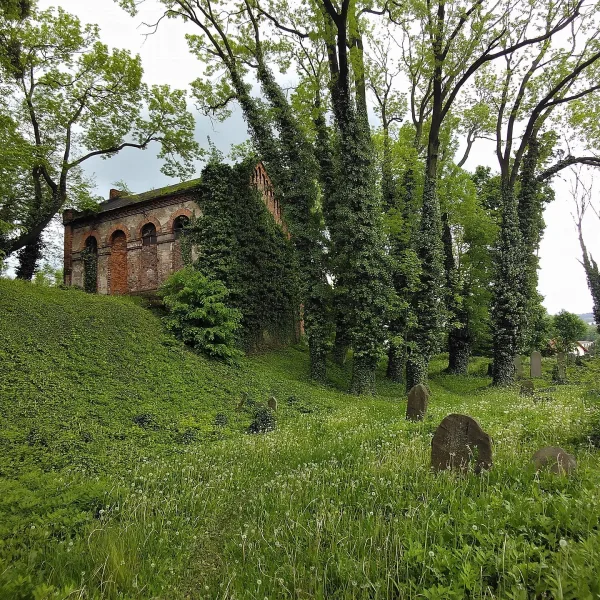
The oldest burial ground is the Old Jewish Cemetery from 1647, with over fifteen hundred gravestones on under two hectares. The largest is the Municipal Cemetery on Katowicka Street, and the calmest is the active Lutheran cemetery in the Górne Przedmieście district. The New Jewish Cemetery on Hażlaska Street, closed to burials since 1974, completes the set.
For wider context see cemeteries and monuments in Silesia, and for everything else in town go to the overview of Cieszyn.
Jewish cemeteries in Cieszyn
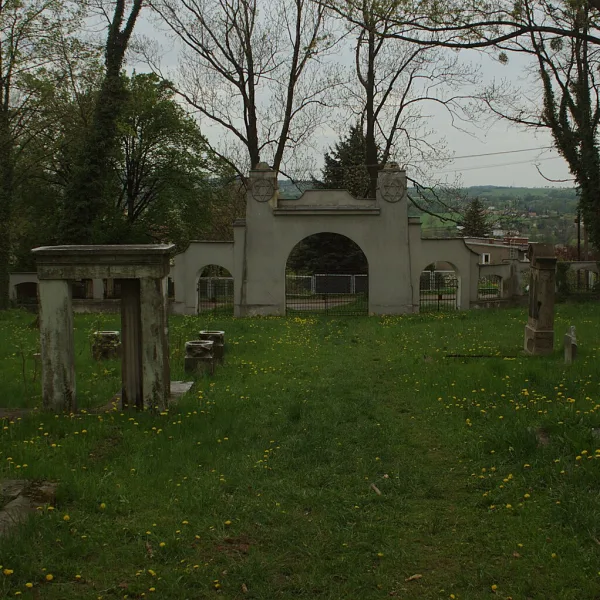
The Old Jewish Cemetery was founded in 1647 by the merchant Jakub Singer, who obtained a ducal permit for a family burial ground. Until 1785 the land belonged to the Singer family, then it passed to the Jewish community. Today it has monument status and is surrounded by a brick wall.
The New Jewish Cemetery on Hażlaska Street opened on 25 June 1907, when the old cemetery had run out of space. The pre-burial house was designed by the Viennese architect Jakob Gartner. No burials have taken place there since 1974, and the site also has monument status.
The Municipal and Lutheran cemeteries
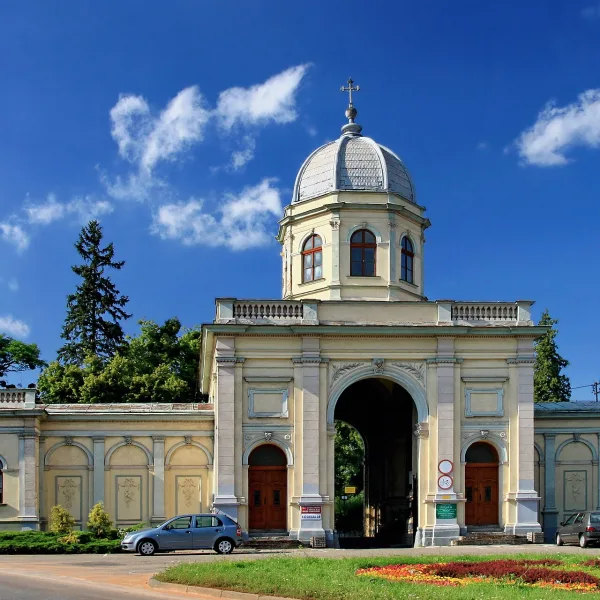
The Municipal Cemetery at Katowicka 34 was opened in 1891, when the earlier cemetery by St George's Church could no longer serve the town. It covers 6.94 hectares and is a listed monument. The entrance is an ornate gate in Austrian Baroque style with a dome, and the grounds hold a tomb of distinguished locals and war plots.
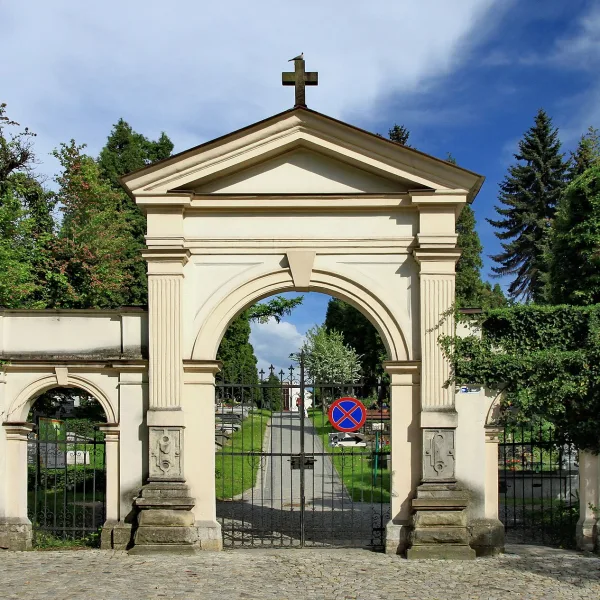
The Lutheran cemetery on Bielska Street was founded in 1887 on the edge of town. It is an active burial ground where people of merit for Cieszyn Silesia rest. The old churchyard cemetery, used until 1939, is now a park.
Monuments and sculptures in Cieszyn
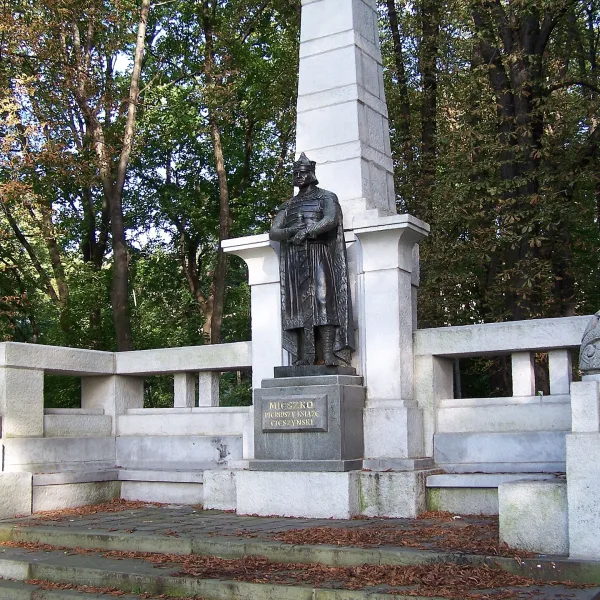
The Mieszko I monument is a bronze statue of the founder of the Cieszyn line of the Piasts, made by Jan Raszka in 1931. On the same spot once stood a monument to Emperor Franz Joseph I, taken down after 1918.
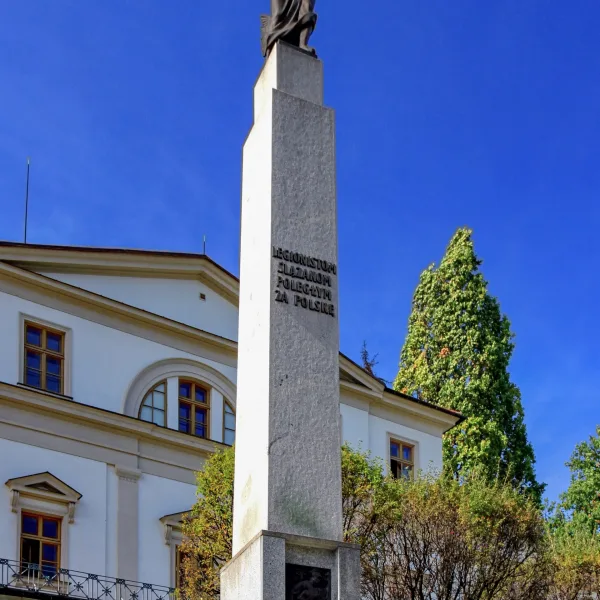
The Cieszyn Nike, officially the Monument to the Silesian Legionnaires Fallen for Poland, honours the volunteers of the Silesian Legion, formed in Cieszyn in 1914. The female figure wears a Cieszyn folk costume, which is why it is also called the Silesian Woman. The monument was unveiled in 1934 and rebuilt in 2008.
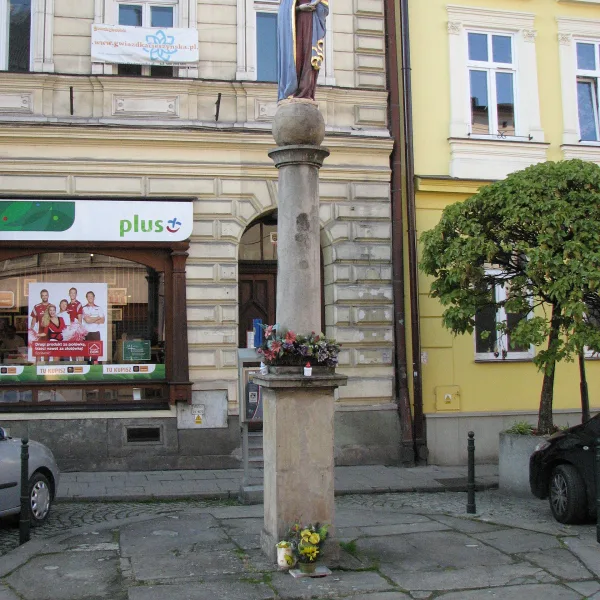
On the Old Market stands the statue of the Madonna and Child, a replica of a 14th-century Gothic work. A museum keeps the original.
Combining monuments and cemeteries with other sights
After the cemeteries it is easy to continue to churches and monasteries in Cieszyn, historic sites or museums. The beginnings of the town are described in the piece on Castle Hill.
Frequently asked questions
Which cemetery in Cieszyn is the largest?
The largest burial ground in town is the Municipal Cemetery on Katowicka Street, covering 6.94 hectares.
Are the Jewish cemeteries in Cieszyn still in use?
No. Burials at the New Jewish Cemetery ended in 1974, and the Old Jewish Cemetery from 1647 survives as a historic site with gravestones.
Where is the Mieszko I monument in Cieszyn?
The monument stands in the town centre on the site of the former monument to Emperor Franz Joseph I. It was unveiled in 1931.
Can you visit the cemeteries in Cieszyn for free?
Yes, all seven places are free to enter. Behaviour suited to a burial ground is expected.

 Cemeteries and monuments