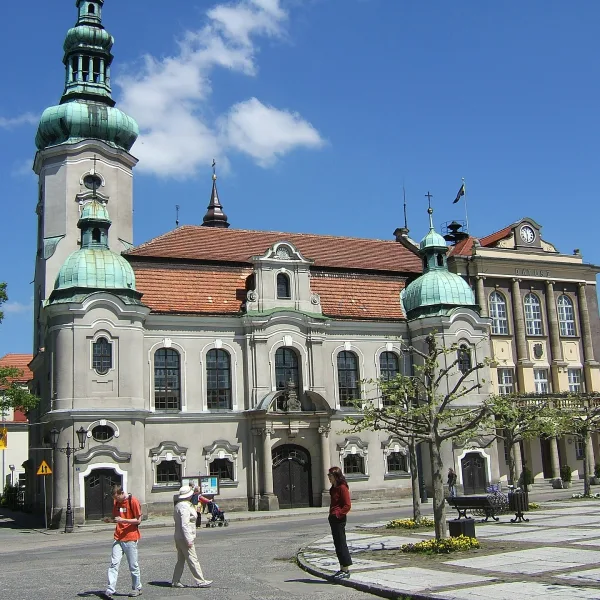
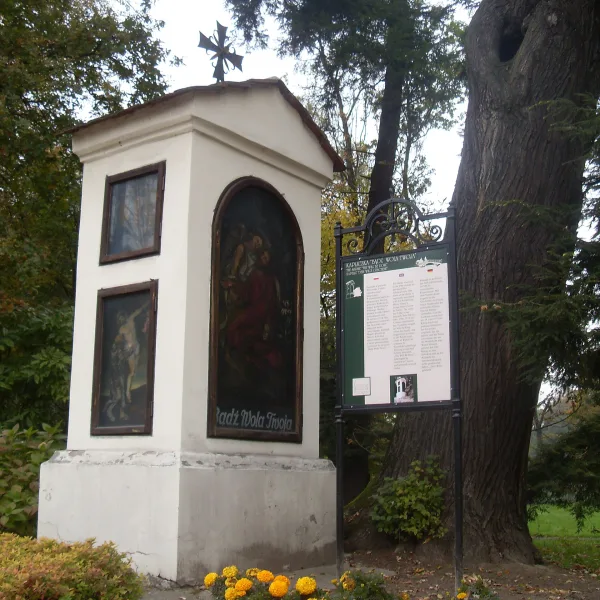
Churches and monasteries in Pszczyna include All Saints Church with the Promnitz crypt, the Lutheran church by the square and a shrine in the park.
Pszczyna has Catholic and Lutheran churches close to one another, in the centre and in the castle park. Walking from church to church takes little time, so it makes a good solo afternoon.
Which church in Pszczyna stands closest to the castle?
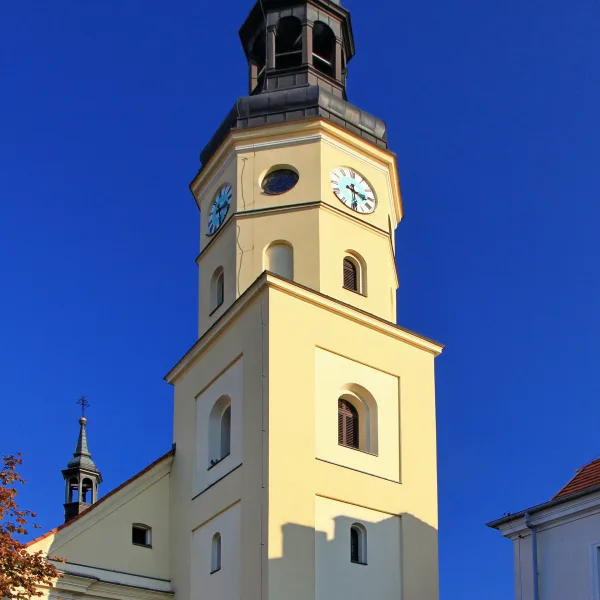
All Saints Church at plac Księdza Prałata Józefa Kuczery 2 is a few dozen metres from the castle. Records name it from 1326, but the present building comes from a reconstruction after the great fire of 1748, completed in 1754. A crypt below holds thirteen Promnitz burials. Earlier, after the blaze of 1622, Jerzy Walenty Meyer of Moravian Ostrava had restored it. The castle next door features in the article on Destailleur's rebuild.
Where are the Lutheran church and the shrine in the park?
The facade of the Lutheran church opens onto the main square, at Rynek 1. The congregation sought a church from 1709, the walls rose in 1743-1746, and a fire in 1905 forced a neo-Baroque rebuild. On the far side of the park, in its south-west corner by Wojska Polskiego and Żorska, stands the "Thy Will Be Done" shrine, a plastered pillar shrine with a tiled roof. A legend of a chase after Henry of Valois is linked to it. Walking through the park and the open-air museum is described in a Pszczyna stroll article. For the rest of the town go to things to do in Pszczyna, and for sacred buildings across the voivodeship to churches and monasteries in Silesia.
Frequently asked questions
Whose tombs lie under All Saints Church?
Thirteen Promnitz burials lie there, the lords of Pszczyna of the time.
What happened to the Lutheran church in Pszczyna in 1905?
A fire in 1905 led to a neo-Baroque reconstruction. The earlier church dates from the 1740s.

 Churches and monasteries