Silesia, Silesian Voivodeship
Friday, 06 November 2026 PL / EN

Architecture: Żory

For families For couples Solo For rainy days Free
6 attractions
Mury obronne Historic sites
Defensive Walls (Żory)
Żory, zachowane fragmenty wzdłuż ulic Ogrodowej i Męczenników Oświęcimskich

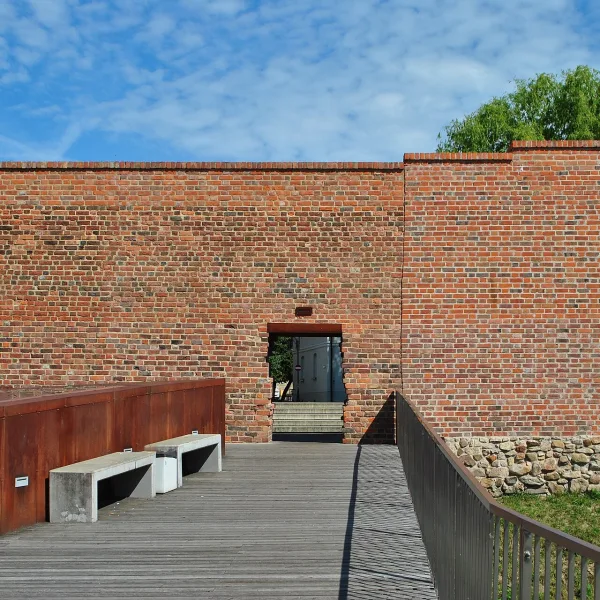
brick walls of the 13th and 14th centuries which in 1345 defended the town against Casimir the Great

Architecture in Żory: medieval town walls, a Gothic church by the square, a modernist Evangelical church, a former synagogue and a palace in Baranowice.

Żory received its town charter in 1272 and still holds many traces of the medieval town. Beside them stand buildings of the 19th and 20th centuries linked with different faiths. Similar monuments from other towns are in architecture across Silesia, and other sights in things to do in Żory.

What remains of Żory's walls and its oldest church?

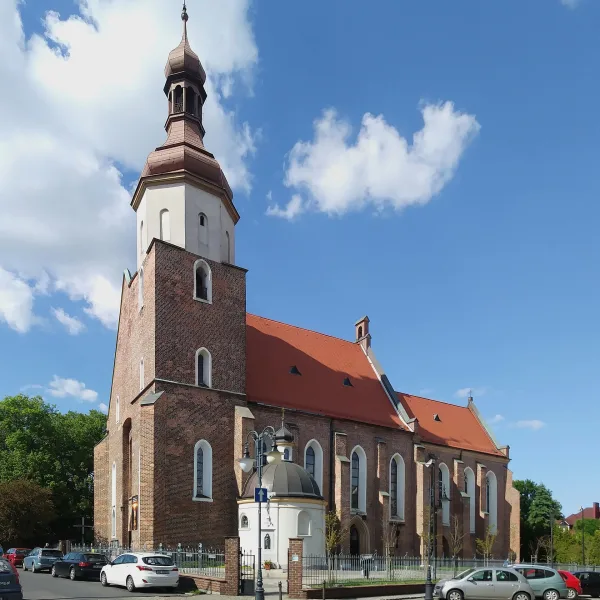
In the centre of Żory, see the brick stretches of the walls, the reconstruction of the Kraków Gate and the church of Philip and James. Together they show what the medieval town looked like: fortifications, one of its gates and a Gothic parish hall by the square.

The brick defensive walls were raised in the 13th and 14th centuries in the Gothic style, and sections survive along Ogrodowa and Męczenników Oświęcimskich streets, and the register of monuments covers them. The vanished Kraków Gate, also called the Lower Gate, is recalled by a brick reconstruction on a roundabout near its old site.

The church of the Apostles Philip and James stands right by the square, not far from the old walls, and is the town's oldest. It is a Gothic three-nave hall of brick and stone with a tower about 54 metres high. A parish existed here long before the town grew, as a papal bull of 1193 by Celestine III recalls. The church was blown up in 1945 and later raised again.

Which churches, synagogue and palace to see outside the square?

Outside the medieval core lie buildings of later periods: an Evangelical church from the 1920s, a former synagogue from the 1830s and the palace in Baranowice. Each reflects another layer of Żory's history.

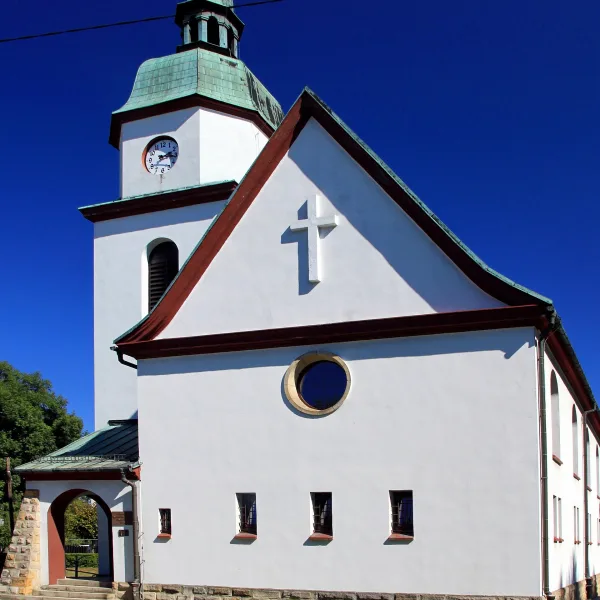
On Osińska Street rises the Church of the Saviour, a modernist building of the Evangelical-Augsburg Church. The brothers Hubert and Henryk Eras from Wrocław prepared the plans; the cornerstone was consecrated in summer 1929 and the completed church was handed over in early spring 1931. The register of monuments includes it.

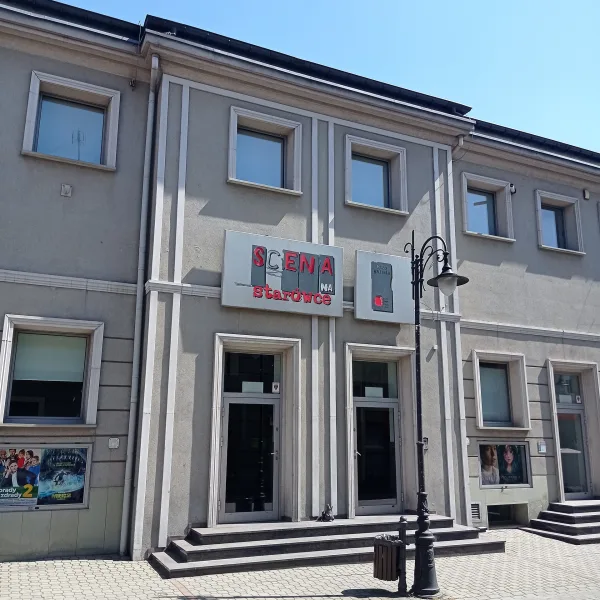
The former synagogue at number 3 Kościuszki Street was erected between 1830 and 1835, replacing an older prayer house. During the occupation its interior was wrecked, and after the war the ruin became the Znicz cinema. The building is a relic of Żory's Jewish community and is not a place visited from inside. Other Jewish necropolises of the region are surveyed in an article on five towns.

The palace in Baranowice, now a district of the town, stands on Zamkowa Street. A brick palace of the 17th century was rebuilt by Emil von Durant in the 1800s, and its style is described as Classicist. After years in ruin it was renovated; monumental oaks grow around it.

Frequently asked questions

Which church in Żory is the oldest?

The church of Philip and James near the square. It is a Gothic hall of brick and stone, rebuilt after the destruction of 1945.

Where do the town walls survive in Żory?

Stretches of brick wall can be seen by Ogrodowa and Męczenników Oświęcimskich streets. They are several centuries old, built in the 13th and 14th centuries.

What is in the former synagogue today?

After the war the devastated building was turned into the Znicz cinema. Today it recalls the former Jewish community.

Where is the palace in Żory?

In Baranowice, a district of the town, on Zamkowa Street, among monumental oaks.