Architecture in Bytom ranges from Gothic in the centre and Neo-Gothic churches to Art Nouveau hotels, Szombierki modernism and old cemeteries.
Over the centuries the city's builders changed their tastes, and each era left its own mark: from medieval cellars to functionalist bathhouses of the 1930s. This guide arranges the monuments by style and district, so that an architecture lover can choose a route easily. The region as a whole is treated under architecture in Silesia, and further Bytom addresses sit in Bytom attractions.
Which architectural styles will you meet in Bytom?
Bytom offers a little of everything: Gothic and Baroque in the centre, rich Neo-Gothic and Neo-Romanesque from the 19th and early 20th centuries, Art Nouveau along Dworcowa Street, Expressionism and modernism from the interwar years, and industrial architecture. It is best seen in chronological order.
The layout also makes practical sense. The Middle Ages and Baroque lie near the market square, brick churches are scattered through the workers' districts, and modernism gathered around Plac Akademicki, the shaft towers and former works. So one day can be given to one style.
Where to see Gothic and Baroque in Bytom?
In the centre: by the market square stands the Gothic Assumption church, brick, which keeps a painting of Our Lady of Bytom dated to around 1430. At Strażacka 8 wait the Gorywoda House cellars, vaults from the 1300s with pointed stone portals and an unusual palm vault for a secular building.
A Gothic chancel is also found in St Adalbert's church on Plac Klasztorny, once Franciscan. Today it is Baroque, single-nave and hall-like, with origins in the mid-15th century. Baroque character also marks Holy Spirit church on Krakowska Street, an eight-sided hospital chapel dating from 1721. The market square also holds the Sleeping Lion, a bronze cast of 1873 to a design by Theodor Kalide.
Which Bytom churches represent Neo-Gothic and Neo-Romanesque?
This is the largest group, since they were built during the rapid growth of an industrial city. Neo-Gothic gives sharply pointed towers, Neo-Romanesque heavier, broader forms with round-arched windows.
Neo-Gothic
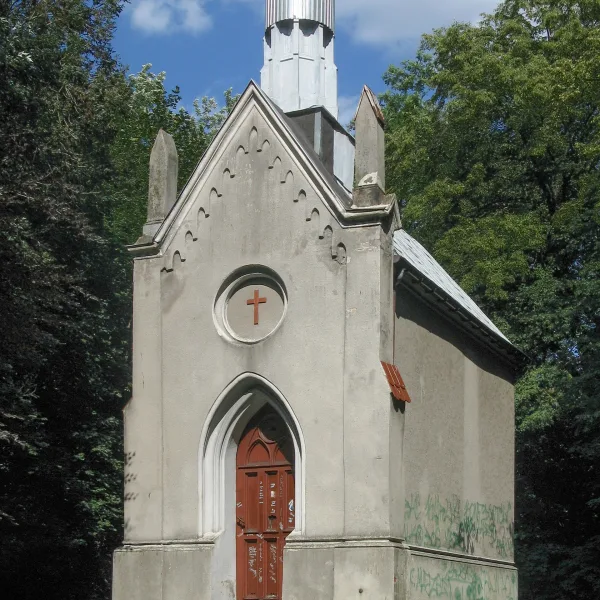
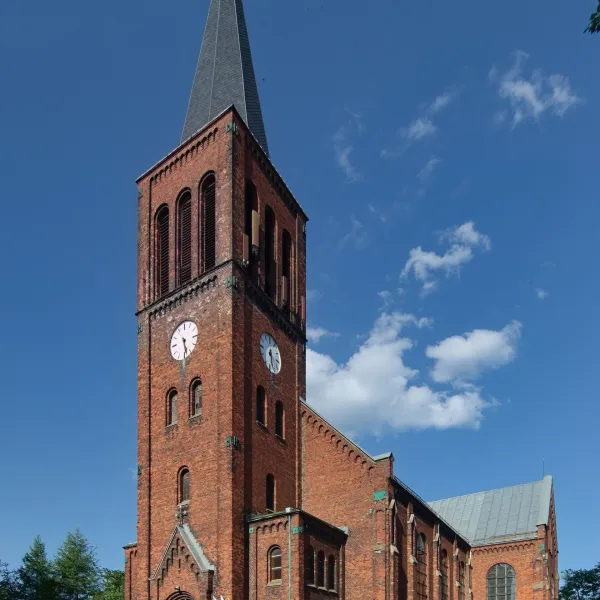
The Holy Cross church in Miechowice, raised in 1856-1864, has a tower of about 60 metres. The central Holy Trinity church was designed by Paul Jackisch, and construction ran from 1883 to 1886. On St Margaret's Hill stands the Neo-Gothic St Margaret's church of 1881. From the early 20th century comes the Good Shepherd church in Karb, where Neo-Gothic mixes with modernism. Linked with Neo-Gothic is also the Evangelical-Augsburg church in Miechowice from the late 19th century, and next to it the miners' chapel of St Barbara from 1850, viewed together with its park.
Neo-Romanesque and eclecticism
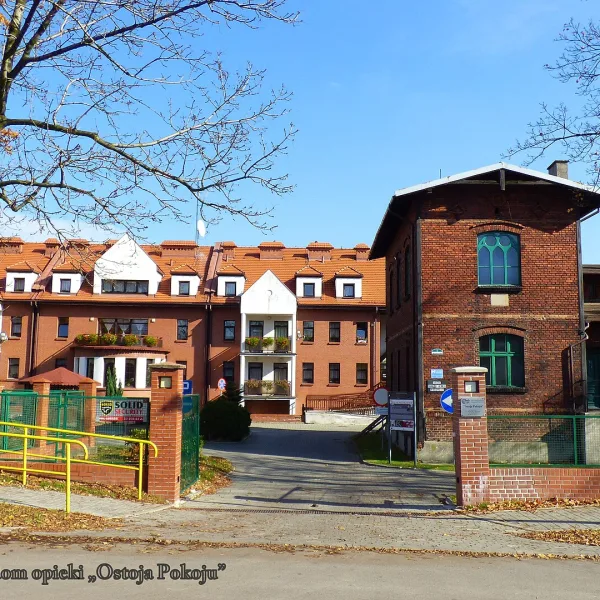
Two towers 57 metres high mark St Hyacinth's church in Rozbark, modelled on Limburg Cathedral. In Bobrek stands the brick Holy Family church, designed by Ludwig Schneider. In Łagiewniki the brick St John of Nepomuk church of 1894-1896 combines Neo-Romanesque and Neo-Gothic motifs. Take note of the former care centre Ostoja Pokoju: an Evangelical complex founded by Mother Eva, with a church, a museum and the founder's cemetery.
Where to see Art Nouveau and Neo-Renaissance in Bytom?
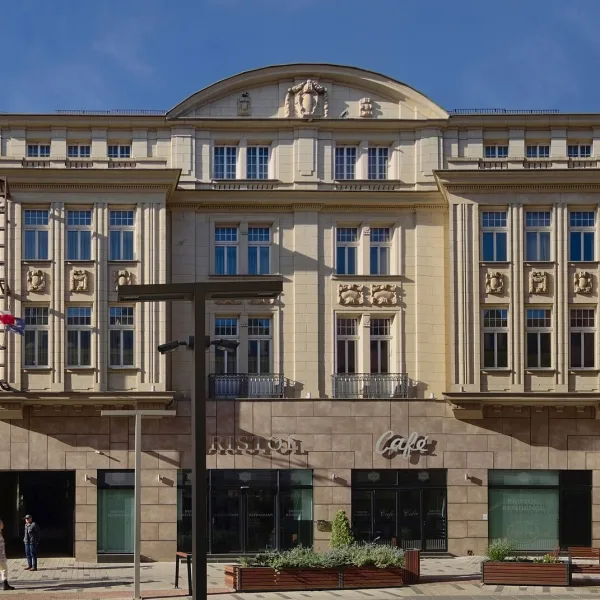
On Dworcowa and Piekarska streets. The former Hotel Reichshof at Dworcowa 19, extended in 1905, is a four-storey townhouse with Art Nouveau facades. At number 16 stands the older Hotel Sanssouci, considered the oldest monument on this street, with a fourteen-bay front.
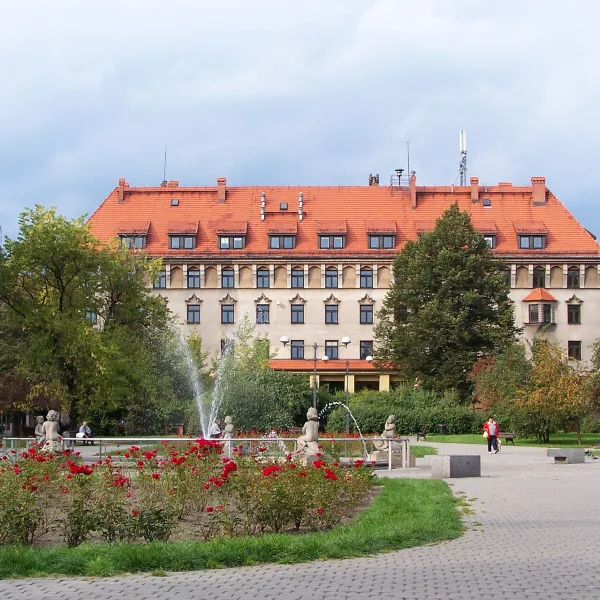
At Piekarska 6 stands the Main Post Office of 1908, Neo-Renaissance, with clinker and sandstone; the building is no longer a working post office, but the facade is still decorated with reliefs of the old mail. From the same period comes Plac Akademicki: an oval square in the centre with buildings of 1905-1927 where Art Nouveau, Expressionism and Art Deco meet; a fountain from 1947 stands in the middle.
What to look for in Bytom's modernism?
Modernism and functionalism concentrate on utilitarian buildings of the 1930s. The bathhouse at Parkowa 1, of 1934, has a clinker facade and a tower and today works as the municipal swimming pool. The municipal water tower on Oświęcimska Street was built of reinforced concrete in 1934-1936 and rises 44.3 metres. They are joined by Krystyna Shaft, a brick winding tower in Szombierki, about 57 metres high.
The article on the Szombierki power plant shows what the Zillmann brothers' design looked like, and a broader view of timber churches is given by the text on wooden churches of the 20th century.
What does industrial architecture look like in Bytom?
Brick mine and steelworks buildings are well preserved. The former Rozbark mine buildings at Chorzowska 12 include an engine house, a lamp room, a boiler house and a retaining wall from the early 20th century. In Bobrek the steelworks power house of 1900-1907, Neo-Romanesque, stretches about 108 metres. In Łagiewniki look at the fire station of 1911 with a wooden training tower, and at the Zgorzelec colony, a workers' estate of thirty-four tenement houses.
Which cemeteries and monuments have architectural value?
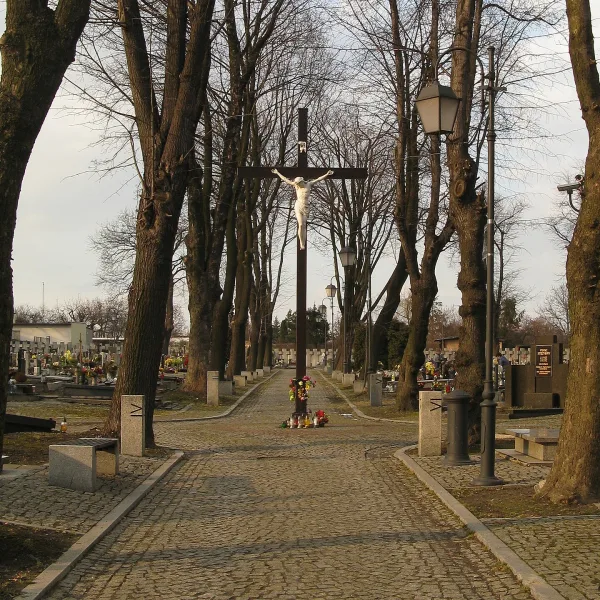
Cemeteries are visited quietly and with respect, since some are active. The Mater Dolorosa Cemetery at Piekarska 71 dates from 1868 and holds a chapel in Neo-Gothic style, family tomb chapels and the graves of people who served the city. The Jeruzalem cemetery in Rozbark was laid out in 1920 where a mine had stood.
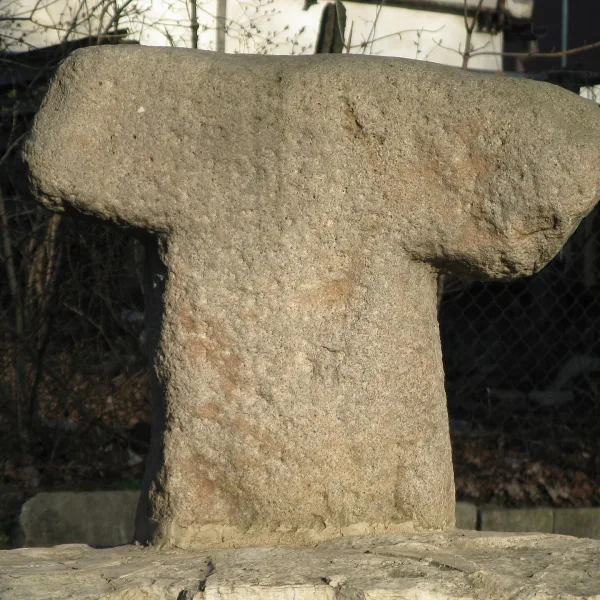
The Jewish cemetery at number 56 on the same street dates from 1866 and includes a funeral-preparation house and a Wall of Memory built of matzevot. In the city centre, on Piastów Bytomskich Street, stood the old Jewish cemetery, liquidated in 1965; now an open plot with a plaque marks the place. In Łagiewniki stands a stone cross in the shape of a T, a medieval sculpture known as a penitential cross.
Frequently asked questions
What architectural styles are there in Bytom?
Gothic, Baroque, Neo-Gothic, Neo-Romanesque, Art Nouveau, Neo-Renaissance, Expressionism, modernism and functionalism, and industrial architecture.
Where to see Art Nouveau in Bytom?
On Dworcowa Street, where former hotels stand, and on Plac Akademicki, where Art Nouveau mixes with other styles.
Can the post office in Bytom be visited?
The Main Post Office on Piekarska 6 is no longer a post office, but its facade can be viewed from the street.
What is Ostoja Pokoju?
It is a former Evangelical care complex in Miechowice, founded by Mother Eva; it contains a church, a museum and the founder's cemetery.

 Historic sites