Architecture in Piekary Śląskie means a basilica with a calvary, Ludwig Schneider's brick churches and the modernist Trinity church. Eight monuments.
Piekary Śląskie is best known for its sanctuary, yet there is more sacred heritage here: district churches, two chapels and a modernist church of the 1930s. The overview groups them by place and style.
What to see in the Piekary sanctuary
The sanctuary comprises the basilica on Bytomska Street and the calvary on Cerekwica Hill. Both are working places of worship, so plan around service times.
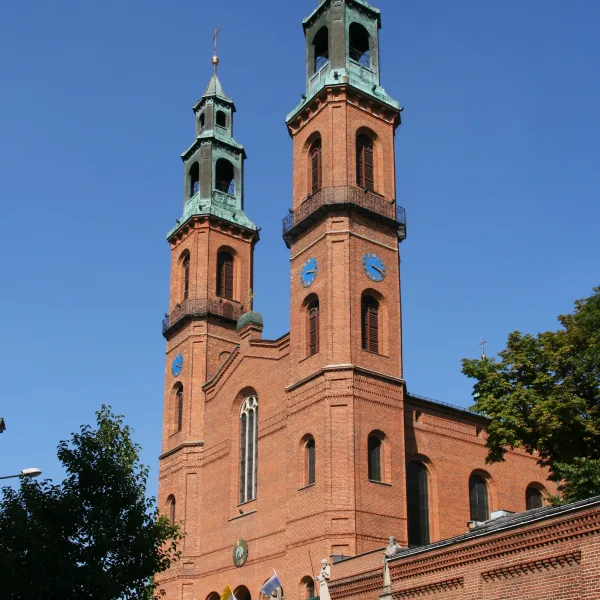
The neo-Romanesque minor basilica dates from 1849 and is the heart of the sanctuary devoted to Our Lady of Justice and Social Love. A parish has existed here since 1303, and pilgrims have come for centuries. The history of that devotion is told in an article on the men's pilgrimages to Piekary. The calvary was laid out in the nineteenth century by parish priest Bernard Purkop, who spent 1866-1871 consolidating land on the hill. Today it features the Church of the Resurrection, a series of chapels for the road of arrest and for the Way of the Cross, along with a wall that holds the rosary chapels. The 34 chapels and the church were entered in the register of monuments in 1995.
Who designed the brick churches of the districts?
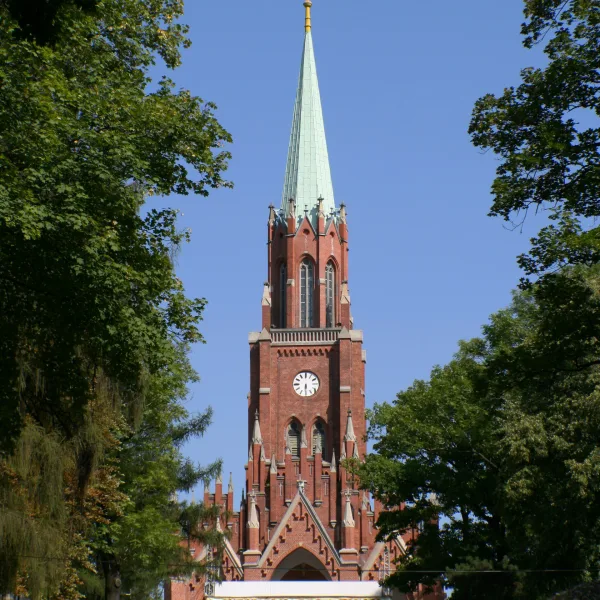
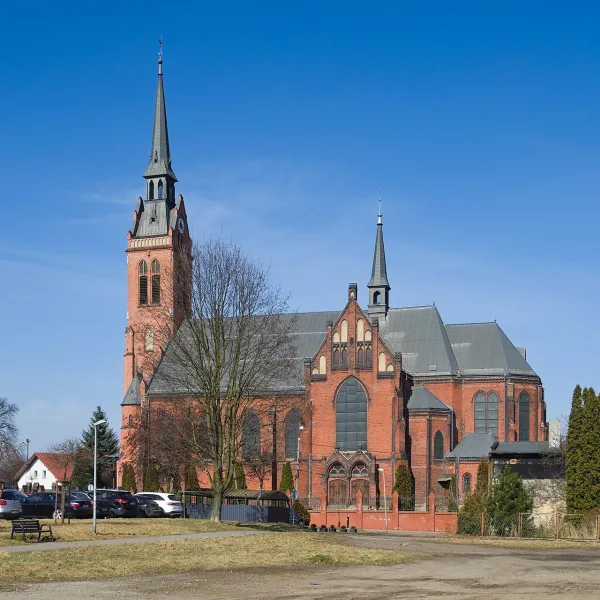
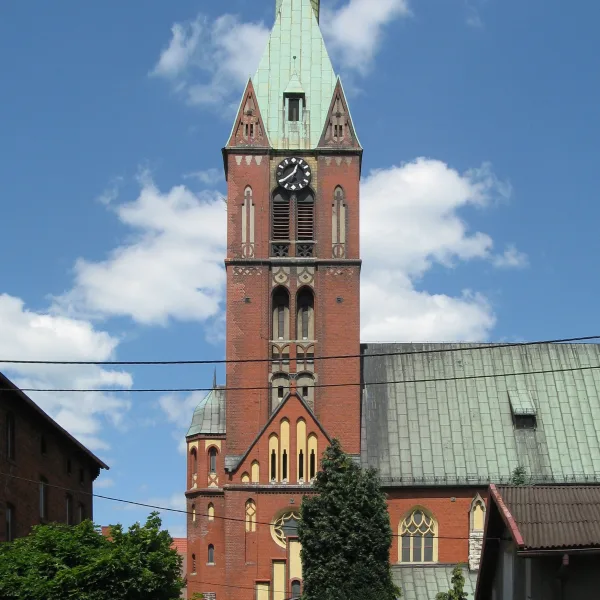
The churches in Dąbrówka Wielka, Brzeziny Śląskie and Kamień share an architect, Ludwig Schneider, who designed or extended each of them. All are brick and were built between the end of the nineteenth century and 1915.
The Church of Saints Peter and Paul in Kamień, on Biskupa Nankera Street, was raised in 1898-1899. It is red-brick neo-Gothic with three naves of equal height, a Latin cross plan, and a tall tower with clocks on two faces. In Dąbrówka Wielka, on Jagiellońska Street, stands the Church of Our Lady Help of Christians. It began as a chapel in 1882 to a design by Paul Jackisch, and Schneider enlarged it in 1902-1903 in a neo-Romanesque spirit. The youngest of the three, the Church of the Sacred Heart of Jesus at Górnicza 30, was built in 1913-1915 as a single-nave building with one tower, mixing neo-Romanesque and neo-Gothic motifs.
What else to see: modernism and small chapels
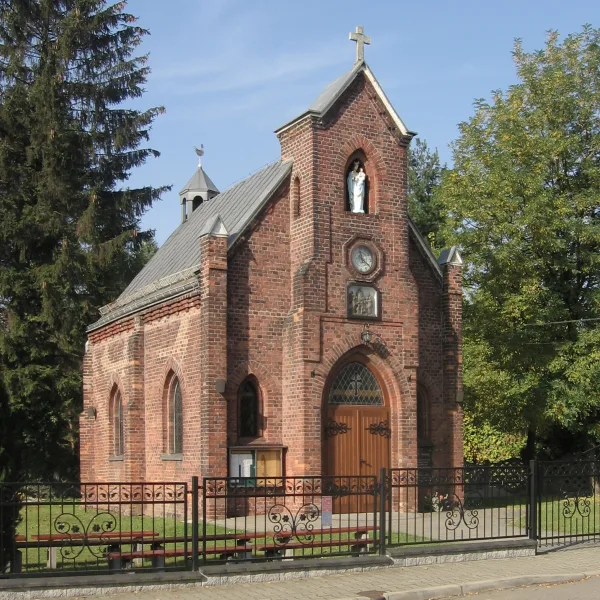
In Szarlej you can see the modernist Church of the Holy Trinity at Żwirki 17 and the neo-Gothic Maria Hilf Chapel. In Dołki there is the Chapel of St Anthony. These three show that Piekary's architecture is not only brick from the turn of the century.
The Trinity church of 1929-1933 was chosen in a competition. Its author, Zygmunt Gawlik, also drew up Christ the King Cathedral in Katowice. The building has a plan close to a square and, instead of a tower, a massive block on the south side. Maria Hilf, from 1905, sits on a modest rise among trees close to the Bytom border; it was added to the register of monuments in 2019, and the renovation of 2020-2021 brought benches and an information board. Local residents built the brick chapel in Dołki in 1929-1930 as a votive offering of thanks for part of Upper Silesia joining Poland.
Frequently asked questions
What sacred monuments does Piekary Śląskie have?
A basilica from 1849, a calvary with 34 chapels, churches in Dąbrówka Wielka, Brzeziny Śląskie, Kamień and Szarlej, and chapels in Szarlej and Dołki.
Can you go into the basilica and calvary during a service?
They are working places of worship, so a visit has to be fitted around the liturgy. It is best to pick a time when no Mass is under way.
Which church in Piekary is modernist?
The Church of the Holy Trinity in Szarlej, which has no tower and a plan close to a square.
Where can you find other places in town?
In the Piekary Śląskie section and on the Architecture page.

 Churches and monasteries