Cemeteries and monuments in Żywiec: a Jewish cemetery with gravestones, the oldest active necropolis, the Grunwald Monument and a bench for Alicja Habsburg.
Żywiec has several necropolises of differing origin and two monuments in public space. Together they show who lived here in earlier times: townspeople, a Jewish community, the poor, soldiers and the dynasty that owned the local estate. Burial grounds call for quiet and respect.
Which cemeteries in Żywiec are historic?
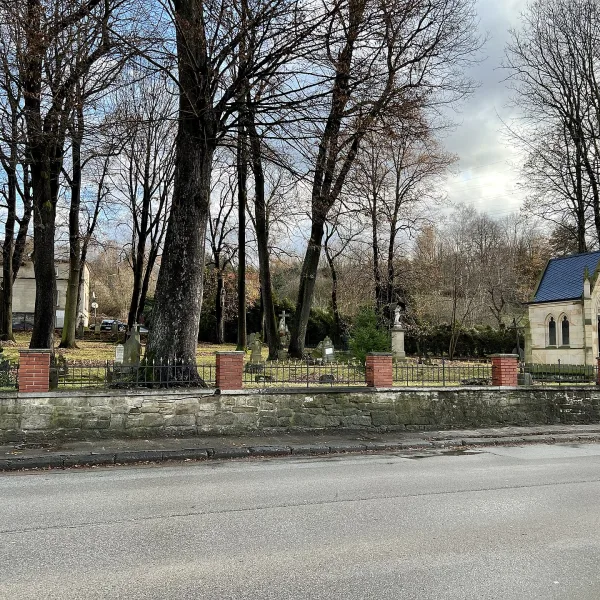
The Transfiguration Cemetery at ul. Komonieckiego 26 is the oldest necropolis in Żywiec still in use. It was founded by the town reeve Andrzej Komoniecki, who built a chapel here in 1705, and a local Catholic parish manages it today. The cemetery is entered in the register of monuments and holds war plots and the graves of locally prominent people.
The cemetery on Sienkiewicza street was established in 1784 around the church of St Mark. The story of the site begins earlier: a small shrine was put up here in 1584, and plague victims were buried nearby. Today it is closed to new burials, and the register of monuments lists it with its gravestones, a neo-Gothic tomb chapel and cast-iron crosses.
Where is the Jewish cemetery?
The Jewish cemetery lies on Stolarska street in the Zabłocie district, beside the Roman Catholic cemetery, and covers about half a hectare. About five hundred matzevot survive, the oldest from 1853 and the latest from 1946. The gravestones are made of sandstone, granite and limestone. The site was restored in 2018-2020 and entered in the register of monuments.
Which monuments are worth knowing in Żywiec?
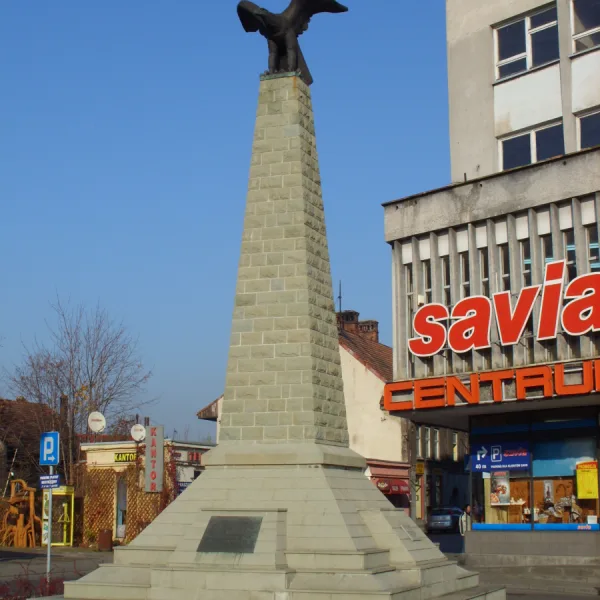
The Grunwald Monument stands on Plac Grunwaldzki in the centre, between Kościuszki, Handlowa and Podwale streets. The first one was unveiled in July 1910 on the five-hundredth anniversary of the battle, designed by Witold Florkiewicz, with an eagle sculpted by Jan Szczepkowski. The original was destroyed during the Second World War; today's monument is a reconstruction from 2005.
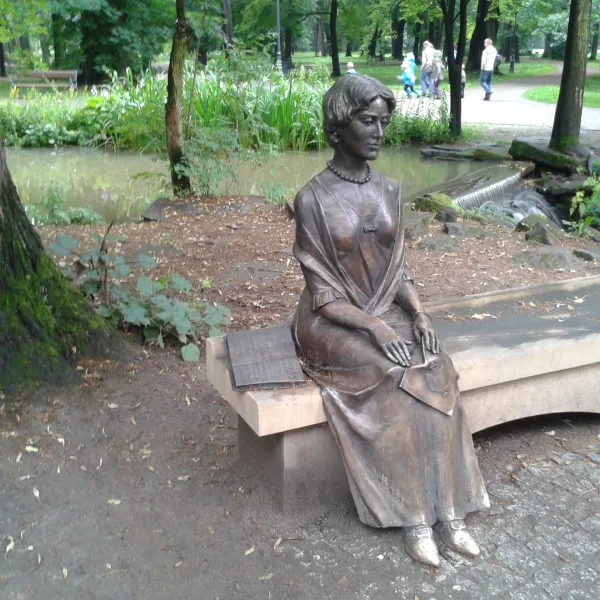
In the Castle Park, near the Miniatures Park, you can sit beside the bench of Alicja Habsburg, a life-size bronze sculpture. Alicja, born Ankarcrona, came from Sweden, was the wife of Karol Olbracht Habsburg and the mother of Princess Maria Krystyna. She lived in Żywiec from 1920 to 1945 and belonged to the Home Army during the war. The family is covered in an article on the Habsburgs and the brewery.
What else relates to the memory of the fallen?
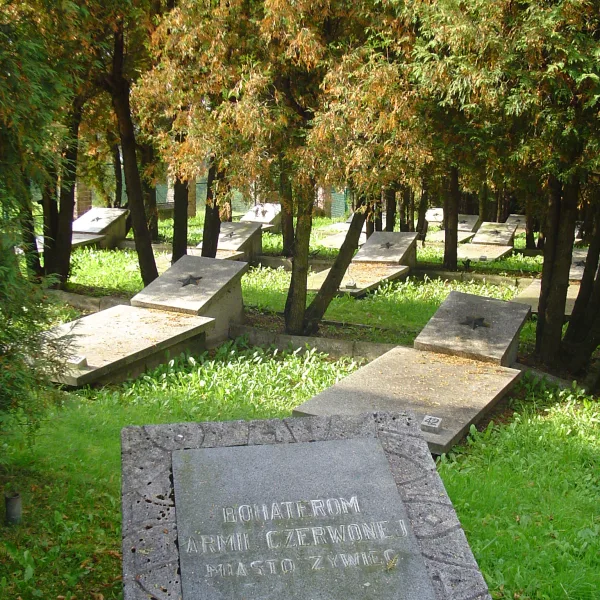
The Soviet Soldiers' Cemetery in Moszczanica, on Moszczanicka street, was established in 1951 on the site of a former manor orchard. It is the resting place of 1120 Soviet soldiers who fell in 1945 in the fighting for the Żywiec region. Their remains were exhumed in 1948 from the places of original burial. The cemetery is entered in the register of monuments.
You can begin a walk through other districts with the attractions of Żywiec, and go on to its churches and monasteries and historic sites. Cemeteries and monuments across the region are gathered under cemeteries and monuments in Silesia.
Frequently asked questions
Which cemetery in Żywiec is the oldest?
The oldest necropolis still in use is the Transfiguration Cemetery on Komonieckiego street, founded in the early eighteenth century. The cemetery on Sienkiewicza street, from 1784, is closed to new burials.
How many gravestones survive in the Jewish cemetery?
About five hundred. The oldest dates from 1853 and the latest from 1946.
Is the Grunwald Monument original?
No, it is a reconstruction from 2005. The first monument was unveiled in 1910 and destroyed during the Second World War.
Whom does the bench in the Castle Park portray?
Alicja Habsburg, born Ankarcrona, who lived in Żywiec from 1920 to 1945.

 Cemeteries and monuments