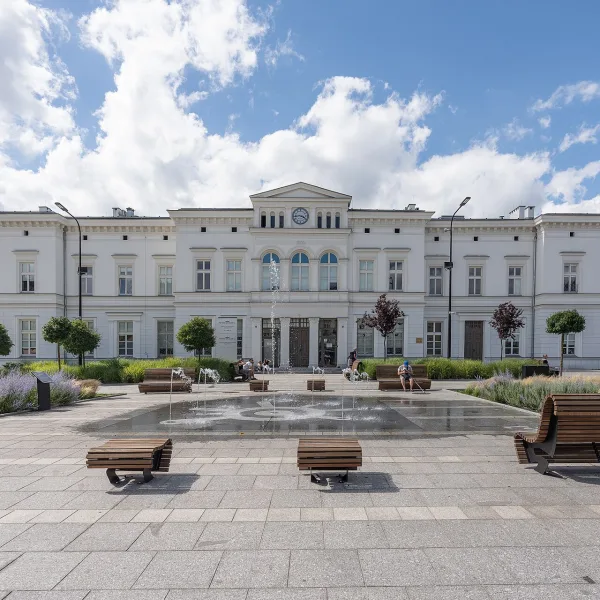
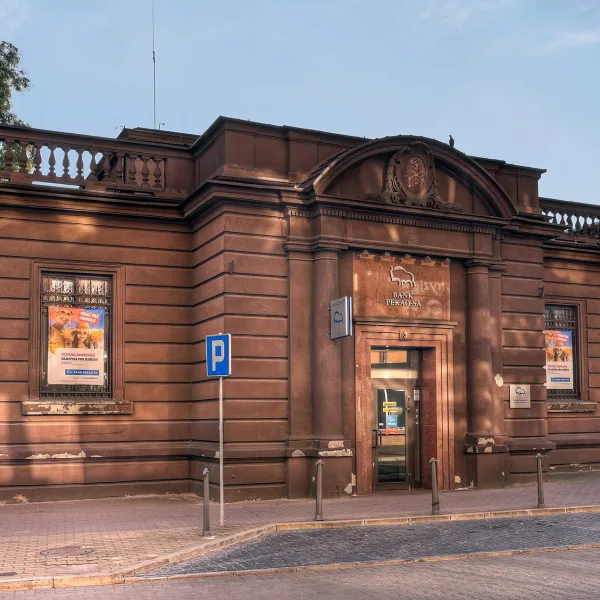
Historic sites in Sosnowiec: Sielecki Castle, the palaces of the Dietel and Schön industrial families, the main station and a former bank.
The centre of Sosnowiec owes its look to manufacturers and the railway. The historic sites range from a castle with medieval roots through industrial residences and a classicist manor house to public buildings.
What to see first in Sosnowiec
Begin with Sielecki Castle, the oldest building in the city, which now houses the Sosnowiec Art Centre, then move on to the Dietel and Schön palaces. The Sosnowiec Główny station from 1859 completes the picture, because the story of the city began with the railway stop.
The region has very many such places, as historic sites in Silesia shows. The full picture of the city is given in the overview of Sosnowiec, and the families behind the palaces are described in the article Palaces and the mausoleum of Sosnowiec industrialists.
The castle and the manor house
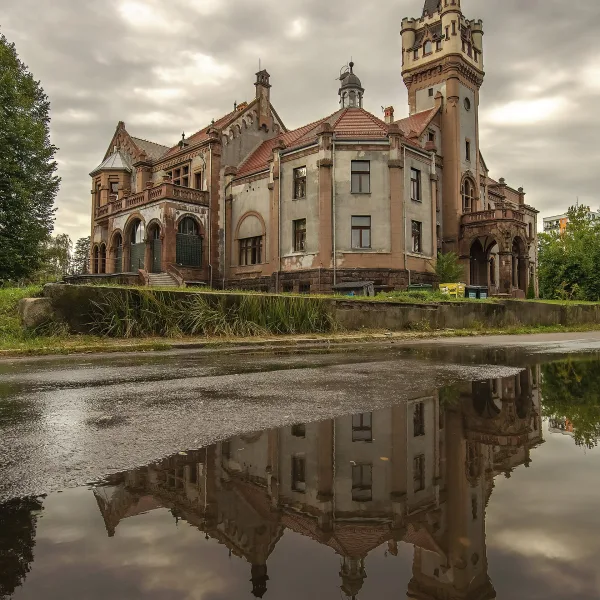
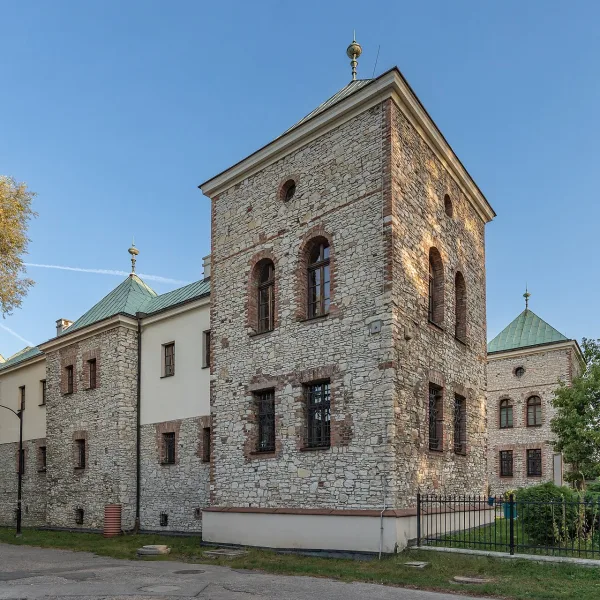
Sielecki Castle stands in Sielec, beside the Czarna Przemsza river. The first mentions of a defensive building date from 1403, and the structure was rebuilt in 1620 and 1832. Inside there are exhibitions and festivals devoted to photography and the artist's book.
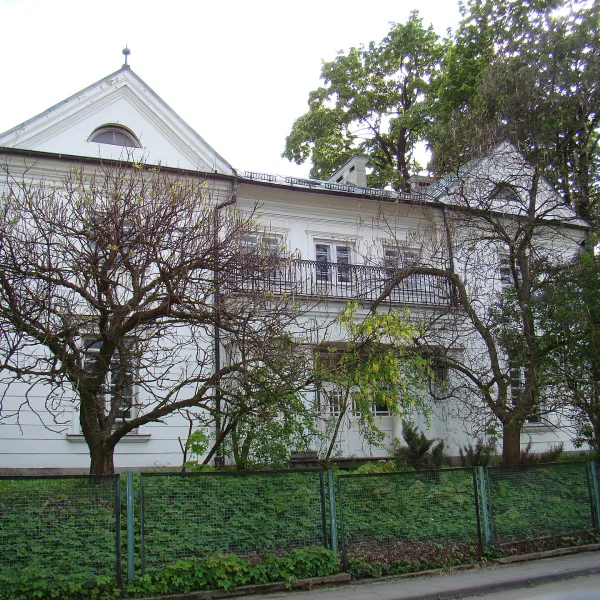
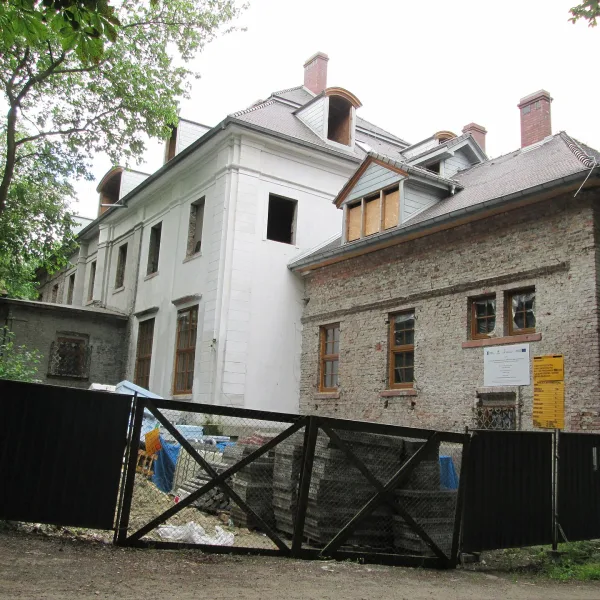
The Mieroszewski Manor House on Szpitalna Street in Zagórze is a two-storey classicist building designed by Franciszek Maria Lanci. A fragment of the park has survived next to it.
Palaces of the industrialists
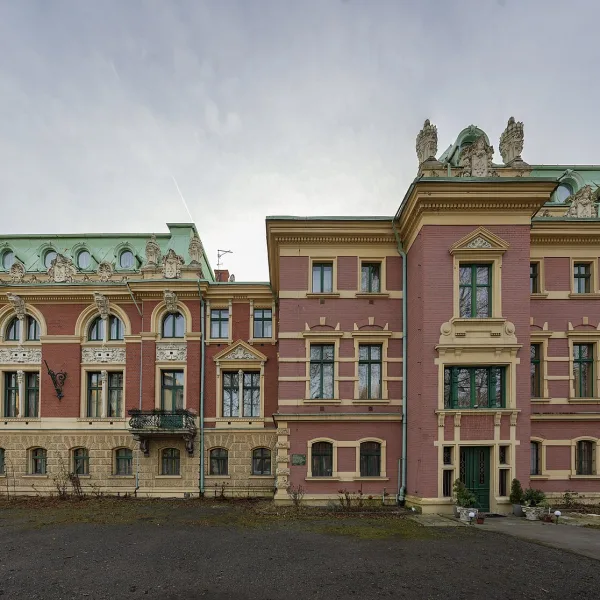
The Dietel Palace on Żeromskiego Street (number 2a) was the neo-Baroque home of a family of manufacturers, built around 1900. The interiors have kept part of the original furnishings and decor, including reception rooms.
Two addresses belong to the Schön family. Wilhelm's Palace on Chemiczna Street in Środula, from 1900, is neo-Baroque with a broken roof and served as a guest palace. The Franz Schön Palace at 1 Maja 19 is an eclectic residence of a wool industrialist. In 1919 the Silesian Uprising's command sat here, and since the 1920s the building has been used by the judiciary, so it is seen from outside while the interiors serve the court.
Bank and station: city architecture
The former Bank Handlowy at Małachowskiego 3 consists of two connected parts. The older one was raised in 1908 with forms recalling the Italian Renaissance, and the newer was added in 1923. The building has monument status and again serves a bank and city services.
The Sosnowiec Główny station at 3 Maja 16 is a two-storey neoclassical building from 1859, standing on January Insurgents' Square. The station was opened where the Warsaw-Vienna Railway met the Upper Silesian Railway, as a border station.
What else to combine with the visit
After the historic sites you can look at museums in Sosnowiec, churches and monasteries or parks and nature. Cemeteries and monuments in Sosnowiec also suit a walk around town.
Frequently asked questions
What is the oldest historic site in Sosnowiec?
The oldest building in the city is Sielecki Castle in Sielec, a former fortified manor rebuilt in 1620 and 1832.
Can you enter the Franz Schön Palace?
The palace is now a district court, so the interiors serve the office. Visitors come for the facade and for the 1919 story of the uprising headquarters.
How many palaces are on the list for Sosnowiec?
Three industrialists' palaces: Dietel on Żeromskiego, Wilhelm on Chemiczna and Franz Schön on 1 Maja. The Mieroszewski Manor House in Zagórze joins them.
How did the history of Sosnowiec begin?
With a railway station opened in 1859, and its station building survives on January Insurgents' Square.

 Historic sites