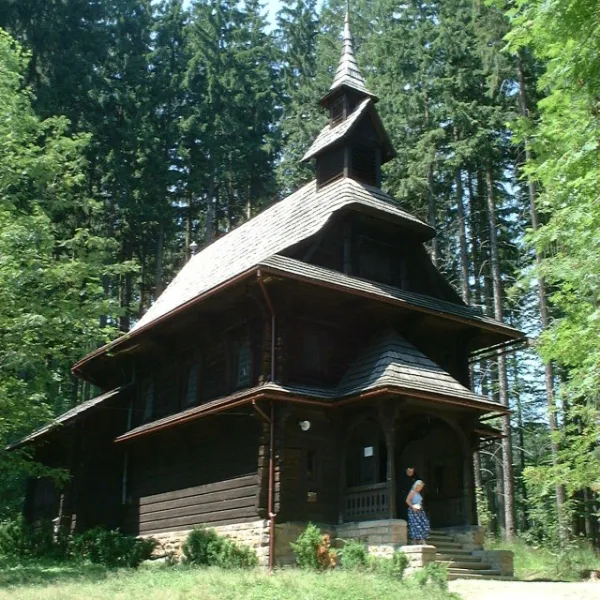
Architecture in Wisła: the wooden Hunting Lodge, the President's Castle, churches and reinforced-concrete railway bridges from the 1930s.
Wisła is famous for its mountains and skiing, but its buildings are just as interesting: from the Tyrolean lodges of the Habsburgs and the modernist presidential residence to churches of two denominations and tall railway bridges. Seven sites make a route for architecture lovers. Buildings across the region are collected under architecture in Silesia, and the other sights of Wisła are described in things to do in Wisła.
Which Habsburg and presidential buildings to see in Wisła?
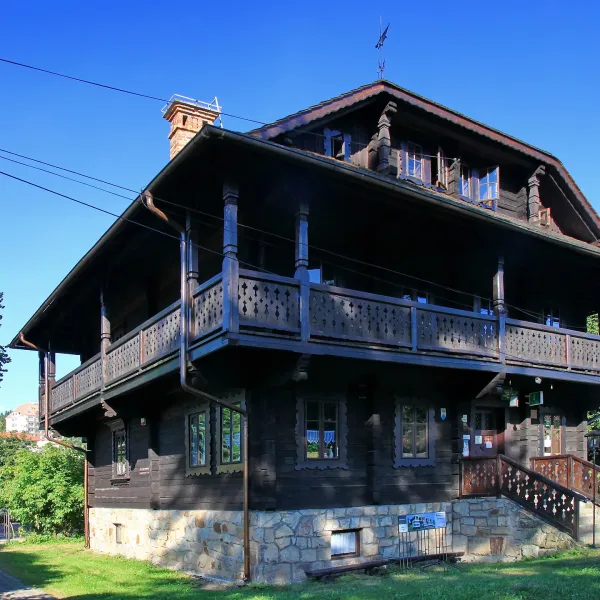
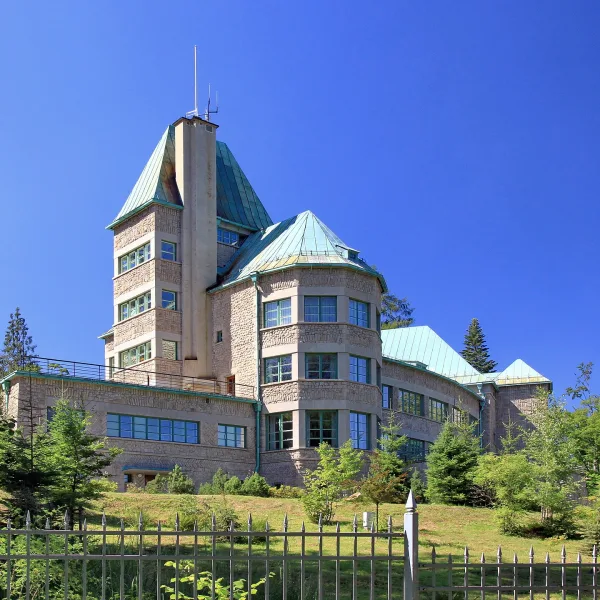
Two places link Wisła with major history: the wooden Habsburg Hunting Lodge and the modernist President's Castle. The first recalls Tyrolean houses and dates from 1897-1898, while the second is a residence of 1929-1930 raised for Ignacy Mościcki.
The Hunting Lodge stands at ul. Lipowa 4a, on the Przysłop clearing below Barania Góra. It is a listed monument, lies on the timber-building route and today houses a PTTK branch. The President's Castle, known as Zameczek, rises on the slope of Zadni Groń and is still a residence of Polish presidents. Only groups with a guide who have registered in advance may go inside. Nearby, on the residence grounds in Czarne, stands the chapel of St Hedwig of Silesia, a timber chapel built in 1909 in the Tyrolean manner, with an altar dating to the 17th century. The history of the town as a summer resort and residence is told in the article Wisła: from a pastoral settlement to a resort and presidential residence.
Which churches in Wisła deserve attention?
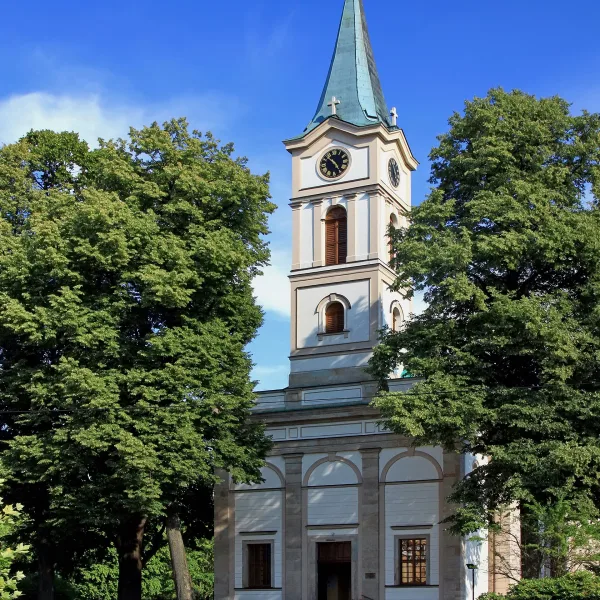
Two quite different ones: a Neoclassical Evangelical Augsburg church in the centre and a newer church in Głębce with a tower dating back almost five centuries. The first was built in 1833-1838, the second in 1981-1983.
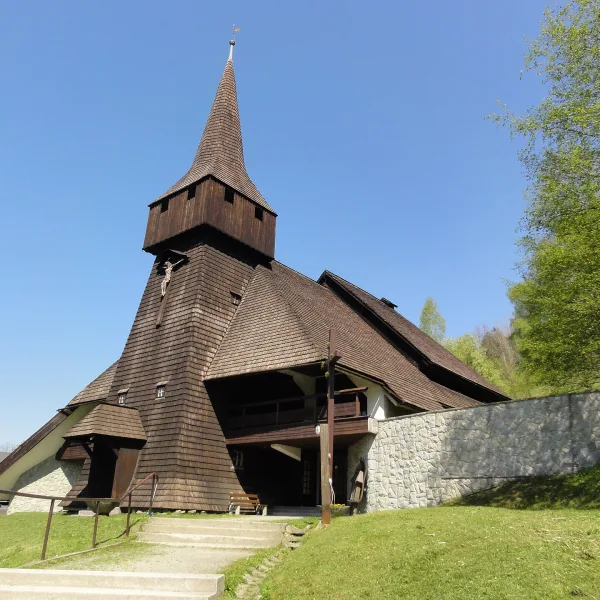
The Evangelical Church of Saints Peter and Paul stands at plac Bogumiła Hoffa 6, by the main promenade, and is one of the most important buildings of this denomination in the town. The Church of the Finding of the Holy Cross in Wisła-Głębce is built of timber and reinforced concrete, and its oldest element is a timber tower dated 1575 that originally belonged to the church in Połomia.
What should you know about the railway bridges in Wisła?
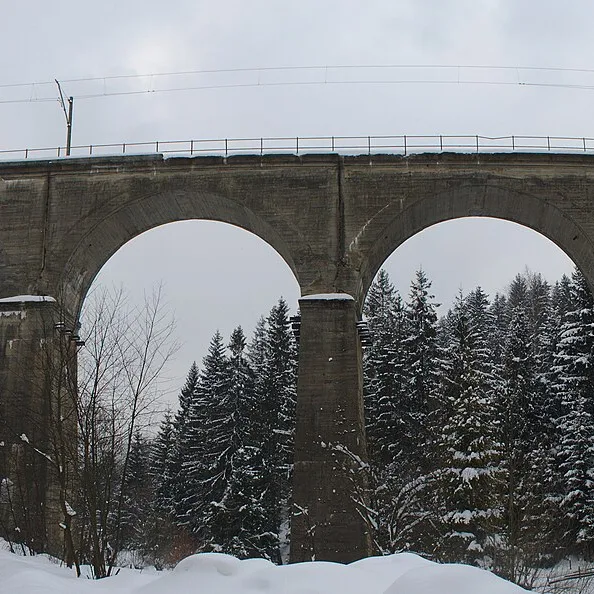
These are reinforced-concrete arch bridges from 1931-1933 on a mountain railway line running from Goleszów. Two structures bear the name of a railway bridge in Wisła and both stand near Głębce, over stream valleys.
The railway bridge in Wisła has seven spans over a total length of 122 metres, and its piers rise up to 25 metres; it ranks among Poland's tallest railway viaducts and is a listed monument. The bridge over the Dziechcinka valley was designed by Stanisław Saski and Tadeusz Mejer, and construction was led by the firm of Ksawery Goryanowicz.
Frequently asked questions
What architecture can I see in Wisła?
The Habsburg Hunting Lodge, the President's Castle, the chapel of St Hedwig of Silesia, two churches and railway bridges from the 1930s.
Is the interior of the presidential residence open?
Partly, but only with a guide, in groups that signed up beforehand. Part of the castle is open because it still serves as a presidential residence.
Where is the wooden architecture in Wisła?
The Habsburg Hunting Lodge on ul. Lipowa and the chapel of St Hedwig of Silesia are part of the Silesian route of timber buildings; the tower of the church in Głębce is also wooden.
How tall is the railway bridge in Wisła?
The tallest piers reach 25 metres, and the whole structure has seven spans and measures 122 metres.

 Churches and monasteries