Architecture in Bielsko-Biała: a Neo-Renaissance town hall, Art Nouveau tenements, factory owners' villas and churches of several faiths, nearly thirty places.
The town grew from two centres, Bielsko and Biała, and its buildings still show it. A Gothic castle stands beside edifices of the 1890s and 1900s, and the districts keep wooden and Baroque churches.
Which buildings in Bielsko-Biała should you see first?
Begin in the centre, where the main public and sacred buildings stand close together. The Town Hall of 1895-1897 was designed by Emanuel Rost junior, and its tower is 52 metres tall. Over the Old Town rises St Nicholas Cathedral, a Gothic church of the 15th century rebuilt in 1909-1912 to plans by Leopold Bauer; its tower measures 61 metres. Higher up, on the hill, stands the oldest building in town, the Castle of the Sułkowski Princes, which goes back to the 14th century and was altered in the 19th. The Historical Museum has been based there since 1945. The history of the fortress is told in the article on the Sułkowski castle.
Add to this trio the Soldiers' House on Broniewskiego street, built in 1924-1928 in the Zakopane style to a design by Leopold Landau. It shows that Bielsko-Biała has interwar architecture as well.
What marks the tenements and hotels from the turn of the 20th century?
This part of the centre recalls the days of the cloth industry and prospering townspeople. Decoration often matters more here than the size of the buildings.
- The Pod Żabami Tenement House of 1903, on the corner of Plac Wojska Polskiego and Targowa street, is Art Nouveau; its portal is adorned with two frogs in tailcoats.
- The President Hotel at 3 Maja 12 was raised in 1892-1893 as a Neo-Renaissance brick building and used to be called the Kaiserhof. Carl Korn designed it, and the monument register has listed it since 1986.
- The Hotel Pod Orłem of 1905 has four storeys and stands by Plac Wolności. Inside you now find offices and an arcade of shops.
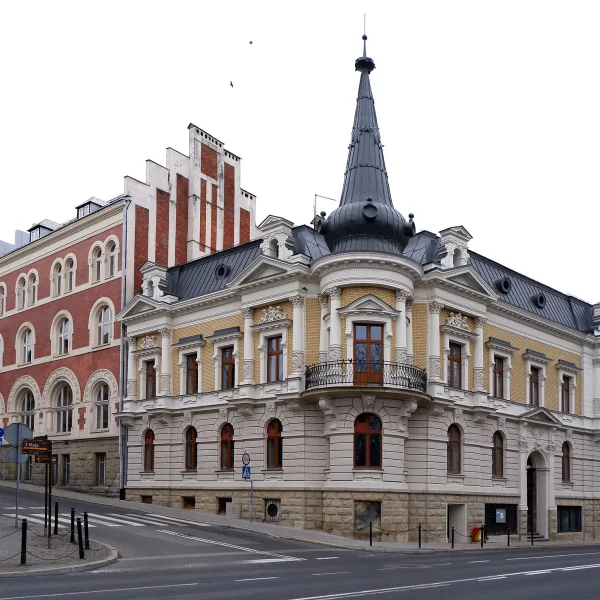
- Alfred Michl's Small Palace at 3 Maja 13 is a villa-like tenement of 1895 with a corner turret, a rich gate and a dome in the entrance hall.
End a walk around this area at the Reksio Monument, a bronze fountain unveiled in 2009 beside the Biała river. It belongs to the urban space rather than to the heritage buildings, but it marks the end of the route well.
Where can you find the villas and palaces of the manufacturers?
Local industrialists built their residences outside the strict centre, and several survive in good condition and now serve culture.
- The Theodor Sixt Villa Complex at Mickiewicza 24, on the Lower Suburb side, is a Neo-Renaissance house of 1883 by Carl Korn. Sixt left it to the town, and an art gallery is there today.
- The Zipser Palace at Bystrzańska 52 is in fact a villa of the manufacturer Edward Zipser from 1890, with a French-style mansard roof.
- Emanuel Rost's Small Palace at Komorowicka 48 was built by the architect for himself in 1903. It joins Neo-Rococo and Art Nouveau, and a library has its seat there today.
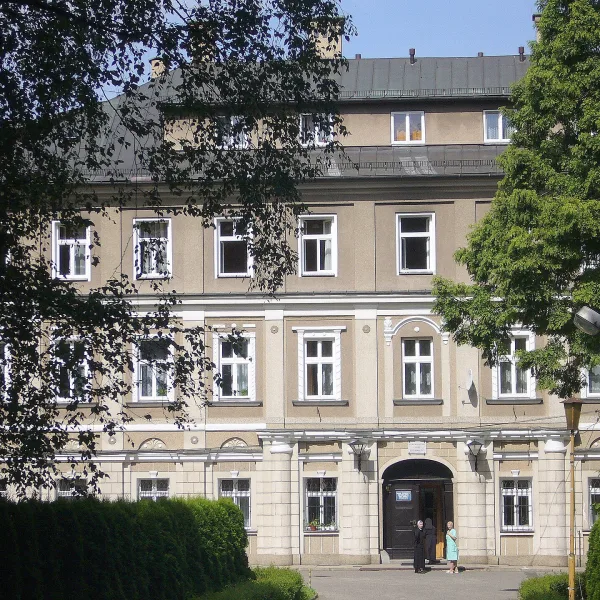
- The Lipnik Manor at Żywiecka 20 started in 1596 as a seat of the district governors; it became a palace in the 19th century and is a convent of the Daughters of Divine Love. It is therefore not a place for visiting interiors.
What does the Bielski Syjon look like, and what other traces of the Lutheran town remain?
In 1782 the Lutheran community of Bielsko began to gather here. The Bielski Syjon is a historic complex around Marcin Luther Square, which holds a church, schools, a graveyard and the reformer's statue.
The focal point is the Church of the Saviour, a Lutheran church of 1782-1790, later altered in the Neo-Gothic spirit, with a tower about 68 metres tall. In front of it stands the Monument to Martin Luther of 1900 by Franz Vogl, made of metal, and no other like it stands in Poland.
Older is the Martin Luther Church of 1788, a Neoclassical building counted as the earliest Protestant church in Galicia. In Stare Bielsko stands the Church of St John the Baptist, Neoclassical, of 1818-1827, built on a former hillfort with a tower added in 1852.
Which churches in the districts of Bielsko-Biała have the most interesting architecture?
The districts have kept their own churches, different in style and age:
- in Stare Bielsko, the Church of St Stanislaus from the end of the 14th century counts as the oldest sacred building in town;
- in Górne Przedmieście, the Church of the Holy Trinity, late Gothic, of 1604-1608, raised in memory of plague victims;
- in Biała Krakowska, the Church of Divine Providence, late Baroque, furnished with a Rococo pulpit, and its organ has forty stops;
- in Mikuszowice Krakowskie, the wooden St Barbara's Church, built in 1690, whose interior Johann Mentil painted in 1723;
- in Hałcnów, the Baroque Basilica of the Visitation, built in 1777-1784, now a minor basilica;
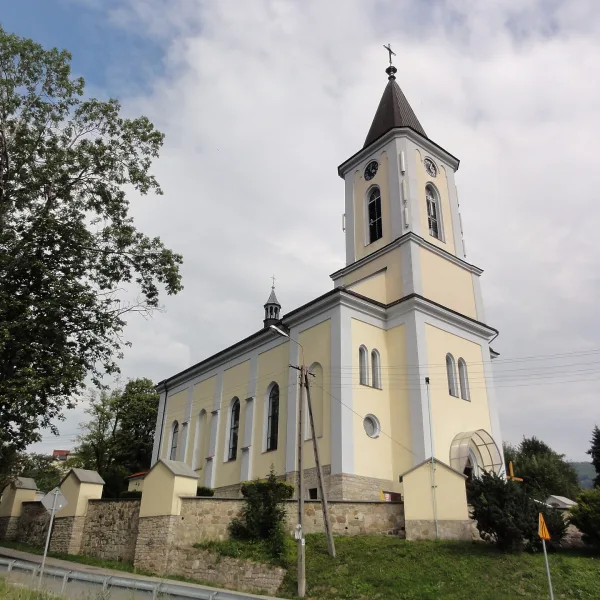
- in Lipnik, the Neo-Gothic Church of the Nativity of the Blessed Virgin Mary of 1880-1885, with a Gothic Madonna sculpture of the 14th century;
- in Komorowice, the brick Church of St John the Baptist, begun in 1921 from plans by Emanuel Rost junior.
Where can you see wooden architecture and collections in Bielsko-Biała?
Besides the church in Mikuszowice, a wooden house of the 18th century is home to the Museum in Bielsko-Biała - Weaver's House at Sobieskiego 51. It is a branch of the museum: a cloth-maker's workshop has been recreated there, and folk costumes are shown alongside. A good place for a rainy day.
How should you approach the cemeteries of Bielsko-Biała?
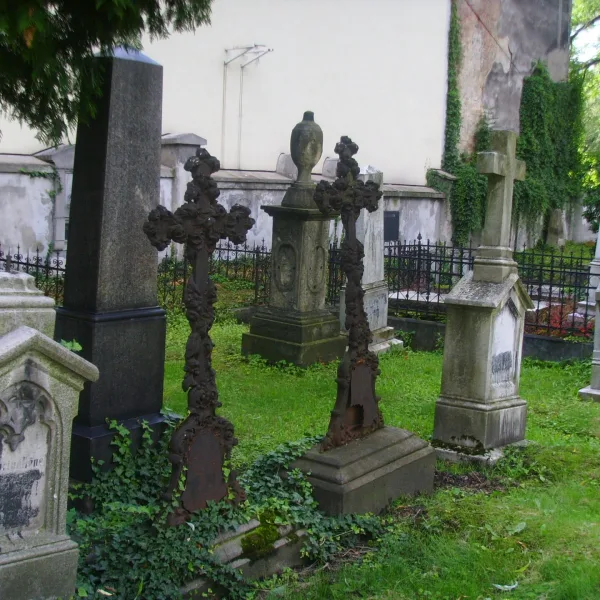
Three cemeteries are also monuments of architecture and funerary art. They are working burial grounds, so cemetery manners apply.
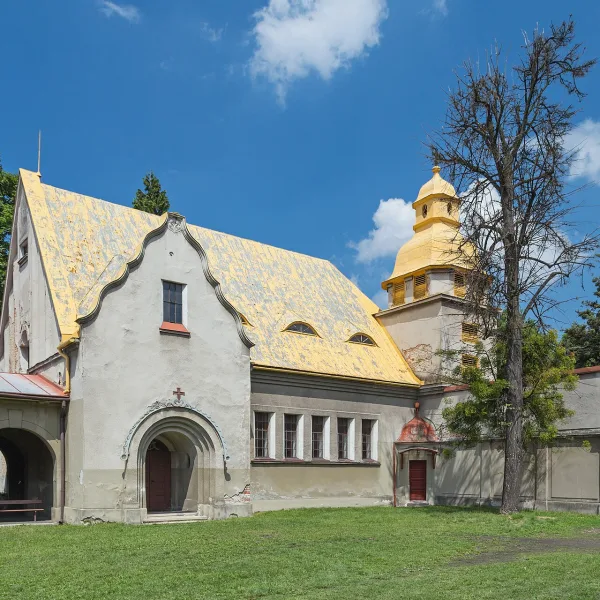
The Evangelical Cemetery on Piłsudskiego street was founded in 1783 in the town centre; manufacturers, mayors and the painter Peter Michal Bohúň were buried there. The New Evangelical Cemetery of 1911 was designed by Hans Mayr and lies on Listopadowa street. The Jewish Cemetery of 1849 is in Aleksandrowice and has a funeral house with polychromes. The other Jewish cemetery of Bielsko-Biała, on Wyzwolenia street, was liquidated in 1966; the text Jewish cemeteries in Bielsko-Biała and Cieszyn tells more.
Frequently asked questions
What should I see in Bielsko-Biała if I am interested in architecture?
Start with the town hall, St Nicholas Cathedral and the Castle of the Sułkowski Princes, then move on to the tenements on 3 Maja and Targowa streets and to the Sixt and Zipser villas.
Where are the wooden buildings in Bielsko-Biała?
The wooden ones are St Barbara's Church in Mikuszowice Krakowskie and the house that holds the Weaver's House museum.
Is there Art Nouveau architecture in Bielsko-Biała?
Yes. The Pod Żabami Tenement House and Emanuel Rost's Small Palace are Art Nouveau, and Alfred Michl's tenement has a corner turret and a dome in the entrance hall.
Where can you find more places in the town?
All places in the town are gathered under Bielsko-Biała, and buildings from the whole region in the section Architecture.

 Historic sites