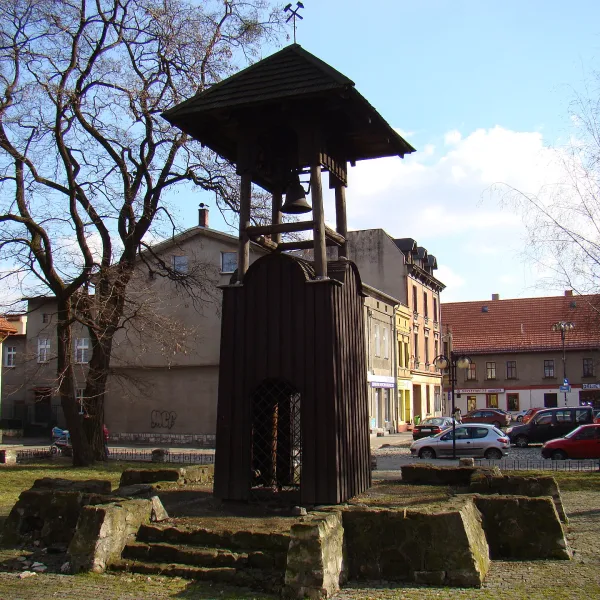
Atmospheric places in Tarnowskie Góry: the miners' market square, Plac Gwarków with a wooden bell tower and a disused quarry canyon.
The Old Town grew out of ore mining, and its squares still gather around former offices and miners' houses. The five places are four squares in the centre and one quarry on the edge of town. Everything except the quarry can be covered on foot in a short walk.
Which square in Tarnowskie Góry is the oldest?
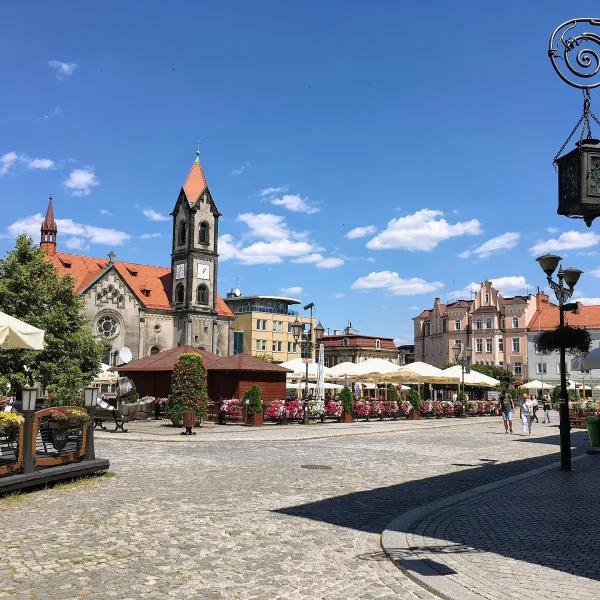
The oldest is Plac Gwarków, the former first market square, now a small paved square with a wooden mining bell tower and a church dedicated to Sts Peter and Paul.
It was probably laid out soon after mining settlement began, following the mining privilege of 1526, and town rights came on 25 July 1562. In time the buildings became so dense that not every office could fit beside it. The Gwarków bell tower was moved to the square in 1955. The Old Town's entire urban layout was entered in the register of monuments in 1966.
What to see on the main market square?
The market square is a trapezoid 108 metres long, with miners' houses of the 16th and 17th centuries, a town hall of 1896-1898 and arcaded townhouses.
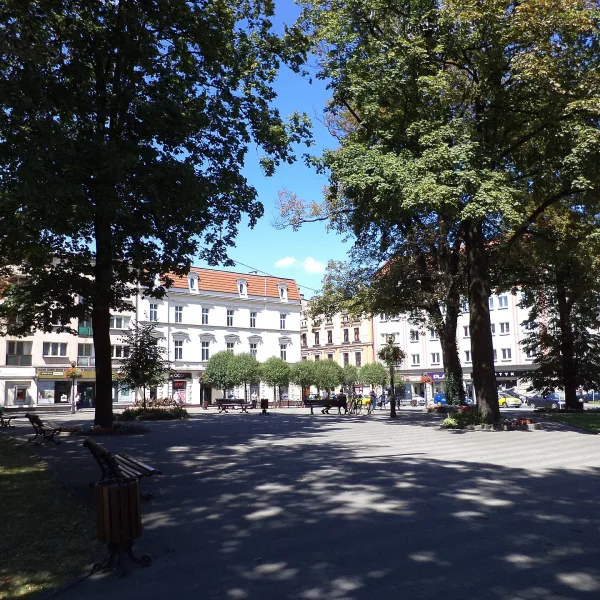
As the town grew rapidly, a new main market was marked out and in 1548 it was widened to the east. It housed the Mining Office, a court, the district governor's office and the town council, and the richest burghers, the mine owners known as gwarkowie, built houses around it. From here it is a short way to Plac Wolności, a rectangular pedestrian square of roughly 51 by 62 metres with benches, trees and flower beds. Until 1897 it was called Krakowskie Przedmieście, from 1897 to 1925 Wilhelmsplatz, and since 1925 it has borne the name Wolności. A grammar school was built there in 1874, and an Art Nouveau furniture factory stands nearby.
Where to go with children, and where to see the big canyon?
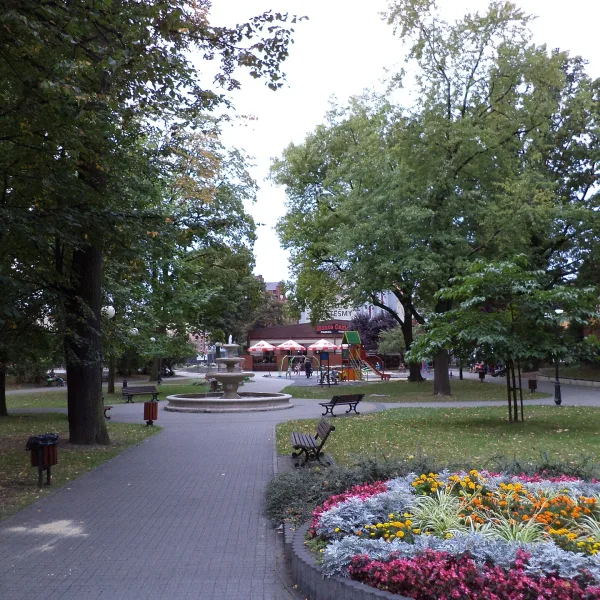
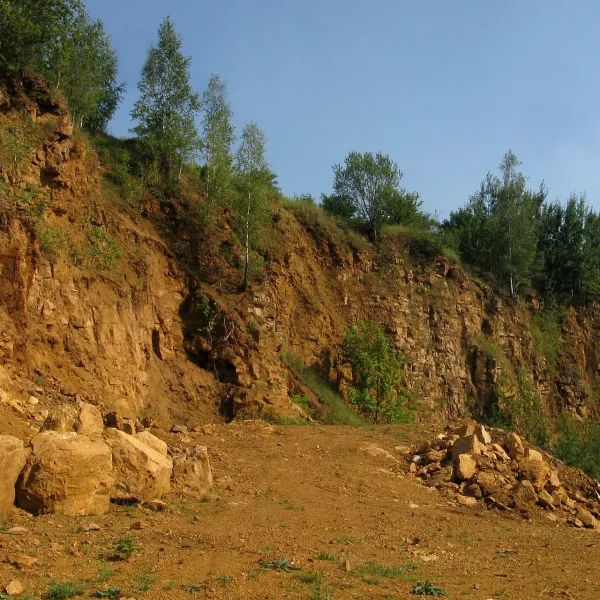
With children head for Plac Towarzystwa Przyjaciół Dzieci, and fans of industrial scenery drive to Bobrowniki Quarry.
The square on Sienkiewicza and Sobieskiego streets, near the town hall, was laid out in the 1960s on the former garden of the district office. In 1963 the city of Bytom gave Tarnowskie Góry two brown bears, Kubuś and Małgosia. The quarry is what remains of an open-pit dolomite mine that worked from 1903 into the 1990s, with walls up to seventy metres high known as the Great Tarnowskie Góry Canyon. It lies by national road 11 on the border with Bytom. The pit is disused, so check access rules before you travel. The works was founded by the Pokój steelworks, which links it to other industrial places in the region. The article Tarnowskie Góry: the Rynek, the mining school and the Gwarków festival tells more about the town. Other places are on the Tarnowskie Góry and atmospheric places in Silesia pages.
Frequently asked questions
How many squares are in the centre?
Four: Plac Gwarków, the market square, Plac Wolności and Plac Towarzystwa Przyjaciół Dzieci. The fifth place is the quarry.
Where does the name Plac Gwarków come from?
From the gwarkowie, the old miners and mine owners around whom the town grew. A wooden mining bell tower stands on the square.
What is the Great Tarnowskie Góry Canyon?
The popular name of the disused Bobrowniki quarry, whose walls reach seventy metres.
Has Plac Wolności always had this name?
No. Until 1897 it was Krakowskie Przedmieście, then Wilhelmsplatz, and since 1925 Plac Wolności.

 Places with character