Things to do in Cieszyn: a Romanesque rotunda on Castle Hill, townhouses around the Market Square, the Jesus Church and museums. See what to visit.
Read this before a day or a weekend in Cieszyn. Churches and monasteries make up the largest group, joined by historic cemeteries, museums and three forest reserves. What sets the town apart from others in Cieszyn Silesia is Castle Hill and the layout of the Old Town, where everything lies close together.
What to see in Cieszyn first?
Start on Castle Hill, where the rotunda and the tower stand, then come down to the Market Square with its town hall and fountain, and end the day in one of the museums. That route shows three layers of the town: the medieval hill, the neoclassical centre and a theatre from the early twentieth century. For the full overview see attractions in Cieszyn, and for the story of the hill itself read the article on the Rotunda of St Nicholas and Castle Hill.
Castle Hill and the Market Square: how to walk around the Old Town?
The main monuments of Cieszyn sit in a small area between Castle Hill and the Market Square. On the hill you walk from the rotunda to the tower, below it stand a palace and a brewery, and beyond begins the Old Town with its theatre and square.
The Rotunda of St Nicholas dates from the eleventh or twelfth century and is a former castle chapel dedicated to Saints Nicholas and Wenceslas. It is one of the oldest round buildings that still stand in Poland. Beside it rises the Piast Tower, a Gothic defensive tower from the first half of the fourteenth century. Of the four towers of the old castle of the Cieszyn dukes only this one survived, and at the top it has a viewing terrace.
At the foot of the hill stands the Habsburg Hunting Palace, a neoclassical building of 1838-1840 designed by Joseph Kornhäusel, which now houses Zamek Cieszyn. Below the hill, on Śrutarska Street, runs the Castle Brewery of 1846, regarded as the longest continuously operating brewery in Poland, with underground cellars.
In the centre you meet the Three Brothers Well, a cast-iron neo-Gothic gazebo of 1868 linked to the legend that three brothers founded the town. The Market Square is a rectangle of roughly 113 by 60 metres surrounded by Renaissance and Baroque houses. In the middle stands a fountain with a figure of St Florian, and beside it the town hall, a neoclassical building with a clock tower that is still the seat of the municipal authorities; it rose after a series of fires that damaged the town over three centuries.
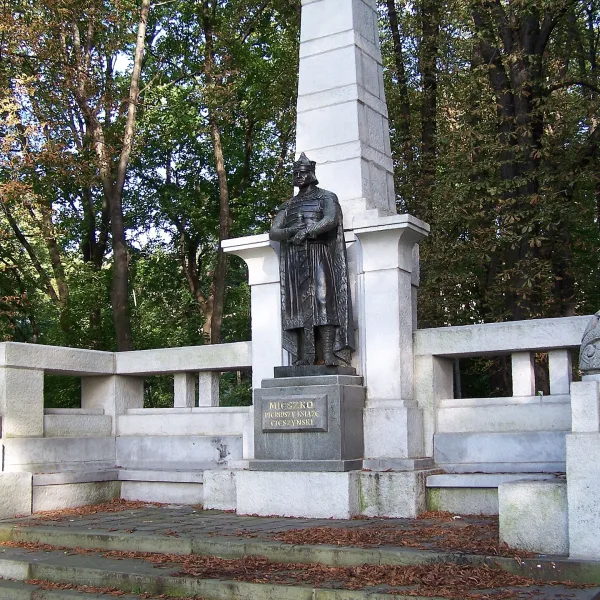
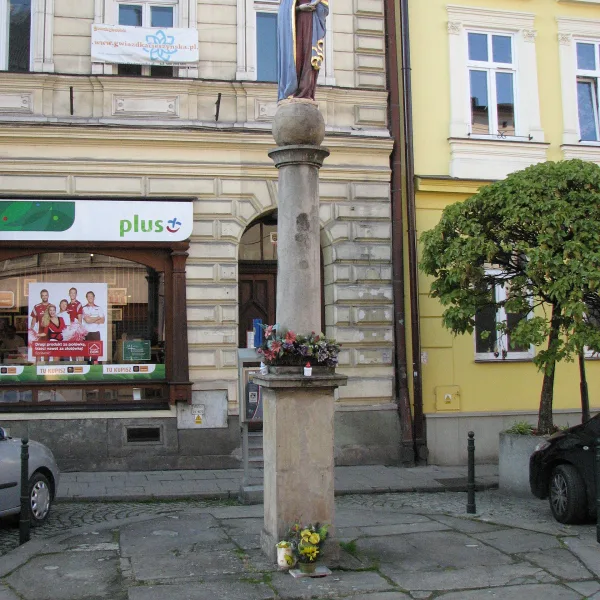
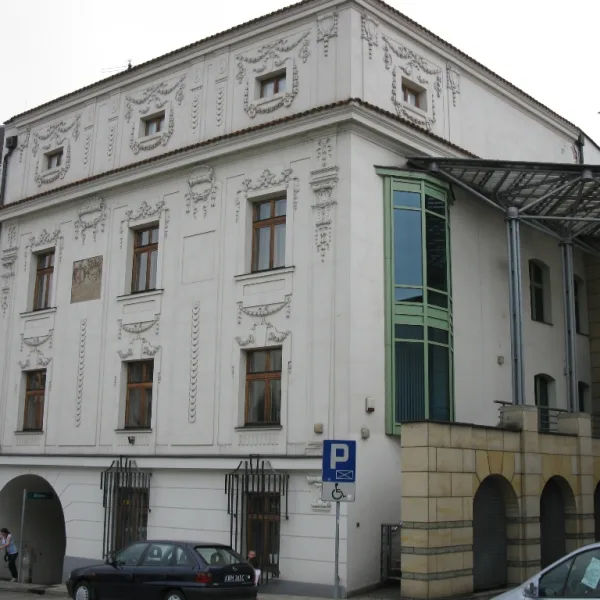
On Plac Teatralny stands the Adam Mickiewicz Theatre of 1910, a five-storey building by the Viennese architects Fellner and Helmer, with an auditorium for 630 people. On the Old Market you will find the statue of the Madonna and Child, a copy of a Gothic sculpture from the fourteenth century; the original is shown in the museum. Among the town's monuments is the monument to Mieszko I, the duke who founded the line of the Cieszyn Piasts (died in 1314 or 1315). It was unveiled in 1931, and its author is Jan Raszka.
Which churches and monasteries in Cieszyn are worth seeing?
The most important are the Jesus Church and the parish church of St Mary Magdalene, and beside them Baroque monastic complexes near the Market Square. Cieszyn has fourteen churches and monasteries, so choose a few by period.
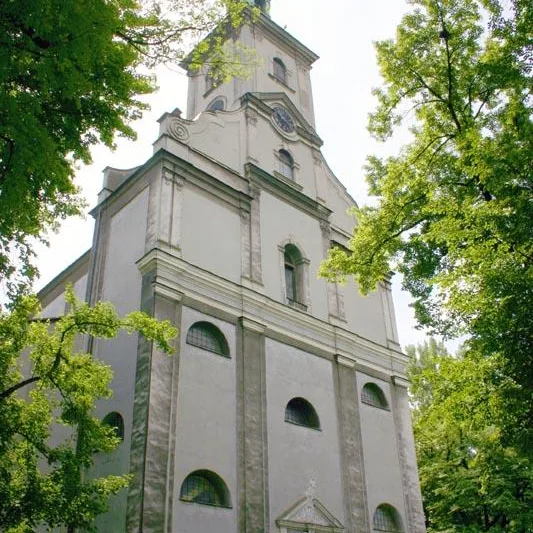
The Jesus Church at 4 Plac Kościelny is the largest Evangelical church in Poland. Work lasted from 1709 to 1772, and the building began as a church of grace, in line with the Altranstädt settlement of 1707. Inside, look up at the three-tier galleries. The oldest surviving Catholic church of the town is the parish church of St Mary Magdalene, a former Dominican church of the thirteenth century, now a shrine of Our Lady of Cieszyn; the Cieszyn Piasts are buried in it. The Gothic Church of St George on Liburnia Street served as a hospice chapel and hospital church from about 1400, and its vault bears the Piast emblem.
The centre has two Baroque ensembles. The Church of the Holy Cross is a late Baroque former Jesuit church, run by Franciscans since 2005; right next to it stands the Franciscan monastery, tied to the collections of Leopold Szersznik. On Londzin Square you find the Brothers Hospitaller complex of 1697-1714 and the Church of the Holy Trinity of 1594, built on a cemetery after the epidemic of 1585 and surrounded by the old cemetery turned into a park.
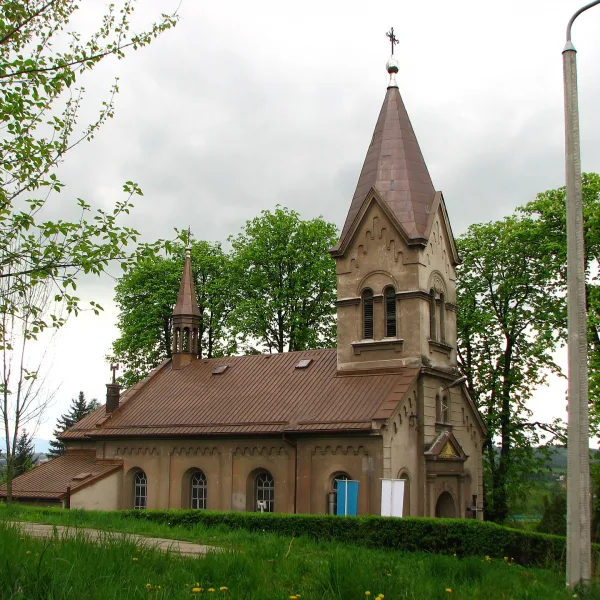
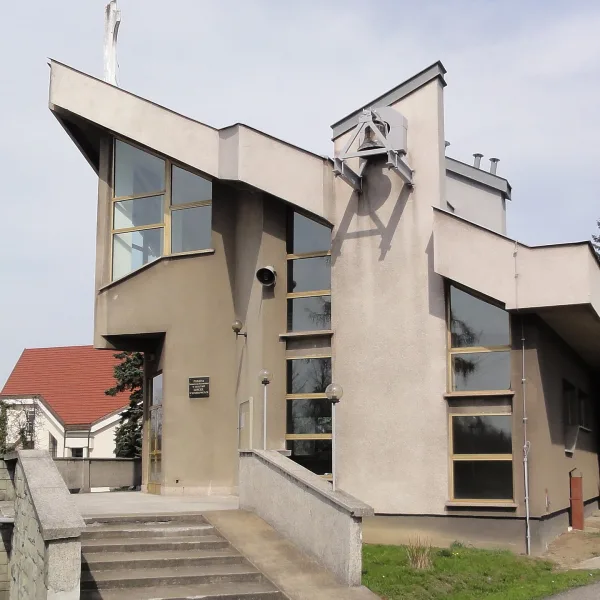
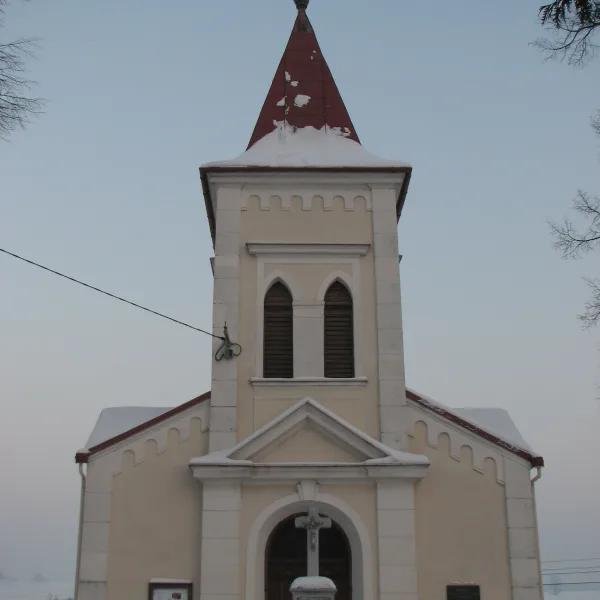
Add the convent of the Borromeo Sisters, set in two townhouses on Górny Rynek with a neo-Romanesque chapel of 1876, and the neo-Baroque Church of St Elizabeth of Hungary of 1900-1903. In the districts there is the Church of Divine Providence, a former cemetery chapel of 1905-1906, and the church in Bobrek of 1908-1910. The Evangelical side is completed by the chapel in Krasna of 1910, raised by the parishioners themselves, and the church in Marklowice of 1987. The fate of Protestants in the region is told in an article on Evangelicals in the Beskids.
Which museums in Cieszyn to visit on a rainy day?
For rain, the best choice is the Museum of Cieszyn Silesia, and for anyone interested in printing, the Reformation or the army, one of the smaller museums. All of them lie in the town itself.
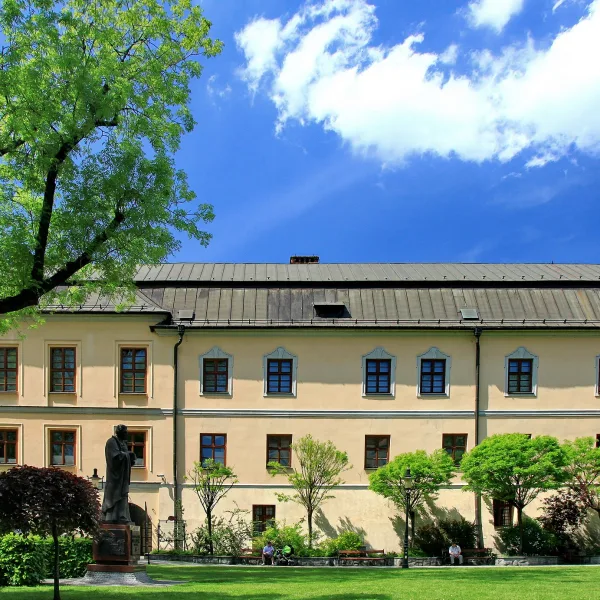
The Museum of Cieszyn Silesia was founded in 1802 and since 1931 has occupied the Larisch palace from the end of the eighteenth century. It has an Egyptian Room and archaeological, ethnographic and photographic collections. The Printing Museum at 50 Głęboka Street opened in 1996 and shows historic printing equipment and a graphic workshop. Since 2022 it has belonged to the structure of Zamek Cieszyn.
On the gallery of the Jesus Church works the Museum of Protestantism, which joins an exhibition of Reformation relics with a library. Military memorabilia are the theme of the private Museum of the 4th Podhale Rifles Regiment, while the town's book collections, together with a gallery, are looked after by the Książnica Cieszyńska library in the house known as the mint. Families with children can visit KIDDY Park, an indoor play centre on two floors covering 350 square metres. More rainy-day ideas are in the category Rainy-day ideas in Cieszyn.
Cemeteries, monuments and places of remembrance in Cieszyn
The cemeteries of Cieszyn are an important part of the town's history, so treat them as places of remembrance. Many have free entry, but they call for quiet.
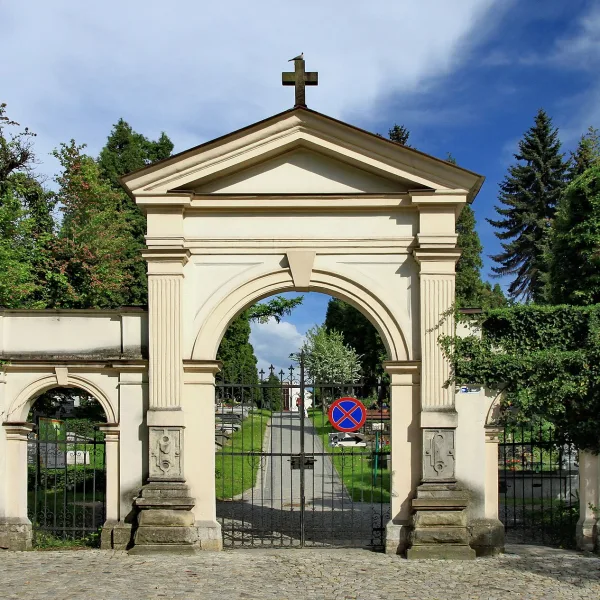
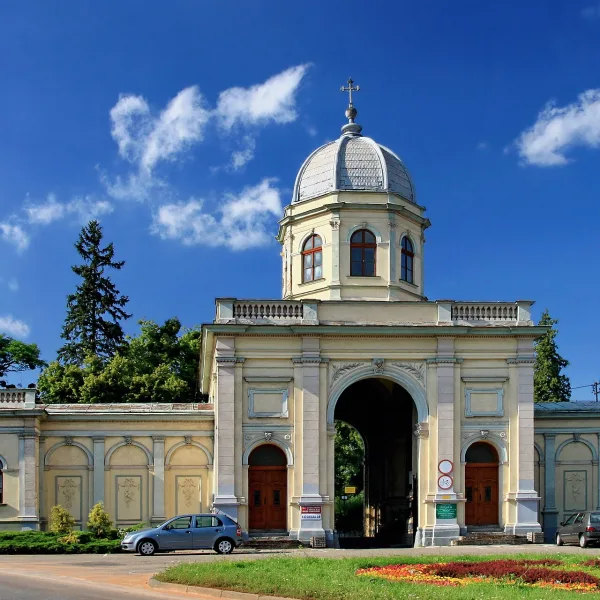
The Old Jewish Cemetery, from 1647, covers 1.9 hectares and keeps more than 1,500 gravestones. The New Jewish Cemetery opened in 1907 on Hażlaska Street, with a funeral house by Jakob Gartner, and has not been used for burials since 1974. The history of both is explained in a text on the Jewish cemeteries of Bielsko-Biała and Cieszyn. The Municipal Cemetery of 1891 is the largest necropolis in town, with a Grave of the Distinguished and war plots, while the Evangelical cemetery of 1887 is still in use.
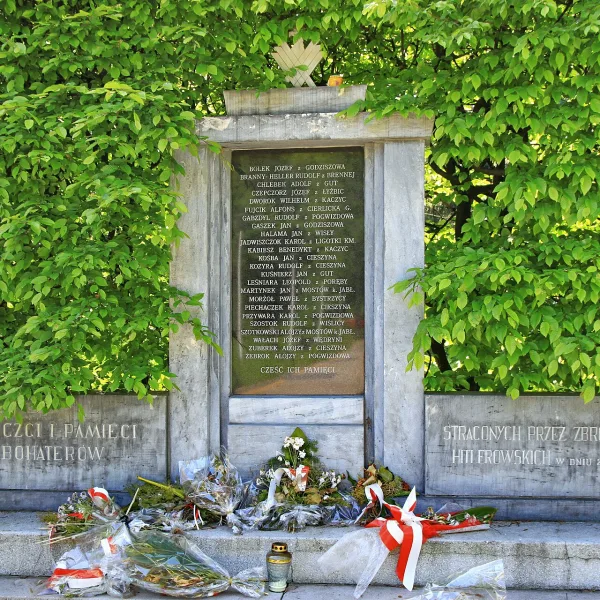
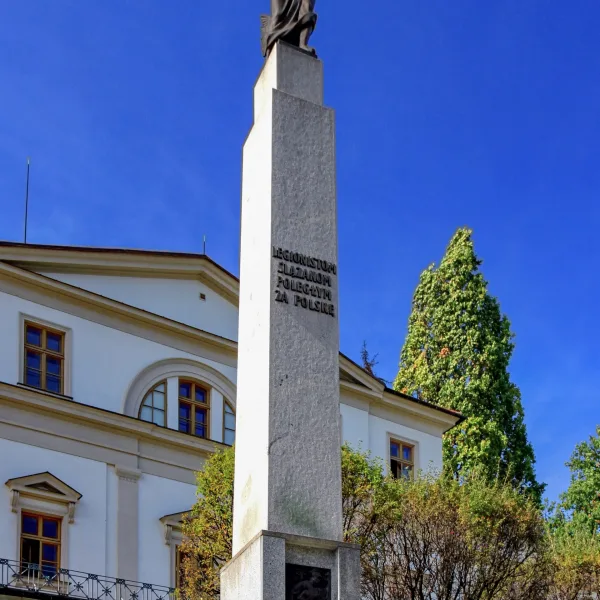
In the park by the Olza stands the monument to those murdered in 1942. It commemorates 24 soldiers of the Union of Armed Struggle and Home Army whom the Germans hanged on 20 March 1942. A different character belongs to the Cieszyn Nike, a monument to the volunteers of the Silesian Legion, unveiled in 1934 and rebuilt in 2008. The division of the town on the Olza in 1920 is covered in an article on Cieszyn, the divided town.
Where to find greenery and woodland in Cieszyn?
Cieszyn has three forest nature reserves, all free to enter. Two are named after the Olza and Puńcówka rivers, and the third lies on a slope above the Olza.
The Lasek Miejski nad Olzą reserve in Błogocice was set up in 1961 to protect the spring-flowering Cieszyn primrose and natural oak-hornbeam forest. The same plant is protected by the Lasek Miejski nad Puńcówką reserve, also from 1961, close to the centre. The Kopce reserve in Marklowice, created in December 1953, covers 14.77 hectares on a steep slope of the right bank of the Olza.
Frequently asked questions
What to see in Cieszyn in one day?
Castle Hill with the rotunda and the Piast Tower, the Market Square with the town hall, and one of the museums. If time remains, add the Jesus Church or the Castle Brewery below the hill.
Which church in Cieszyn is the oldest?
The oldest surviving Catholic church is the parish church of St Mary Magdalene from the thirteenth century. Older still among sacred buildings is the Rotunda of St Nicholas from the eleventh or twelfth century.
What to do in Cieszyn when it rains?
Visit the Museum of Cieszyn Silesia, the Printing Museum or the Museum of Protestantism, and with children KIDDY Park. You can also fit in the theatre and the churches.
Are there free sights in Cieszyn?
Yes, the Market Square, the nature reserves, the cemeteries and the monuments can be visited without a ticket. Museums and the theatre set their own conditions.
Is there a viewpoint in Cieszyn?
At the top of the Piast Tower on Castle Hill, which has a viewing terrace.

 Cemeteries and monuments