Churches and monasteries in Gliwice: a neo-Gothic cathedral, wooden churches and a Redemptorist monastery. Nearly thirty places to choose from.
Gliwice has several districts with their own churches, so it is easiest to choose by area and period. The Old Town holds a Gothic hall church, Szobiszowice has brick neo-Gothic churches, and the edges of the city keep wooden and Baroque ones.
Which churches in Gliwice should you see first?
Start with the Cathedral of Saints Peter and Paul, the Church of All Saints in the Old Town and the new Church of St Bartholomew in Szobiszowice. The cathedral is a neo-Gothic building from 1896-1900 with a tower 75.5 metres high, All Saints is a Gothic hall church with a viewing terrace, and the tower of St Bartholomew's reaches 92 metres.
These three show the two main periods of church building in the city: the late Middle Ages and the neo-Gothic of the turn of the 20th century. Smaller parish churches in the districts often have a more interesting story than their size suggests.
What churches stand in the centre and the Old Town?
Most of the historic buildings in the centre lie within a short walk of each other. The Church of All Saints on Plac Wszystkich Świętych is one of the oldest churches in the city, and its tower can be seen from the Market Square. With the cross it reaches about 64 metres, and a viewing terrace is inside.
The cathedral on Księcia Ziemowita Street has been the seat of the Gliwice diocese since 1992. On Mikołowska Street stands the Church of the Holy Trinity, a Neoclassical building from 1836-1838, linked since 1945 with Armenian Catholics and serving as the shrine of Our Lady of Łysiec.
The Church of St Barbara on Dworcowa Street is a neo-Romanesque basilica from 1856-1859, designed by Friedrich August Stüler. It was built for Protestants and today belongs to the military parish. The Church of St Albert the Great on Bolesława Krzywoustego Street is the brick chapel of the former Albertinum boarding school, built in 1930-1931 and added to the heritage register in 2023.
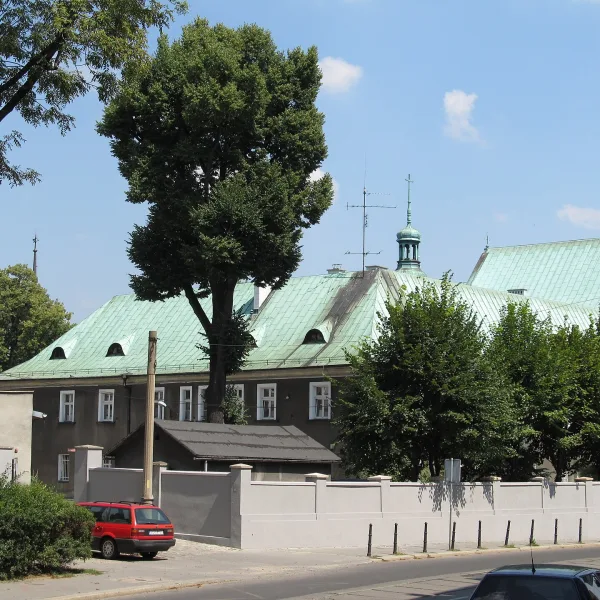
At Daszyńskiego 2 stand side by side the Church of the Exaltation of the Holy Cross and the Redemptorist monastery. The church is Baroque, rebuilt after a fire in 1677, and has been a Marian shrine since 2015. The four-winged monastery dates from the 17th century, and the Redemptorists have lived there since 1945.
What is there to see in Szobiszowice, Zatorze and Sośnica?
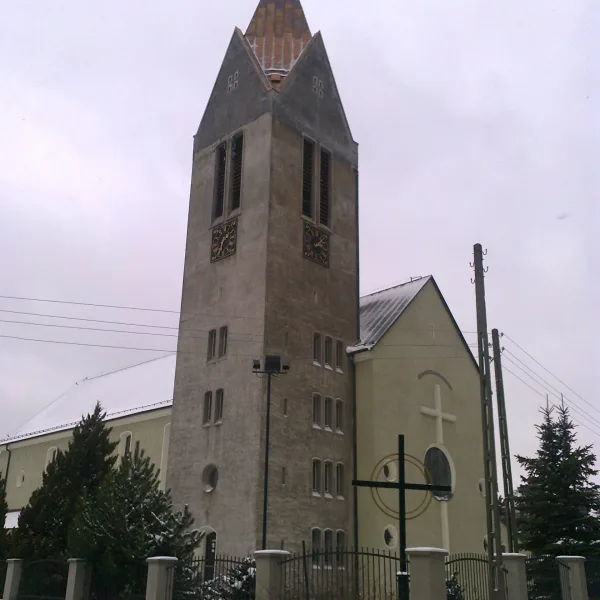
Two churches in Szobiszowice share one patron saint. The Old Church of St Bartholomew on Toszecka Street is a Gothic building surrounded by a wall, the parish church until 1911, with 17th-century polychromes. Brick neo-Gothic at its finest is shown by the new church on Bernardyńska Street, one of the largest in the region, with an organ of sixty stops.
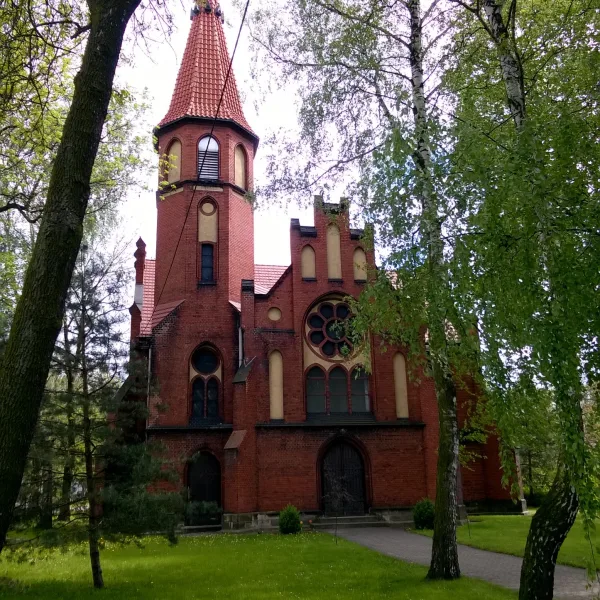
In Zatorze it is worth comparing two very different churches. The Church of Christ the King is a reinforced-concrete basilica from 1934-1935 designed by Karl Mayr, with a form reminiscent of a ship. The Church of the Holy Family is neo-Gothic and was built for residents of the estate by the Huldschinsky steelworks.
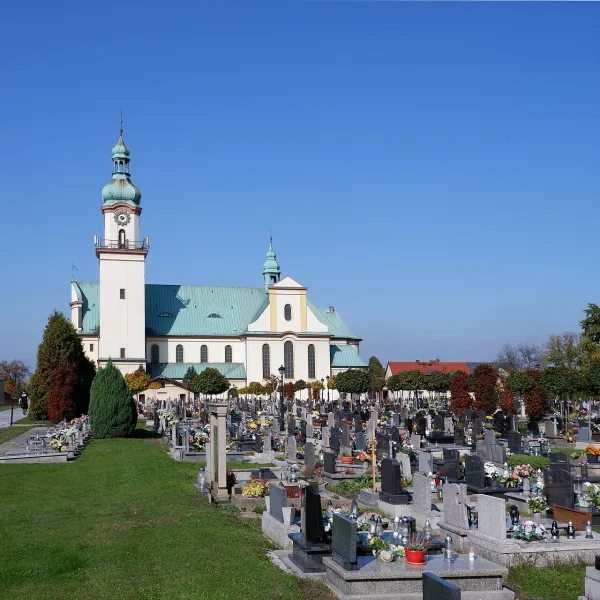
Sośnica has the Church of Our Lady Help of Christians from 1928-1929, with stained glass from a Berlin workshop and a mosaic in the chancel, and the brick Church of St Hyacinth from 2003, designed by Jacek Zimosz. Among the modern buildings are the Church of the Mother of the Church in Sikornik, built in 1981-1993 with sculptures by Stanisław Słodowy, the Church of the Sacred Heart of Jesus on Franciszkańska Street, consecrated in 2009, and the Church of Our Lady of Częstochowa in Trynek, consecrated in 1991.
On the Kopernika estate stands the Church of Our Lady of Kochawina, run by the Jesuits and, since 2020, the diocesan sanctuary of Our Lady of Safe Travel. Its form and interior refer to the Baroque.
Are there wooden and village churches in Gliwice?
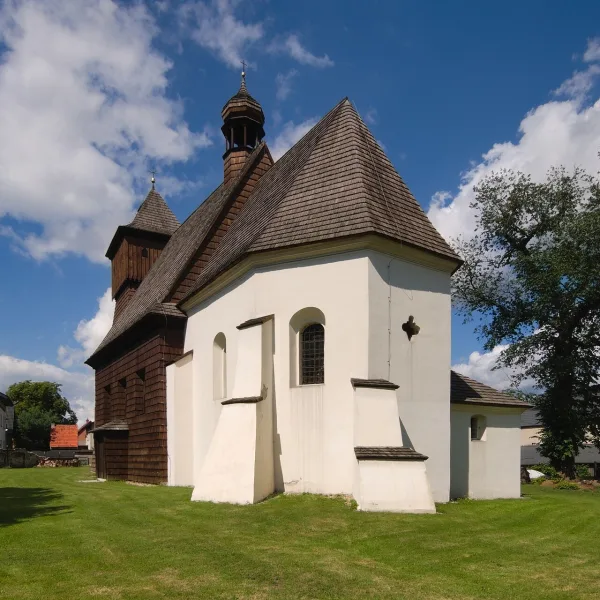
Yes, and they are often the biggest surprise. The Church of St George in Ostropa at Piekarska 13 is wooden, with a brick chancel and a tower dating from around 1544 and Baroque polychromes from 1667-1668. It is part of the regional route of timber monuments and lies about six kilometres west of the centre.
The wooden Church of the Assumption of the Blessed Virgin Mary at Kozielska 29 dates from 1493 and originally stood in Zębowice near Olesno. It came to Gliwice in 1925 and was moved a second time, between 1997 and 2000, to the Old Kozielski Cemetery. Two relocations make it one of the more interesting stories in the city.
Ostropa also has the neo-Baroque Church of the Holy Spirit from 1925-1927 with a Rieger organ from 1927. In Bojków see the Church of the Nativity of the Blessed Virgin Mary, rebuilt in 1898-1911, and in Brzezinka the neo-Gothic Church of St Hedwig from 1891-1899, successor to a wooden church of 1551.
Two small parish churches have unusual beginnings. The Church of St John the Baptist in Żerniki opened in 1931 in a converted barn, and the Church of St Joseph in Ligota Zabrska was set up in 1925 in a house and farm buildings as a temporary building.
What are the churches in Łabędy like?
Łabędy is a district with three very different churches. The Church of the Assumption of the Blessed Virgin Mary dates from the 15th century, and its present Baroque shape comes from an extension in 1716-1719. It keeps medieval bells, and a wall with chapels surrounds the site.
The Church of St George rose in 1937-1939 from plans by Theodor Ehl and Otto Linder, just before the outbreak of war. The brick Evangelical Church of Martin Luther from 1900-1902 served as a forge during the war and is a church again today.
Where in Gliwice are the Evangelical and other non-Roman Catholic churches?
Besides Roman Catholicism, two communities are easy to overlook. The Church of the Saviour on Jagiellońska Street, in the Baildona estate, was consecrated in September 1902 and still serves an Evangelical-Augsburg parish. The Armenian Catholic rite is represented by the Church of the Holy Trinity mentioned above.
The same group includes the former Evangelical church of St Barbara, now a garrison church, and the Martin Luther church in Łabędy.
How to plan a route around the churches of Gliwice?
The easiest way is to link churches by neighbouring addresses. One route takes in the cathedral, All Saints, the Holy Trinity and St Barbara in the centre. A second goes through Szobiszowice and Zatorze. The third is a trip west to Ostropa and north to Łabędy.
The churches with viewing terraces, All Saints and the Church of St Anthony on Herman Hill in Wójtowa Wieś, with a tower 51 metres high, combine well with other sights of the city. Beside sacred interiors Gliwice offers monuments in Gliwice, museums in Gliwice and parks and nature in the city. For the city's history read about the Caro Villa, the Gliwice Canal and the Silesian University of Technology.
Frequently asked questions
Which church in Gliwice is the oldest?
The oldest of those described is the wooden Church of the Assumption on Kozielska Street, built in 1493. The Gothic Church of All Saints dates from the late 15th century, and Łabędy has a church from the 15th century later extended in the Baroque style.
Which church in Gliwice offers a view over the city?
The tower of the Church of All Saints in the Old Town has a viewing terrace. A terrace is also found in the 51-metre tower of St Anthony's on Herman Hill.
Which churches in Gliwice are wooden?
The wooden ones are the Church of St George in Ostropa, with a brick chancel, and the Church of the Assumption on Kozielska Street, moved from Zębowice. The first is a stop on the regional route of timber monuments.
Are there Evangelical churches in Gliwice?
Yes: the Church of the Saviour on Jagiellońska Street, the Martin Luther church in Łabędy and the former Evangelical church of St Barbara, now a garrison church.
How should I visit the churches and monasteries of Gliwice?
By district: the centre and Old Town first, then Szobiszowice with Zatorze, then Ostropa and Łabędy. Every church is listed under churches and monasteries in Gliwice, and a wider overview is in the category churches and monasteries in Silesia.

 Churches and monasteries