Architecture in Ruda Śląska means brick churches, the Ficinus Colony and the Pokój blast furnace, a set of sites spread across several districts.
The city grew out of several older settlements, so its landmarks sit in Wirek, Godula, Kochłowice, Bielszowice, Orzegów, Nowy Bytom and Ruda itself. This overview groups them by type and by area to help you plan a route around Ruda Śląska.
Which architectural sites should you see in Ruda Śląska?
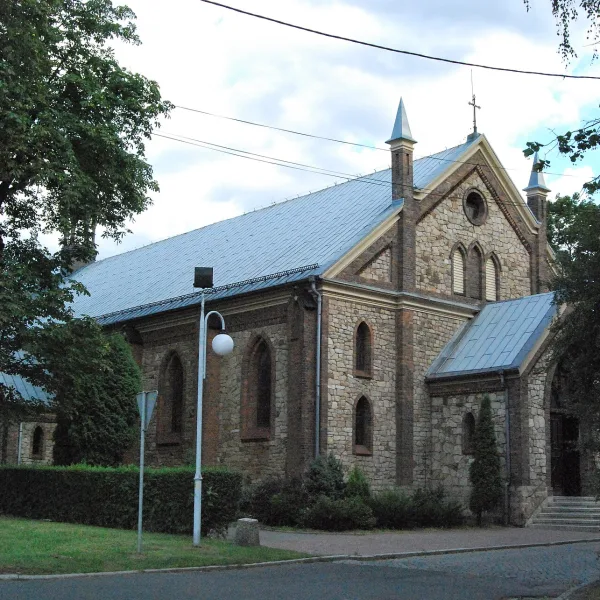
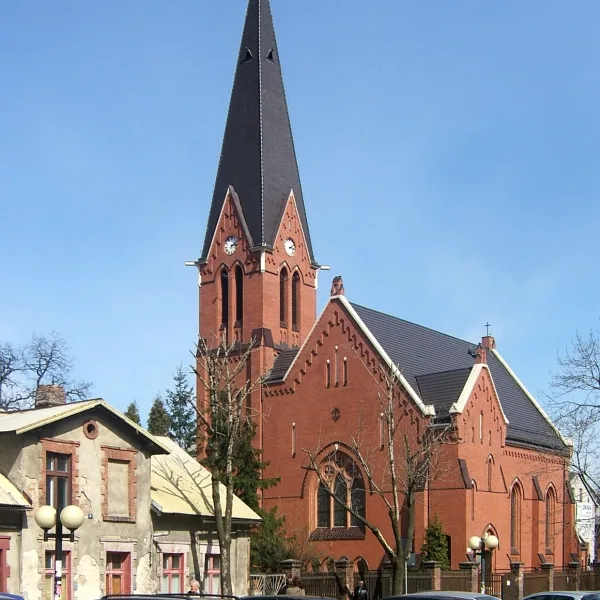
Most numerous are churches from the nineteenth and early twentieth centuries, mostly of brick, in neo-Gothic and neo-Romanesque styles. Beside them stand workers' housing estates, a pit-head tower, a blast furnace and bunkers from a defensive line. Together they show a city built on coal mining and steelmaking.
To compare Ruda with other towns, see the wider section on architecture in Silesia. Two articles tell the industrial story: one about the Pokój Steelworks and the Sendzimir rolling mill, another about the Ficinus Colony and the first village with electric light.
Which churches in Ruda Śląska have the most interesting architecture?
Ten churches on this list were built between 1806 and 1912. The oldest is the late Baroque church in Kochłowice, the youngest the neo-Romanesque basilica in Nowy Bytom. The rest are brick buildings in neo-Gothic or neo-Romanesque style, each in a different district.
Wirek
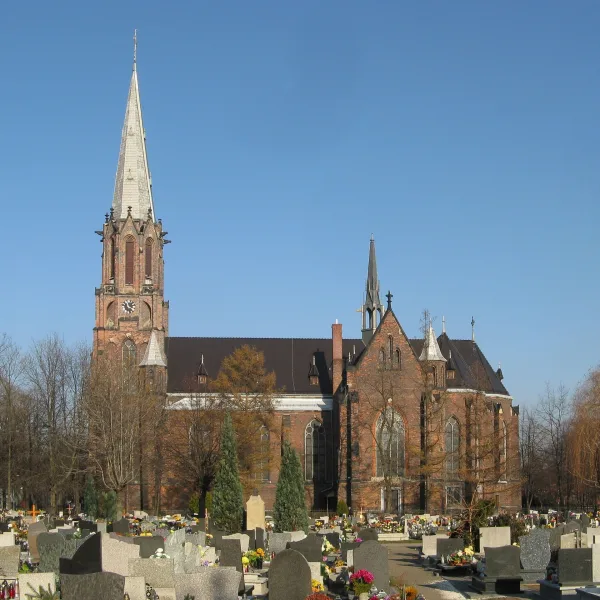
The Church of St Lawrence and St Anthony at Ściegiennego 6 was raised in 1907-1909 as a single-nave neo-Gothic building with one tower. It was designed by Ludwig Schneider of Wrocław and entered the register of monuments in 1999. In the same district, at 1 Maja 291, stands the Church of the Redeemer: red brick, one tower, and a Lutheran parish. It was consecrated in 1902 to a design by Feliks Henry of Wrocław.
Godula, Bielszowice and Orzegów
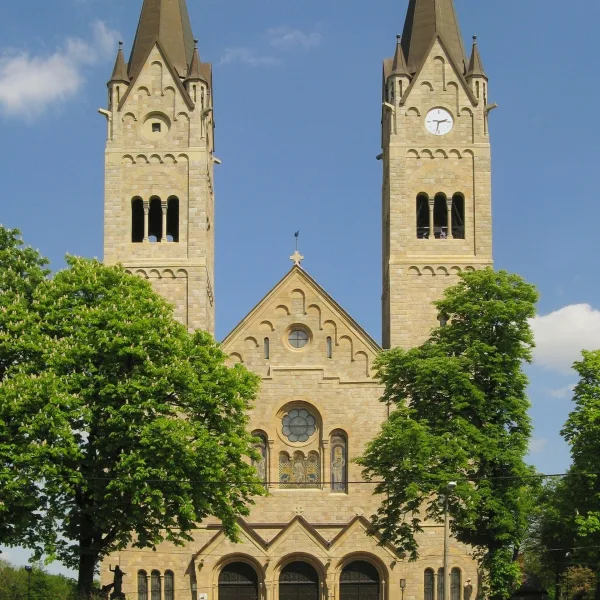
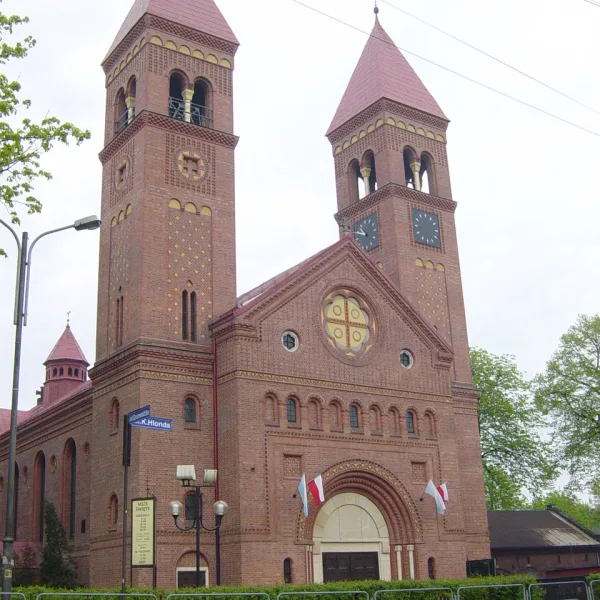
In Godula, at Karola Goduli 22, rises the Church of the Beheading of St John the Baptist from 1868-1871. The brick church has three naves and one tower, designed by Teodor Linke. In Bielszowice, at Edmunda Kokota 152, you will find the Church of St Mary Magdalene, finished in 1883 to a design by architects from Gliwice. In Orzegów, at Królowej Jadwigi 8, is the Church of St Michael the Archangel: neo-Romanesque, with a twin-towered front, put up in 1894-1895 and enlarged in 1911-1912.
Kochłowice
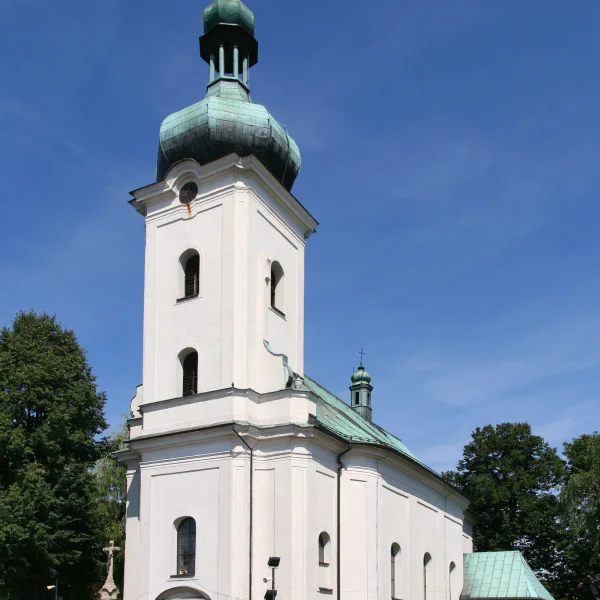
This district has two churches from different eras. The Sanctuary of Our Lady of Lourdes stands at Piłsudskiego 1. Builders used local stone for this late Baroque church, consecrated in 1806, which makes it the oldest church in the city. The title of Marian shrine followed in 2008. Newer is the Church of the Holy Trinity at Tunkla 2, built in 1900-1902 in a style that mixes neo-Romanesque and neo-Gothic features.
Ruda and Nowy Bytom
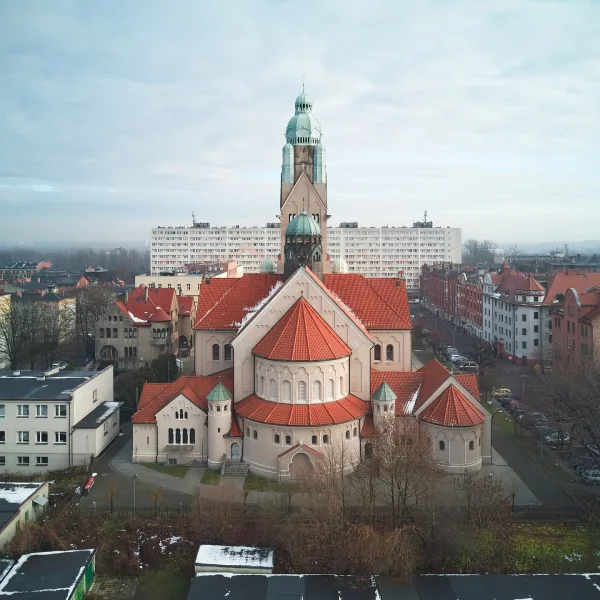
In the district of Ruda, at Kościelna 12, stands the Church of Our Lady of the Rosary, neo-Gothic, from 1869-1872 and funded by Count Ballestrem. In Nowy Bytom, the Church of St Paul closes off the western side of Plac Jana Pawła II. The neo-Romanesque basilica was raised in 1911-1912 to plans by Johannes Franziskus Klomp, and sculpture decorates it richly.
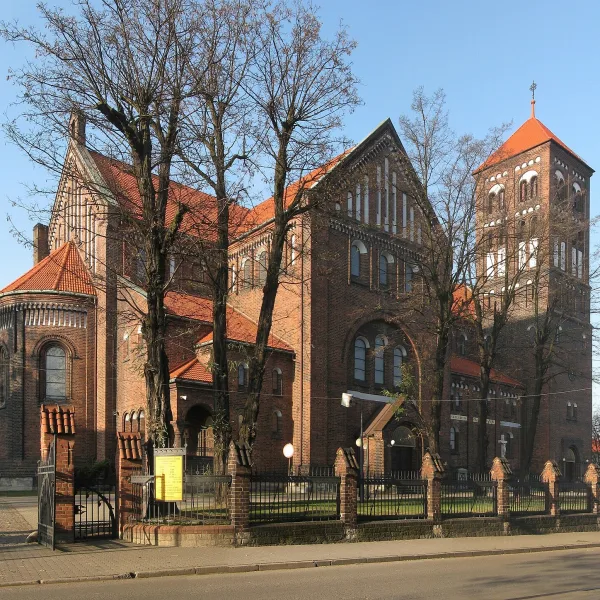
One more church deserves separate mention: the Church of St Joseph at Piastowska 18. Count von Ballestrem paid for this brick neo-Romanesque church, built in 1902-1904. Inside are the founders' crypt and capitals carved with symbolic motifs.
Where can you see historic workers' estates in Ruda Śląska?
Two such complexes lie in former industrial districts. The Ficinus Colony at Pawła Kubiny 20 in Wirek is sixteen identical sandstone houses from 1860-1867, built for the workers of the "Błogosławieństwo Boże" mine. Today they hold shops and services, and the estate is part of the Industrial Monuments Trail of the Silesian Voivodeship.
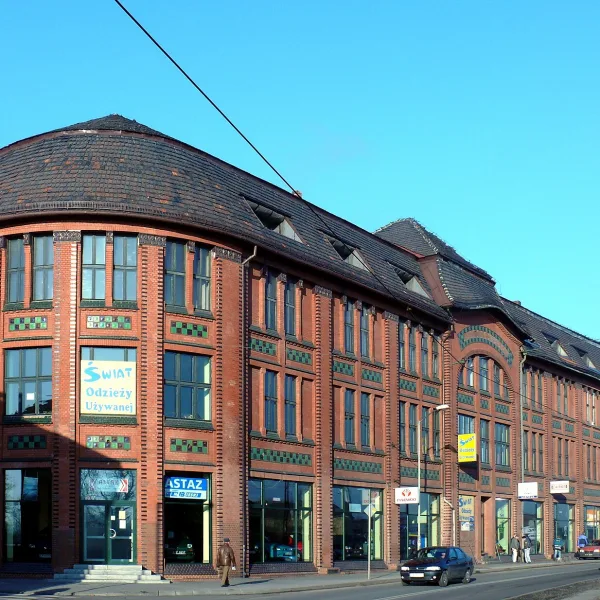
The Kaufhaus Estate lies on the border of Nowy Bytom and Chebzie. A row of workers' terraced houses along the curve of Niedurnego street was built in 1880-1913 for steelworkers, and a department store joined them in 1904. The walk is short and shows well what life next to the old steelworks looked like.
Which industrial and defensive sites are there in Ruda Śląska?
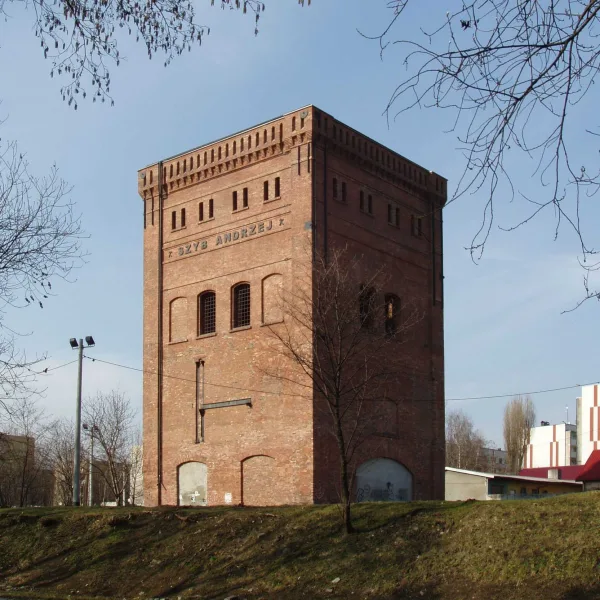
The Andrzej Shaft Tower is the brick pit-head frame of the former Gottessegen colliery, a four-storey tower of the Malakoff type. The shaft was called Aschenborn in German until 1922, and the structure appears in the register of monuments.
The Pokój blast furnace at Piotra Niedurnego 79 dates from 1968 and survives from the steelworks founded in 1840 in Nowy Bytom. The furnace is an industrial monument and part of the district's industrial landscape.
Quite different is the Hill 319 Strongpoint, part of the Silesian Fortified Area. Combat bunkers with armoured cupolas and weapon positions are scattered along Rodziny Gürtlerów avenue, and the fortifications blocked roads leading out of Zabrze. What remains are former defences, so visit with care.
How to plan a route around the monuments of Ruda Śląska?
The simplest plan is to group sites by district. Wirek can be covered in one afternoon: the Ficinus Colony, the Church of St Lawrence and St Anthony and the Church of the Redeemer. Nowy Bytom brings the Church of St Paul, the Kaufhaus Estate and the blast furnace, all within the area of the old steelworks.
Kochłowice, Bielszowice, Orzegów and Godula work as separate short outings, with one or two churches each. When planning to enter a church, remember that these are working parishes, and service times limit sightseeing.
Frequently asked questions
How old is the oldest church in town?
The church in Kochłowice, late Baroque, consecrated on 26 October 1806. It is now the Sanctuary of Our Lady of Lourdes, a status granted in 2008.
What is the Ficinus Colony?
It is an estate of sixteen sandstone workers' houses from 1860-1867 in Wirek, built for mine employees. The register of monuments has included it since 1978, and it forms part of the Industrial Monuments Trail.
In which style are most of the churches built?
Brick and neo-Gothic forms prevail, and several churches show neo-Romanesque features. One combines both, and the oldest is late Baroque.
What is Hill 319?
It is a strongpoint, one section of the Silesian Fortified Area in Ruda Śląska. It consists of combat bunkers with armoured cupolas scattered along Rodziny Gürtlerów avenue.
Which estate was built for steelworkers?
The Kaufhaus Estate, built in 1880-1913 for workers of the Pokój steelworks, with a department store from 1904.

 Industrial heritage