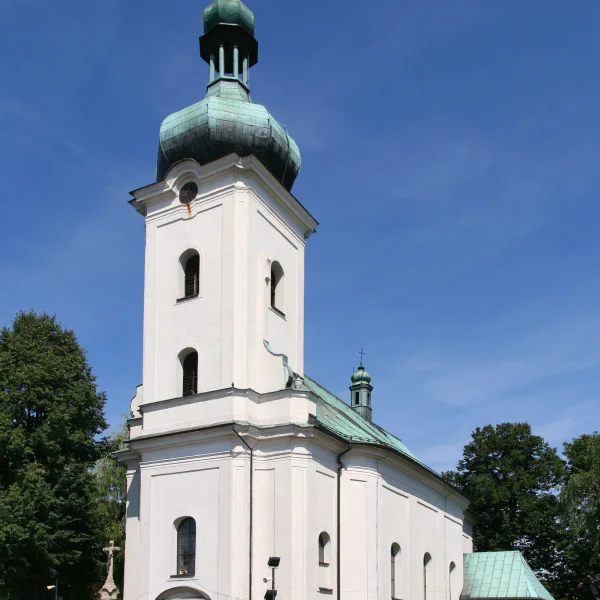
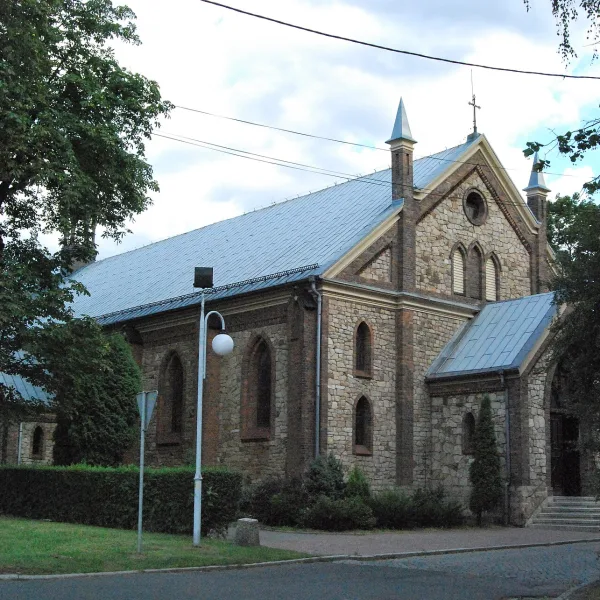
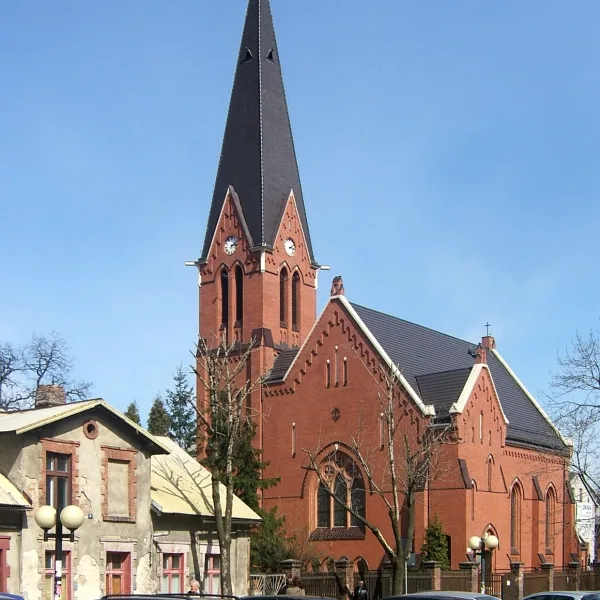
Churches in Ruda Śląska: from the oldest church, a late Baroque shrine in Kochłowice, to a Neo-Romanesque basilica in Nowy Bytom.
Ruda Śląska grew from several former villages, so its churches stand in the districts: Wirek, Kochłowice, Halemba, Bielszowice, Orzegów, Godula and Czarny Las. Here you will find brick Neo-Gothic, Modernism of the 1930s and a Lutheran church.
Which churches in Ruda Śląska should you see first?
Begin with the Sanctuary of Our Lady of Lourdes in Kochłowice, the Church of St Paul in Nowy Bytom and St Joseph's Church on ulica Piastowska. They differ in age, style and founders.
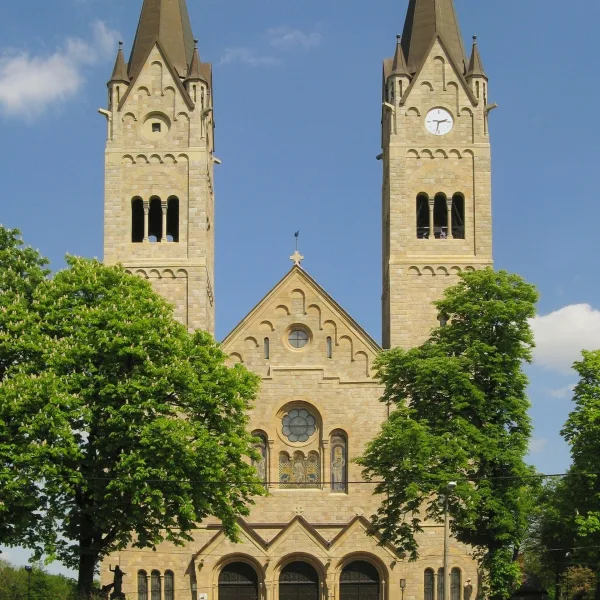
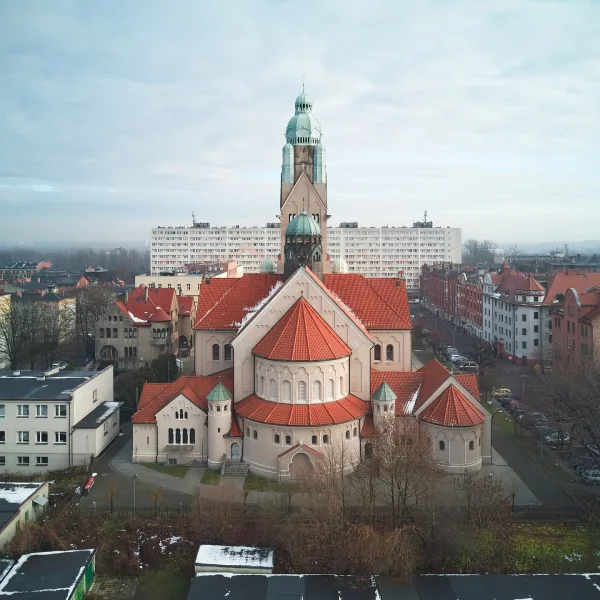
The shrine at ulica Piłsudskiego 1 is a late Baroque church of 1806 built from local stone; it is the oldest in the city and has been a Marian shrine since 2008. St Paul's closes plac Jana Pawła II on its western side. It is a Neo-Romanesque basilica of 1911-1912 by Johannes Franziskus Klomp of Dortmund, with rich sculptural decoration. St Joseph's was built in 1902-1904 with funds from Count Franz Xaver von Ballestrem; it has a founders' crypt and symbolic column capitals.
What do the Neo-Gothic brick churches look like?
This is the largest group in the city. Neo-Gothic red brick appears in Godula, Bielszowice, Ruda and Wirek, and each church has its own architect and patron.
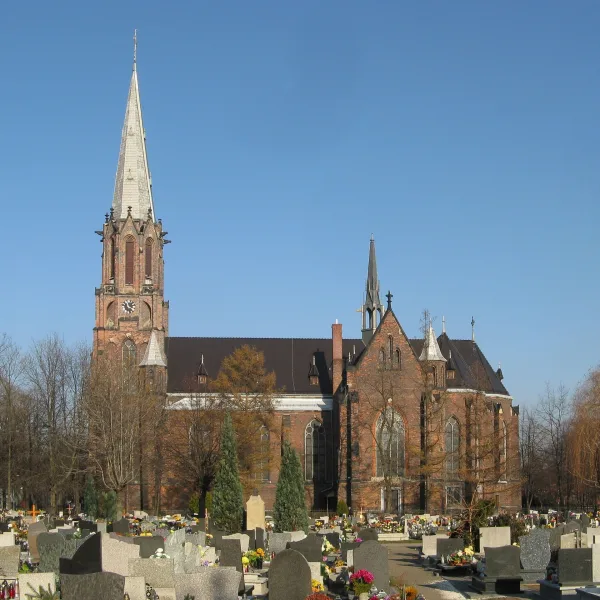
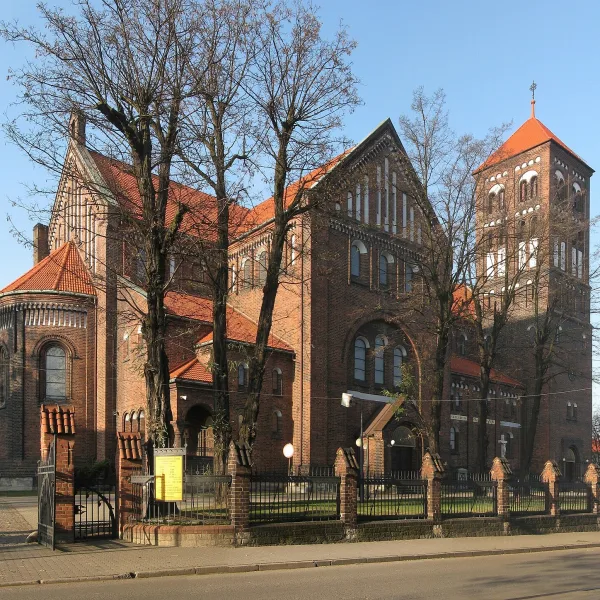
The Church of the Beheading of St John the Baptist at ulica Karola Goduli 22 was built in 1868-1871 to a design by Theodor Linke, builder for the Schaffgotsch family. It has three aisles and one tower, and its windows are decorated with stained glass by L. Glötz of Salzburg. In Bielszowice, at ulica Edmunda Kokota 152, stands St Mary Magdalene's Church, finished in 1883, with one nave and one tower; architects from Gliwice designed it. In the Ruda district, at ulica Kościelna 12, is the Rosary church of 1869-1872, founded by Count von Ballestrem. What sets it apart is the lack of a tower, which is rare in the region.
In Wirek, at ulica Księdza P. Ściegiennego 6, stands the Church of St Lawrence and St Anthony: a single-nave brick church from 1907-1909, designed by Ludwig Schneider of Wrocław and listed as a monument. In Kochłowice, at ulica Tunkla 2, you will find the Church of the Holy Trinity of 1900-1902, which combines Neo-Romanesque and Neo-Gothic features, with three aisles on a Latin cross plan.
Are there Neo-Romanesque churches in Ruda Śląska?
Yes, one more besides the basilica in Nowy Bytom and St Joseph's. It stands in a district and shows what parishes looked like in the years when mining grew.
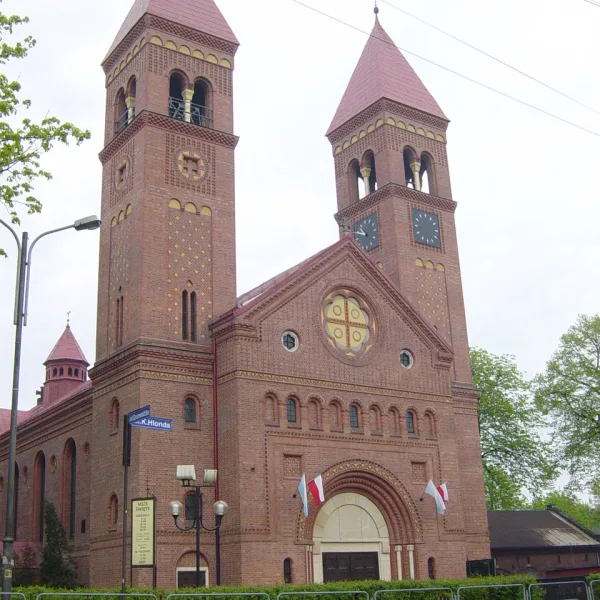
The Church of St Michael the Archangel in Orzegów, at ulica Królowej Jadwigi 8, has a twin-towered facade. It was built in 1894-1895 and extended in 1911-1912, and its windows come from Wrocław workshops. The Schaffgotsch family paid part of the costs, and parishioners paid the rest through collections.
Where do you find Modernism and post-war buildings?
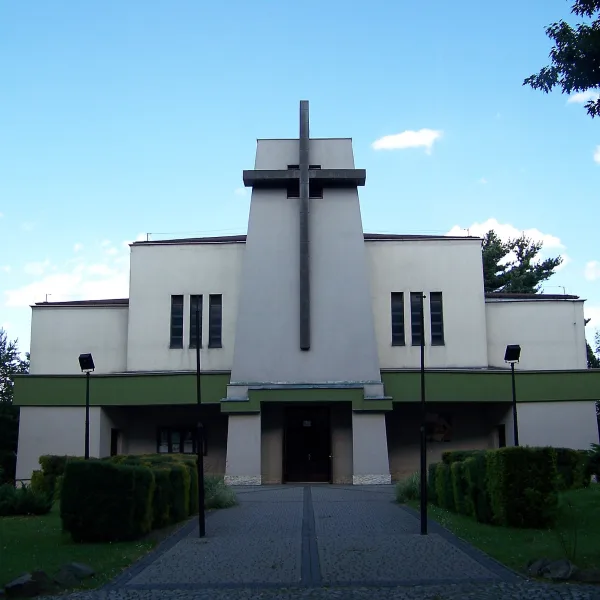
Modernism here means chiefly two churches by Jan Affa. Beside them stand post-war buildings that had to be repaired after mining damage.
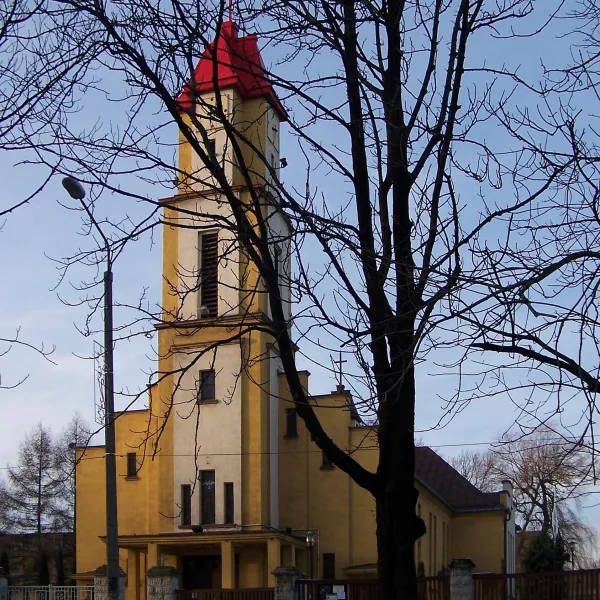
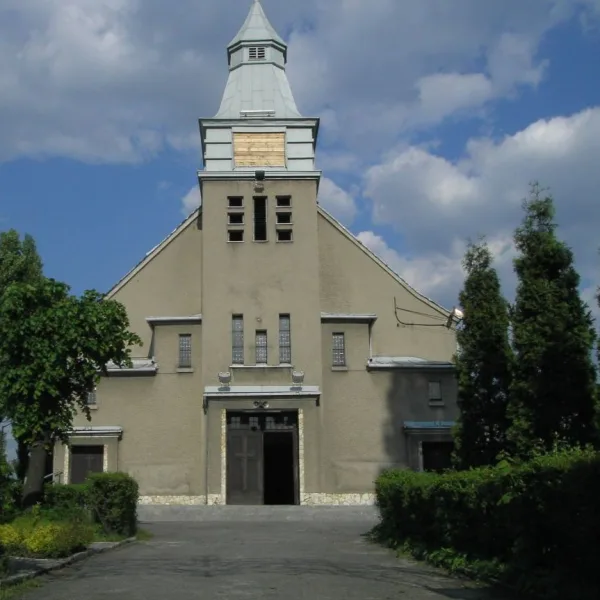
The Church of the Most Sacred Heart of Jesus in Bykowina was built in 1935 in four months. It stands on a rocky outcrop 296 metres above sea level, with three aisles and a pseudo-hall layout. The Church of the Holy Spirit in Czarny Las, on ulica Cynkowa, rose in 1937-1938 on a Latin cross plan, also designed by Jan Affa. The brick Church of the Exaltation of the Holy Cross in Halemba, on ulica Kochłowicka, was built in 1948-1949; its tower doubles as the entrance. In Wirek, St Andrew Bobola's Church was built after the war. Mining damage interrupted the work, and the interior recalls Art Deco.
Is there a second Church of Our Lady of the Rosary in Halemba?
Yes. In Halemba stands a church of 1890 with the same dedication as the one in the Ruda district, so do not mix up the two addresses. The Halemba church has Rosary frescoes on its ceiling from 1950-1952 and belongs to the Kochłowice deanery of the Archdiocese of Katowice.
For comparison: the church at ulica Kościelna 12 is Neo-Gothic, built of stone and has no tower, while the one in Halemba was blessed on 29 September 1890. When planning a route, check the district rather than the dedication alone.
Where is the Lutheran church in Ruda Śląska?
In Wirek, at ulica 1 Maja 291, stands the Church of the Redeemer, a Neo-Gothic red-brick church with one tower. The parish is Lutheran (Evangelical-Augsburg), and the building has monument status.
The Wrocław architect Felix Henry designed it, and it was blessed in 1902. Lutherans in Wirek built their first chapel in 1855, and services were held in Polish and German. Wirek, incidentally, is the district with the most churches in this guide.
How do you plan a route through the churches of Ruda Śląska?
It is best to link churches by district. Wirek lets you visit three churches (Lawrence and Anthony, Andrew Bobola, the Redeemer) in one trip, and Halemba offers two churches of different dedication and age.
Besides churches, look at the monuments of Ruda Śląska, the museums and the sites in the industrial heritage and technology category. An overview of the whole city is on the page about things to do in Ruda Śląska, and the industrial Nowy Bytom is the subject of the article Huta Pokój w Rudzie Śląskiej i walcarka Sendzimira. Churches from across the region are gathered in the churches and monasteries category.
Frequently asked questions
Which church in Ruda Śląska is the oldest?
The late Baroque church of 1806 in Kochłowice, today the Sanctuary of Our Lady of Lourdes, is regarded as the oldest. It was declared a Marian shrine in 2008.
Which church in Ruda Śląska has no tower?
The Rosary church in the Ruda district, on ulica Kościelna. This Neo-Gothic building of 1869-1872 consists of a vestibule, a nave and a chancel.
Where is the basilica in Ruda Śląska?
The Neo-Romanesque basilica of St Paul stands in Nowy Bytom at plac Jana Pawła II 5. It was built in 1911-1912 to a design by Johannes Franziskus Klomp.
Is there a Lutheran church in Ruda Śląska?
Yes, the Church of the Redeemer in Wirek at ulica 1 Maja 291. It was blessed in 1902.
Which church was built in four months?
The Modernist Sacred Heart church in Bykowina, from 1935. It stands on a rise 296 metres above sea level.

 Churches and monasteries