Solo in Częstochowa is more than Jasna Góra: there are museums, many churches, townhouses on the main avenue and an underground mining display.
The city handles solo sightseeing well: sites lie close to the main promenade, and the museums are small, so each takes under an hour. This guide helps arrange a day around Jasna Góra, find places for bad weather and choose something off the pilgrim route. More ideas for people travelling alone are in the solo section for Silesia, and the rest of the city is in the overview of Częstochowa attractions.
What to see in Częstochowa on your own, and where to begin?
First Jasna Góra, then the archcathedral and one of the museums. This order shows the city in two forms: the religious one, with the sanctuary and churches, and the secular one, with museums and townhouses on the main promenade.
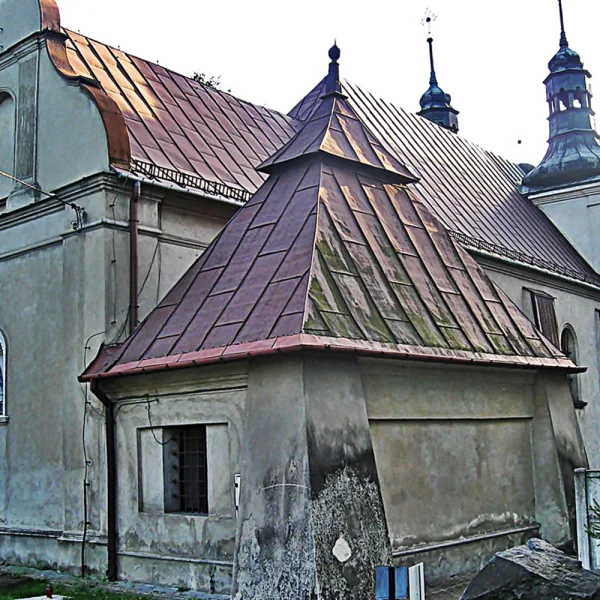
Jasna Góra is a Marian sanctuary and a Pauline monastery on a hill, with the icon known as Our Lady of Częstochowa, a treasury and a viewing tower. For almost two centuries the hill was a fortress with bastions and a moat, as told in the article on the fortifications and siege of 1655. At the foot of its western side stands the Pallottine Valley of Mercy, a sanctuary with mosaics, and about six hundred metres from the monastery is the Baroque Church of St Barbara with a spring tied to the story of the painting.
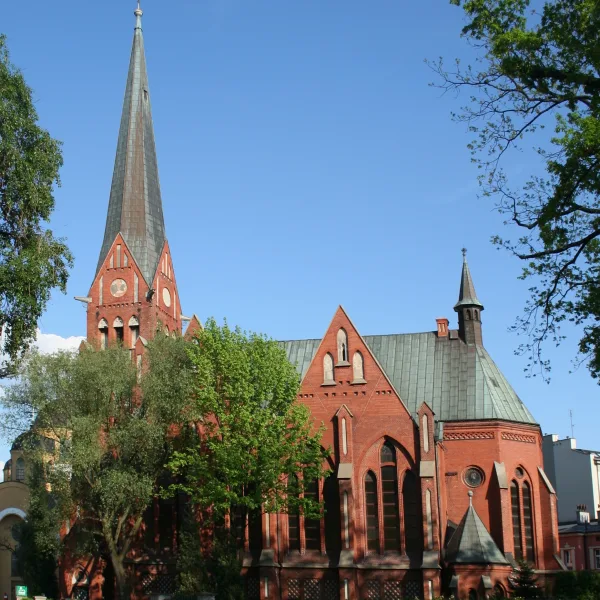
Nearby is the Archcathedral of the Holy Family: Neo-Gothic, brick, with three naves, built in 1901-1927, with a 101-stop organ and a crypt for its bishops.
How to explore Częstochowa without a pilgrimage?
The easiest way is through museums, since the city has several and each deals with something different: from poetry through railways to matches and iron-ore mines. All suit a rainy afternoon.
The Częstochowa Museum is among the oldest cultural institutions of the region, and its exhibitions are spread over several places: the Town Hall, the House of Poetry and the Good Art Gallery. The latter, the Good Art Gallery, occupies a former presbytery of 1875 where bishops once lived. The House of Poetry, or Halina Poświatowska Museum at Jasnogórska 23, opened in 2007 in the poet's former home.
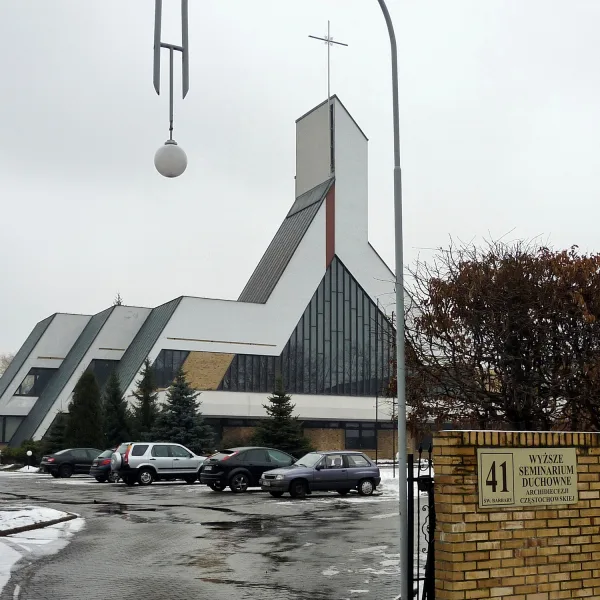
Underground you go to the Iron Ore Mining Museum: in corridors dug in 1974-1976 workings and machines are shown at full scale. Lovers of technology will also find the Railway History Museum in the Stradom station building, with uniforms, lamps and two steam locomotives, and the Match Production Museum in a works founded in 1881, at Ogrodowa 68; before you go, check what the visiting arrangements are. A collection of over eleven thousand items linked with John Paul II belongs to the private coin and medal museum on Jagiellońska Street. Sacred art of the region is gathered by the Museum of the Archdiocese of Częstochowa in the seminary building on St Barbara Street.
In the Raków district, under a pavilion, waits the Lusatian culture archaeological reserve, a museum branch with a cemetery kept where it was found. The city beyond pilgrimage is described in the article on Częstochowa around Jasna Góra.
Which churches in Częstochowa should you see besides Jasna Góra?
Częstochowa has a dozen or more churches of differing style and age: from Gothic to buildings finished in the 21st century. Walking alone, you can combine them in pairs from neighbouring streets.
St Sigismund's, on Daszyński Square, is the city's oldest church; it is Gothic brick, known from records of 1474, and got its two-tower facade in 1783. In the centre, St James's (Biegański Square) began life as an Orthodox church in 1870-1872 and is Catholic today, with Neo-Byzantine features. By the main promenade is the Holy Name church, Neo-Gothic, of 1859-1862, with modernist paintings and an organ of 1936. On Rynek Wieluński, in the former centre of Częstochówka, stands the Neo-Gothic Church of the Dying Lord Jesus of 1906.
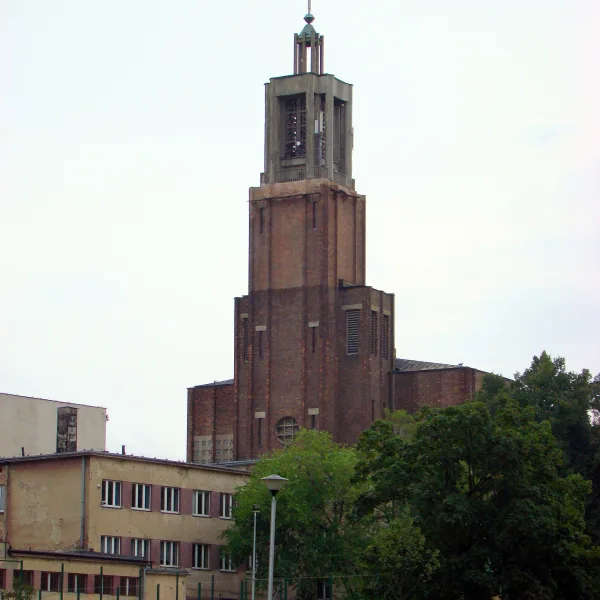
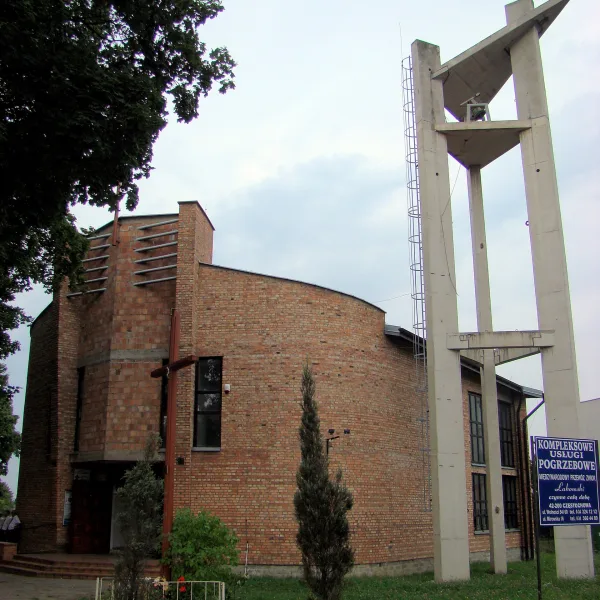
The Baroque is represented by St Roch and St Sebastian of 1680, rebuilt in 1783-1785, with a Rococo altar. The modernist brick Church of St Anthony of Padua on Szczytowa Street has a tower 50 metres high and has been a sanctuary since 1997. Other denominations are the Neo-Gothic Evangelical-Augsburg church of 1913, the modern Orthodox parish church and the cathedral of the Polish Catholic Church, round in plan, from 1979-1985. In Raków, on a hill, stands the Sanctuary of St Joseph with two towers.
On Wrzosowiak several young parishes have appeared. The church of St Raphael Kalinowski has been under construction since 1999, St Ursula Ledóchowska's since 1987 (consecrated in 2022), while Holy Spirit parish built its single-nave church in 2006-2008. The Shrine of the Blood of Christ in Grabówka, in turn, holds a relic from Mantua.
Where to see townhouses and old industry in Częstochowa?
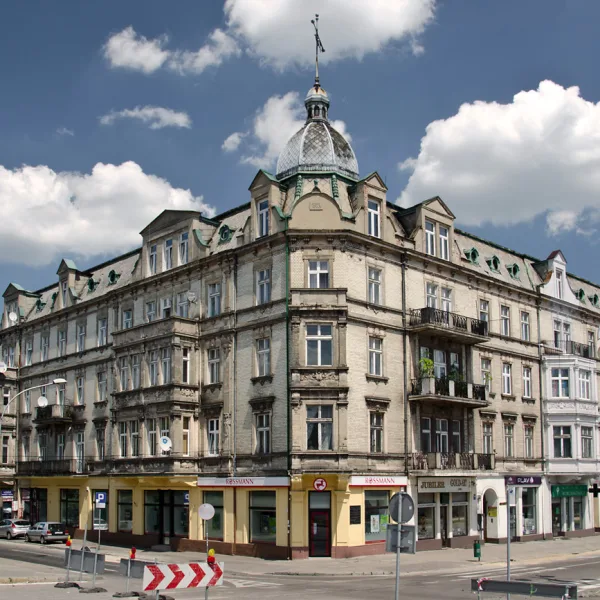
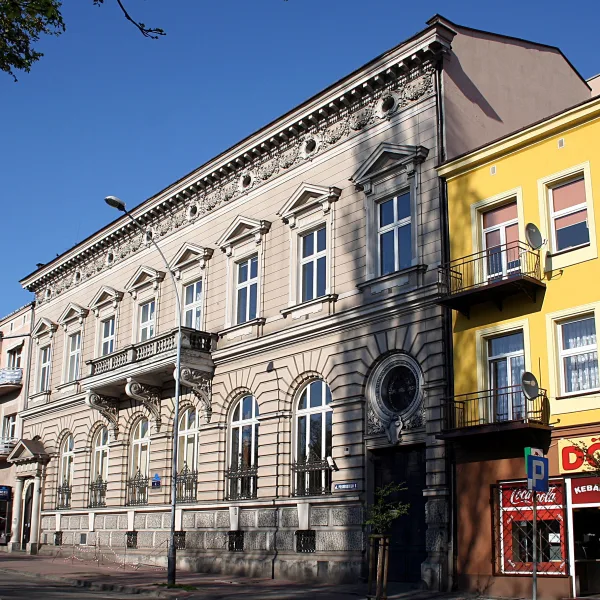
Most representative architecture lies along Aleja Najświętszej Maryi Panny and around it, while industrial traces are found mainly in Raków and on Ogrodowa Street.
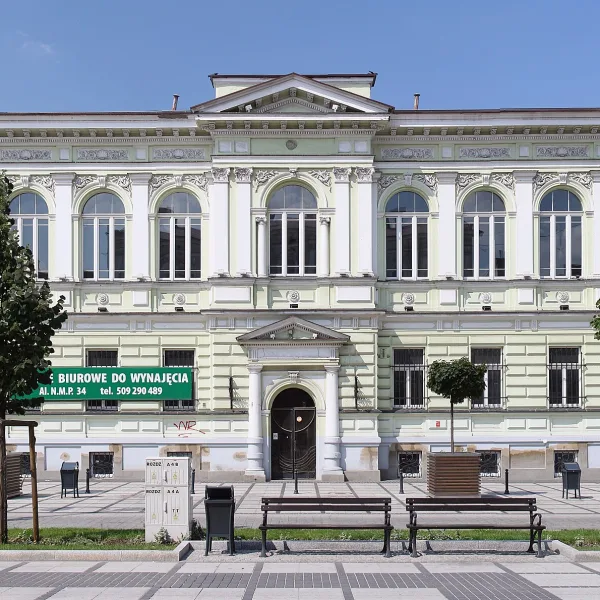
On the avenue stand the Franke House, an eclectic townhouse of 1901-1903 at number 14, built for Adolf Franke, and the Bank Polski townhouse on the Second Avenue, in a Renaissance-Art Nouveau style from 1903-1904. Not far off, at Piłsudskiego 5, the Bank Handlowy townhouse has a facade in Neo-Renaissance style and an operating hall with a mezzanine.
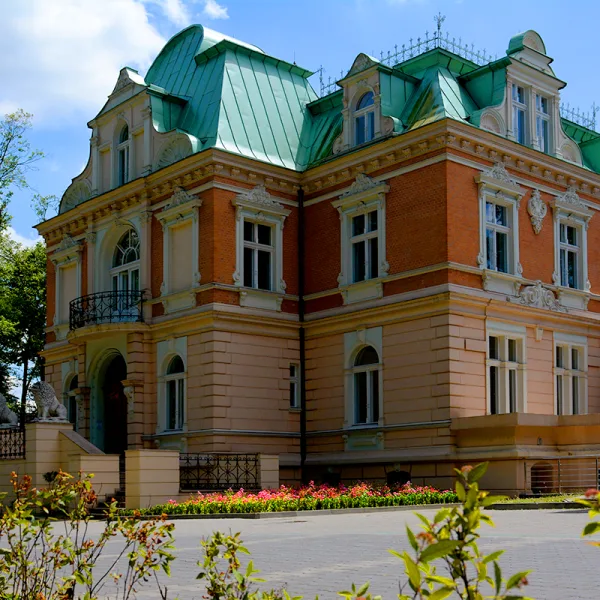
In Raków the Neo-Baroque Hantke Villa of 1900-1903 is today the seat of a culture centre and stands in a park. The story of factories in this region is completed by the article on the Częstochowa steelworks. At Ogrodowa 18/22 you can see from the street the abandoned Kmicic Brewery of 1840, closed since 2004; it is meant for viewing from the pavement.
Is there a place for nature in Częstochowa?
There is, though an unusual one: the Cave on Kamień is a horizontal cave under the Church of Divine Providence, a former stretch of the underground course of the Warta. It is a good end to a day if walls had been enough.
Frequently asked questions
What to see in Częstochowa besides Jasna Góra?
The archcathedral, the oldest church of the city, museums by the main promenade and in Raków, and townhouses on Aleja Najświętszej Maryi Panny.
Which museums in Częstochowa suit rain?
The Częstochowa Museum with its branches, the Iron Ore Mining Museum, the Railway History Museum and the Halina Poświatowska Museum, as well as the sacred-art museum on St Barbara Street.
Can I tour a match factory in Częstochowa?
The Match Production Museum occupies a factory of 1881, but it is worth checking visiting arrangements before you go.
Is the Kmicic Brewery open to visitors?
No: the historic brewery has been closed since 2004 and is abandoned, so it is viewed only from the street.

 Churches and monasteries