Things to do in Dąbrowa Górnicza: basilicas, an underground training mine, the Pogoria reservoirs and parks in the Dąbrowa Basin.
Dąbrowa Górnicza belongs to the Dąbrowa Basin, and its scattered districts each have their own churches, chapels and parks. This guide builds a visit around three themes: industrial history, water and greenery, and places of worship. What sets Dąbrowa apart from neighbouring towns are the large reservoirs left by quarrying and a steelworks whose name misleads.
What to see in Dąbrowa Górnicza first?
Start with the "Sztygarka" City Museum and the underground Training Mine, then visit one of the basilicas and finish the day by the Pogoria reservoir. Dąbrowa offers several dozen sights, among them more than a dozen churches and chapels. For the complete list, open attractions in Dąbrowa Górnicza; and the town's history from Koniecpolska Wola to its charter is described in an article on the origins of Dąbrowa Górnicza.
Which places in Dąbrowa show the industrial history of the Basin?
The best are the "Sztygarka" City Museum, the Training Mine and Haller Park. Each touches a different chapter of mining and steelmaking. A revitalised factory and the steelworks complete the picture, though the steelworks is better seen from outside.
The "Sztygarka" City Museum occupies a former mining school building at 69 Legionów Polskich Street. It tells of industry, the lives of miners and farmers, geology and travel. The museum also runs the Training Mine, an underground route cut in the 1920s, in 1927 to be exact, to teach future miners.
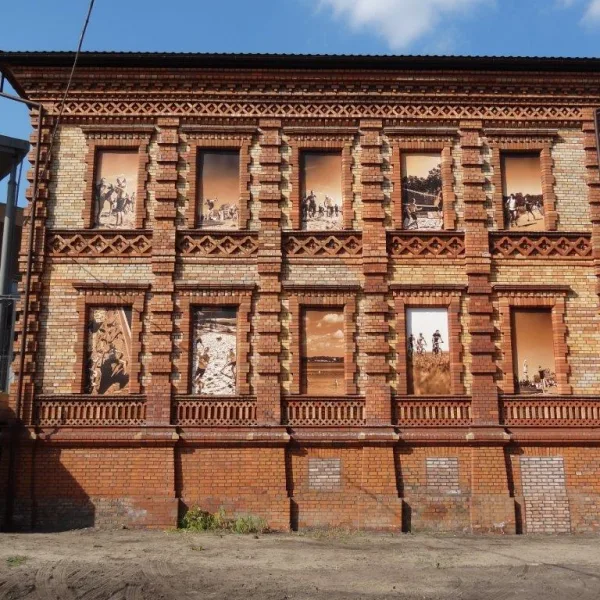
Haller Park was laid out on the grounds of the former Reden mine, which was gradually filled in. Today it is a municipal recreation area with a sports hall and a water park. In the centre stands the Fabryka Pełna Życia, a revitalised site of the former DEFUM machine-tool factory with an events hall, fairs and an open-air cinema. By Plac Wolności rises the Basin Palace of Culture, a Socialist Realist landmark built in 1951-1958. It houses a stage, an art-house cinema and a gallery, and is entered in the register of monuments.
The name Huta Katowice can mislead, because the steelworks lies in Dąbrowa Górnicza, not in Katowice. Construction began in 1972, the first tapping of pig iron came in 1976, and today a branch of ArcelorMittal Poland operates there. It is a working industrial plant, so its interiors are not a sightseeing stop.
Where to walk by the water and among greenery in Dąbrowa Górnicza?
Go to the Pogoria II reservoir or the larger Kuźnica Warężyńska lake for water, and to Zielona Park for greenery. All of these places are free to enter.
The Pogoria II Reservoir was created in 1976-1978 in a flooded sand pit. It lies within an ecological site, is home to a colony of black-headed gulls, and today serves walkers and anglers. The Kuźnica Warężyńska Reservoir, popularly Pogoria IV, is an artificial lake left after quarrying that in 2005 filled the pit of a former sand quarry. It lies in Dąbrowa Górnicza and the municipality of Siewierz, and the main beach is on the Wojkowice Kościelne side.
Zielona Park in the Korzeniec district covers 67 hectares over an old oak woodland and was renewed in 2018. Its eastern half contains Uroczysko Zielona, an ecological site of 17.5 hectares set up in 2008, with an educational trail of five stops. For a longer hike there is the Metallurgists' Trail, a black footpath 18.2 kilometres long that leads to Sosnowiec over Gołonóg Hill. Natural places in town are collected in the category Nature in Dąbrowa Górnicza.
Which churches and chapels in Dąbrowa Górnicza are worth seeing?
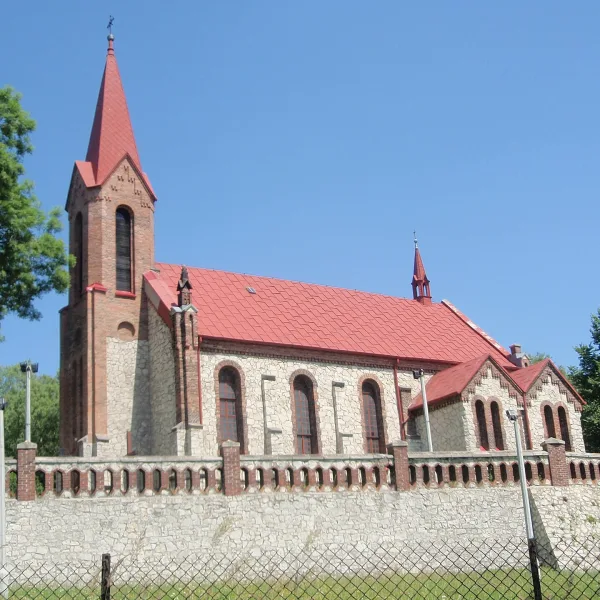
The town has sixteen churches and chapels, among them two basilicas. The best known are the neo-Gothic churches in the centre and in Strzemieszyce Wielkie, while the oldest are the Baroque church in Gołonóg and the wooden chapel in Ujejsce.
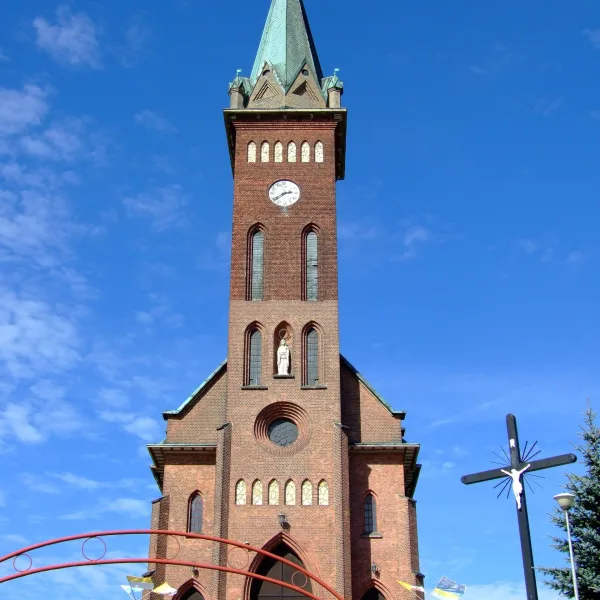
The Basilica of Our Lady of the Angels at 12 Królowej Jadwigi Street is a neo-Gothic church of 1898-1912 with three towers in its facade, a shrine of Our Lady of the Angels with a tower 86 metres high. The Basilica of the Most Sacred Heart of Jesus in Strzemieszyce Wielkie is a brick building of 1903-1910, a shrine since 2002 and a minor basilica since 2008. St Anthony's Church on the limestone hill in Gołonóg, at 335 metres, was built in 1675-1678 and is now a shrine of St Anthony of Padua.
Several districts have churches from the early twentieth century. The Church of Our Lady of Częstochowa in Łęka is a neo-Romanesque building of 1897-1905. The Church of the Descent of the Holy Spirit in Ząbkowice, neo-Gothic with three naves, was blessed in 1905. The church in Łośń was raised in 1890-1910 and consecrated in 1960. The Church of St Barbara at 36 Legionów Polskich Street, from 1882, was built by Evangelicals and has served Catholics since 1945.
Newer are the Church of St Joseph of 1938-1948, modernist, with an openwork tower and stained glass by Zofia Baudouin de Courtenay, the Church of Christ the King, built from 1957 and blessed in 2001, and the Church of St Mary Magdalene in Ząbkowice, raised from 1987 and consecrated in 2010. On the Mydlice estate stands the Church of the Most Holy Body and Blood of Christ, consecrated in 2005, and in Błędów the Church of the Most Holy Trinity of 1952-1960.
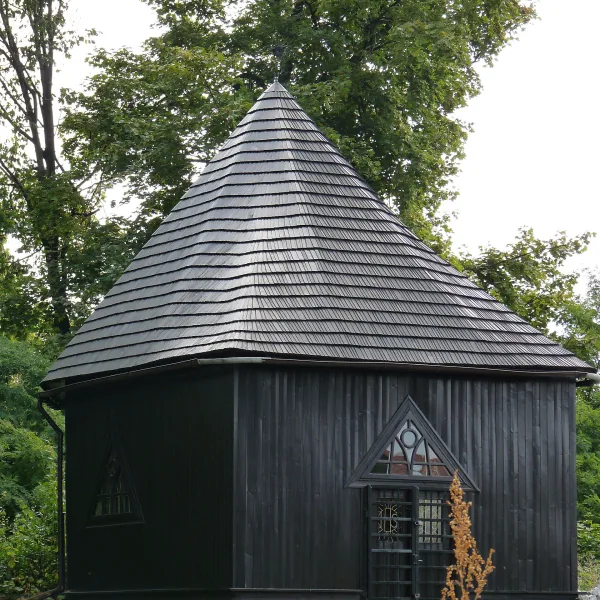
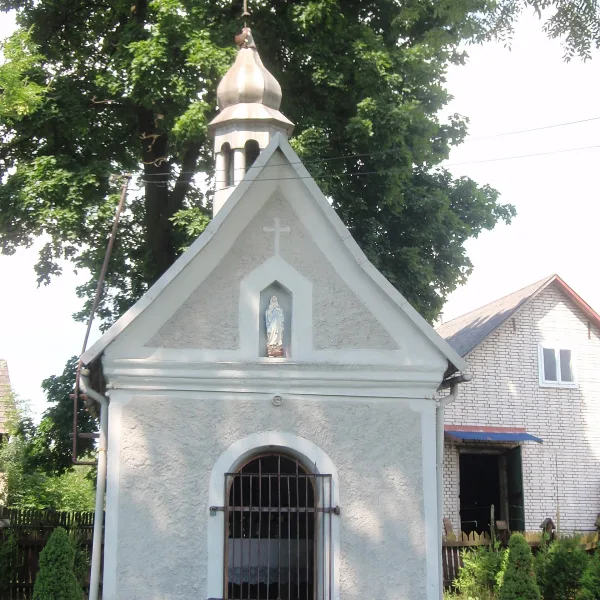
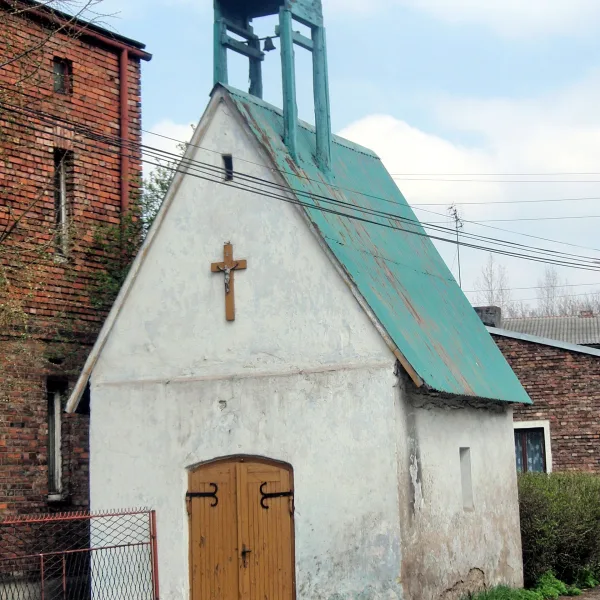
Small chapels form a separate, rural trail: the stone Chapel of Our Lady of Mount Carmel from the turn of the nineteenth century, the stone Chapel of Our Lady of Sorrows in Błędów from the late nineteenth century, the brick chapel in Trzebiesławice with eighteenth-century fittings, entered in the register in 1967, and the wooden chapel of St Catherine in Ujejsce, founded in 1784. All sacred sites are listed in the category Churches and monasteries in Dąbrowa Górnicza.
Monuments, cemeteries and a small palace: what else is in the centre?
Around Plac Wolności stand two monuments of very different character, and by the City Centre Park a small palace. Treat the cemeteries as places of remembrance and keep quiet there.
The Monument to the Heroes of the Red Banners was unveiled in 1970 to a design by Augustyn Dyrda. In 1990 residents saved it from being blown up. Next to it stands the Jimi Hendrix bench, a bronze sculpture with a guitar by Adam Szczepański from 2012. Dezon's Little Palace beside the City Centre Park was built before 1883 for the wife of a director of the Franco-Italian Company; during the war it was the seat of the Gestapo, and its exterior was renovated in 2008.
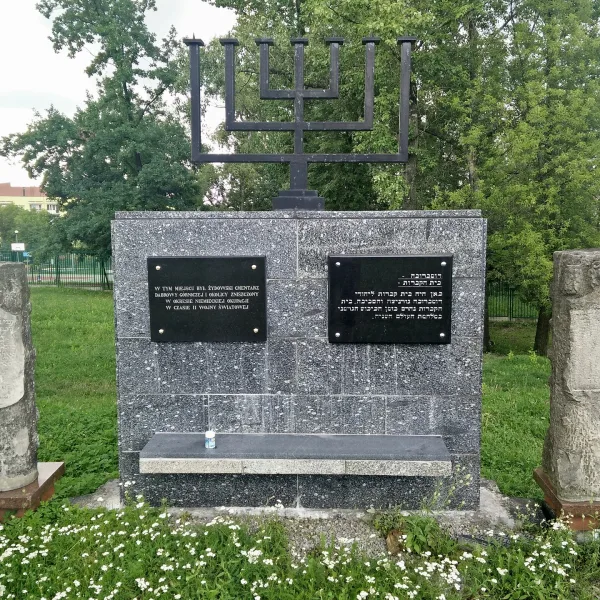
The cemetery of St Barbara's parish was founded in 1891 and holds those who served the town. The Jewish cemetery on Jaworowa Street, from 1929, covers about half a hectare; fragments of gravestones and a monument of 1993 survive there.
What to do in Dąbrowa Górnicza with children and on a rainy day?
For rain and for children, play halls, a museum with an underground route and the Basin Palace of Culture all work.
Fikołki at 6 Sobieskiego Street is a play hall in the Pogoria shopping centre, with a tiered climbing frame, slides and a climbing wall. Pixelowo.pl at 26 Łączna Street is an interactive movement-game hall with a lit-up floor. More wet-weather places are in the category Rainy-day ideas in Dąbrowa Górnicza.
Frequently asked questions
What to see in Dąbrowa Górnicza in one day?
The "Sztygarka" City Museum with the Training Mine, the basilica on Królowej Jadwigi Street and the Pogoria II reservoir. If time remains, add Zielona Park.
Is Huta Katowice in Katowice?
No, the steelworks lies in Dąbrowa Górnicza. It is a working industrial plant, so it is not visited like a museum.
Where is the beach in Dąbrowa Górnicza?
The main beach of the Kuźnica Warężyńska reservoir is on the Wojkowice Kościelne side. The lake lies in Dąbrowa Górnicza and the municipality of Siewierz.
Is there anything in Dąbrowa Górnicza for rainy weather?
Yes: the "Sztygarka" City Museum and the Training Mine, the Basin Palace of Culture, and for children the Fikołki and Pixelowo play halls.
Which attractions in Dąbrowa Górnicza are free?
Entering parks, the reservoirs, cemeteries and monuments needs no ticket. The museum and play halls have their own entry rules.

 Churches and monasteries