Solo in Zabrze means going underground in two former coal mines, climbing a water tower for the view and walking between dozens of striking churches.
Zabrze works well for a solo trip because its main sights form compact museum complexes, while the rest are quiet walks between industrial monuments and churches. This guide helps choose the first places, build a route from neighbouring addresses and find something for a day when the weather is worse than planned. More ideas for solo travellers are gathered in the solo section for Silesia, and other addresses in the city in the overview of Zabrze attractions.
What to see in Zabrze on your own, and where to begin?
Begin with the Coal Mining Museum, because it ties several stops into one story: the Guido mine, the Queen Louise Adit, the water tower and the former mine buildings. For a first day it is enough to choose one of these sites and add a walk around the area.
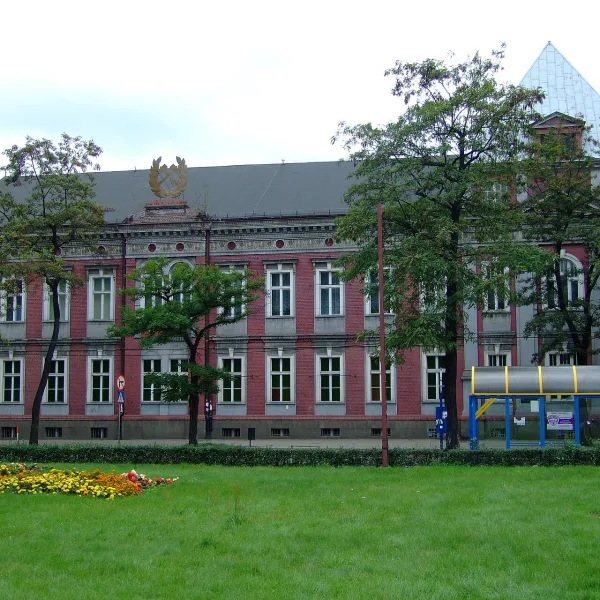
The museum's main seat is in the former district office of 1874 at 3 Maja 19, and its exhibitions are completed by routes in the field. That lets you plan the day at your own pace: one place before noon, another in the afternoon, and a church or palace as a break. A guide to the underground routes is the article on Guido and Queen Louise.
Which underground routes in Zabrze should you choose?
There are two directions: descending into the Guido mine or visiting the Queen Louise Adit. The first is a classic coal mine, the second a system of drainage tunnels with a boat route, so it is more a story about water than about coal.
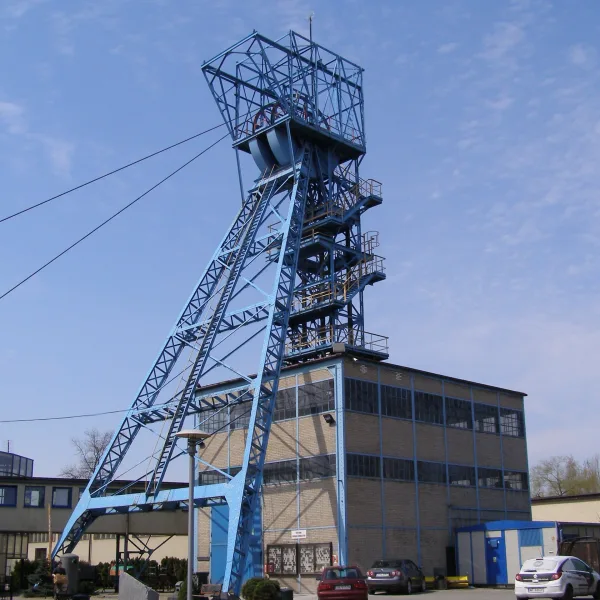
The Historic Guido Coal Mine at 3 Maja 93 is now part of the mining museum. Visitors go down to levels of 170 and 320 metres underground, and because the route is underground it also suits a day of changeable weather. The Queen Louise Adit offers almost five kilometres of underground workings of the former mine and the Main Kluczowa Hereditary Adit, with a section covered by boat.
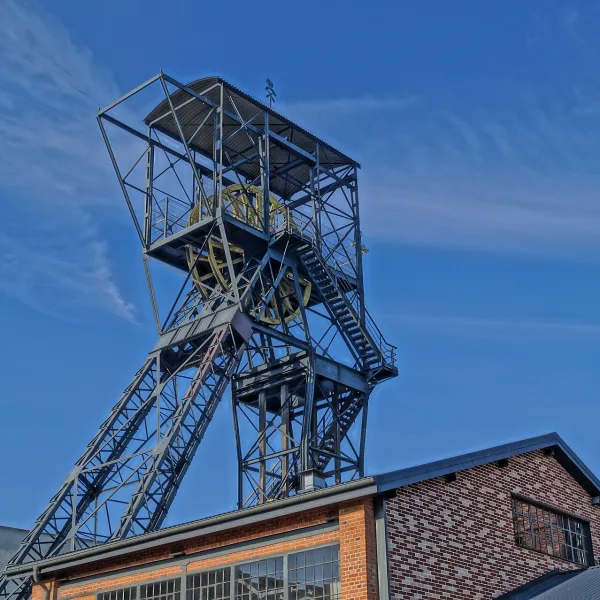
The Main Kluczowa Hereditary Adit adds to this: a drainage canal driven below ground from 1799, 14.25 km in length, joining Zabrze to what is now Chorzów. Only parts of it are open in Zabrze. On the surface, the Carnall Shaft helps you get your bearings: a former drainage shaft from the mid-19th century with a tower that has a viewing point and a passage to the adit.
What can you see on the Queen Louise site?
The former mine grounds hold several buildings that you can see in one day. Besides the adit and the Carnall Shaft there are a chain bathhouse, a complex of surface buildings and a car museum.
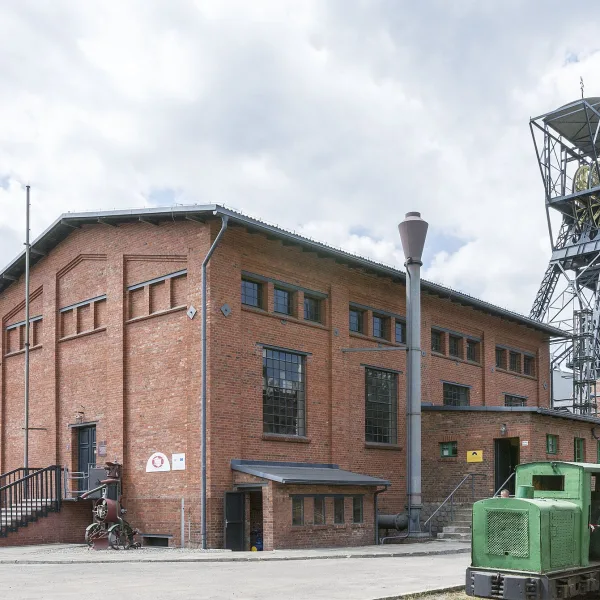
The chain bathhouse at Wolności 408 is a brick building of 1890, one of the elements around the Carnall Shaft. Next to it stand the mine buildings, the surface part of a works that extracted coal until the end of the 1990s. On the same grounds is the Museum of Vintage Vehicles in a former compressor house, with cars and motorcycles.
Where to see old industry from the outside in Zabrze?
Beyond the museum routes, three places show industry straight from the street: the water tower, the Maciej shaft complex and the Concordia mine.
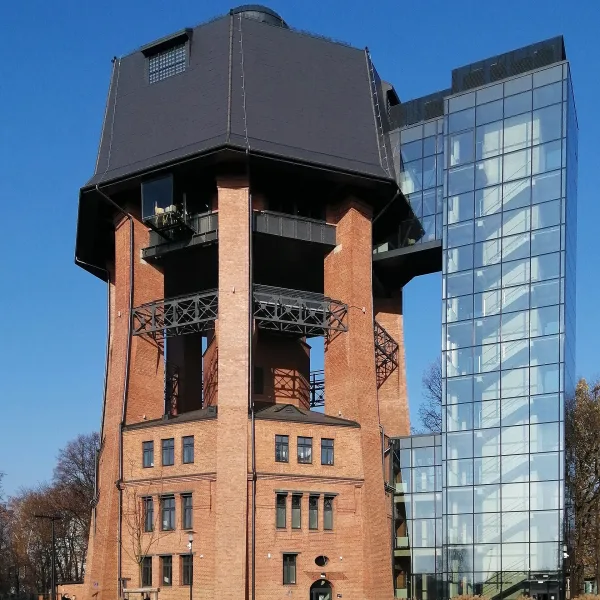
The water tower at Zamoyskiego 2 was built in 1907-1909, stands about 46 metres tall and is an example of Expressionism. Today it belongs to the mining museum: it houses the CARBONEUM exhibition about coal, and the top offers a viewing platform. For further towers of this kind, read Water towers of Silesia.
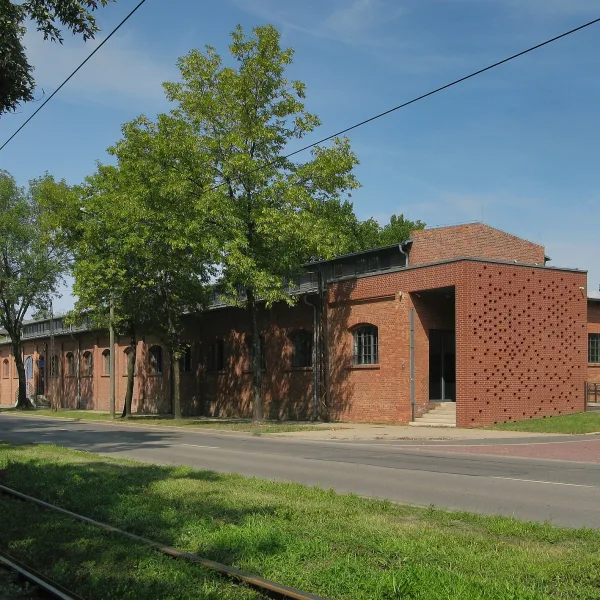
In Maciejów, at Srebrna 6, stands the Maciej shaft complex: a former mine with a headframe building, a Siemens winding engine and a spoil heap, lying on the Industrial Monuments Route. The Concordia mine on Hagera Street began extraction in the 1840s and was closed in the 1990s; the Maciej shaft complex survives from it. One more trace of mining life is the “Wojciech” tipping bridge, a steel and concrete structure of 1910-1913 from which sand was dumped into a shaft. The mines and the bridge suit a trip about industrial heritage, described more widely in the article on mines in new roles.
Which museums in Zabrze suit a rainy day?
For rain, go to the museums: the municipal one, the mining one, the military technology one and the vintage vehicles one. Each shows a different slice of history, so together they make a day indoors.
The Municipal Museum at 3 Maja 6 has operated since 3 October 1935, and it started as a regional collection room. Today it has departments of culture, art, history, naive art and sport. The Coal Mining Museum presents exhibitions in the 1874 building and links them with underground routes. The Military Technology Museum at Mochnackiego 12 gathers military vehicles and kit, some from the People's Army of Poland period and some from the Second World War. The Grupa Śląsk association started the collection.
Which churches in Zabrze are worth a walk?
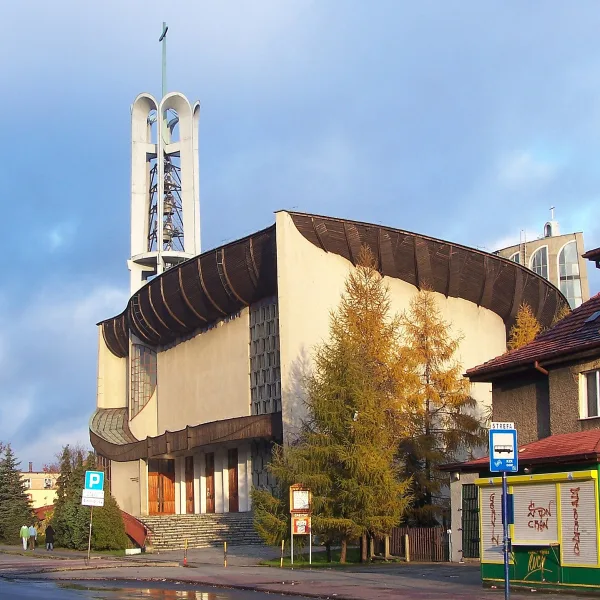
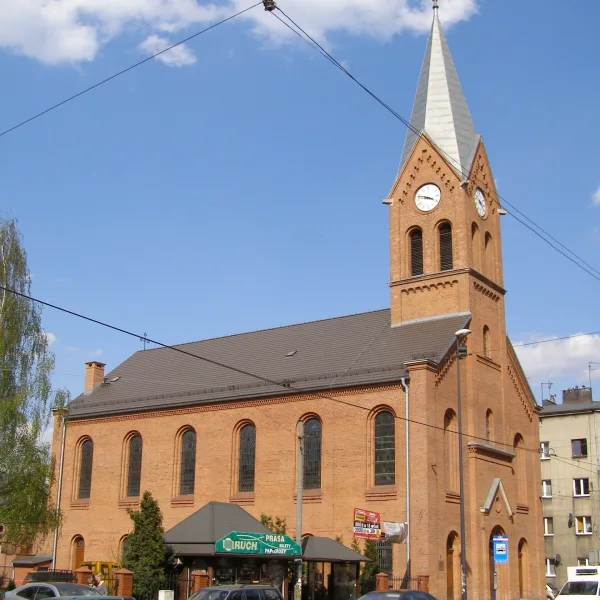
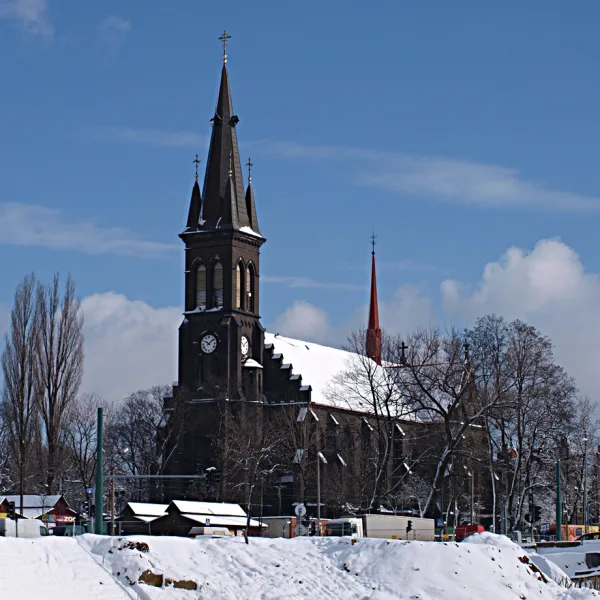
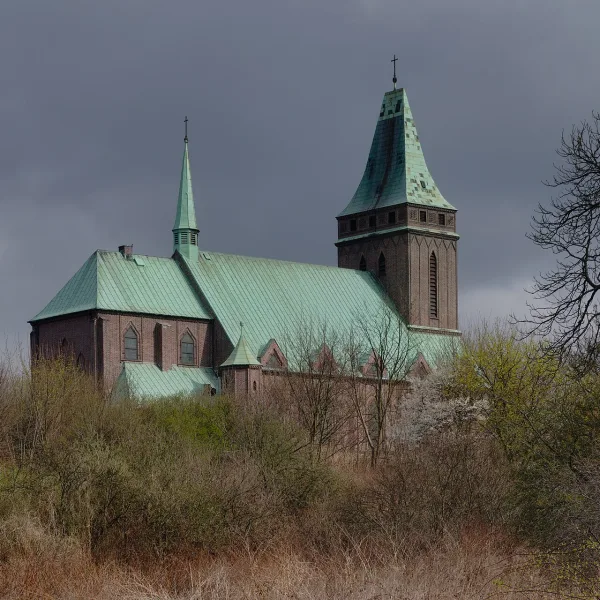
Zabrze has more churches than most visitors assume, and many are valuable architecture: wooden, brick, Expressionist and modern. They suit solo walks, because each takes only a quarter of an hour or so.
Wooden and unusual
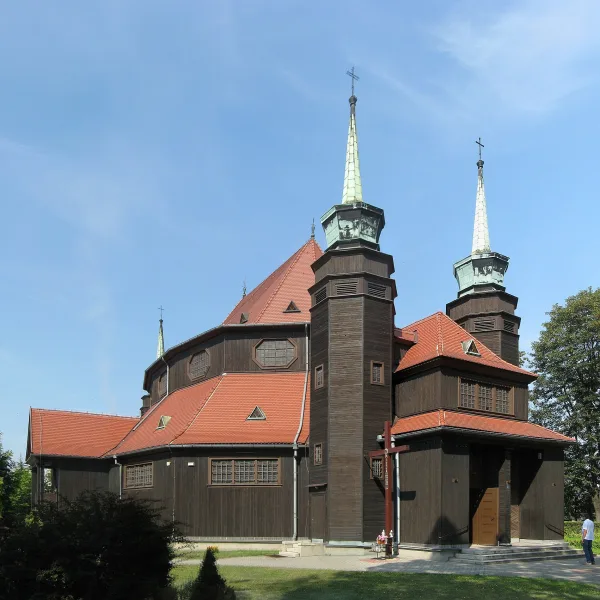
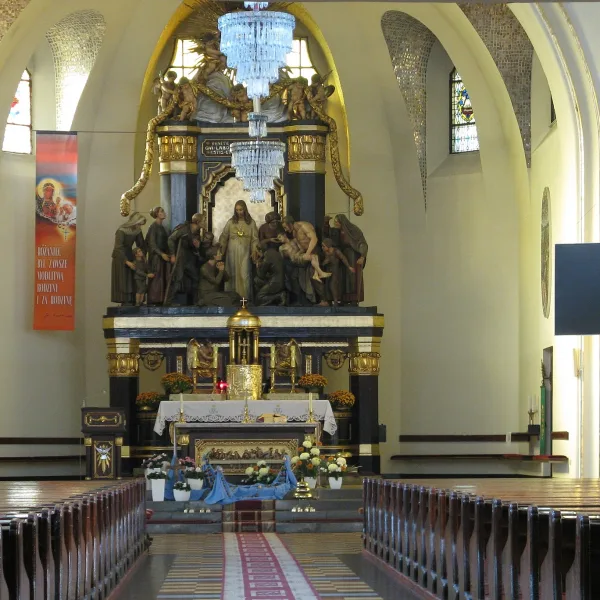
St Hedwig's Church at Wolności 504 stands out: a timber church from 1928-1929 with an oval, twelve-sided outline and four towers; it belongs to the Wooden Architecture Route. The Lutheran church in Mikulczyce of 1937 is also wooden, among the most recent timber churches around. St Matthias's Church in Maciejów dates from the 1930s, modelled on the wooden churches of Upper Silesia, and mining subsidence has harmed it. The history of St Camillus's church is unusual too: the Camillians fitted it out in 1928 in an adapted theatre hall, and the interior was designed by Dominikus Böhm.
Brick and modernist
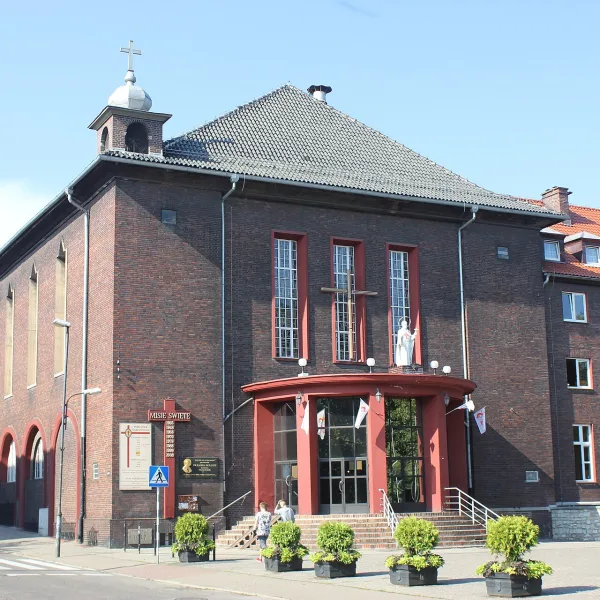
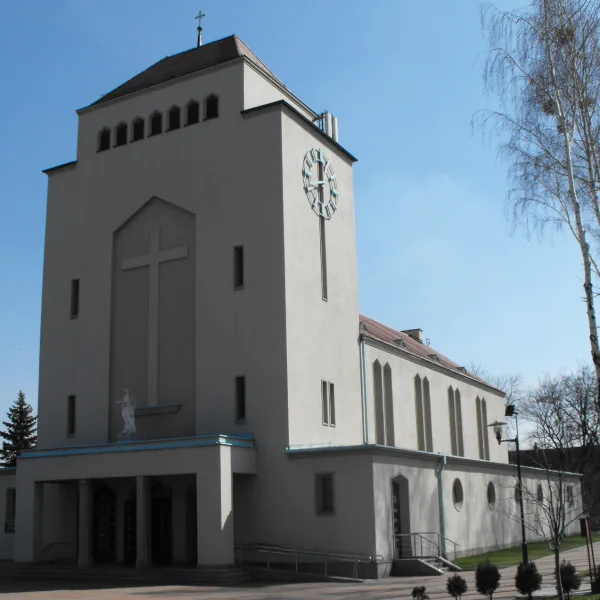
Dominikus Böhm also designed St Joseph's Church on Roosevelta Street, a brick building of 1930-1931 regarded as an interesting example of modernism and brick Expressionism. In Biskupice stands the Assumption church, built in 1928-1929 in brick Expressionism; its organ has 33 stops. Mikulczyce adds the modernist church of St Thérèse by Theodor Ehl of Bytom, and in Pawłów the Neo-Baroque St Paul's Church, raised in 1929-1933.
From the 19th century
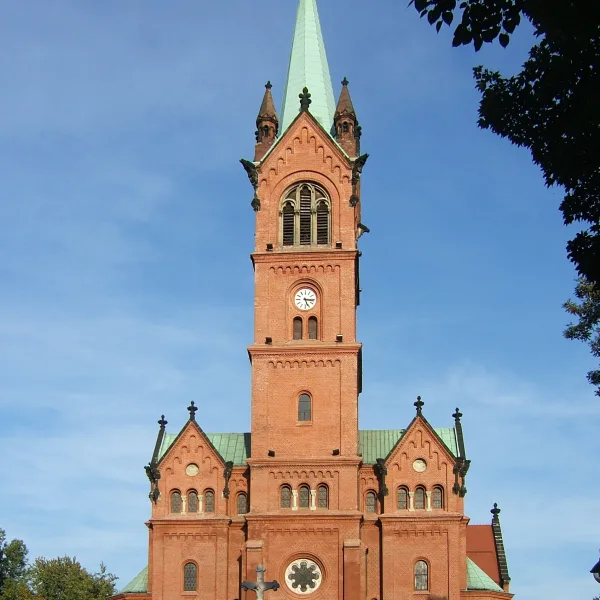
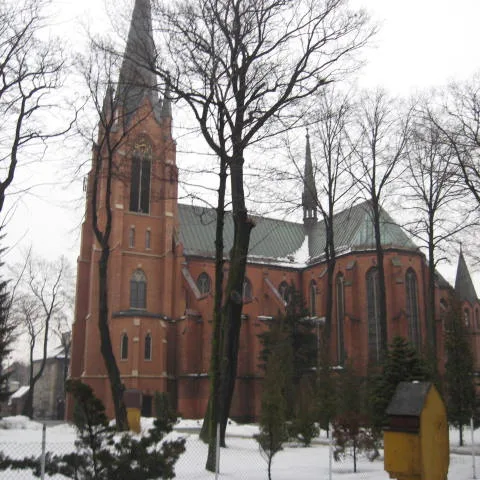
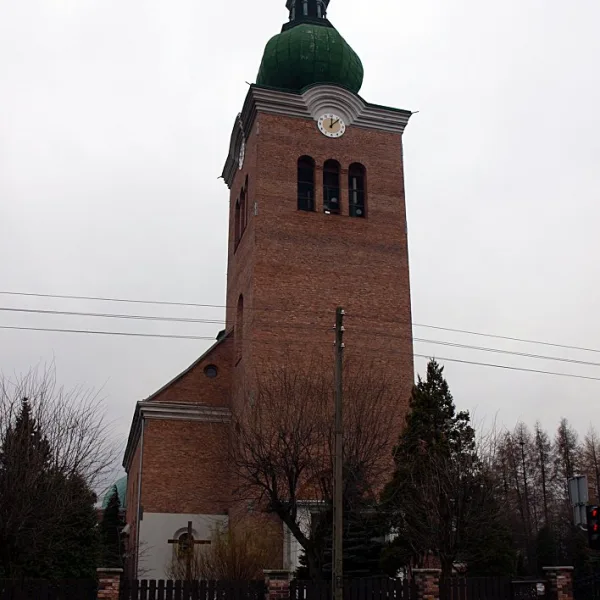
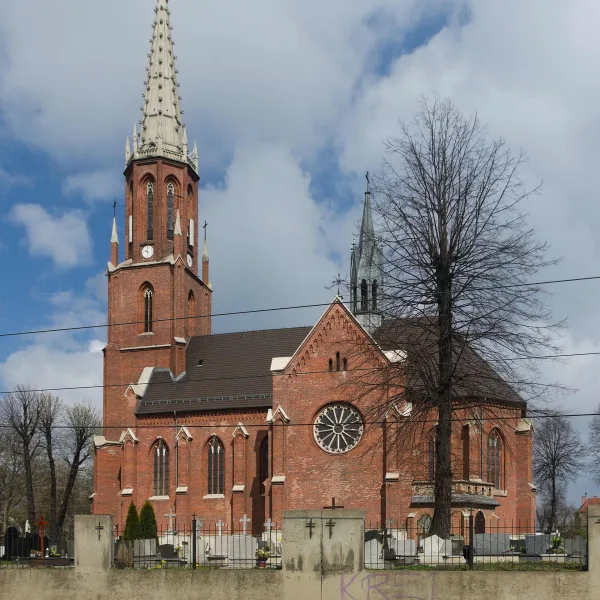
The oldest sacred building of the city is St John the Baptist's Church in Biskupice, Neo-Gothic, built in 1853-1857 with funding from the Ballestrem family, who rest in the crypt. The Neo-Gothic church of St Lawrence stands on Church Hill in Mikulczyce and rose in 1892-1894 to a design by Paul Jackisch. St Andrew's Church is a Neo-Romanesque sandstone building consecrated in 1868, with a Rieger organ of 1936, and the Church of Peace on Lutra Street is a Neo-Romanesque Protestant church of 1874. The Neo-Gothic church of St Francis on Wolności Street, of 1884-1885, has two towers 67 metres high. Further stops are St Anne's in the former village of Dorota and the Church of the Sacred Heart in Rokitnica, a big three-nave church of 1911-1912.
After 1945 and unusual conversions
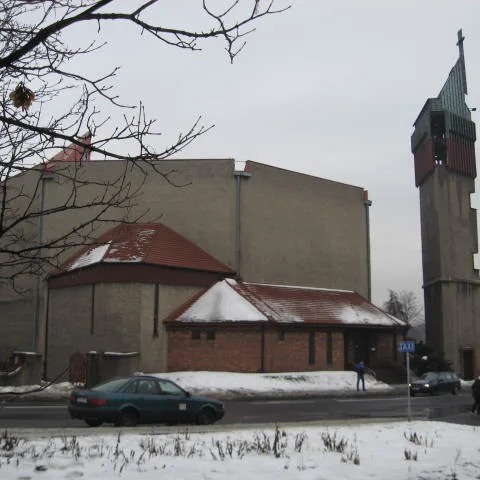
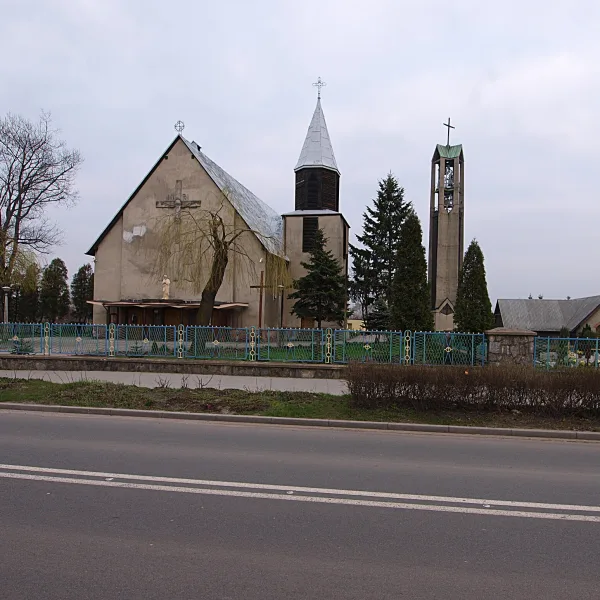
In Helenka stands the church of Mother of the Church from 1980-1988, and the Franciscans' brick church on Franciszkańska Street, built between 1982 and 1988, has one tower and a 45-stop organ. In Grzybowice the parish of Our Lady of the Rosary has worshipped in a converted barrack since 1945, with a new church going up alongside. In Guido, St Anthony's parish took over a rebuilt inn in 1931, and its altars of the 17th century come from the old timber church. Also see the Protestant chapel in the Borsigwerk colony, from 1870. Beware of namesakes: the Sacred Heart and Assumption dedications have churches in Bytom too, so check the town before you set off.
How to plan one day in Zabrze?
Two streets organise the plan: 3 Maja Street and Wolności Street. On the first lie three museums, on the second the Queen Louise grounds, three churches and a modernist hotel.
On 3 Maja Street stand the Guido mine (number 93), the Coal Mining Museum (19) and the Municipal Museum (6), so a day under a roof can be built along one axis. Wolności Street runs from St Francis's church with its two tall towers past St Andrew's (189) and the Admiralspalast hotel (305) to Queen Louise (408-410) and St Hedwig's (504). It is an order that comes from house numbers, which leaves time for pauses in churches along the way.
Does Zabrze have palaces, manors and medieval traces?
It does, though not all can be entered. The palace in Mikulczyce on Lipowa Street counts as the oldest surviving building in Zabrze; it is brick, with a mansard roof and a triangular projection. In Rokitnica stands a manor house at Żniwiarzy 2, brick, built in the later 1800s, with a tower of three storeys.
Medieval traces are two motte-type mounds from the 13th to 15th centuries: in Mikulczyce, an overgrown bank studied by archaeologists in 1970-1972, and in Rokitnica, by a pond, on the “Gajdzikowe Górki” path. From a different era comes the modernist Hotel Admiralspalast at Wolności 305, with a dome on the corner, designed by Berlin architects, with a ballroom and a roof garden.
Where in Zabrze for a calm walk by the water?
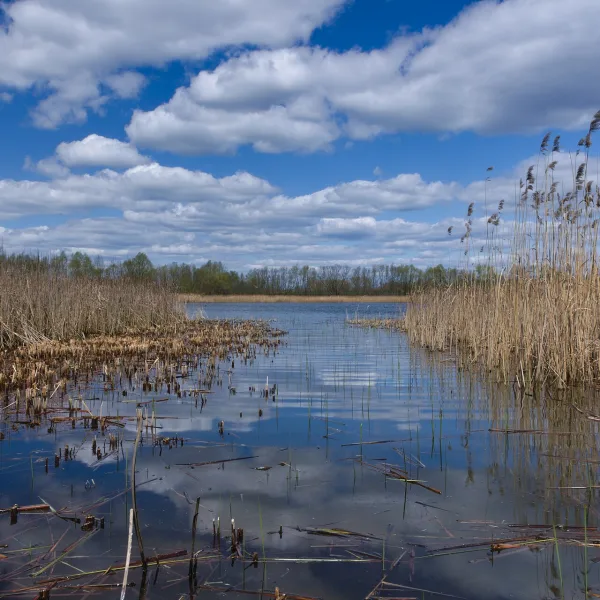
For water, head to Anaszacht (the Madejski reservoir) in the Biskupice district. It is a shallow lake of about 6.5 hectares, suitable for a short walk after visiting the church in Biskupice. For green spaces across the region, see Botanical gardens, arboreta and themed gardens of Silesia; Zabrze appears there beside Radzionków, Racibórz and Gliwice.
Frequently asked questions
Where to start exploring Zabrze alone?
With the Coal Mining Museum and its sites: Guido, Queen Louise and the water tower. Later you can add churches and the manor in Rokitnica.
What to see in Zabrze when it rains?
The Municipal Museum, the Coal Mining Museum, the Military Technology Museum, the Museum of Vintage Vehicles and the underground routes. Churches also offer shelter.
Are there wooden churches in Zabrze?
Yes: St Hedwig's of 1928-1929, the Lutheran church in Mikulczyce of 1937 and St Matthias's in Maciejów from the 1930s.
Which places in Zabrze are good for families?
Guido, the adit and the Carnall Shaft are routes that can also be offered to children. The vehicle museum joins them.
Where in Zabrze can I get a view from above?
From the platform on the water tower and from the tower at the Carnall Shaft; both belong to the mining museum routes.

 Industrial heritage