Architecture in Katowice: modernism, neo-Gothic, workers' estates and mine shafts, from the Superjednostka to Nikiszowiec and the Silesian Parliament building.
Katowice grew fast, so it kept buildings from several eras side by side: brick churches from the late nineteenth century, the industrial estates of the Zillmann brothers, modernist towers and tenements of the 1930s, and bold postwar forms. Below we point out what to see and how to join it into a route. For a wider view of the region see architecture in Silesia, and for every place in the city see things to do in Katowice.
What architecture is worth seeing in Katowice?
Three currents are the most interesting: interwar modernism with its towers and tenements, brick industrial architecture with workers' estates, and neo-Gothic and neo-Baroque churches. Most buildings stand in Śródmieście (the city centre), but the most atmospheric industrial complexes lie in Szopienice, Giszowiec and Nikiszowiec, and single gems are scattered through Załęże, Bogucice and Dąbrówka Mała.
Many sites are viewed from outside, because they now serve other purposes: offices, public administration, medical care or housing. A tour of the city therefore calls for good shoes rather than tickets, and it is worth reading each description to check what the interior holds today.
Where to start with modernism in Katowice?
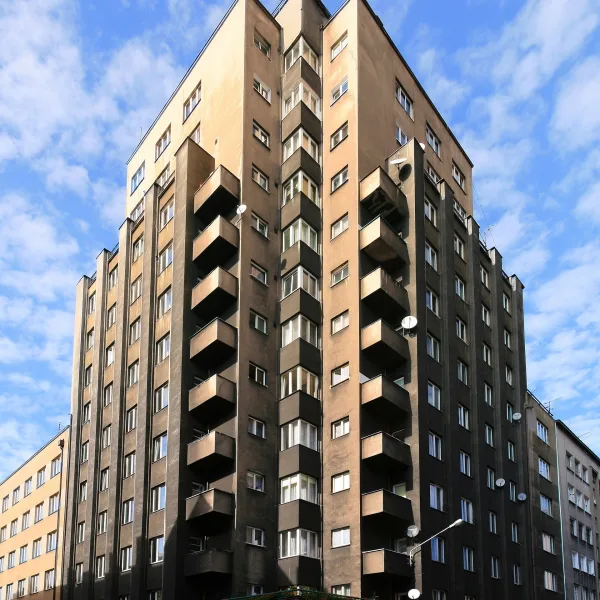
Start with Drapacz Chmur at Żwirki i Wigury 15, a former tax office. The fourteen-storey tower finished in 1934 was built on a steel frame, which was a novelty then, and together with the Prudential building in Warsaw it ranked high among the country's tallest buildings. The tower is listed as a monument and regarded as a textbook case of functionalism.
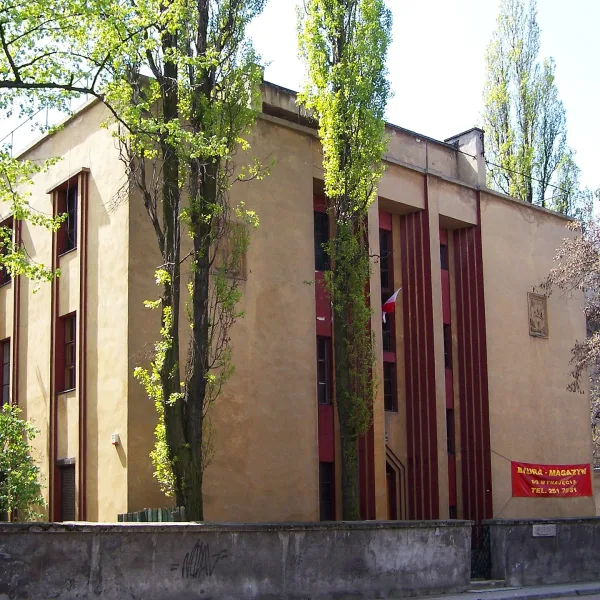
Nearby stands Wędlikowski House at PCK 10. Stanisław Gruszka's design of 1937-1939 is a five-storey tenement on an L-shaped plan, with a rounded corner and the original staircase. The architect's own home, Tadeusz Michejda's Villa of 1926-1930, belongs to Katowice's Modernism Trail and was Michejda's first independent project in the city.
Postwar giants
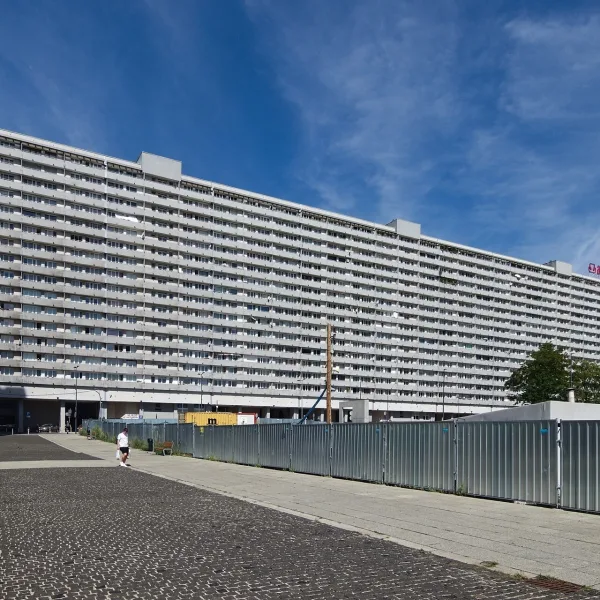
Three landmarks date from the People's Republic. Spodek, the work of Maciej Gintowt and Maciej Krasiński, was inaugurated in 1971, and its body is covered with aluminium scales. The Superjednostka, a giant residential slab along Korfantego avenue (1966-1970), measures 187.5 metres and holds 764 flats on eighteen levels. The .KTW complex in Koszutka consists of two office towers beside Spodek; the interiors are closed to visitors, but you can walk around the block and the square. By General Ziętek roundabout stands Rondo Sztuki, an exhibition space run by the Academy of Fine Arts, high inside a hemispherical building opened in 2007.
What do the churches of Katowice look like?
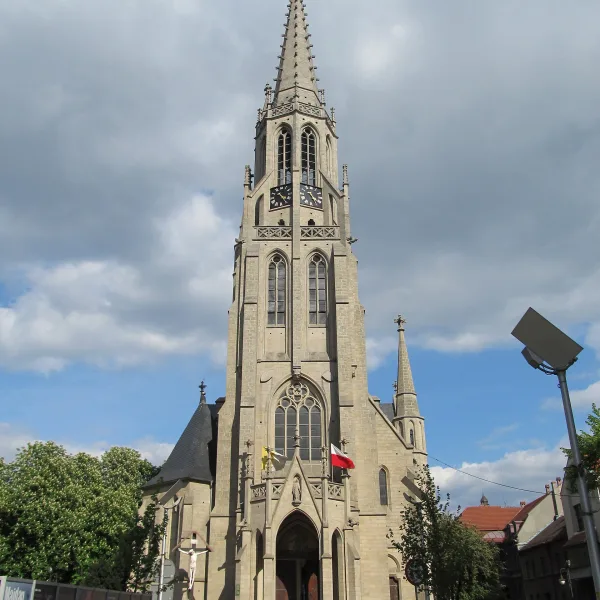
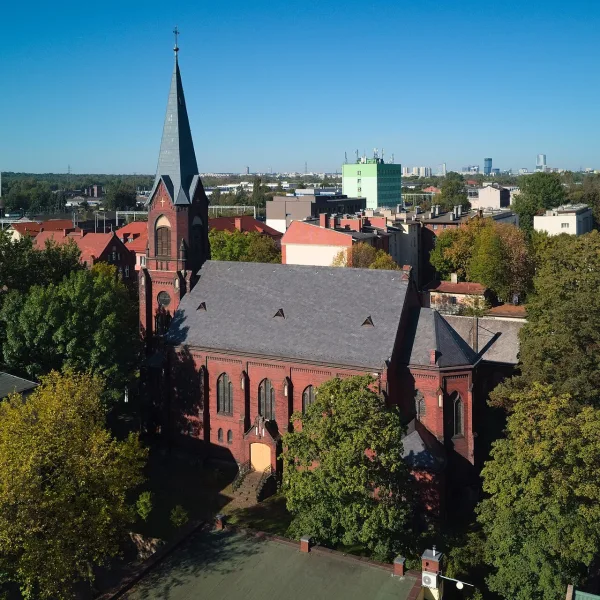
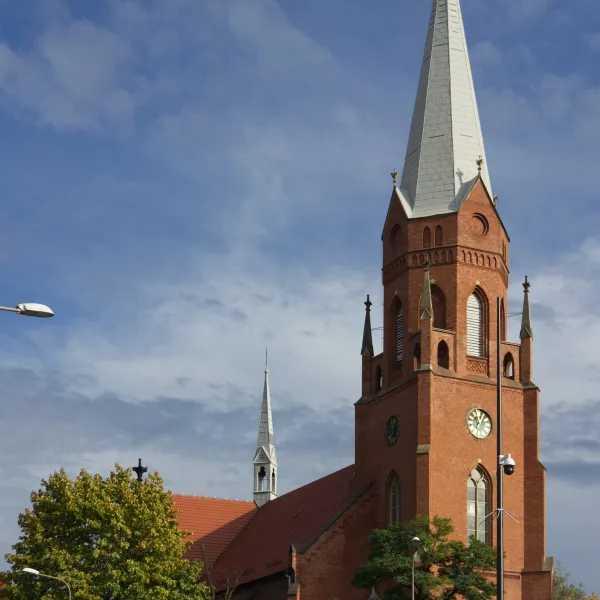
Churches are a separate chapter of the urban story, because they show how styles changed. The oldest surviving brick church in the centre is the neo-Gothic Mariacki Church of 1862-1870, with a tower 71 metres high, designed by Alexis Langer. The Church of Saints Peter and Paul on Mikołowska rises 86 metres and for two decades of the twentieth century served as the cathedral.
The church that replaced it is the Cathedral of Christ the King, with its dome, portico and Monument of History status since 2017. Next to it stands the Bishop's Palace of 1927-1933, designed by the same architects, Zygmunt Gawlik and Franciszek Mączyński; it is now the seat of the curia, so you look at it from outside.
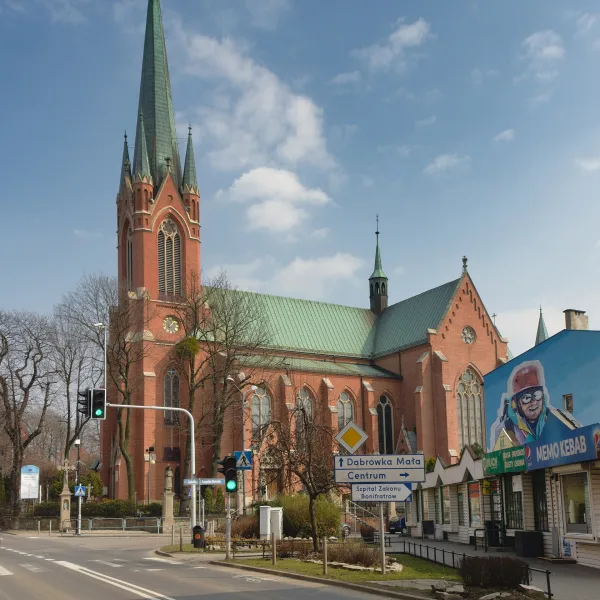
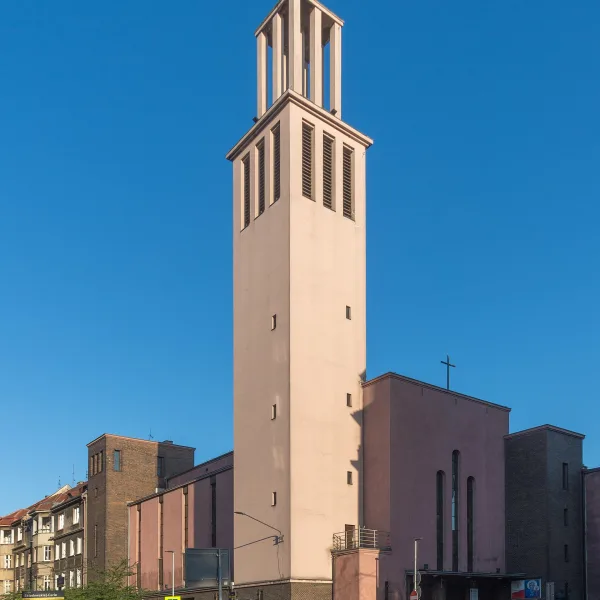
The districts hold more good examples. In Bogucice rises the neo-Gothic Basilica of St Stephen, in Załęże the brick St Joseph's Church by Ludwig Schneider, and in Dąbrówka Mała the neo-Baroque church of St Anthony of Padua from 1911-1912. The Church of Divine Providence in Zawodzie looks more modern, a brick and reinforced-concrete design by Tadeusz Łobos from 1930-1931. In Panewniki stands the Franciscan basilica, and in Nikiszowiec St Anne's Church with two towers. An exception is the wooden Church of St Michael the Archangel, from around 1510, in Kościuszko Park; you can read about the regional trail of such churches in the article on wooden churches of the sixteenth to eighteenth centuries.
Where to see the industrial architecture of the Zillmann brothers?
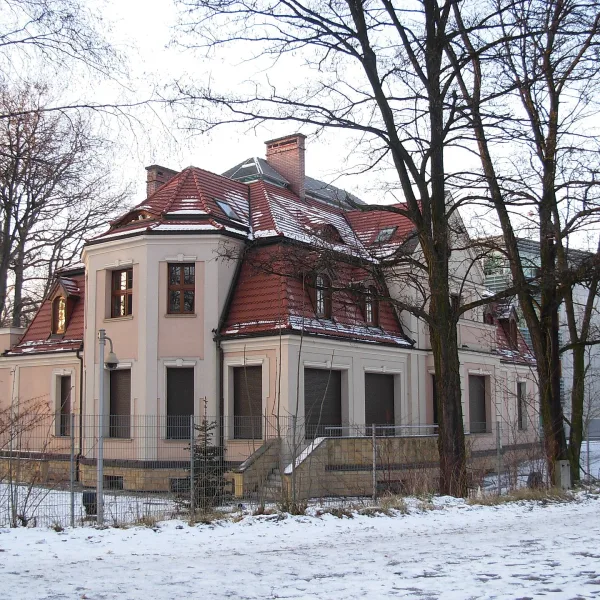
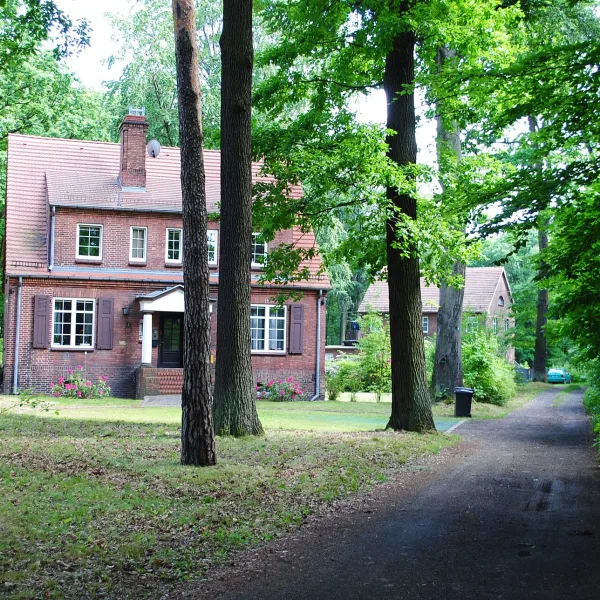
Emil and Georg Zillmann, architects from Berlin, drew up estates and buildings for the firm Georg von Giesches Erben. You see this most fully in Nikiszowiec, where tightly packed red-brick houses (1908-1919) earned the Monument of History title in 2011. Farther on, in the villa of the Giesche mine director at Pszczyńska 10 in Giszowiec, you will see a brick residence of 1910. The same district has a water tower about 33 metres high, and along Górniczego Stanu street the American colony, where half a dozen villas in an English manner housed SACO's American managers in 1927-1928.
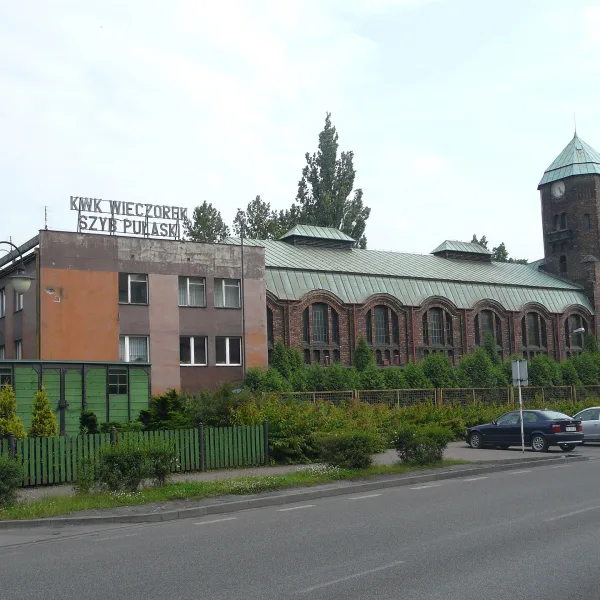
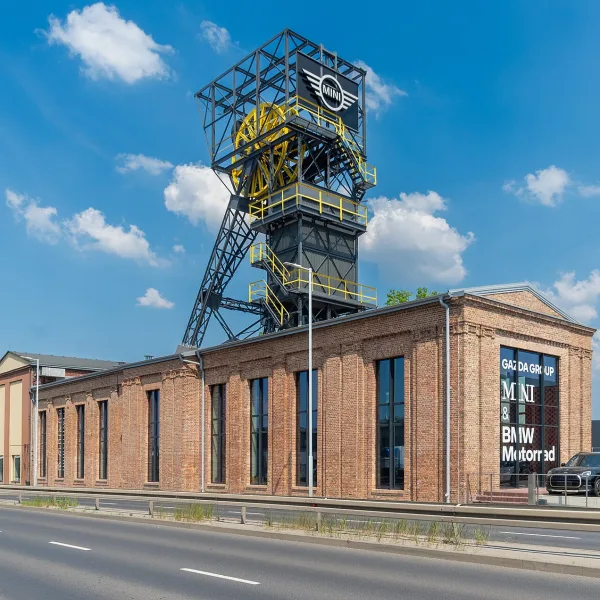
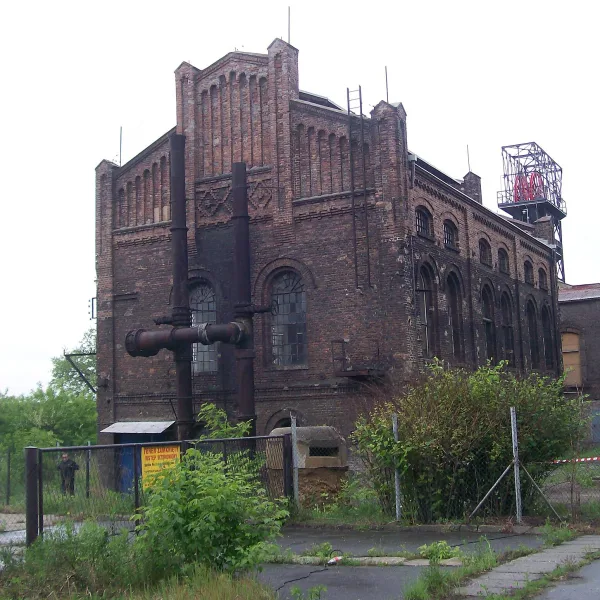
Traces of the mines survive in several places. The Pułaski shaft complex of 1903-1911 has a forty-metre steel headframe; the original shaft was called Carmer. The Wschodni II shaft at the Kleofas mine has a steel tower with a brick shaft building from 1913-1916. In Szopienice it is worth combining the Rolling Mill - Museum of Zinc Metallurgy with two water towers: the reinforced-concrete tower of the former works from 1912, unused and open to view only from outside, and the Art Nouveau-modernist tower on Korczaka street, 68 metres high. Similar designs by the Zillmann brothers can be seen in Bytom, in the Szombierki power station covered in our article.
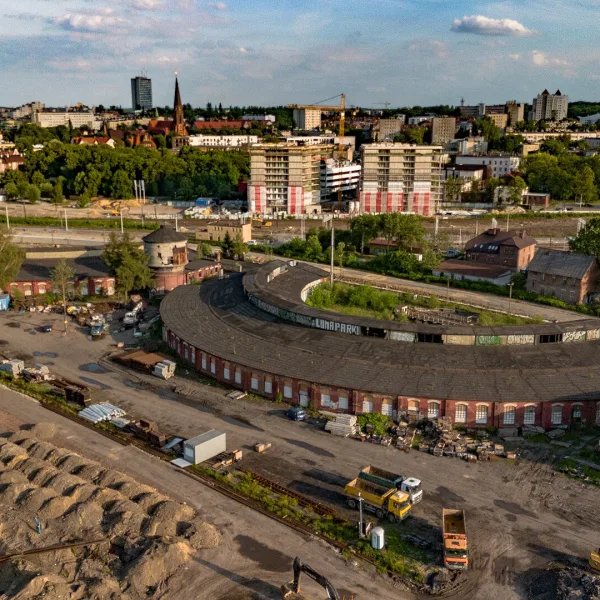
An abandoned railway landmark is Katowice Locomotive Shed on Raciborska street, with two fan-shaped halls of 1900. It is out of use, so you look at it from a distance and do not enter.
Which palaces and public buildings can you admire from outside?
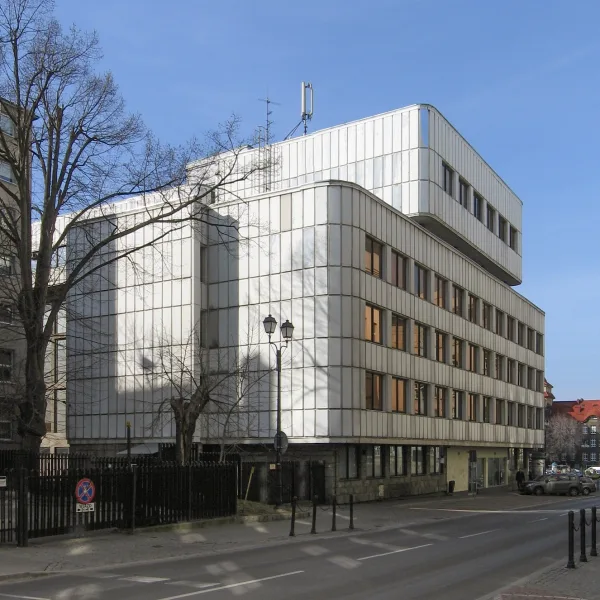
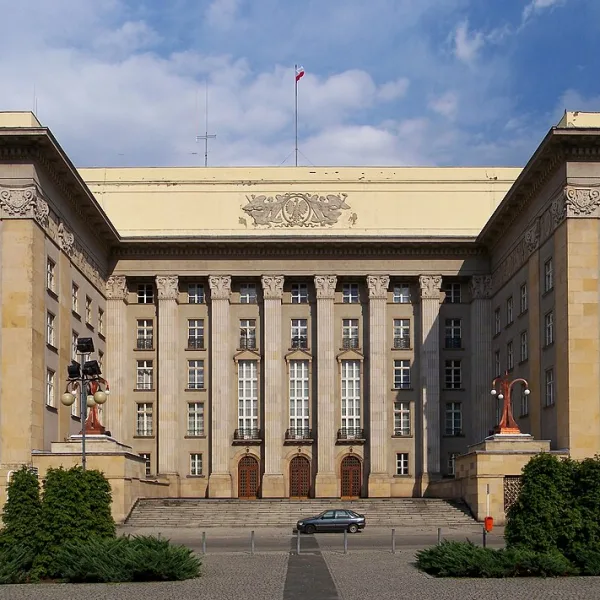
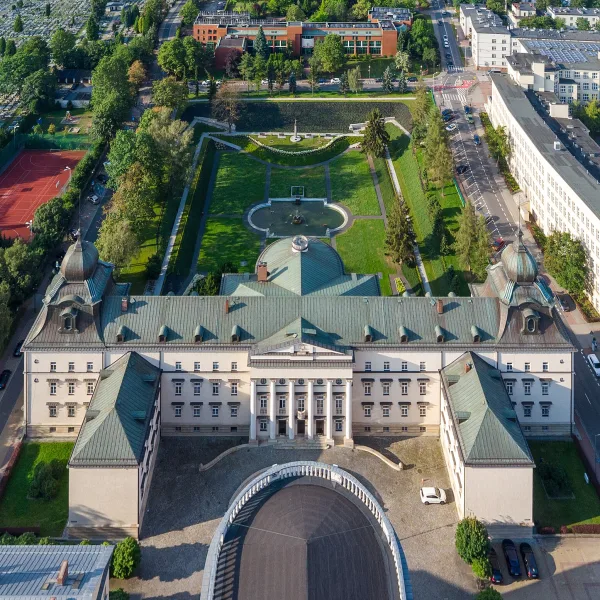
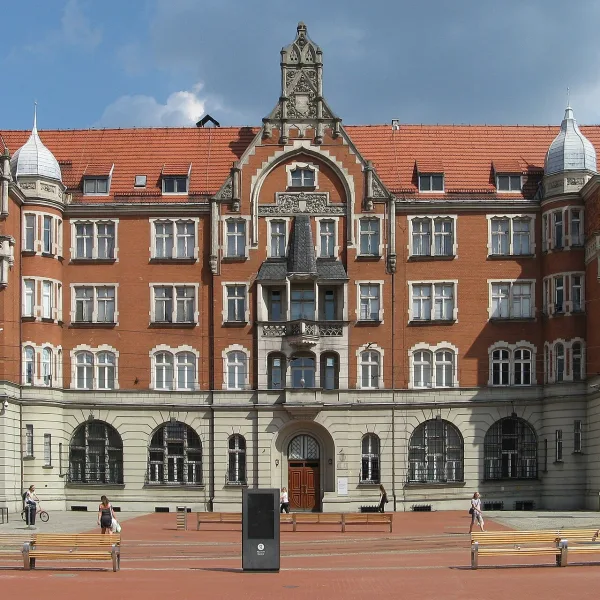
Śródmieście has several buildings you know from photographs. The Hotel Monopol of 1902, in white clinker brick, still receives guests. The Silesian Parliament building of 1924-1929 is a neoclassical Monument of History and a symbol of the voivodeship's autonomy; offices work there now. The building at Korfantego 3 is the former Grand Hotel, from 1984 to 2018 the seat of the Silesian Museum, and today a technical building closed to visitors. The Goldstein Palace of 1872 houses a registry office.
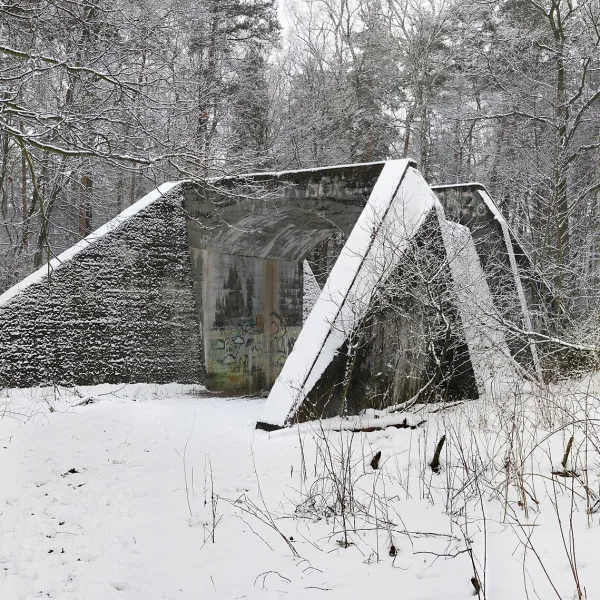
In Załęże add the palace of 1886-1887, now a private hospital, and the brick Załęże town hall of 1897, with a clock in the gable. Dąbrówka Mała hides the Tiele-Winckler manor farm, whose eastern wall carries the year 1853. In Podlesie you will see the historic bridge over the Mleczna river of stone and brick, and the Gypsy Bridge hidden in the forest, a disused railway viaduct of reinforced concrete from around 1918, over which no train ever ran.
What stands behind the most famous buildings?
Behind several buildings stand stories that change the way you look at their facades. Spodek was chosen in a closed competition of 1960 and opened on 8 May 1971; today an ice rink and a swimming pool work inside. The Superjednostka began as the Compact Housing Unit and until 1973 was the largest residential building in Poland, until the Falowiec in Gdańsk surpassed it. Its flats vary in size, from compact two-room flats of 38 square metres to larger ones.
The Hotel Monopol rose on the site of the two-storey Ollendorf villa of 1860, which Arnold Lustig bought in the late 1890s; the older part on Dworcowa was built in 1901-1902. No other administrative building raised in interwar Poland has a larger cubic volume than the Silesian Parliament, and the Organic Statute granted the voivodeship autonomy in 1920. The Goldstein Palace was put up by the brothers Abraham and Josef, who ran sawmills across the old Prussian and Russian frontier; after a fire in 1892 they moved their firm out of Katowice. The Mariacki Church, meanwhile, is the oldest brick church in the city, and plans for the parish reach back to the middle of the nineteenth century.
What can you also enter?
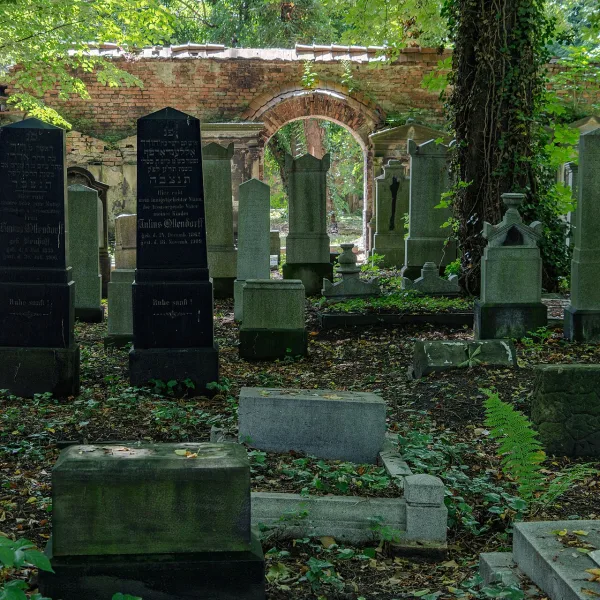
You can go inside in several places on this list: the Silesian Museum in the former Katowice mine is largely underground, and Spodek works as an events arena. Churches are open for worshippers, and Katowice City of Gardens on Silesian Parliament Square runs music and visual festivals. The historic Jewish cemetery at Kozielska 16, from 1869, is still in use, and its gate, funeral building and gravestones are protected.
How to plan an architecture route in Katowice?
Plan the first day in Śródmieście: Drapacz Chmur, Wędlikowski House, the Monopol, the Parliament and the Cathedral with the Bishop's Palace lie within a small radius. Devote the second day to the Zillmann estates: Nikiszowiec, the Pułaski shaft, Giszowiec with its villa, tower and American colony. The third is Szopienice with the Rolling Mill and the water towers. Załęże offers a church, a palace and a town hall on one street, Gliwicka, and Koszutka has Spodek, .KTW and Rondo Sztuki. For lovers of unusual places add a day in Podlesie with its bridges. If you have only a few hours, choose one group: the estate and Pułaski shaft, or the centre with its tower and churches. That way you see more and spend less time travelling between districts.
Frequently asked questions
What architecture should you see in Katowice?
Drapacz Chmur, Spodek, the Superjednostka, the Cathedral, the Silesian Parliament building and the estates of Nikiszowiec and Giszowiec. These five or six places give a picture of the city.
Which buildings in Katowice are modernist?
Drapacz Chmur, Wędlikowski House, Michejda's Villa and the Church of Divine Providence are modernism from 1926-1939. The postwar forms are Spodek and the Superjednostka.
Can you visit the palaces of Katowice?
Not all of them. The Goldstein Palace houses a registry office, the Załęże palace a private hospital, and the Bishop's Palace the curia. You see them from outside.
Who designed Nikiszowiec?
Georg and Emil Zillmann, architects from Berlin, drew it, and they also planned Giszowiec and St Anne's Church.
Can you enter all the industrial heritage sites?
No. The water tower of the former works in Szopienice is unused and the Locomotive Shed is out of service. You can visit the Rolling Mill - Museum of Zinc Metallurgy as a museum.
How big is the Superjednostka?
The block of 1966-1970 is 187.5 metres long, with eighteen storeys and 764 flats, so on the street it looks like a district of its own.
Where to start sightseeing in Śródmieście?
At Drapacz Chmur on Żwirki i Wigury, then Wędlikowski House, Hotel Monopol and the Silesian Parliament building. They all lie close together, and you can see them in half a day.

 Churches and monasteries