Churches and monasteries in Katowice: from the archcathedral and the Panewniki basilica to a 16th-century wooden church in Kościuszko Park.
Katowice has more than fifty churches and monasteries worth knowing: neo-Gothic churches in the city centre, brick parish churches of the mining estates, basilicas and new parishes from the 1980s. The easiest way to explore them is district by district, because neighbouring addresses suggest a route.
Most of them are active parish or monastic churches. When you go inside, follow the opening habits of each parish and view the buildings from the outside during services. A wider choice of churches in the region is in the category Churches and monasteries in Silesia, and other places in Katowice are in the section Things to do in Katowice.
Which churches in Katowice should you see first?
Begin with three addresses: the Cathedral of Christ the King, the Panewniki Basilica and St Anne's Church in Nikiszowiec. Each comes from a different part of the city and a different era, so together they give a good picture of Katowice's sacred architecture.
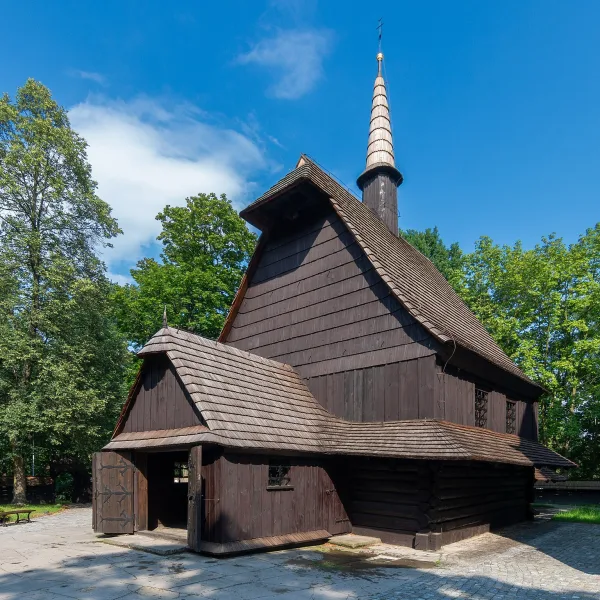
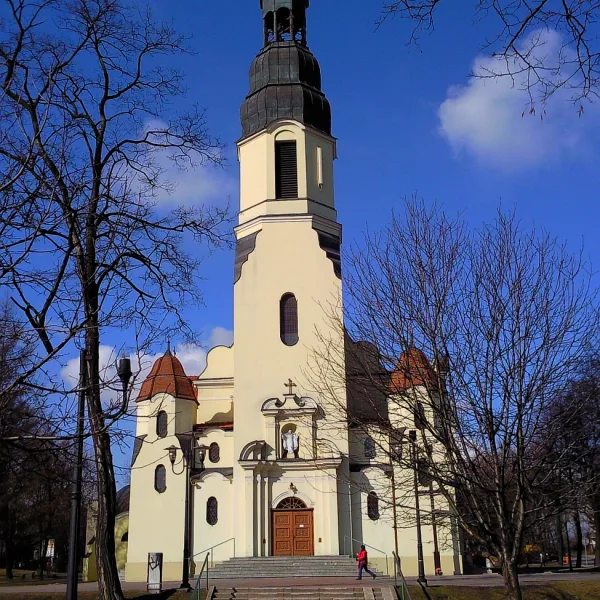
If you want the oldest building in the city, go to Kościuszko Park, where the wooden Church of St Michael the Archangel stands. It was probably built in 1510 in Syrynia near Wodzisław Śląski, then dismantled in 1938 and moved to Katowice. Since 1997 it has been a branch of the Museum of Katowice History, yet it still works as a parish church. The article Kościoły, które się przeprowadziły (in Polish) tells of similar moves.
Which churches stand in the city centre?
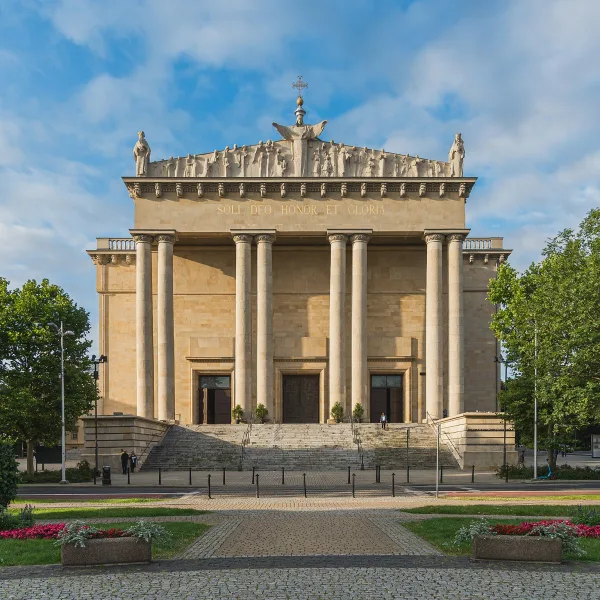
The Śródmieście district holds eight churches and monasteries, and several are a short walk apart. The Cathedral of Christ the King at Plebiscytowa 49 is a monumental building with a dome and a portico of eight Corinthian columns. The Katowice diocese was founded in 1925, but the church was consecrated only in 1955, after more than a quarter of a century of building. The architectural competition drew 37 entries, and in 2017 the cathedral complex was named a Monument of History.
The Church of the Immaculate Conception of the Blessed Virgin Mary (St Mary's Church) on Plac ks. Emila Szramka closes the view from the east end of Mariacka Street. It is the oldest surviving Catholic church in the city centre and the oldest brick church in the city, a neo-Gothic building of 1862-1870 designed by Alexis Langer, with a 71-metre tower.
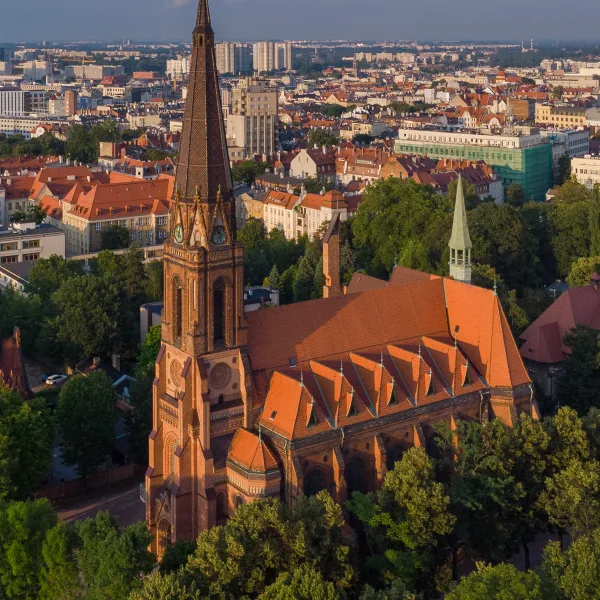
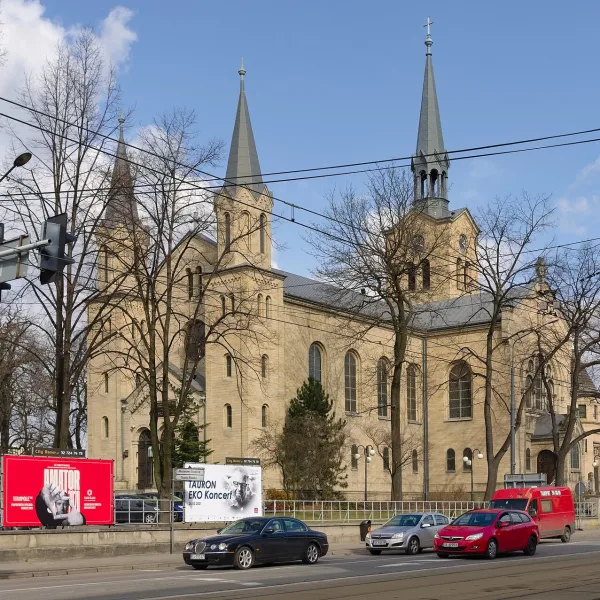
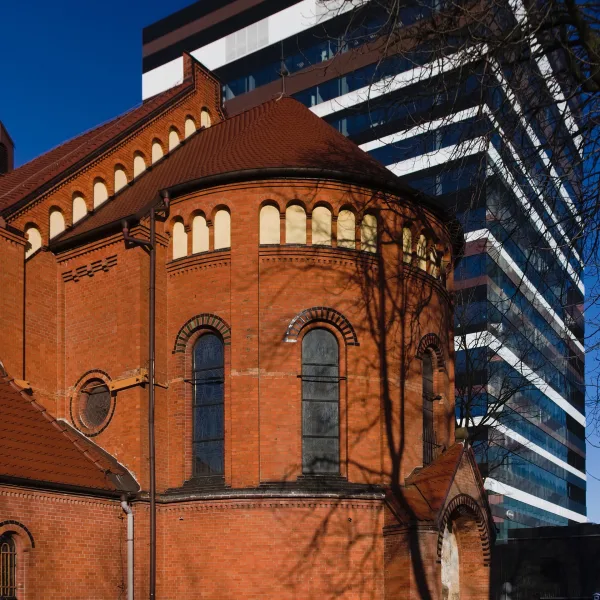
The Church of Saints Peter and Paul on Mikołowska Street is a neo-Gothic brick church built in 1898-1902, with a tower 86 metres tall. For more than thirty years it served as the cathedral, before that title passed to the Church of Christ the King.
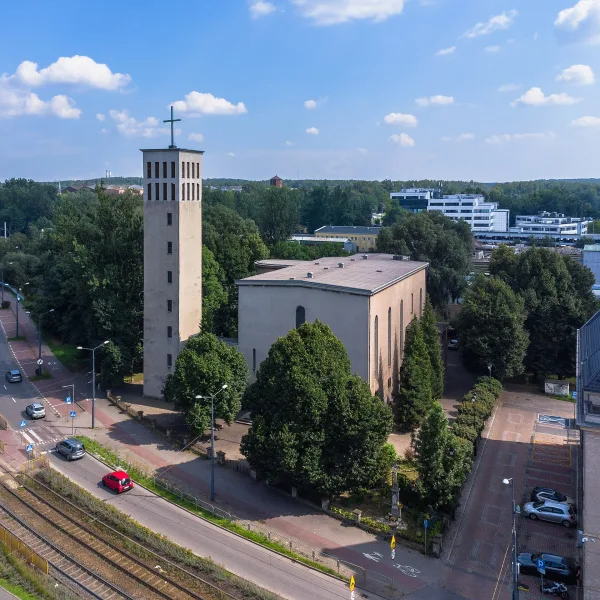
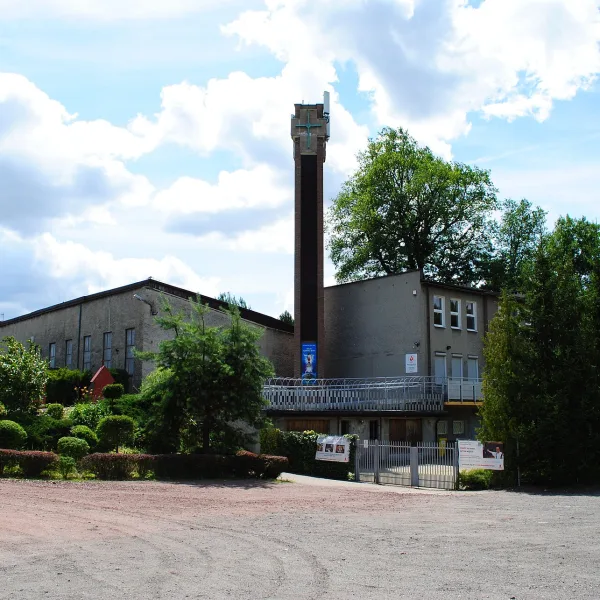
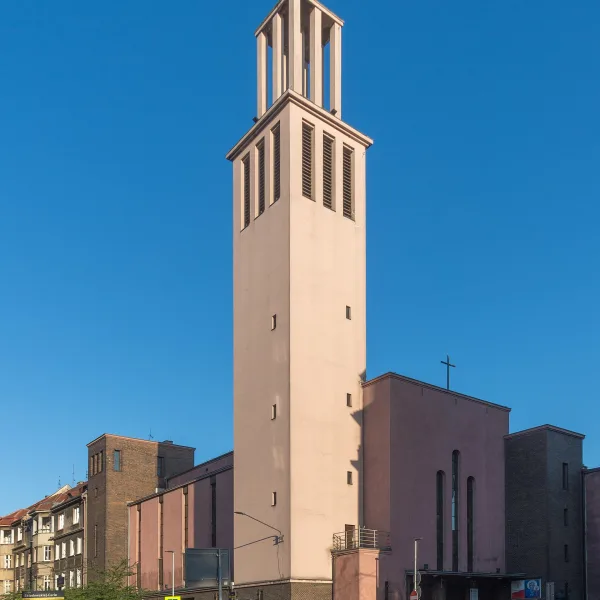
The Church of St Casimir the Prince at Kopernika 10 is quite different: a modernist garrison church of 1930-1933. Leon Dietz d'Arma designed it, and the brick building is recognisable by a single tall tower in its north-western corner. It is listed as a monument and keeps almost all of its original furnishings.
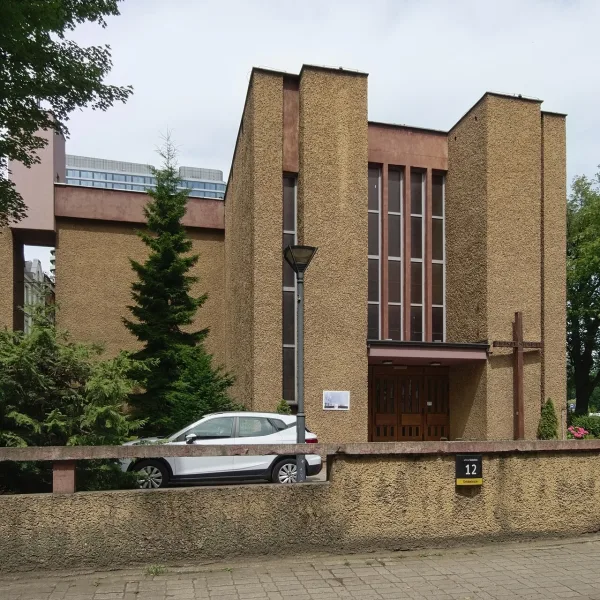
The district also has the Dominican Friary at Sokolska 12. The community has been there since 2012, attached to the parish of the Transfiguration, and the church itself passed to the Catholic community from the Old Catholics in July 1938.
What sets Panewniki, Ligota and Ochojec apart?
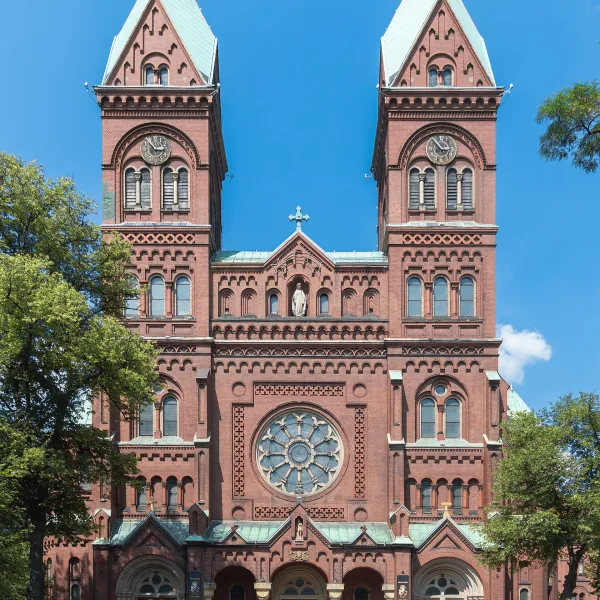
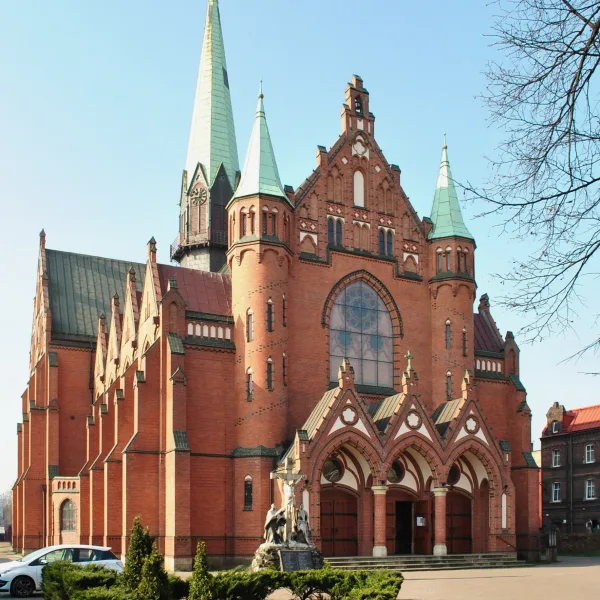
Panewniki is the city's main pilgrimage site. The Basilica of St Louis the King and the Assumption of the Blessed Virgin Mary at Panewnicka 76 is a neo-Romanesque Franciscan monastery church of clinker brick, built in 1905-1908. The title of minor basilica dates from 1974. The church is 76 metres long, with a facade 28 metres high and two towers of 48 metres each. It is a listed monument and known for its yearly nativity scene.
Behind the monastery lies the Panewniki Calvary, a group of chapels devoted to the Passion and to Mary, laid out in a park of about eight hectares. The year 1909 is taken as its beginning, and Father Wilhelm Rogosz consecrated the stations on 16 July 1911. The metal figures of Christ and the two thieves were set up on 4 April 1912.
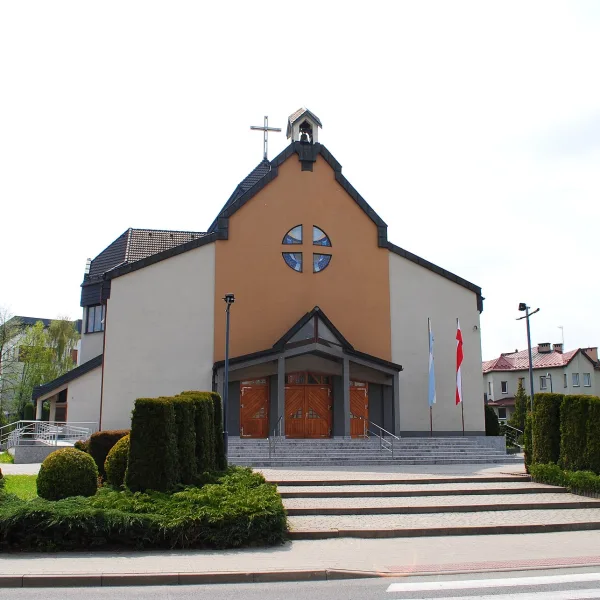
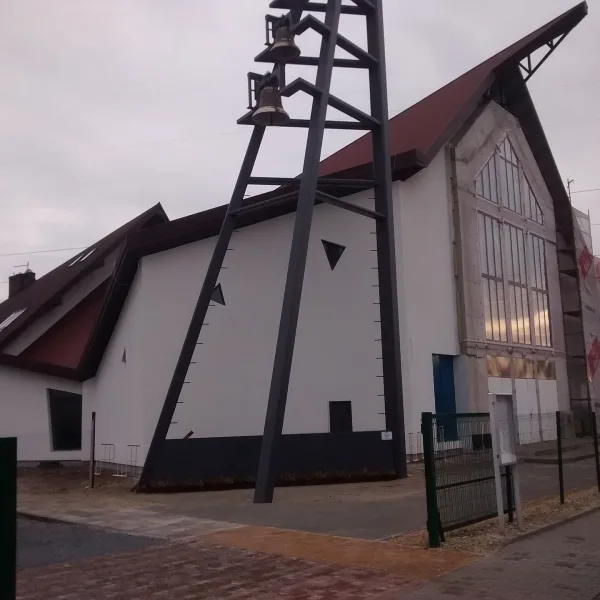
The same district has two churches dedicated to St Anthony of Padua. The new parish Church of St Anthony of Padua was built in 2019-2023 to a design by Grzegorz Ratajski and consecrated on 4 June 2023. The former church at Panewnicka 463 was created in 1958 inside a former restaurant, and the new one replaced it in 2023, so when visiting Panewniki check which address you need. The Church of Our Lady of the Rosary on Zadole Street was built in 1985-1992, and Pope John Paul II blessed its foundation stone at Muchowiec airfield in 1983.
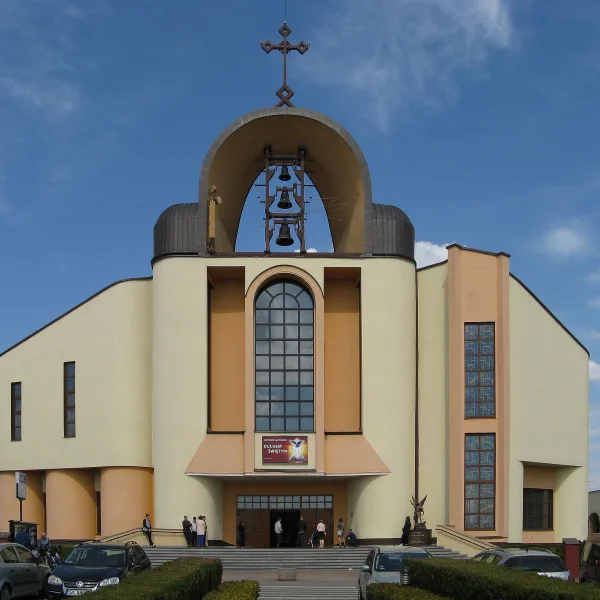
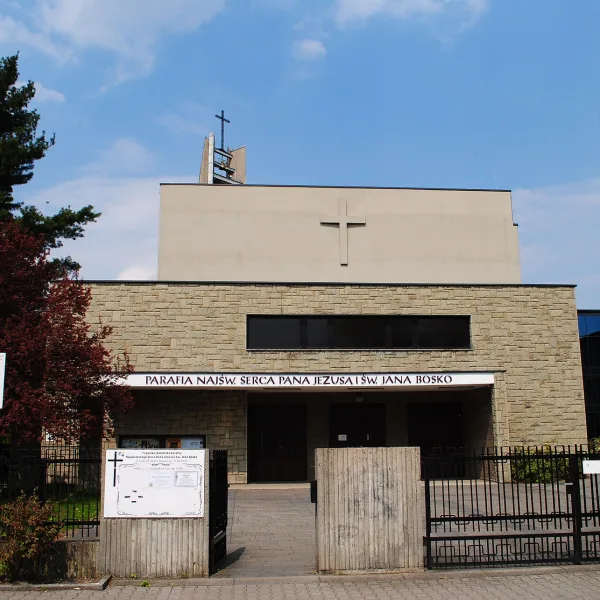
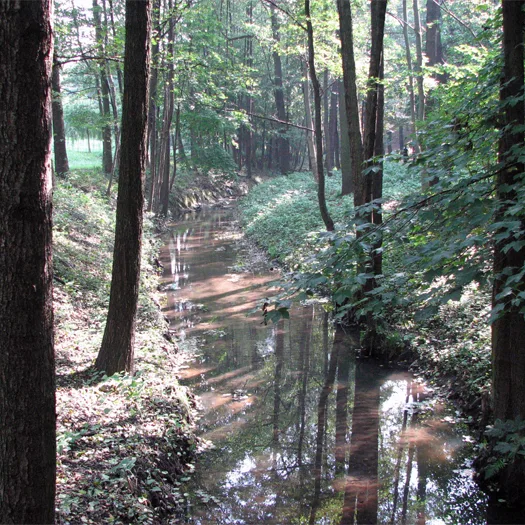
Piotrowice-Ochojec has four very different sites. St Hyacinth's Church took from 1937 until 1975 to complete, and has a chapel of St Maximilian Kolbe. The Church of the Sacred Heart of Jesus and St John Bosco of 1974-1979 was built by parishioners as voluntary labour, and the Church of the Most Holy Body and Blood of Christ was consecrated in 2004. In the forest between Giszowiec and Ochojec stands the Chapel of St Hubert, a brick rotunda with a shingle roof in a forest landscape complex. Accounts give two versions of its origin: 1906, on the order of the Prince of Pszczyna, or 1936, funded by the Silesian Riding Club.
What do the churches of the old mining estates look like?
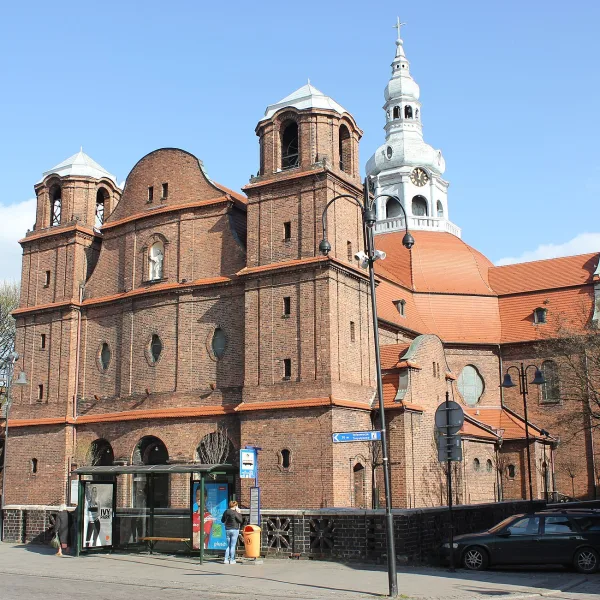
Nikiszowiec is Katowice's best-known workers' estate. St Anne's Church stands at its centre, on plac Wyzwolenia, a neo-Baroque church with two towers and a brick front, dedicated in 1927. It was designed by the Berlin architects Emil and Georg Zillmann, who planned the whole estate. The residents of Janów had been collecting money for their own church since 1901, and the mining company agreed to help only on condition that it would stand in Nikiszowiec.
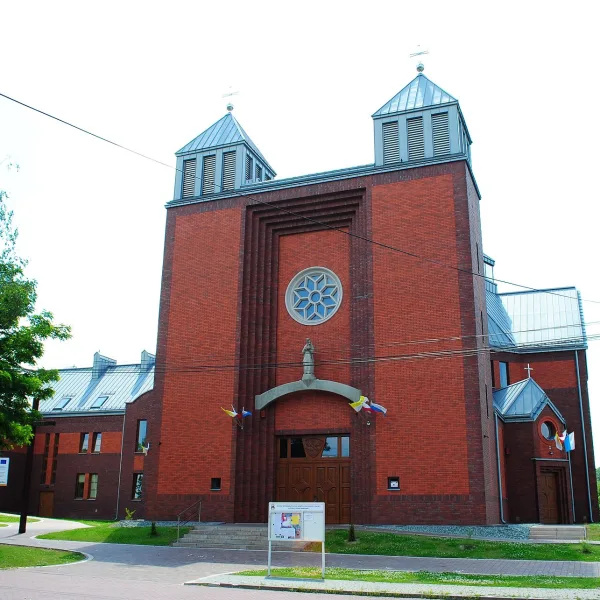
Giszowiec has two churches separated by two generations. St Stanislaus Kostka's Church on Górniczego Stanu Street is a small brick building with one tower, put up between 1946 and 1948 after plans by Jerzy Krug. St Barbara's Church on Młodzieżowa Street was built in 1983-1993, largely through community effort, and John Paul II blessed its foundation stone in 1983. It was consecrated on 23 October 1994.
In Dąb two sites lie along Chorzowska Street: the Church of Saints John and Paul at number 160, a neo-Romanesque brick church designed by Ludwig Schneider and built from 1901, and the Chapel of St Barbara by Silesia City Center. The chapel of 1920 is housed where the shaft machinery of the Eminenz mine once stood, and that mine closed in 2004.
In Wełnowiec-Józefowiec two churches invite comparison. The Church of St Joseph the Worker of 1935-1939 is neo-Baroque, and its silhouette is defined by a dome above the point where nave and transept meet. Earlier a temporary wooden church stood here, built in 138 days in 1919. The Church of Our Lady Help of Christians on Korfantego Avenue is housed in a former iron foundry from the early 19th century, rebuilt in 1930. The building had earlier been a warehouse and a shop.
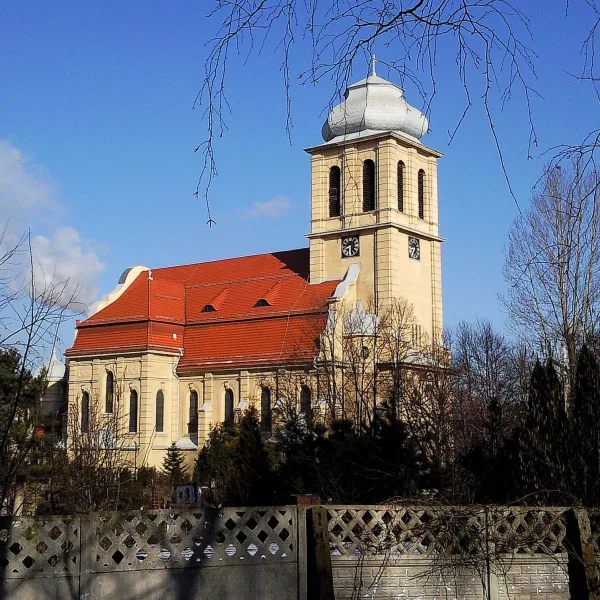
Other churches of the mining estates are the Church of the Sacred Heart of Jesus in Murcki, a brick building of 1931-1934 designed by the Kraków architect Zygmunt Gawlik, and the Church of St Hedwig of Silesia in Szopienice, neo-Gothic, built in 1884-1887, 43 metres high, with the Garden of Olives chapel of 1903. Szopienice-Burowiec also has the Church of Our Lady of Perpetual Help, a reinforced-concrete building whose foundation stone was blessed by the Pope in 1979.
Where to find the remaining district churches?
In Bogucice stands the Basilica of St Stephen and Our Lady of Bogucice on Markiefki Street. It is a neo-Gothic church of 1892-1894, listed as a monument, and since 2015 a minor basilica and a place of Marian devotion centred on the picture of Our Lady of Bogucice. In Zawodzie you will find the Church of Divine Providence, a modernist building of 1930-1931 designed by Tadeusz Łobos and added to the monument register in 2019.
In Dąbrówka Mała, on Niepodległości Avenue, stands the neo-Baroque Church of St Anthony of Padua of 1911-1912, with a tower on the facade and an organ of 1914. In Podlesie there is the brick Church of Our Lady of Częstochowa of 1921, whose main altar holds a copy of the Jasna Góra painting. In Koszutka the Oblates' church The Oblates raised it in 1936-1937 and enlarged it twice, in 1957 and in 1999.
Which churches of the 1980s and 1990s were built on new estates?
A large group of Katowice churches was built when the city grew by new housing estates. Osiedle Tysiąclecia has two: the two-level Church of the Exaltation of the Holy Cross and Our Lady Healer of the Sick of 1979-1994 on Mieszka I Street, and the Church of Our Lady of Piekary on Ułańska Street, consecrated in 1990. In Zarzecze there is the Church of Our Lady Help of Christians of 1981-1985.
Kostuchna offers both an older and the newest church: the Church of the Most Holy Trinity was consecrated in 1995, and its dedication is meant to recall that residents once belonged to three parishes, in Podlesie, Piotrowice and Murcki. The Church of Our Lady of Fatima on Bukszpanowa Street took shape over many years after 2012 and was blessed on 13 October 2025. In Brynów add the Church of the Most Holy Names of Jesus and Mary, with an organ of 1883 brought from Hamburg, and the Church of the Holy Family and St Maximilian Kolbe, consecrated in 1993, with stained glass and sculptures by local artists.
Which churches commemorate miners?
Three Katowice churches are tied to the mining history of the city, and it is worth seeing them with that context in mind. St Joseph's Church in Załęże, a neo-Gothic brick building of 1898-1900, rose as a thanksgiving vow following the 1896 catastrophe at the Cleophas colliery, which claimed the lives of over a hundred miners.
The Church of the Exaltation of the Holy Cross and St Herbert on Osiedle Witosa, at Barlickiego 2, was built in 1984-1992 and is linked with the demands of the striking miners of the Kleofas mine. John Paul II blessed its foundation stone in Rome in 1982.
The Church of the Exaltation of the Holy Cross in Brynów, on Piękna Street, was raised in 1982-1989 as a memorial church for the miners who died when the strike at the Wujek mine was suppressed in December 1981. Bishop Damian Zimoń laid the foundation stone on 16 December 1986. It is a place of prayer and remembrance, so visit with respect. Other places of remembrance in the city are gathered in the category Miejsca pamięci: Katowice.
How to plan a route through Katowice's churches?
It is best to combine sites from a single district. In Śródmieście the archcathedral, the Church of Saints Peter and Paul and St Mary's can be seen in one walk, while St Casimir's needs a short detour. In Panewniki the basilica and the calvary form one complex, in Dąb two sites stand on the same Chorzowska Street, and in Giszowiec two churches are only a short distance apart.
If architecture is your interest, combine neo-Gothic (St Mary's, Peter and Paul, Szopienice), modernism (St Casimir's, Divine Providence) and neo-Baroque (Nikiszowiec, Dąbrówka Mała). If you prefer industrial history, join St Anne's, the chapel in the former mine engine house and the church in Załęże. Besides the churches, look at the nearby monuments in Katowice and the cemeteries and monuments in Katowice.
Frequently asked questions
Which church in Katowice is the oldest?
The oldest building in the city is the wooden Church of St Michael the Archangel, probably built in 1510 in Syrynia and moved to Katowice in 1938. The oldest brick church is St Mary's.
Which Katowice churches hold the title of basilica?
Two: the Basilica of St Louis the King in Panewniki (since 1974) and the Basilica of St Stephen in Bogucice (since 2015). The Cathedral of Christ the King is the archdiocesan cathedral.
Where can you see a church in a former factory or mine?
The Chapel of St Barbara by Silesia City Center occupies the old machine hall over the Eminenz shaft, and the Church of Our Lady Help of Christians in Wełnowiec occupies a former iron foundry.
What is there to see in Nikiszowiec?
St Anne's Church, a neo-Baroque building with two towers, designed together with the whole workers' estate by the Zillmanns.
Is there a calvary in Katowice?
Yes. The Panewniki Calvary is a set of chapels in a park next to the Franciscan monastery in Ligota-Panewniki.

 Churches and monasteries