Monuments in Silesia are dozens of sculptures and plaques, from the Cieszyn Nike to Chopin in Gliwice, in Racibórz and in Katowice.
They stand in squares, parks and cemeteries, and each tells a different fragment of the story of the Silesian Voivodeship: uprisings, artists, patron saints and old destruction. Looking at them is free, since all are in public space.
Which monuments in Silesia should you see first?
To begin, choose monuments with a clear history, in places where they join easily into one walk: the Martin Luther monument in Bielsko-Biała, the Cieszyn Nike, the Chopin monument in Gliwice and the Golgotha of the Beskids in Radziechowy. The most monuments cluster in Racibórz and Katowice, with several each in Gliwice, Sosnowiec, Częstochowa and Cieszyn.
Which monuments commemorate the Silesian uprisings and the struggles for the region?
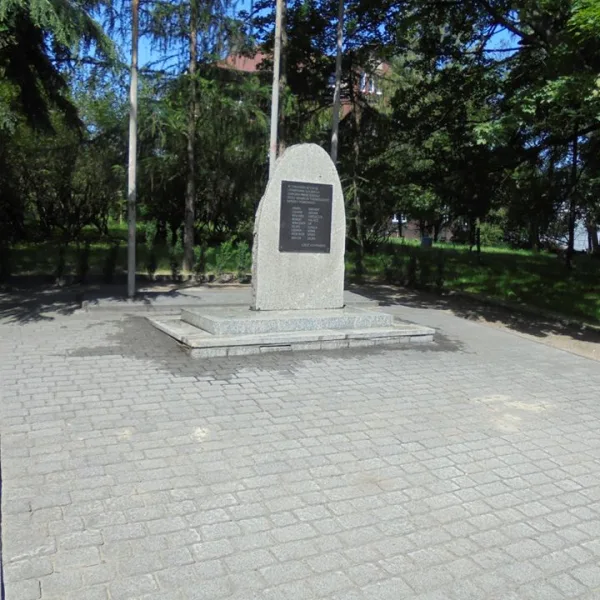
Monuments to the Silesian insurgents form the largest group. In Świętochłowice-Piaśniki stands a monument of 1937, rebuilt after the war, commemorating nine insurgents shot in August 1919. In Knurów on Dworcowa Street a monument of 1923 recalls Paweł Hora and Florian Henel. Katowice's Kostuchna has an obelisk with the names of 85 insurgents from the district, recreated in 2002 after a monument of 1922.
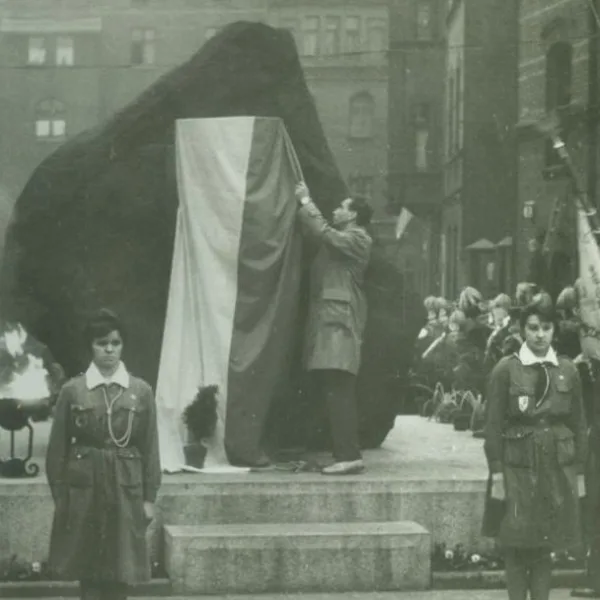
In Wodzisław Śląski a monument of 1975 in Korfanty Square refers to three uprisings and names places of the Wodzisław land. Siemianowice Śląskie has a bust of Wojciech Korfanty carved by Mirosław Kiciński in 1986. In Chropaczów, part of Świętochłowice, a boulder of 1960 honours the uprisings.
In Cieszyn the Cieszyn Nike is a monument to the Silesian Legion with a woman in Cieszyn costume, unveiled in 1934 and rebuilt in 2008. In the cemetery in Katowice-Ligota at 45 Panewnicka Street stands the Monument to the Defenders of Katowice, dedicated to the Silesian insurgents and scouts murdered in 1939 and to the defenders of the city. The tone of these places is serious: they are memorials, not viewpoints.
What monuments does Racibórz have?
Racibórz has six monuments and it is worth joining them in one walk; they are also listed under monuments in Racibórz. In the City of Roth Park, balustrades and benches survive from the monument to the fallen of the First World War of 1926. In Wolności Square lies a granite erratic boulder of 42.5 tonnes, carried by a glacier and made a natural monument in 1960. At the park entrance from Opawska Street stands the bronze Arka Bożek monument, made in 1980 by Augustyn Dyrda.
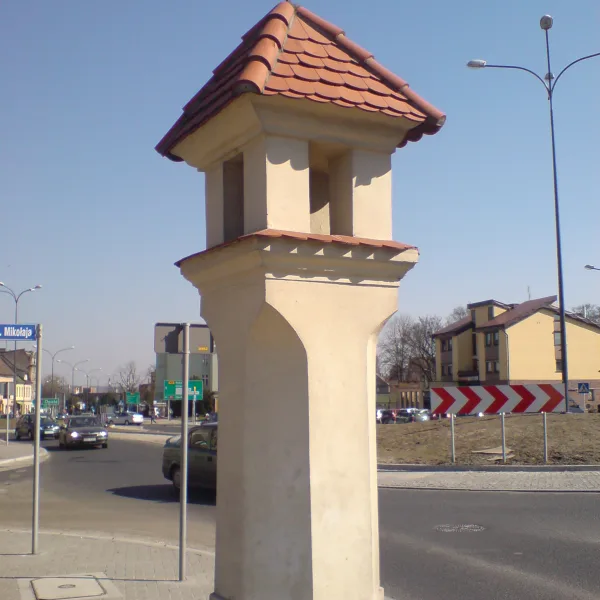
The poet Joseph von Eichendorff has two monuments in the town: a bronze replica of 1994 in the centre, replacing a lost original of 1909, and a replica of 2006 in Brzezie, at the edge of a forest. The Middle Ages are recalled by the Concord Monument, a brick pillar shrine which recalls a settlement of 1287 between a duke, Henry IV Probus, and a bishop, Thomas II.
What do the monuments to people look like: artists, popes and patrons?
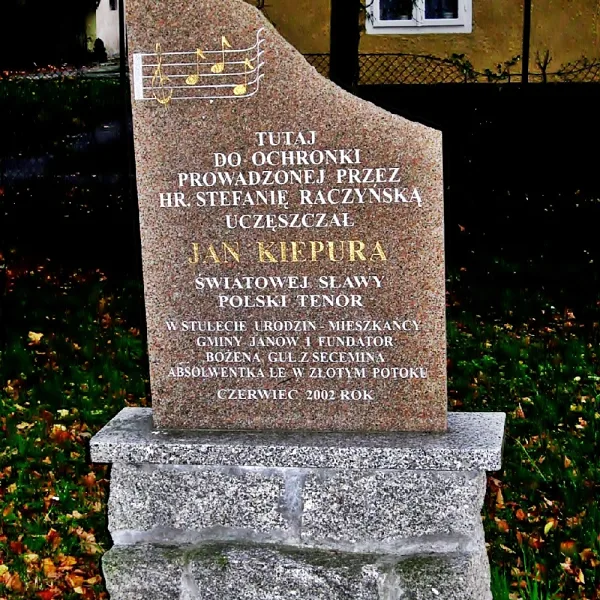
Two places honour Jan Kiepura. In Sosnowiec, in Stulecia Square, there is a three-metre bronze monument unveiled in 2002, and in Złoty Potok a marble obelisk recalls the tenor's childhood in Countess Raczyńska's shelter. The Gliwice Chopin monument in the park named after him has a bronze medallion and a marble plinth, unveiled on 17 June 1949.
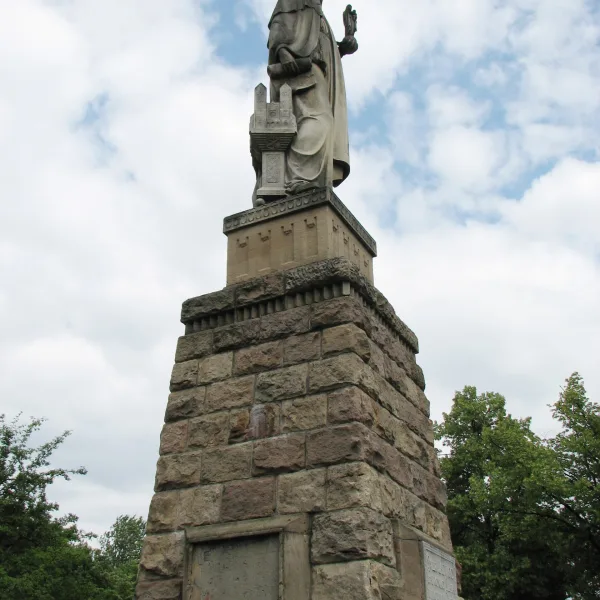
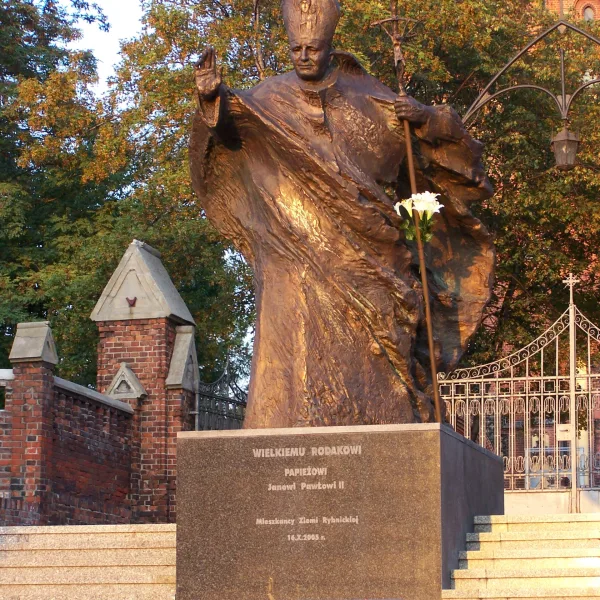
Pope John Paul II is remembered by a bronze by Zygmunt Brachmański in Rybnik of 2005, in the square before the Basilica of St Anthony, and by a cast-iron sculpture by Jan Funk in Sosnowiec of 2006 in Papal Square. Among religious monuments there is also the shrine-monument to John of Nepomuk in Knurów, sandstone, of 1919, and the figure of St Hedwig of Silesia of 1912 by the basilica in Panewniki. The Bielsko Martin Luther monument of 1900 is the work of Franz Vogl, standing before the Church of the Saviour, the only such monument in Poland.
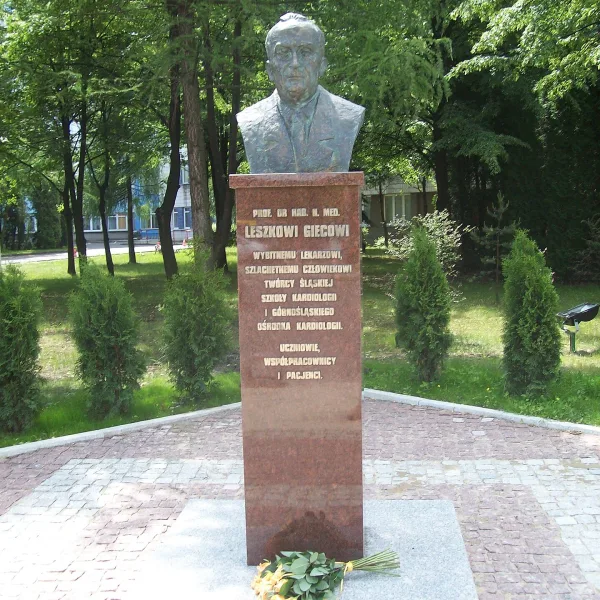
In Katowice the Tadeusz Kościuszko monument is an obelisk in the park named after him, with a medallion and a plaque dated 1925. In Janów-Nikiszowiec stands the monument to the miner Józef Wieczorek shaped like a coloured hand, and in Piotrowice-Ochojec the bust of the cardiologist Leszek Giec. In Częstochowa, in Biegański Square, is the Józef Piłsudski monument of 1997, and in Cieszyn a bronze Mieszko I, founder of the Cieszyn Piast line, unveiled in 1931.
Which monuments are unusual or have a stormy history?
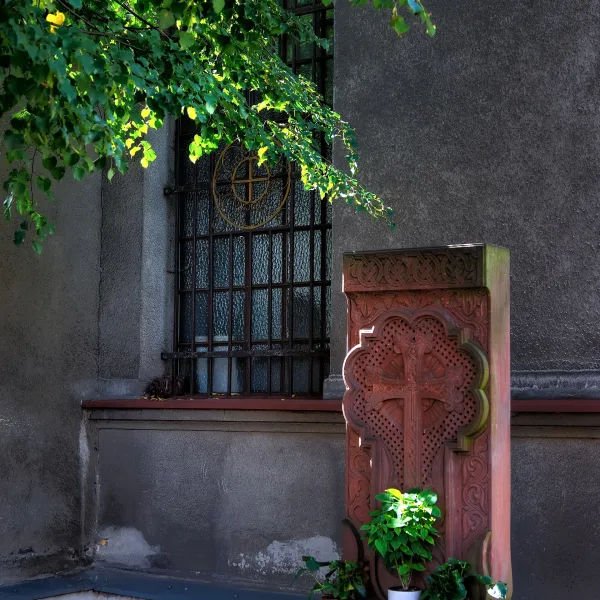
In Gliwice before the Holy Trinity church stands a khachkar, an Armenian stele of red tuff dedicated to victims of the Armenian genocide. On Valenciennes Square the sleeping lion is now a copy of 2009 of a monument to Prussian soldiers unveiled in 1849. In Bytom-Łagiewniki the stone cross shaped like a T is a medieval sculpture entered in the register of movable monuments.
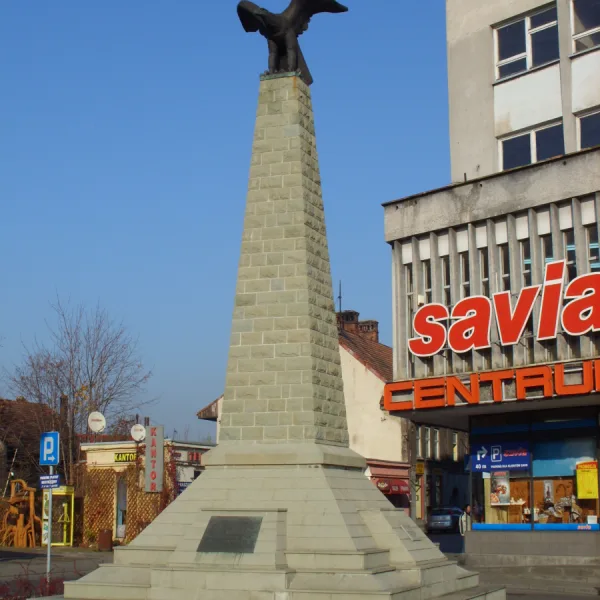
The Żywiec Grunwald Monument, an eagle in Grunwaldzki Square, dates from 1910, was wrecked in 1939 and went up again in 2005. In Dąbrowa Górnicza the Monument to the Heroes of the Red Banners of 1970 in Wolności Square was defended by residents against demolition in 1990. The Mermaid of Bielsko-Biała, from 1954, is a fountain by Ryszard Sroczyński modelled on the Warsaw monument. And up Matyska hill in Radziechowy leads the Golgotha of the Beskids, a Way of the Cross whose sculptures are the work of Prof. Czesław Dźwigaj; a Millennium Cross of steel crowns the summit.
How to plan a walk among the monuments?
It is best to plan by town. Many of the monuments of Katowice are collected under monuments in Katowice: in Ligota-Panewniki there are two, in Brynów one, and in Kostuchna, Janów-Nikiszowiec and Piotrowice-Ochojec one each. Gliwice has three near parks and squares, described separately under monuments in Gliwice. Racibórz is easy to cover in a day, since all six monuments lie within the town or its district.
Frequently asked questions
Which monument in Bielsko-Biała is unusual?
The Martin Luther monument of 1900, made of metal by Franz Vogl, has no counterpart elsewhere in Poland. Its place is in Martin Luther Square, in front of the Evangelical Church of the Saviour.
Where are the monuments to the Silesian insurgents?
Monuments to insurgents stand in Świętochłowice, Knurów, Kostuchna, Wodzisław Śląski, Siemianowice Śląskie and Cieszyn, among others. All are described above with their dates of unveiling.
Can you see monuments to Pope John Paul II?
Yes, in Rybnik before the Basilica of St Anthony and in Sosnowiec in Papal Square. The first is a bronze of 2005, the second a cast-iron sculpture of 2006.
Which monuments were rebuilt after destruction?
The Cieszyn Nike was rebuilt in 2008, the Grunwald Monument in Żywiec in 2005, and the obelisk in Kostuchna was recreated in 2002. The monument in Świętochłowice-Piaśniki was rebuilt after the war.

 Cemeteries and monuments