Things to do alone in Katowice: churches, museums and workers' estates, from the Cathedral to Nikiszowiec, where you need no company.
These places suit visitors who travel solo: a free day on a business trip, a quiet walk, or a day at your own pace without negotiating a plan. More than a hundred places in Katowice work for this kind of sightseeing, from churches to industrial estates. For a wider choice across the region see solo attractions in Silesia, and for the full city list see things to do in Katowice.
What can you do alone in Katowice?
The easiest start is with places where nobody expects conversation: churches with striking architecture, museums you can tour at your own speed, art galleries and former workers' estates. The city has most of these in three groups: several dozen churches and monasteries, several dozen historic buildings and several dozen museums, plus industrial heritage and a few trails on the outskirts.
Sightseeing alone has its advantages. You can stay longer in a museum that draws you in and skip what does not interest you. Many places are close together, especially in Śródmieście (the city centre) and the Culture Zone, so a single day is enough for several stops without rushing. In many churches nobody checks a ticket, and in museums you follow your own route.
Which churches in Katowice are worth seeing on your own?
Begin with the Cathedral of Christ the King on Plebiscytowa street. A low dome crowns the building, and a portico with eight Corinthian columns marks the entrance; the complex has held Monument of History status since 2017. The works dragged on for over twenty-five years, and the consecration came in 1955. Inside you will find a crypt, an organ, a pantheon and a viewing terrace, so an hour or two is enough for a solo visit.
The churches of Katowice differ greatly in character. The Church of Saints Peter and Paul stands on Mikołowska: a neo-Gothic brick church whose tower reaches 86 metres. The diocese used it as its cathedral between 1925 and 1957. St Joseph's Church in Załęże grew out of a vow made after the Kleofas mine catastrophe; Ludwig Schneider designed it in neo-Gothic style. In Bogucice stands the neo-Gothic Basilica of St Stephen and Our Lady of Bogucice, a Marian shrine with a painting from around the fifteenth century.
Wood, brick and modern times
The oldest building in Katowice is the wooden Church of St Michael the Archangel on Beata Hill in Kościuszko Park. It was built around 1510 in Syrynia and moved to the city in 1938. It belongs to the Katowice History Museum (since 1997) yet remains a working parish church, so stay quiet during services.
In Nikiszowiec the neo-Baroque St Anne's Church stands out, with two towers and a brick facade, dedicated in 1927. Its plans came from the Berlin architects who drew the entire estate. From a different era comes St Barbara's Church in Giszowiec, built in 1983-1993, with a foundation stone from John Paul II. In Panewniki there is the Franciscan basilica of clinker brick from 1905-1908, with a 28-metre facade and two towers of 48 metres. Next to it lies the Panewniki Calvary, a complex of chapels in a park of about eight hectares, good for a quiet walk.
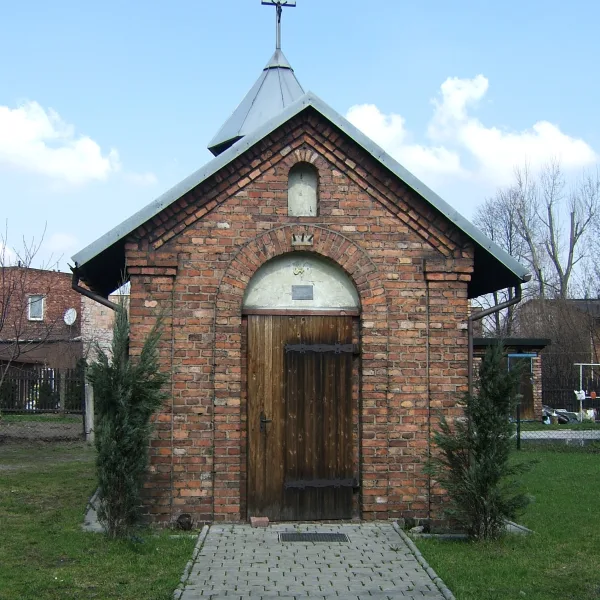
If you want to see more, visit St Joseph the Worker's Church in Wełnowiec-Józefowiec, neo-Baroque, with a dome above the crossing, the Oblate church in Koszutka from 1937, and the Dominican friary on Sokolska street. These are parish and monastic churches, so the rules of worship apply.
Which museums and galleries suit a solo visit?
For a solo visit the best choices are museums where you plan your own route and small galleries where nobody hurries you. A first choice is often the Silesian Museum in the former Katowice mine in Bogucice. Its permanent displays cover Polish painting, sacred art, non-professional art and the history of Upper Silesia, and most of the building lies underground.
For the history of the city, go to the Katowice History Museum, in a tenement house from 1910 on Józefa Szafranka street. Its collections include portraits of the Asymmetrical Lady by Witkiewicz, photographs and porcelain from former ironworks. The museum also has branches, among them the wooden church mentioned above. If you prefer entertainment, choose FunHouse on Bogucicka street, where over two hundred retro pinball tables, arcade cabinets and consoles wait, play time is unlimited and booking is not required. It is a good idea for a solo evening, because everyone plays on their own machine.
Contemporary art and theatre
In Śródmieście there are three small galleries. The BWA gallery on Korfantego avenue has shown contemporary art since 1949 and has about 800 square metres of exhibition space. Parnas on Kochanowskiego street has shown paintings, prints, sculpture and one-off glass pieces since 1993. Ateneum Gallery at 3 Maja 25 presents set designs, puppets and photographs from the puppet theatre. The small Polish Radio Museum Room at Ligonia 29 keeps old receivers, microphones and recording gear. In the open air you can walk through the Artists' Gallery on Grunwaldzki Square, where bronze busts of people linked to the city have been added since 2004.
Where can you see the industrial heritage of Katowice?
The most interesting traces of industry are former workers' estates and metallurgical sites, which are easy to see alone because they mostly require a walk. Choose one district and give it half a day.
Nikiszowiec was built for the miners of the Giesche mine between 1908 and 1919 to plans by Georg and Emil Zillmann, and since 2011 the estate has carried the Monument of History title. Its compact red-brick buildings gather around Wyzwolenia Square and St Anne's Church. In Giszowiec, built in 1907-1910, a brick water tower about 33 metres high stands at the highest point of the estate.
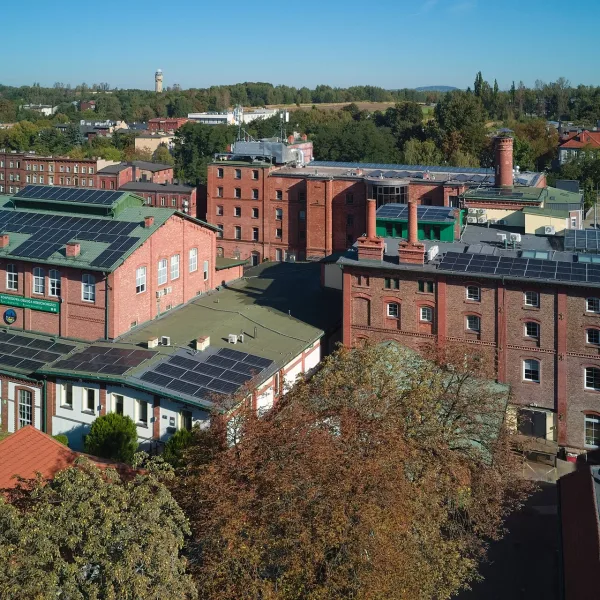
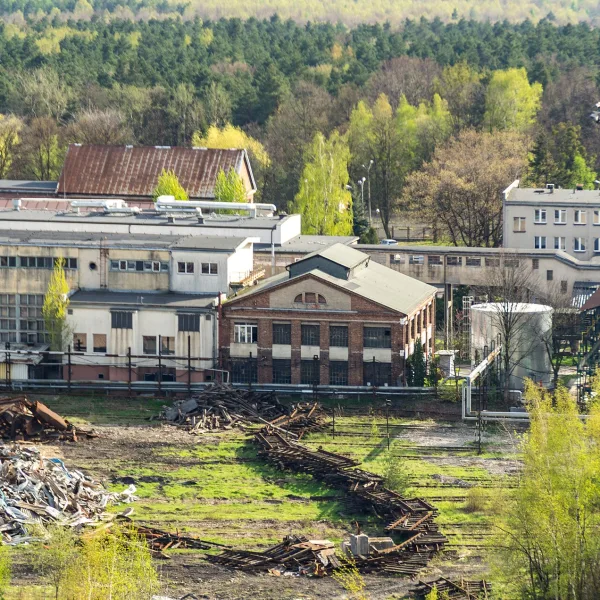
In Szopienice-Burowiec it is worth combining three places: the Rolling Mill - Museum of Zinc Metallurgy on 11 Listopada street, a former zinc-sheet mill where the whole production line survives, steam engines included, the red-brick Helgoland estate on Lwowska street, and the Wilhelmina Colony with workers' houses from the 1870s on Krakowska street. Nearby stands the water tower of the former works from 1912, now unused and visible only from outside. In Wełnowiec you can see Alfred Colony, the former estate of the Alfred mine with houses from the late nineteenth century, and by the main railway station the railway water tower of 1951, 30 metres high.
Which buildings in the centre can you admire from outside?
Śródmieście is good for a walk, because many interesting buildings stand close together and you can admire their architecture from the street. Such a walk needs no tickets or reservations.
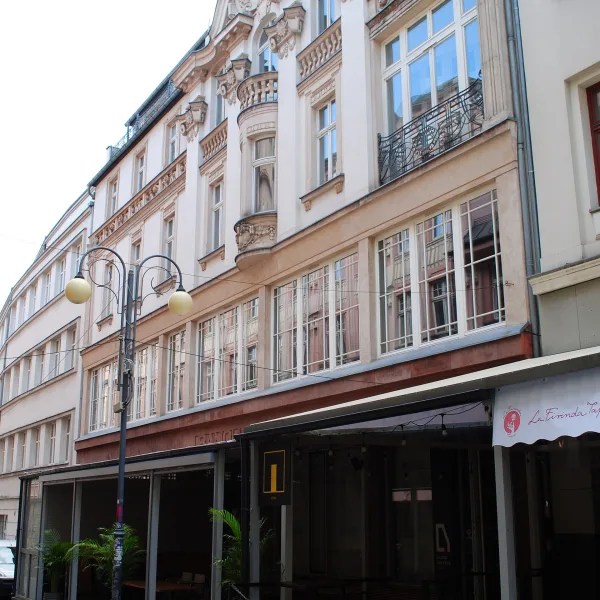
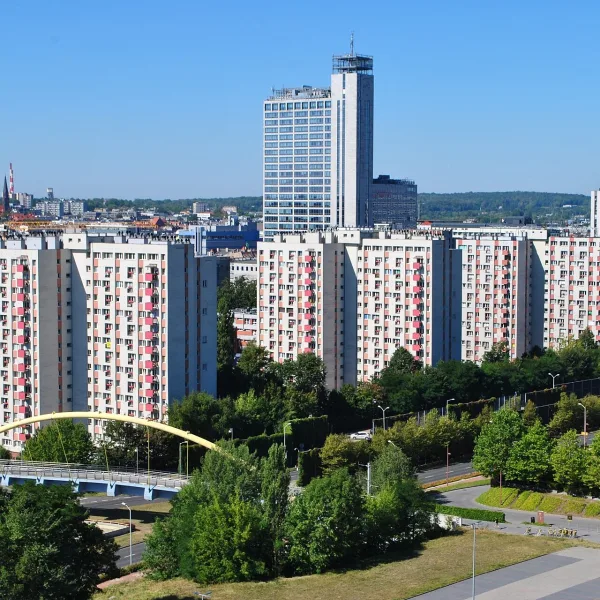
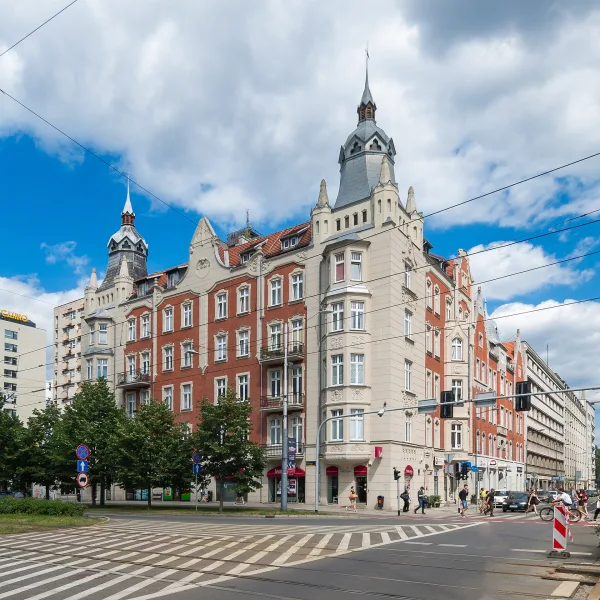
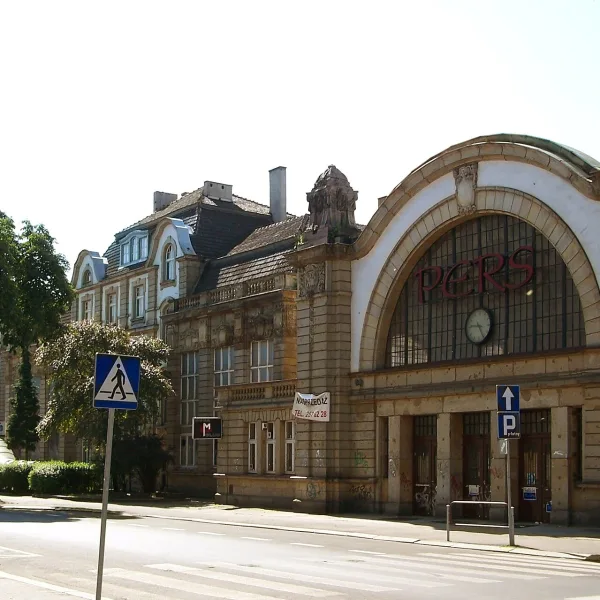
The Hotel Monopol on Dworcowa street is an eclectic pale clinker-brick building facing the old station; it opened in 1902 and still receives guests. Modernism is represented by Drapacz Chmur on Żwirki i Wigury street, a fourteen-storey tower completed in 1934, and by Wędlikowski House at PCK 10, a tenement from 1939 with a rounded corner. Two palaces must be seen from outside: the Goldstein Palace of 1872 is now a registry office, and the Załęże Palace of 1886-1887 houses a private hospital, so you cannot tour the interiors. The Youth Palace consists of ten buildings put up in the early post-war years (1948-1951) and listed in the register of monuments.
Where can you spend time on culture and books?
For people who value quiet, Katowice has several libraries and halls you can enter alone. The Silesian Library on Rady Europy Square has existed since 1922, in its present building since 1998, and holds collections on Upper Silesia and the Dąbrowa Basin. CINiBA is a joint library of two universities in a modern building from 2012, a few hundred metres from the Silesian Museum.
In the evening choose a concert. Spodek is an arena shaped like an inverted cone, built over the years 1964-1971, while Symfonia offers a concert hall for 470 listeners and a glazed atrium. A quieter evening awaits in Ligota, where the Municipal Cultural Centre fills an Art Nouveau villa of 1910 and runs a library and festivals.
How to plan a solo day by district?
The simplest way is to choose one district and stay there until evening. Several dozen places lie in Śródmieście, so it is a good starting point. You can begin at the Cathedral, pass the Monopol and Drapacz Chmur, and visit galleries in the afternoon.
A second idea is Szopienice-Burowiec, with a dozen or so places: the historic rolling mill, Helgoland, Wilhelmina and the water tower. A third is Janów-Nikiszowiec with the estate and St Anne's Church, from which Giszowiec is not far. A fourth is Ligota-Panewniki: the basilica, the Calvary and the cultural centre in a villa. A fifth plan is Załęże: the neo-Gothic St Joseph's Church stands at Gliwicka 76, and the palace of 1886-1887 on the same street at number 159, so a single walk joins them. In Wełnowiec-Józefowiec you can pair Alfred Colony with the neo-Baroque church. A day in one district lets you really get to know it, rather than just tick off an address.
Which solo plans work when it rains?
When it rains, the Silesian Museum, the Katowice History Museum, the Rolling Mill, galleries, libraries and FunHouse work best, because you spend several hours indoors. Several dozen places are suited to a rainy day. Leave churches and workers' colonies for dry hours, since the route there runs along streets.
Frequently asked questions
What can you do alone in Katowice?
Visit churches, museums, galleries and former workers' estates at your own pace. The Cathedral, the Silesian Museum, Nikiszowiec and the Rolling Mill are good starting points, since each takes several hours.
Which places in Katowice are good for a solo walk?
Nikiszowiec, Giszowiec, Helgoland, Wilhelmina Colony and the Panewniki Calvary in its park all suit a walk. They lie outdoors, and you can plan a route along neighbouring streets.
Is it worth going out in the rain?
Yes. The Silesian Museum, the Katowice History Museum, the Rolling Mill, FunHouse, galleries and libraries will fill several hours under a roof.
Can you enter every site?
No. The Goldstein Palace is a registry office, the Załęże Palace is a private hospital, and the water tower in Szopienice is unused. These three are seen from outside.
Where should you begin a first visit to Katowice?
In Śródmieście: the Cathedral, Hotel Monopol, Drapacz Chmur and the galleries lie close together. On the second day go to Nikiszowiec or Szopienice.

 Churches and monasteries