Mountain huts in Silesia: dozens of places in the Beskids and the Jura, from Stożek to student cabins high in the hills.
Most of them stand on the ridges of the Silesian, Żywiec and Little Beskids, beside waymarked trails. There are also former huts that now serve other purposes, and rock shelters on the Jura where nobody stays the night. The word for a hut, "schronisko", therefore covers several different things.
Which huts in the Silesian Beskids should you see first?
For a first trip Szyndzielnia, Klimczok and Stożek work well: each stands at a trail junction, has a well-known history and can be reached from a town or a valley. A short ridge separates Szyndzielnia and Klimczok above Bielsko-Biała, while Stożek lies on the Czech border above Wisła.
The Szyndzielnia hut has been open since 1897 at an altitude of 1,001 m and operates all year. Its windows overlook the Żywiec Basin, the Little Beskids, Babia Góra and Pilsko, and in good weather the Tatras as well. A small turret makes the building easy to recognise from afar. Klimczok stands at 1,052 m, between the summit of Magura and the Siodło pass, and the brick building seen today was raised in 1914 and has hardly been altered. The summit of Klimczok lies 700 m west of it.
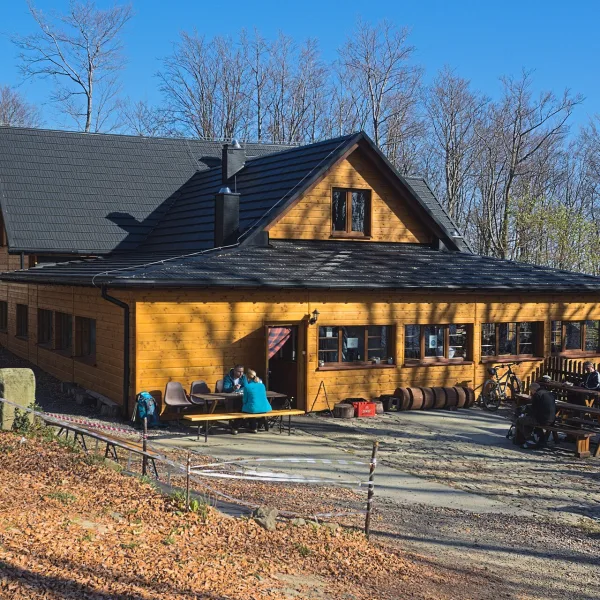
The Stożek hut in Wisła is the oldest of the Polish huts to survive in that range; the first guests came in 1922, right under the top of Stożek Wielki, with Czechia beyond the ridge. It is not the only stop on that ridge. About half a kilometre north of the summit of Soszów Wielki, where several paths meet beside the Main Beskid Trail, stands the private Soszów Wielki hut of 1932 (about 792 m).
Where does a hut stand right under a summit?
Right under the top is the Skrzyczne hut (1,250 m), on the highest peak of the range; its history goes back to 1933, and a two-stage chairlift runs up from Szczyrk. Within the boundaries of Lipowa stands a building that can be reached on foot or by lift. The hut at Przysłop below Barania Góra (951 m) in Czarna Wisełka is different: three trails to the summit end there and a nature trail begins. It is a base for Barania Góra, on whose slope the Vistula rises.
The Błatnia hut in Brenna was built in 1925-1926 and opened on 23 May 1926; it has fifty beds and stands at nearly 900 m. It was raised by the German touring society Naturfreunde. In Szczyrk, below the Karkoszczonka pass, Uncle Tom's Cabin works all year in a highland cottage of 1918, a goal for short outings for people holidaying in Szczyrk. In Istebna, on the Main Beskid Trail, the Stecówka hut has stood since 1934, built by Marta and Michał Legierski.
What huts are there in the Żywiec Beskids?
The Żywiec Beskids have the largest cluster of huts in this selection. It helps to group them around the meadows: Rysianka, Lipowska, Boracza, Miziowa and Wielka Racza. Each lies on a different ridge and is reached by its own stretch of path.
The Hala Rysianka hut in Sopotnia Wielka stands at 1,290 m; the first hut welcomed visitors in May 1937, and many paths meet here today. It has about fifty beds, a buffet and a kitchen, and a campsite in summer. East of Lipowski Wierch, above Złatna and Rajcza, lies the Hala Lipowska hut, begun at the urging of the German Beskidenverein and officially opened on 6 August 1932; from Rysianka it is a walk of about a quarter of an hour. The Hala Boracza hut in Żabnica, at about 854 m, was raised in the 1920s by the Jewish sports society Makkabi of Bielsko; Romanka can be seen from the surroundings.
On the Main Beskid Trail stands the Hala Miziowa hut in Korbielów, on the slopes of Pilsko: the new building opened in 2003. A GOPR mountain rescue post operates nearby, and from here walkers climb to the summit of Pilsko. The Wielka Racza hut (1,236 m) was built in the 1930s at the crossing of two Polish trails, red and yellow, and a Slovak green one, and extended in the 1990s. In Rycerka Górna, at the Przegibek pass, about 1,000 m, stands the PTTK hut at Przegibek, opened in 1923 as a private hut; trails to Rycerzowa and Wielka Racza start from it.
The PTTK bacówki are a separate type. The Bacówka on Rycerzowa, a wooden hut at 1,120 m, welcomed its first guests on 14 September 1975, the first of the series. The Bacówka on Krawcowy Wierch stands on the Krawcula meadow at 1,038 m, in the Żywiec Landscape Park; it entered service on 4 December 1976, and the Malá Fatra is visible from its surroundings. The private Słowianka tourist station in Żabnica (856 m, 24 beds) occupies a two-storey wooden building on the Romanka massif. In Złatna-Huta there is Gawra, with 28 beds, a buffet and a shelter for campfires.
Where to stay in the Little Beskids: former forester's lodges and cottages?
The Little Beskids hold simpler places: former forester's lodges and highland cottages, where conditions can be modest. The best known is Magurka Wilkowicka (909 m), a PTTK mountain hut above Wilkowice. The present building dates from 1913, and the first, in 1903, was put up by German walkers from the Bielsko section of the Beskidenverein. Today it bears the name of the activist Józef Grzybowski.
Lower down, in a clearing below Rogacz, stands the Rogacz Hut in a former forester's lodge, an inexpensive base on the trail from Wilkowice since the 1960s. In Ślemień three places differ in character. The hut below Potrójna occupies a highland cottage of 1911 and works all year. On the Gibasy pass stand Gibasówka Lutecja, a wooden cottage of 1925 repaired after its roof collapsed in 2019, and the modest Gibasówka u Stacha, heated by stoves, with water from a well and an outdoor toilet. It is worth enquiring about both in advance, because their standards differ.
In Porąbka, on the slope of Trzonka, stands the Limba Mountain Tourism Club hut in a former forester's lodge of the Andrychów Forest District, with about 25 beds. In Międzybrodzie Bialskie lies the Hrobacza Łąka Tourist and Retreat House: a hut from the 1930s, run by a foundation as a retreat house since 1991 and being rebuilt after a fire in 2017.
What are student cabins and small shelters in the Beskids?
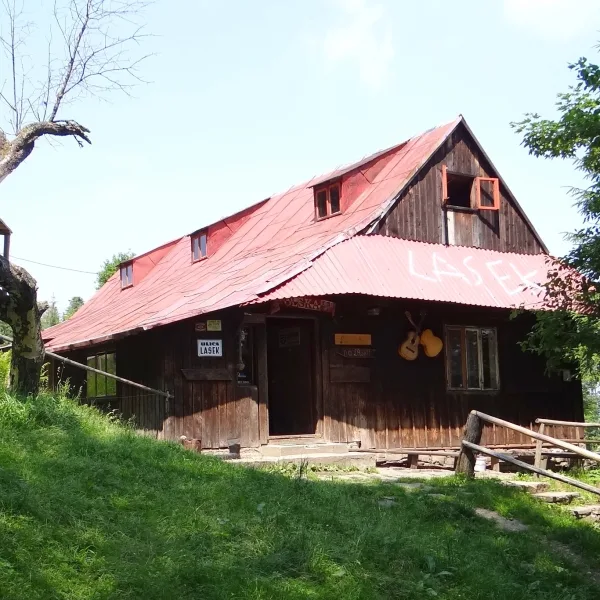
Student cabins are simple places run by clubs and tourist organisations, meant for people who prefer a modest bed to hotel comfort. Chata na Zagroniu, in a wooden highland cottage on the Zapolanka ridge, is run by Beskid guides from Katowice. AKT Dobrodziej in Sopotnia Wielka stands in the Witasówka clearing with thirty beds in dormitories; it used to be called the Builders' Hut because a faculty of the Silesian University of Technology in Gliwice managed it, and today it is private. Below the summit of Łosek in Pewel Wielka, in the Beskid Makowski, the Lasek hut, formerly the Electricians' Hut, has stood since 1971.
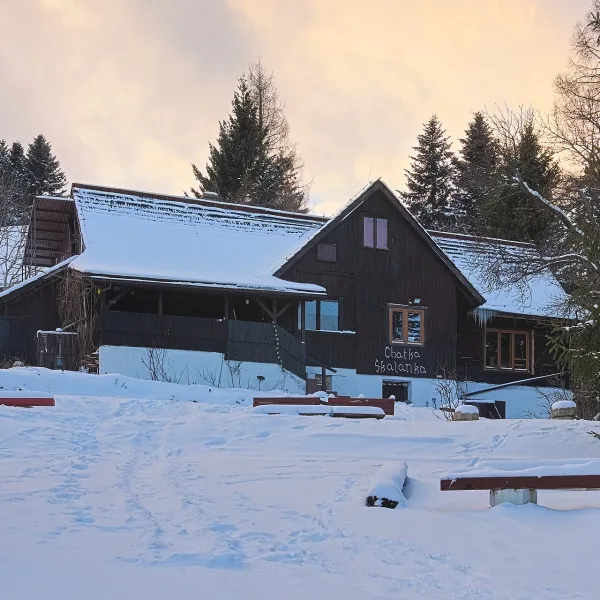
In Zwardoń two places that are easily confused stand side by side: the Skalanka Student Tourist Shelter, a wooden cabin for around fifty people on the border ridge, and Chata Pod Skalanką at Zwardoń 211a. Beside the second stands a plaque of 2019 in memory of Lt Stanisław Kopik, codenamed Zemsta, and his soldiers.
Which places no longer welcome walkers as they once did?
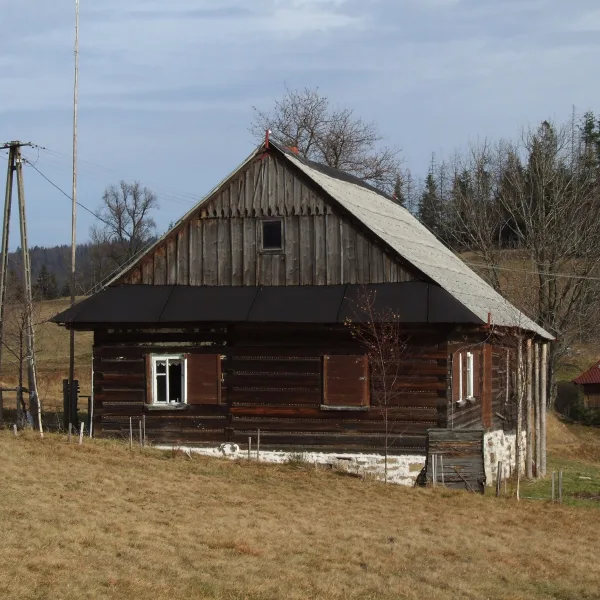
Not every hut on the list works as its name suggests. The Kozia Góra hut, called Stefanka, is a building of 1912 at 676 m in Bielsko-Biała; since 2023 official registers have listed it as a tourist facility rather than a mountain hut. The former PTTK hut Pod Tułem in Cisownica, built in the 1930s, stopped being a hut after its sale in 2006 and today works as a restaurant with guest rooms. The Oźna hut in Sól is a former school youth hostel from 1963 at 823 m. It stood unused for years and is being renovated to reopen, so it is necessary to check before a trip whether it takes guests.
What are the rock shelters on the Jura?
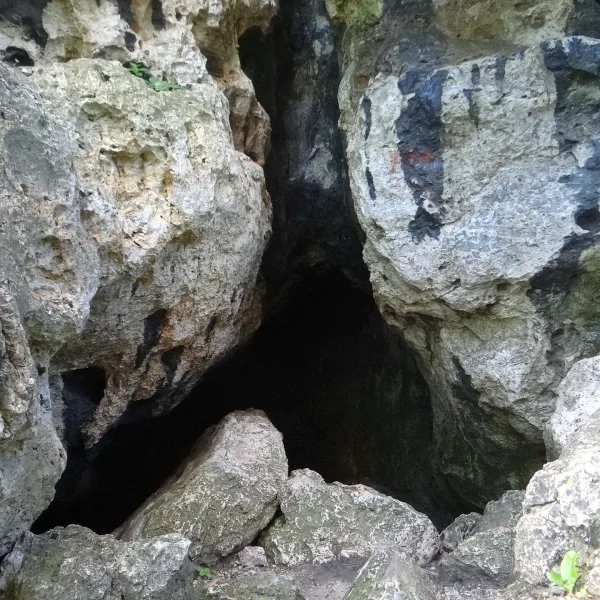
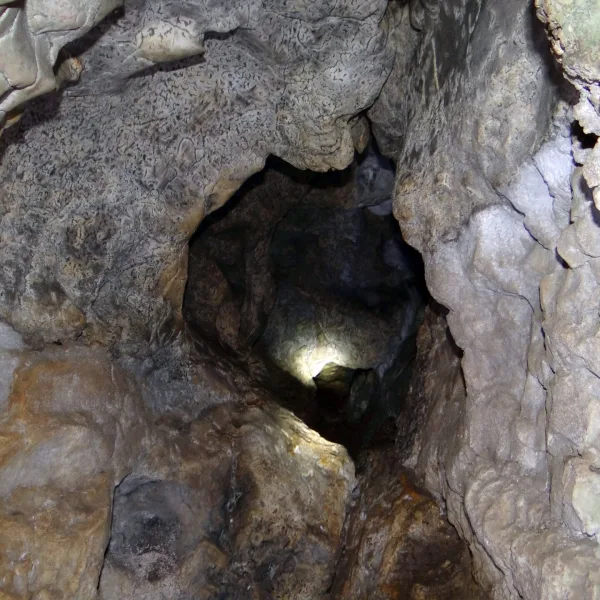
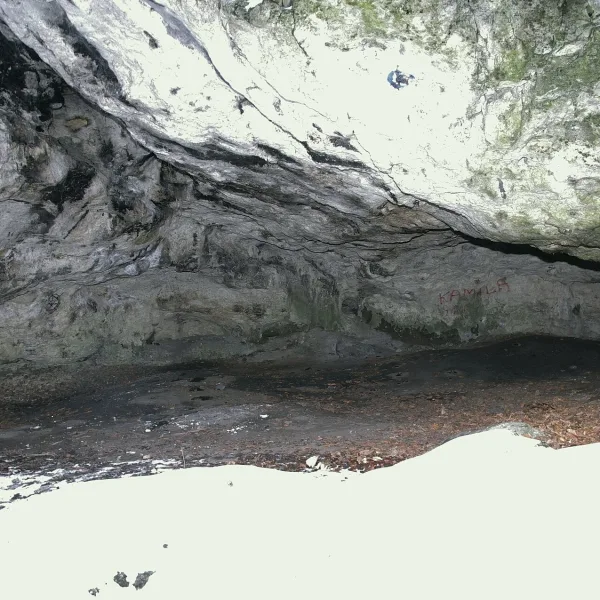
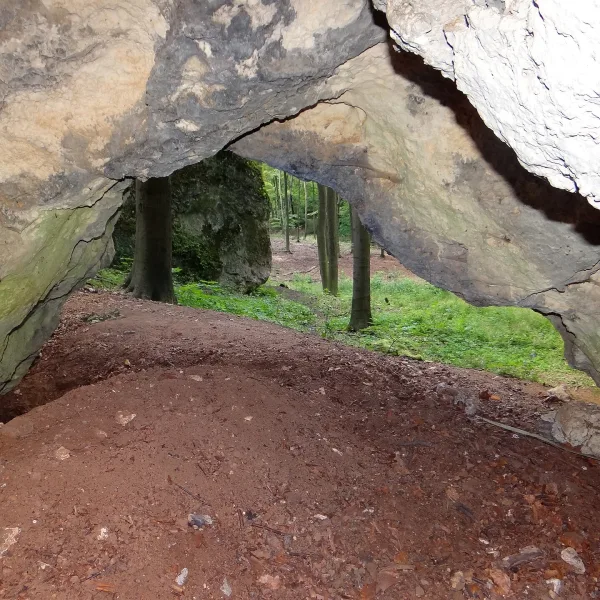
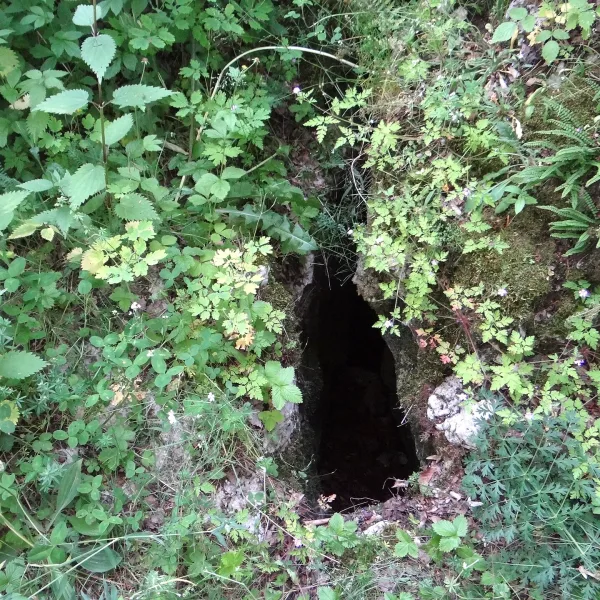
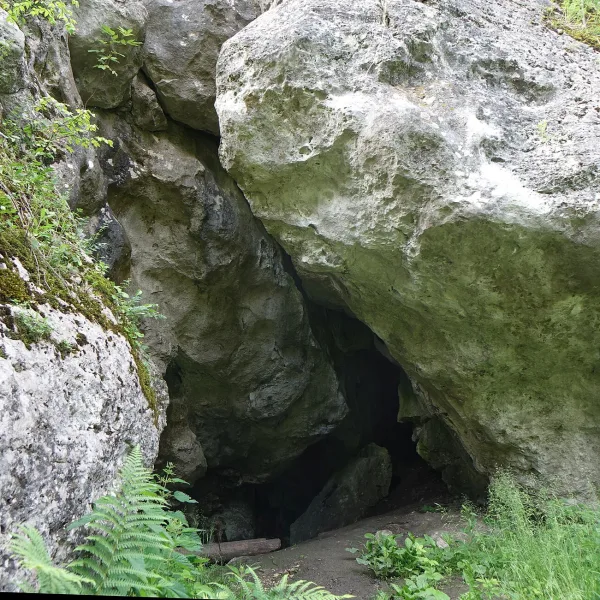
On the Kraków-Częstochowa Upland the same word means something quite different: a natural cave under a rock overhang, not a building with beds. Six such places lie in the rocks of reserves and hills. There are no beds or staff, so a visit is a short walk to look at the formations, and some of the sites matter to archaeologists.
The shelter in Góra Birów in Podzamcze, also called Cave IV, has four openings in the rocks on which the Góra Birów stronghold stands, and is regarded as a valuable archaeological cave site. In Ryczów, on the Kosia Góra hill, is the Upper Shelter, a refuge under the overhang of Kosia Skała with a narrow, triangular entrance. The shelter under the White Tower in the Góra Zborów reserve has a bright chamber of 4 by 2 m. In the Zielona Góra reserve near Olsztyn lies the shelter below the summit of Zielona Góra, 12 m long.
In the Wiercica Valley the Ostrężnik rock looks like a block of Swiss cheese, with several caves; the Larger Shelter in Ostrężnik is one of them, with a short passage and a chamber with remnants of dripstone. The Wild Boar Rock Shelter in the Hermit's Rock near Zastudnie runs for 9 m and its chamber measures five by four metres.
How to choose a hut and prepare for the trip?
The choice depends on the aim. For views, pick huts under the summits: Skrzyczne, Szyndzielnia, Klimczok, Rysianka, Wielka Racza. For a plain bed on a ridge, student cabins and the small places of the Little Beskids suit better. For a short outing from town, Szyndzielnia, Stefanka or the restaurant in Cisownica will do. Details on availability, standard and number of beds are best checked with the operator directly, because some places are private, some have changed status and some are under renovation.
Several towns have their own lists: huts in Wisła and in Ślemień have separate pages where it is easy to compare places in one area.
Frequently asked questions
Which hut in the Silesian Beskids is the oldest?
The Stożek hut in Wisła has operated since 1922 and is the oldest of the Polish huts that survive in the Silesian Beskids. Szyndzielnia is older (1897), but it was built by the German Bielsko section of the Beskidenverein, not by a Polish society.
Which huts are open all year?
The Szyndzielnia hut is open all year, as are Uncle Tom's Cabin in Szczyrk and the hut below Potrójna in the Little Beskids. For other places it is better to ask the operator before leaving.
Is food available in the huts?
In some of them. Rysianka has a buffet and a kitchen, Hala Miziowa has a restaurant, and Gawra in Złatna-Huta serves meals as a buffet. Student cabins usually offer only a bed.
How does a hut differ from a bacówka?
The PTTK bacówki are a series of small huts, of which Rycerzowa, opened in 1975, was the first. They are smaller and plainer than the big huts at trail junctions.
Can you stay overnight in the rock shelters on the Jura?
No. They are natural caves with an overhang, not accommodation. They show rocks and karst forms, and some have archaeological importance, like the shelter in Góra Birów.

 Mountains