Cemeteries and necropolises in Silesia: Jewish kirkuts in Cieszyn and Katowice, Lutheran burial grounds and war plots across dozens of towns.
This is a guide for visitors to the Silesian Voivodeship who want to see gravestones, chapels and the layouts of historic cemeteries, and for people tracing family graves. The cemeteries are varied: Jewish burial grounds with matzevot, Lutheran cemeteries in Cieszyn Silesia and Bielsko-Biała, and large municipal cemeteries with war plots. Many are still in use, so quiet and simple respect for mourners are expected.
Which cemeteries in Silesia should you visit first?
Start with one of three routes: Jewish cemeteries with surviving matzevot, Lutheran cemeteries with the graves of industrialists, or large municipal necropolises with a clear plan. Each shows a different layer of the region's history, and a single town often offers all three.
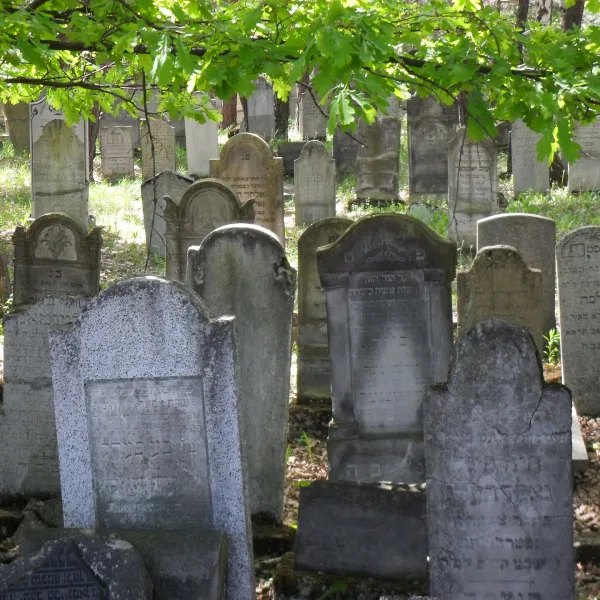
Begin with the Old Jewish Cemetery in Cieszyn: its land was bought in 1647, and over fifteen hundred gravestones stand within a masonry wall on almost two hectares. At the other end is the Central Municipal Cemetery in Gliwice, laid out in the 1920s on the plan of a Latin cross as a cemetery combined with a park. Between them lie historic parish cemeteries such as the Mater Dolorosa Cemetery in Bytom and the hill of the Kule Cemetery in Częstochowa, founded in 1882.
If you have time for just one town, open its dedicated page. Katowice has the most sites, followed by Bielsko-Biała, Sosnowiec, Częstochowa and Gliwice. Full lists are here: cemeteries in Katowice, in Bielsko-Biała, in Sosnowiec, in Częstochowa and in Gliwice.
Which Jewish cemeteries in Silesia still have gravestones?
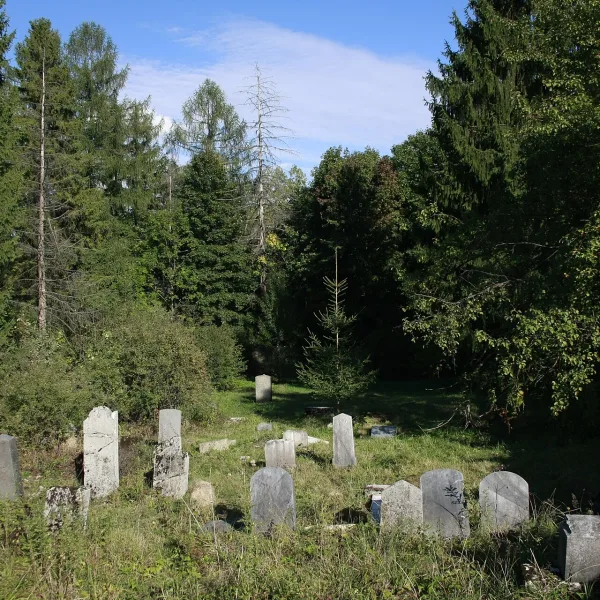
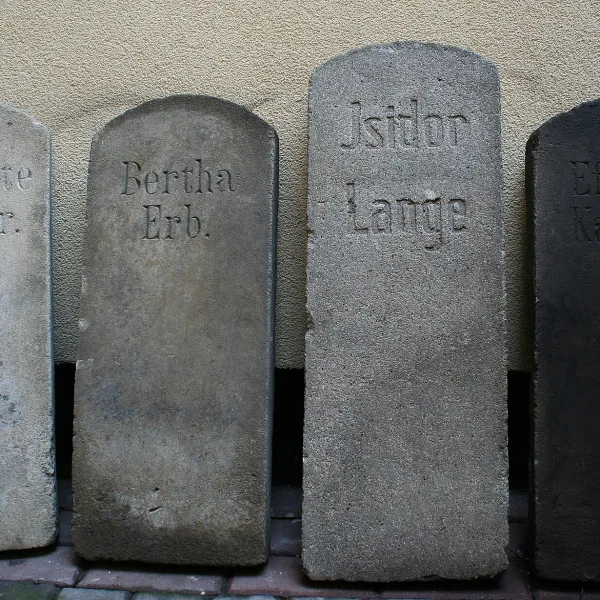
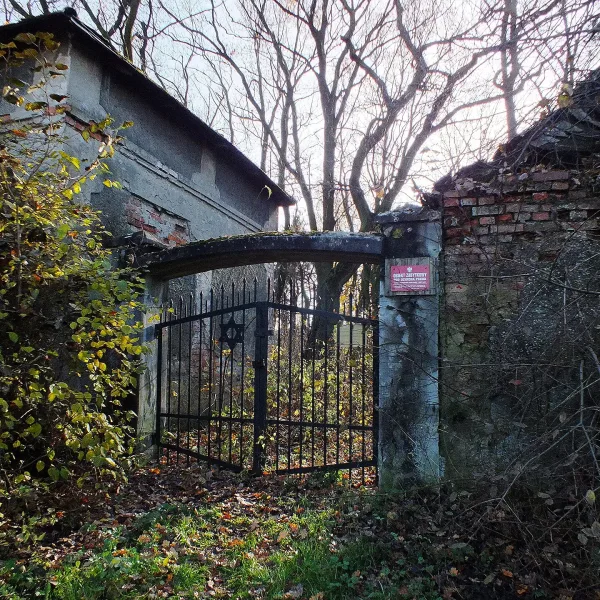
Gravestones survive in several dozen kirkuts across the voivodeship, from large town cemeteries to small forest burial grounds near villages. Some still serve Jewish communities, some have been closed for decades, and a few survive only as a plaque. These are places of memory, so visit quietly and without hurry.
The conurbation and its surroundings
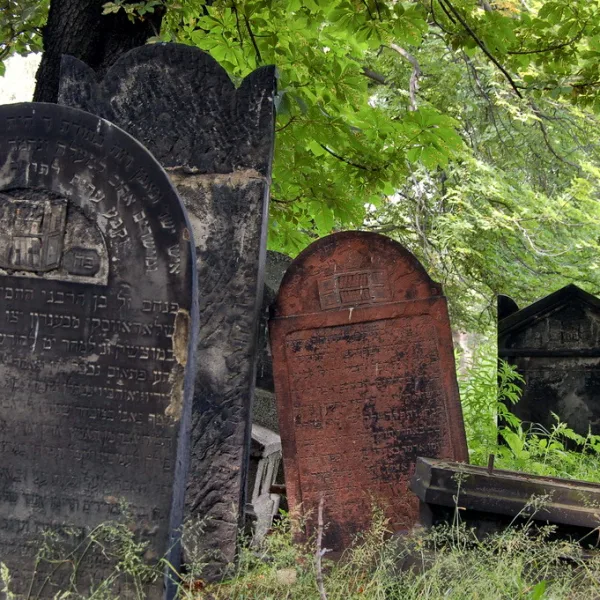
The Jewish Cemetery in Katowice was opened in 1869 at Kozielska Street; around fourteen hundred gravestones remain, along with a Holocaust monument. In Bytom the Jewish Cemetery in Bytom keeps a neo-Gothic prayer-preparation house and, along its fence, a Wall of Memory built from matzevot of a vanished cemetery. Only a plaque marks that older site on Piastów Bytomskich Street, covered under Old Jewish Cemetery in Bytom. Gliwice has two kirkuts: the Old Jewish Cemetery in Gliwice in the centre, with about five hundred gravestones, and the New Jewish Cemetery in Gliwice, still in use, with a memorial to Jewish soldiers killed in the First World War.
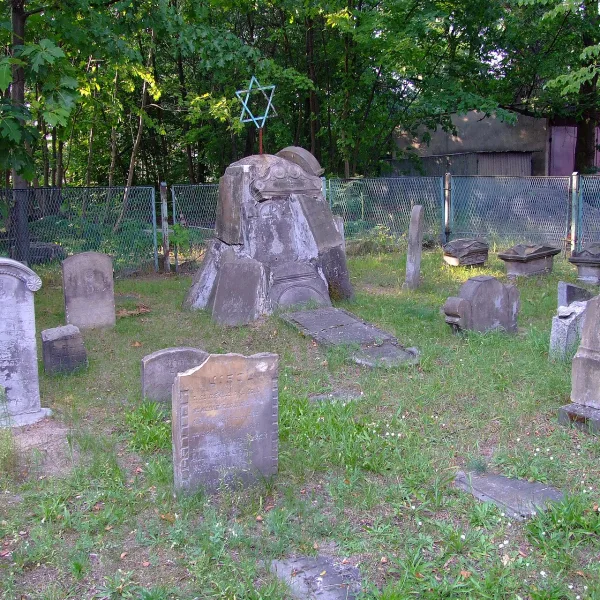
In Zabrze the Jewish Cemetery in Zabrze lies in the Zandka district and has about five hundred gravestones. In Tarnowskie Góry the Jewish Cemetery in Tarnowskie Góry on Gliwicka Street preserves about four hundred and fifty matzevot and a prayer-preparation house. In Pyskowice the Jewish Cemetery in Pyskowice stands by the road towards Gliwice and has been closed since the Second World War.
The Dąbrowa Basin and the Jura
In Będzin the New Jewish Cemetery in Będzin lies on the slope of Castle Hill below the castle and is the one of Będzin's three Jewish cemeteries that outlasted the others. In Czeladź the Jewish Cemetery in Czeladź was shared by the communities of Czeladź and Będzin and still has about three thousand two hundred gravestones and fragments. In Zawiercie the kirkut keeps its prayer-preparation house and mortuary together with some two hundred stones.
Further north the Jewish Cemetery in Częstochowa on Złota Street covers about eight and a half hectares and is among the largest kirkuts in Poland, now overgrown with forest. Near Krzepice the Jewish Cemetery in Krzepice is known for its cast-iron matzevot, and in Żarki the New Jewish Cemetery in Żarki is the sole survivor of three Jewish burial grounds the town once had and holds over seven hundred gravestones.
The south and Cieszyn Silesia
In Cieszyn, next to the old kirkut, stands the New Jewish Cemetery in Cieszyn, opened in 1907, with a prayer-preparation house designed by the Viennese architect Jakob Gartner. In Bielsko-Biała the Jewish Cemetery in Bielsko-Biała in Aleksandrowice is still in use and has a prayer-preparation house with painted decoration. In Pszczyna the Jewish Cemetery in Pszczyna is among the best preserved in the voivodeship, and in Żywiec the Jewish Cemetery in Żywiec on Stolarska Street was restored in 2018-2020. In Żory the Jewish Cemetery in Żory is the oldest burial ground in town, and smaller kirkuts can be found in Wielowieś, Cieszowa and Janów.
Where can you see Lutheran cemeteries?
The largest cluster of Lutheran burial grounds lies in Cieszyn Silesia and Bielsko-Biała, with single important cemeteries also in Katowice, Sosnowiec and Siemianowice Śląskie. They usually have an orderly plan, chapels and the graves of industrialists, mayors and local figures.
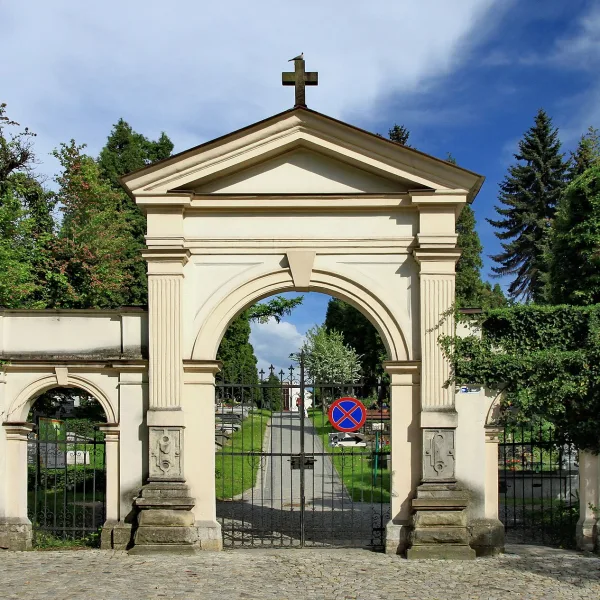
In Bielsko-Biała it is worth pairing two places: the Evangelical Cemetery on Piłsudskiego Street, consecrated in 1783 and still in use, and the Old Evangelical Cemetery in Bielsko-Biała with its neo-Gothic gate and Avenue of the Distinguished on the so-called Bielski Zion. In Cieszyn the Evangelical Cemetery in Cieszyn dates from 1887 and is an active necropolis where prominent figures of Cieszyn Silesia are buried. In Wisła the Evangelical Cemetery Na Groniczku was consecrated in 1819, and its chapel dates from 1948.
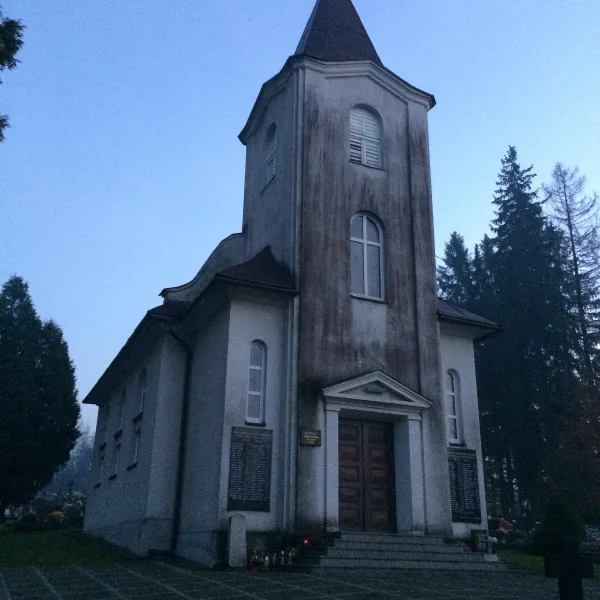
In Katowice the Evangelical Cemetery on Francuska Street lies in the city centre next to a Catholic cemetery. In Siemianowice Śląskie the Evangelical Cemetery has a five-metre tin crucifix donated by the Fitzner brothers, and in Sosnowiec the Evangelical Cemetery on Smutna Street is known for the mausoleum of the Dietel family. The Evangelical Cemetery in Racibórz on Starowiejska Street is no longer used for burials; a chapel and a monument to the fallen of the First World War remain.
Which municipal and parish cemeteries are worth seeing?
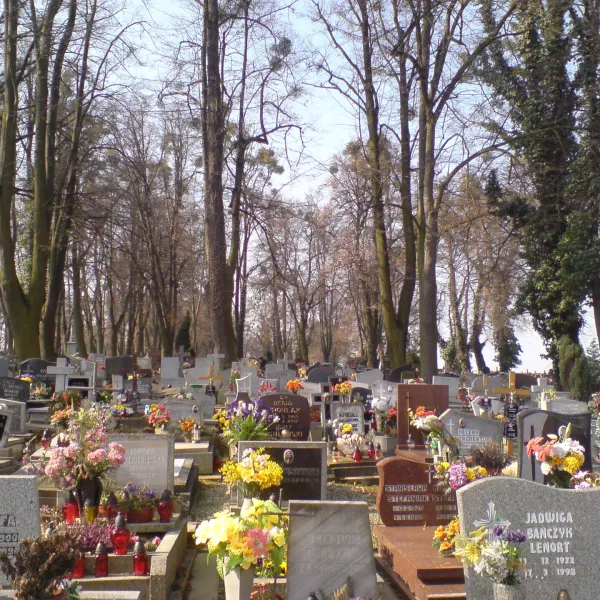
Municipal and parish necropolises give a survey of a town's history in gravestones: chapels, war plots, and the graves of people from culture and industry. Choose those with a clearly described layout, since they are easy to see in an hour.
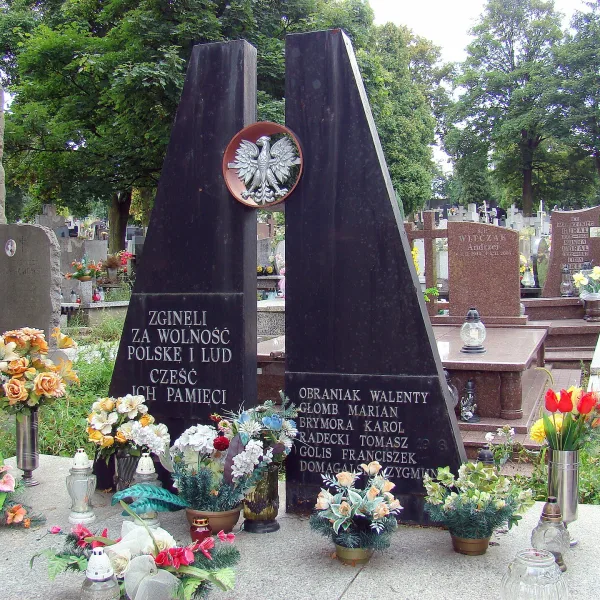
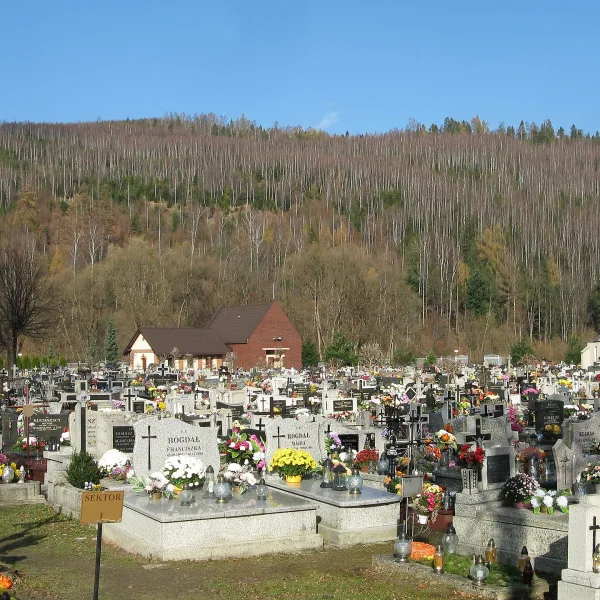
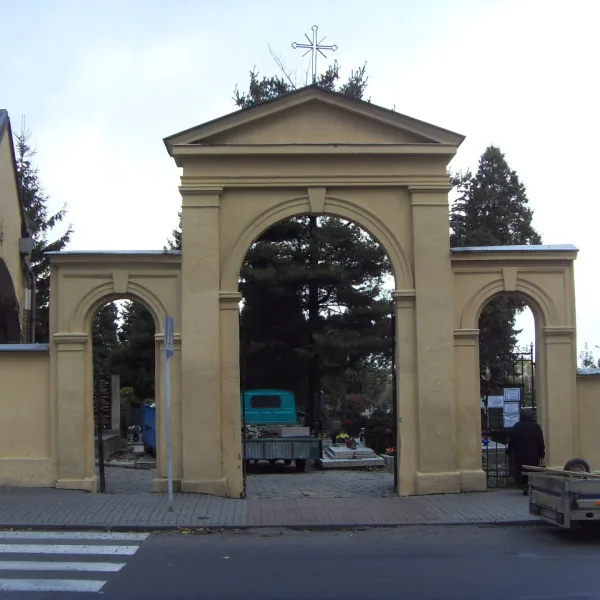
The St Roch's Cemetery in Częstochowa received its first burials in 1641; a Baroque chapel stands there, and the plots hold insurgents and victims of wars. In Katowice the cemetery on Sienkiewicza Street, from 1911, has a modernist chapel, and two well-known composers rest there: Wojciech Kilar and Henryk Mikołaj Górecki. In Cieszyn the Municipal Cemetery on Katowicka Street opened in 1891, when the old cemetery by St George's church no longer sufficed for the town, and has a gate in the Austrian Baroque style and a Tomb of the Distinguished. In Gliwice the Lipowy Cemetery, from 1885, preserves plots of soldiers of several nationalities and a mass grave of children, while the Ironworkers' Cemetery dates from 1808, when the royal iron foundry laid it out beside its works, and volunteers have been bringing it back since the early 2000s; its cast-iron lions at the gate followed the sculptures of Johann G. Schadow. The Municipal Cemetery in Bielsko-Biała in Kamienica is the town's largest necropolis, with memorials to war victims and to people deported to Siberia.
Which town has the most cemeteries close together?
Katowice has the most in one place, followed by Bielsko-Biała, Sosnowiec, Częstochowa and Gliwice. Cieszyn has four necropolises in this selection: the old and new kirkuts, a Lutheran cemetery and a municipal one. Bielsko-Biała brings together cemeteries of three faiths, while Racibórz and Bytom have several places each, which make short routes of their own.
Open the pages for Bytom, Cieszyn and Racibórz to plan one afternoon without long transfers. Single necropolises also lie in Rybnik, Dąbrowa Górnicza, Żywiec, Pszczyna, Zawiercie and Zabrze.
Which districts of Katowice have cemeteries?
Katowice has a dozen or so necropolises scattered across different parts of the city, not only the centre. Three of them are in Śródmieście, including the cemetery on Sienkiewicza Street and the Lutheran one on Francuska Street. Single cemeteries lie in the Katowice districts of Brynów-Osiedle Zgrzebnioka (two), Ligota-Panewniki, Bogucice, Dąb, Załęże, Janów-Nikiszowiec, Wełnowiec-Józefowiec, Dąbrówka Mała, Giszowiec, Podlesie and Szopienice-Burowiec.
If you are combining a visit with another plan, choose the necropolis in the district where you will be anyway, and check its address before setting out. Katowice has Catholic, Lutheran and Jewish burial grounds, so a single city shows three different burial traditions.
How to visit a cemetery with respect
At an active cemetery keep quiet, do not step on graves and do not photograph funeral guests. At a Jewish cemetery do not touch or move the matzevot, and men usually cover their heads. A pebble left on a gravestone is a sign of remembrance, so leave it where it is. In abandoned forest cemeteries watch for uneven ground and fallen stones.
Check practical details such as opening hours and access at the page of each cemetery, because the condition of the site varies: active cemeteries are tidy, while closed ones can be overgrown. For small kirkuts by villages, such as Cieszowa or Wielowieś, bring sturdy shoes.
Frequently asked questions
Can I enter every cemetery on this list?
Not always. Active cemeteries are open during the day, but some kirkuts and forest burial grounds may require contact with a caretaker. Check the description and address of each site.
Which cemeteries are the oldest?
The earliest burials noted here took place at St Roch's Cemetery in Częstochowa (1641), while the old kirkut in Cieszyn dates its founding to 1647. Both sites have more than three centuries of history.
Where can I see cast-iron matzevot?
In Krzepice, where about four hundred cast-iron gravestones stand in the cemetery, most of them from the mid-nineteenth century.
Are famous composers buried in Katowice?
Yes, the necropolis on Sienkiewicza Street in Katowice holds the graves of both Wojciech Kilar and Henryk Mikołaj Górecki.
Do I need to prepare for a Jewish cemetery?
Respect and clothing suited to a place of memory are enough. Men usually cover their heads, and stones lying on gravestones stay where they are.

 Cemeteries and monuments